
via Call Time For Congress Shows How Fundraising Dominates Bleak Work Life.
Celebrating humanity's flourishing through the spread of capitalism and the rule of law
14 Jul 2015 Leave a comment
in constitutional political economy, politics - USA, Public Choice, rentseeking Tags: campaign finance reform, campaign finance regulation, lobbying, special interests
14 Jul 2015 Leave a comment
in economics of education, human capital, labour economics, occupational choice, politics - Australia, politics - New Zealand, politics - USA Tags: College premium, graduate premium
14 Jul 2015 Leave a comment
in labour economics, labour supply, politics - Australia, politics - New Zealand, politics - USA, population economics Tags: Australia, economics of identity, economics of immigration
13 Jul 2015 Leave a comment
in applied price theory, applied welfare economics, economics of religion, law and economics, politics - USA, property rights Tags: British economy, doing business, France, Germany
Figure 1: registering property rankings, USA, UK, Germany and France – World Bank Doing Business rankings, 2014
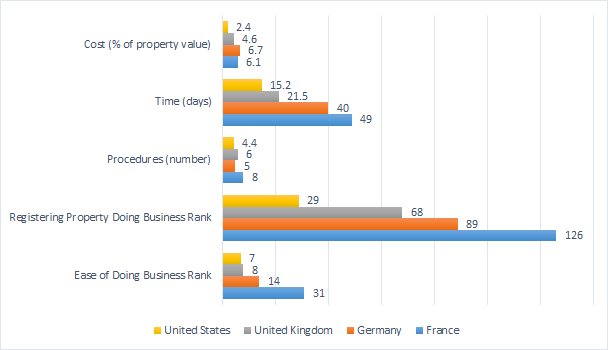
Source: Doing Business – Measuring Business Regulations – World Bank Group.
12 Jul 2015 Leave a comment
in discrimination, economics of love and marriage, gender, labour economics, labour supply, law and economics, occupational choice, politics - USA, poverty and inequality Tags: asymmetric marriage premium, British economy, Canada, gender wage gap, marriage and divorce, motherhood penalty
Figure 1: Female/male earnings ratio by partner status and motherhood, 2004 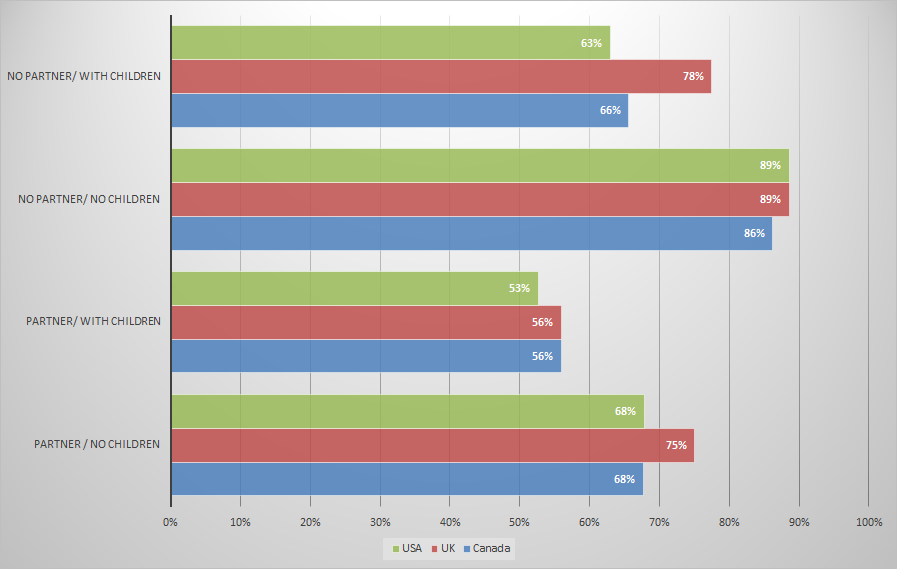 Source: LIS Cross-National Data Center in Luxembourg – Wave VI; individuals with positive earnings only. .
12 Jul 2015 Leave a comment
in human capital, labour economics, labour supply, occupational choice, politics - USA Tags: compensating differential, labour productivity, relative wages, superstar wages, superstars
Which industries have the highest hourly earnings h/t @WSJecon blogs.wsj.com/economics/2015… | http://t.co/xaYaRgOrku—
Charts and Maps (@ChartsandMaps) April 06, 2015
11 Jul 2015 Leave a comment
in applied price theory, applied welfare economics, Federalism, income redistribution, labour economics, labour supply, minimum wage, politics - USA, Public Choice, rentseeking Tags: federalism, living wage, Puerto Rico, sovereign default
Puerto Rico's economy can't handle the federal minimum wage. bit.ly/1IEJIEi http://t.co/D3mzOmlnJa—
Manhattan Institute (@ManhattanInst) July 07, 2015
11 Jul 2015 Leave a comment
in constitutional political economy, economic history, politics - USA, Public Choice Tags: 2016 presidential election, voter demographics
Right now, only one poll number says anything meaningful about 2016. My @monkeycageblog post: washingtonpost.com/blogs/monkey-c… http://t.co/BJ7ixc5m0W—
Patrick J. Egan (@Patrick_J_Egan) July 10, 2015
11 Jul 2015 Leave a comment
in constitutional political economy, international economics, law and economics, politics - New Zealand, property rights, Public Choice, rentseeking Tags: antiforeign bias, antimarket bias, left-wing populists, New Zealand First, New Zealand Labour Party, political opportunism, racism, rational ignorance, rational irrationality, right-wing populists, traditional labour voter, working class Tory
Figure 1: who won the electorate vote of New Zealand First party voters, 2014 New Zealand election
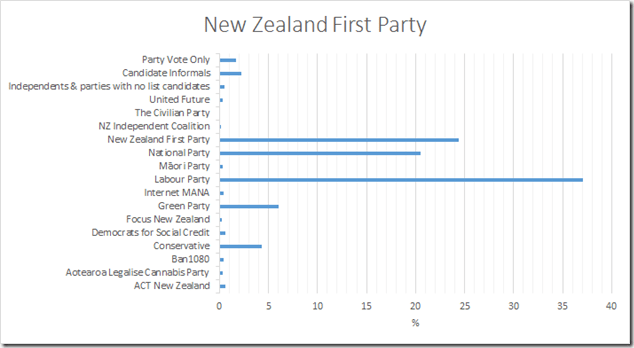
Source: Electoral Commission.
New Zealand First vote splitting data in Figure 1 suggests many more Labour voters vote New Zealand First than for the National Party with their electorate votes.
1/3rd of voters who gave their party vote to New Zealand First voted Labour with their electorate vote. This compares to one in five New Zealand First voters who gave their electorate vote to the National Party.
The Labour Party can win back some traditional Labour voters by borrowing populist policies from New Zealand First and its ageing leader such as prohibiting foreigners from buying New Zealand land.
Who mentioned Shane Jones?
In politics we don't pull our punches, unless you've got one of the world's best in town! http://t.co/Xiz2l36btg—
Winston Peters (@winstonpeters) August 08, 2013
11 Jul 2015 Leave a comment
in applied price theory, applied welfare economics, comparative institutional analysis, economics of regulation, industrial organisation, law and economics, politics - USA, property rights Tags: British economy Doing Business, France, Germany, World Bank
Figure 1: Starting a business rankings, USA, UK, Germany and France – World Bank Doing Business rankings, 2014
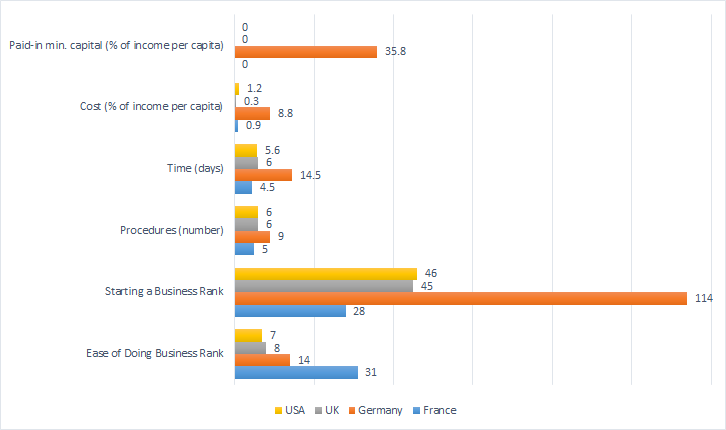
Source: Doing Business – Measuring Business Regulations – World Bank Group.
I have no idea why you have to pledge one third of German per capita income to start a business in Germany. It takes about a week and a half a dozen procedures to start a business in the other countries.
In New Zealand, you can start a business within the hour by registering for GST and registering your company online.
11 Jul 2015 Leave a comment
in environmental economics, environmentalism, global warming, politics - USA, Public Choice, technological progress Tags: air pollution, climate alarmism, conservation, voter demographics, water pollution
11 Jul 2015 Leave a comment
in economics of love and marriage, labour economics, labour supply, law and economics, politics - Australia, politics - USA, poverty and inequality, welfare reform Tags: Australia, British economy, Canada, child poverty, family poverty, marriage and divorce, single mothers, single parents
Figure 1: poverty rates by age of youngest child, 2004

11 Jul 2015 Leave a comment
Under the shy Labour voter theory, countries with low turnouts should have right-wing governments and countries with high turnouts should have left-wing governments. Do they?
Voter turnout among voting age people
Turkey 86%
Sweden 83
France 71
Mexico 65
UK 61
US 54pewresearch.org/fact-tank/2015… http://t.co/lmMcqqM4JD—
Conrad Hackett (@conradhackett) June 01, 2015
10 Jul 2015 Leave a comment
in applied price theory, applied welfare economics, econometerics, income redistribution, politics - Australia, politics - New Zealand, politics - USA, Public Choice, rentseeking Tags: activists, British economy, British politics, do gooders, expressive voting, living wage, rational ignorance, rational irrationality, The fatal conceit, The pretence to knowledge, unintended consequences
Do Living Wage advocates realise it helps richer households more than poorer ones? My take: telegraph.co.uk/finance/budget… … http://t.co/YPTB6v7tSB—
Fraser Nelson (@FraserNelson) July 10, 2015
Celebrating humanity's flourishing through the spread of capitalism and the rule of law
Celebrating humanity's flourishing through the spread of capitalism and the rule of law
Celebrating humanity's flourishing through the spread of capitalism and the rule of law
Celebrating humanity's flourishing through the spread of capitalism and the rule of law
Celebrating humanity's flourishing through the spread of capitalism and the rule of law
Celebrating humanity's flourishing through the spread of capitalism and the rule of law
A History of the Alt-Right
Econ Prof at George Mason University, Economic Historian, Québécois
Celebrating humanity's flourishing through the spread of capitalism and the rule of law
Scholarly commentary on law, economics, and more
Beatrice Cherrier's blog
Celebrating humanity's flourishing through the spread of capitalism and the rule of law
Celebrating humanity's flourishing through the spread of capitalism and the rule of law
Celebrating humanity's flourishing through the spread of capitalism and the rule of law
Why Evolution is True is a blog written by Jerry Coyne, centered on evolution and biology but also dealing with diverse topics like politics, culture, and cats.
Celebrating humanity's flourishing through the spread of capitalism and the rule of law
A rural perspective with a blue tint by Ele Ludemann
DPF's Kiwiblog - Fomenting Happy Mischief since 2003
Celebrating humanity's flourishing through the spread of capitalism and the rule of law
The world's most viewed site on global warming and climate change
Tim Harding's writings on rationality, informal logic and skepticism
A window into Doc Freiberger's library
Let's examine hard decisions!
Commentary on monetary policy in the spirit of R. G. Hawtrey
Thoughts on public policy and the media
Celebrating humanity's flourishing through the spread of capitalism and the rule of law
Politics and the economy
A blog (primarily) on Canadian and Commonwealth political history and institutions
Reading between the lines, and underneath the hype.
Economics, and such stuff as dreams are made on
"The British constitution has always been puzzling, and always will be." --Queen Elizabeth II
Celebrating humanity's flourishing through the spread of capitalism and the rule of law
Celebrating humanity's flourishing through the spread of capitalism and the rule of law
WORLD WAR II, MUSIC, HISTORY, HOLOCAUST
Undisciplined scholar, recovering academic
Celebrating humanity's flourishing through the spread of capitalism and the rule of law
Res ipsa loquitur - The thing itself speaks
In Hume’s spirit, I will attempt to serve as an ambassador from my world of economics, and help in “finding topics of conversation fit for the entertainment of rational creatures.”
Researching the House of Commons, 1832-1868
Articles and research from the History of Parliament Trust
Reflections on books and art
Posts on the History of Law, Crime, and Justice
Celebrating humanity's flourishing through the spread of capitalism and the rule of law
Exploring the Monarchs of Europe
Cutting edge science you can dice with
Small Steps Toward A Much Better World


Recent Comments