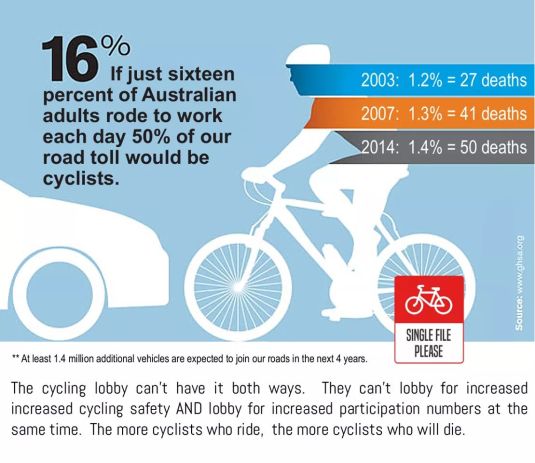
Good morning all & hopefully every Australian will vote soundly in the Conscription plebiscite pic.twitter.com/GRTYlCpjJY
— Gray Connolly (@GrayConnolly) December 1, 2017
Celebrating humanity's flourishing through the spread of capitalism and the rule of law
02 Dec 2017 Leave a comment

26 Nov 2017 Leave a comment

from https://www.nzsuperfund.co.nz/performance-investment/monthly-returns
Little wonder that no hedge fund headhunts from the New Zealand superannuation fund. Their staff turnover ratios are below 10% and often 5% and the CEO is paid a pittance by hedge fund standards.
Page 32 of "An Illustrated Guide to Income" more economic #dataviz at: bit.ly/12SEI9p http://t.co/HYm0II2UNI—
Catherine Mulbrandon (@VisualEcon) May 08, 2013
Page 33 of "An Illustrated Guide to Income" more economic #dataviz at: bit.ly/10M7lqR http://t.co/FcmaqZWB32—
Catherine Mulbrandon (@VisualEcon) May 09, 2013
25 Nov 2017 Leave a comment
in Economics of international refugee law, politics - New Zealand

24 Nov 2017 Leave a comment
in applied price theory, labour economics, labour supply, politics - New Zealand
If immigration lowers wages in New Zealand, political parties should be cheering every New Zealander who leaves because their emigration will raise wages here!? But none of them do that. They welcome returning New Zealanders.

Source: Immigration Economics: A Review David Card and Giovanni Peri, April, 2016.

24 Nov 2017 Leave a comment

Source: Tol, Richard S J (2017) The structure of the climate debate. Energy Policy, 104. pp. 431-438.
23 Nov 2017 Leave a comment
in economics of bureaucracy, politics - New Zealand, Public Choice Tags: Yes Prime Minister
12 Nov 2017 Leave a comment
in applied price theory, economics of regulation, politics - New Zealand, politics - USA, urban economics Tags: land supply, zoning
11 Nov 2017 Leave a comment
in Economics of international refugee law, International law, politics - New Zealand
11 Nov 2017 Leave a comment

05 Nov 2017 Leave a comment
in discrimination, gender, labour economics, labour supply, occupational choice, politics - New Zealand, public economics
Please no excuses like the recruitment pool is made up of too much of one gender and not enough of the other. The occupational choices and labour supply decisions of workers is never accepted as an excuse at the other end of this chart as valid reasons for departmental gender pay gaps.

05 Nov 2017 Leave a comment
in discrimination, gender, labour economics, occupational choice, politics - New Zealand
30 Oct 2017 Leave a comment
in economics of regulation, politics - New Zealand, Public Choice, urban economics
30 Oct 2017 Leave a comment
in Economics of international refugee law, politics - Australia, politics - New Zealand
PS, the boat people that the left never mention
25 Oct 2017 Leave a comment
in politics - New Zealand, urban economics
In 1962, Anthony Downs put forward the fundamental law of peak hour congestion on urban commuter expressways: peak-hour traffic congestion rises to meet maximum capacity. Larger bus and train networks and more cycle-ways are never the solution. Just as more highways leads to more congestion because more people drive to work, with fewer people driving to work if they fit enough to ride on the new cycle-ways, other people will start driving to work, instead of taking public transport (Downs 2005).

Downs’ law of peak hour congestion or “triple convergence” means that road will be as congested as before after any new investment in capacity because fewer people are taking public transport or postponing their trips to outside the peak hour times. More commercial driving in peak hours by trucks and delivery vans is an obvious response to more road capacity (Downs 2004). Increases in road capacity do not reduce congestion because of a triple convergence of new users from buses, trains and off-peak.
If an expressway’s capacity were doubled overnight, the next day’s traffic would flow rapidly because the same number of drivers would have twice the road space. Word will soon spread that this highway is less congested. Drivers who used that road before and after the peak hour to avoid congestion will shift into the peak hours. Other drivers using alternative routes will shift to this more convenient expressway. Bus and train passengers will start driving on the upgraded road in the peak periods. In a short time, this triple convergence of bus, train and car users onto the improved or new road in the peak hours will make that road as congested as it was before its expansion. Duranton and Turner (2011) found that vehicle kilometers travelled increases proportionately to increase road space for interstate highways and slightly less rapidly for other roads. The increased vehicle miles travelled is a mix of more driving by current residents, more commercial traffic and some migration from other types of roads.
Increases in bus or train capacity had the same triple convergence effect at peak times as new roads. Duranton and Turner (2011) found that increased provision of public transport does not relieve road congestion. The road space freed up by the motorists who switched to the additional buses or trains is filled by other motorists and commercial transport who previously planned to travel outside of the peak hours. Downs considers that peak-hour congestion is inherent to how modern societies operate:
…congestion exists because societies organize economies so most people will work during the same hours each day. This makes interaction among firms and agencies possible, thereby increasing society’s productivity, and raising overall efficiency. But it also requires most workers and students to travel to and from their places of activity at the same times. This overloads ground transportation systems during the morning and evening peaks, and often longer.
No large metropolitan areas have enough infrastructure to transport everyone who wants to move during peak hours simultaneously; nor do they have enough resources to build it. Hence some travelers must wait until others have moved. That waiting constitutes traffic congestion. (Downs 2006).
Road capacity expansions and extensions to bus and train networks do not reduce congestion. The added space means the extra traffic can be handled with still tolerable congestion. Judiciously selected road investments are still value for money because the additional road space allows more commuters to travel by the fastest, most convenient, most flexible method of urban travel, which is in a car.
Celebrating humanity's flourishing through the spread of capitalism and the rule of law
Scholarly commentary on law, economics, and more
Beatrice Cherrier's blog
Celebrating humanity's flourishing through the spread of capitalism and the rule of law
Why Evolution is True is a blog written by Jerry Coyne, centered on evolution and biology but also dealing with diverse topics like politics, culture, and cats.
Celebrating humanity's flourishing through the spread of capitalism and the rule of law
A rural perspective with a blue tint by Ele Ludemann
DPF's Kiwiblog - Fomenting Happy Mischief since 2003
Celebrating humanity's flourishing through the spread of capitalism and the rule of law
The world's most viewed site on global warming and climate change
Tim Harding's writings on rationality, informal logic and skepticism
A window into Doc Freiberger's library
Let's examine hard decisions!
Commentary on monetary policy in the spirit of R. G. Hawtrey
Thoughts on public policy and the media
Celebrating humanity's flourishing through the spread of capitalism and the rule of law
Politics and the economy
A blog (primarily) on Canadian and Commonwealth political history and institutions
Reading between the lines, and underneath the hype.
Economics, and such stuff as dreams are made on
"The British constitution has always been puzzling, and always will be." --Queen Elizabeth II
Celebrating humanity's flourishing through the spread of capitalism and the rule of law
WORLD WAR II, MUSIC, HISTORY, HOLOCAUST
Undisciplined scholar, recovering academic
Celebrating humanity's flourishing through the spread of capitalism and the rule of law
Res ipsa loquitur - The thing itself speaks
In Hume’s spirit, I will attempt to serve as an ambassador from my world of economics, and help in “finding topics of conversation fit for the entertainment of rational creatures.”
Researching the House of Commons, 1832-1868
Articles and research from the History of Parliament Trust
Reflections on books and art
Posts on the History of Law, Crime, and Justice
Celebrating humanity's flourishing through the spread of capitalism and the rule of law
Exploring the Monarchs of Europe
Cutting edge science you can dice with
Small Steps Toward A Much Better World
“We do not believe any group of men adequate enough or wise enough to operate without scrutiny or without criticism. We know that the only way to avoid error is to detect it, that the only way to detect it is to be free to inquire. We know that in secrecy error undetected will flourish and subvert”. - J Robert Oppenheimer.
The truth about the great wind power fraud - we're not here to debate the wind industry, we're here to destroy it.
Celebrating humanity's flourishing through the spread of capitalism and the rule of law
Economics, public policy, monetary policy, financial regulation, with a New Zealand perspective
Celebrating humanity's flourishing through the spread of capitalism and the rule of law
Restraining Government in America and Around the World
Recent Comments