Rowan Atkinson on Free Speech vs. The New Intolerance
11 Aug 2018 1 Comment
in economics of crime, economics of education, economics of information, economics of media and culture, economics of religion, law and economics, politics - New Zealand, Public Choice Tags: free speech, political correctness, regressive left
.@JohnHCochrane says free trade agreements should be 2 lines @golrizghahraman
10 Aug 2018 Leave a comment
in applied price theory, comparative institutional analysis, international economics, politics - New Zealand, politics - USA Tags: preferential trading agreements

Kim Workman’s @ScoopNZ reply to my @DomPost op-ed: gangs are social clubs too! @sst_nz
09 Aug 2018 Leave a comment
in economics of crime, law and economics, politics - New Zealand
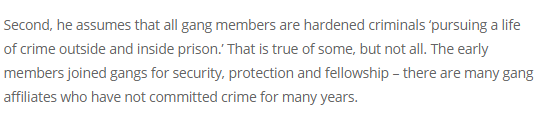
At http://www.scoop.co.nz/stories/HL1805/S00199/jim-rose-on-gangs-analysis-without-context.htm about https://www.stuff.co.nz/dominion-post/comment/104107156/extra-prisoners-are-nearly-all-gang-members–thats-hardly-a-crisis
My @ScoopNZ feature reply to @PeterGluckman @ChiefSciAdvisor report @sst_nz
08 Aug 2018 Leave a comment
in applied price theory, economics of crime, economics of information, labour economics, labour supply, law and economics, occupational choice, politics - New Zealand Tags: crime and punishment, criminal deterrence, law and order

Speaking of free speech, hate speech and reaching out to touch raw nerves
08 Aug 2018 Leave a comment
in liberalism, libertarianism, politics - New Zealand, politics - USA, Public Choice Tags: free speech, hate speech, political correctness, regressive left
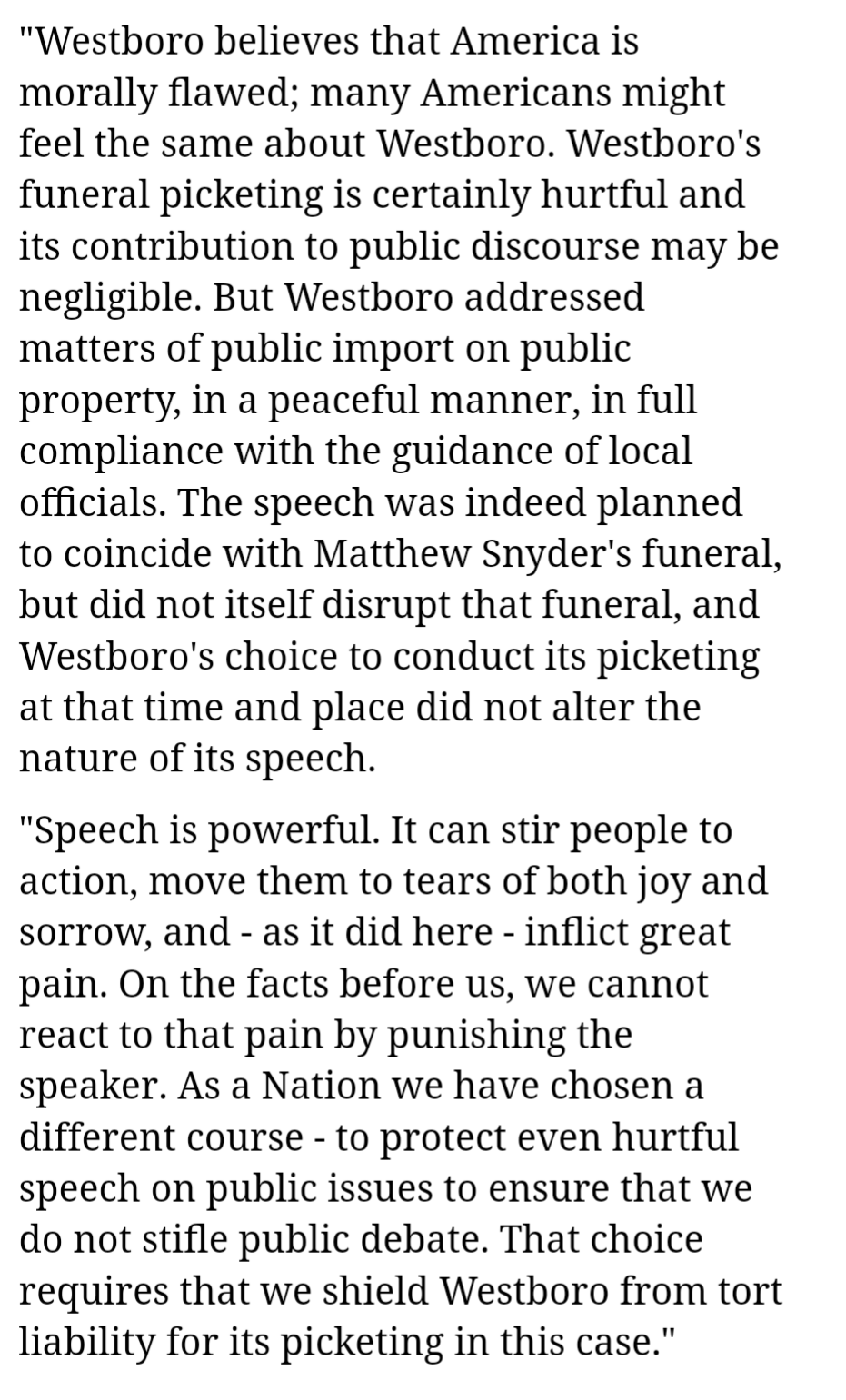
Will @MasseyUni @ProfJanTho ban 111 MPs who voted for this 2006 anti-Maori bill? @JordNZ @dpfdpf
08 Aug 2018 Leave a comment
in constitutional political economy, discrimination, law and economics, politics - New Zealand Tags: racial discrimination, racial equality
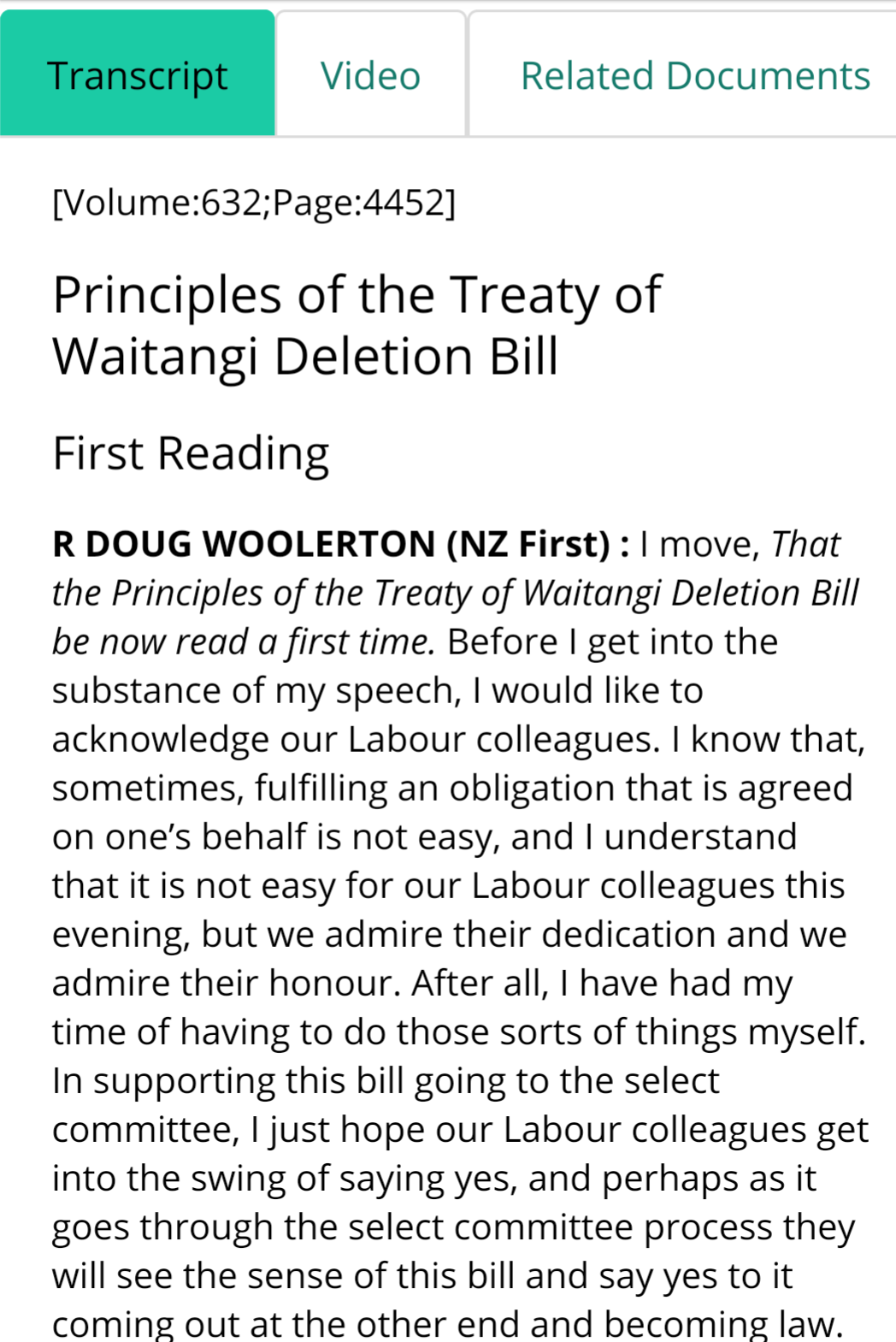
Bad day for the code of conduct of @MasseyUni @ProfJanThomas
07 Aug 2018 Leave a comment
in economics of education, politics - New Zealand

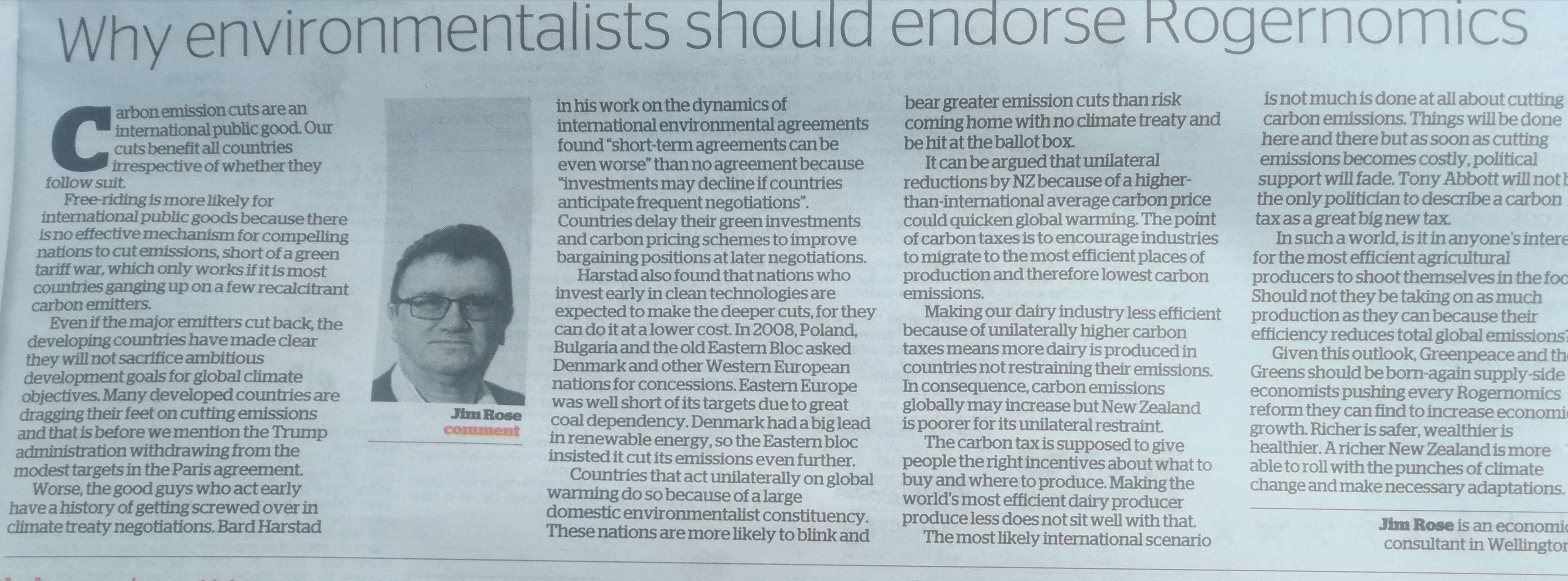
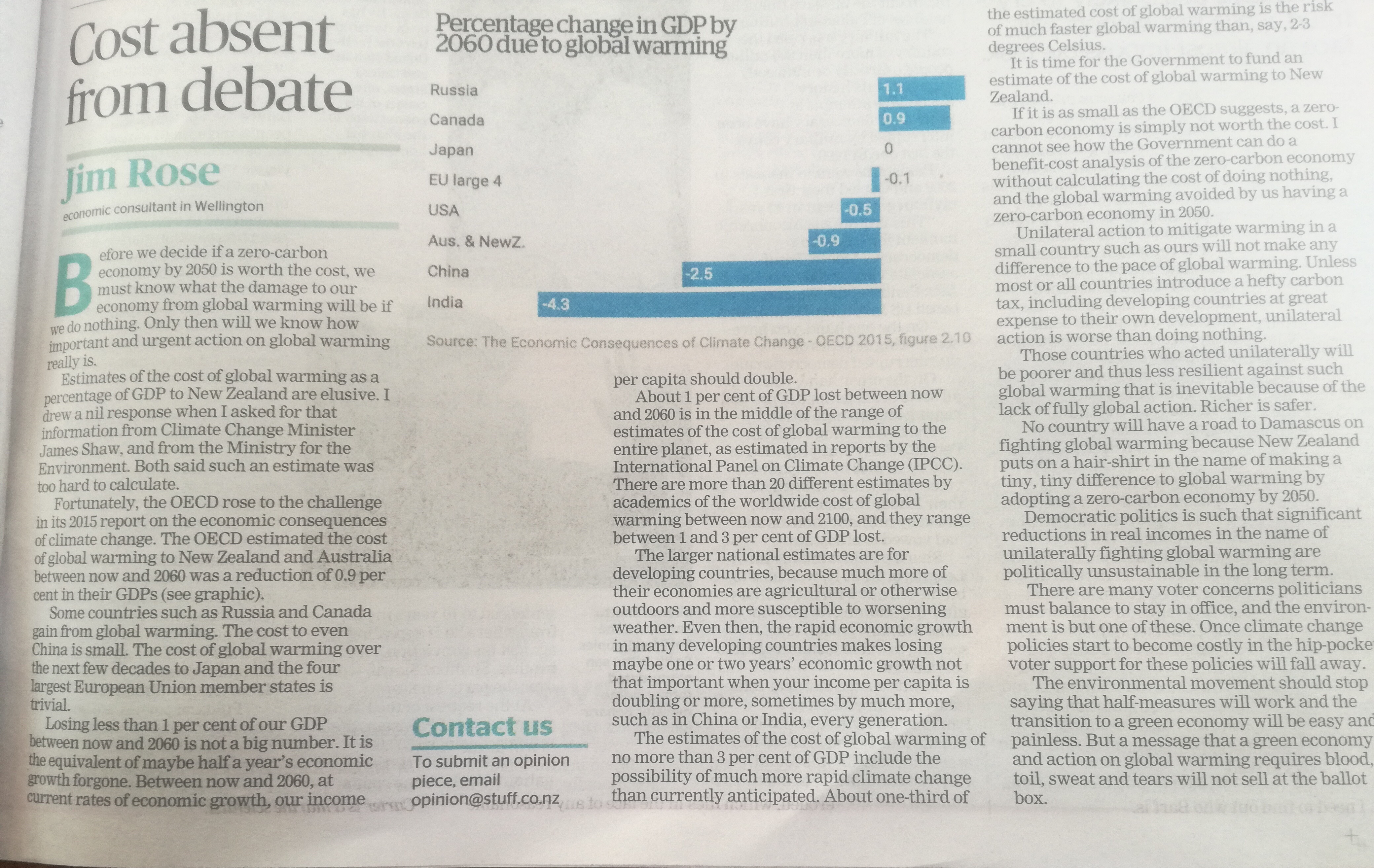
My @NZHerald op-ed: unilateral climate action isn’t the next best thing @jamespeshaw
06 Aug 2018 Leave a comment
in applied price theory, applied welfare economics, comparative institutional analysis, economics of bureaucracy, environmental economics, global warming, international economic law, International law, politics - New Zealand, Public Choice, rentseeking Tags: climate alarmism, game theory
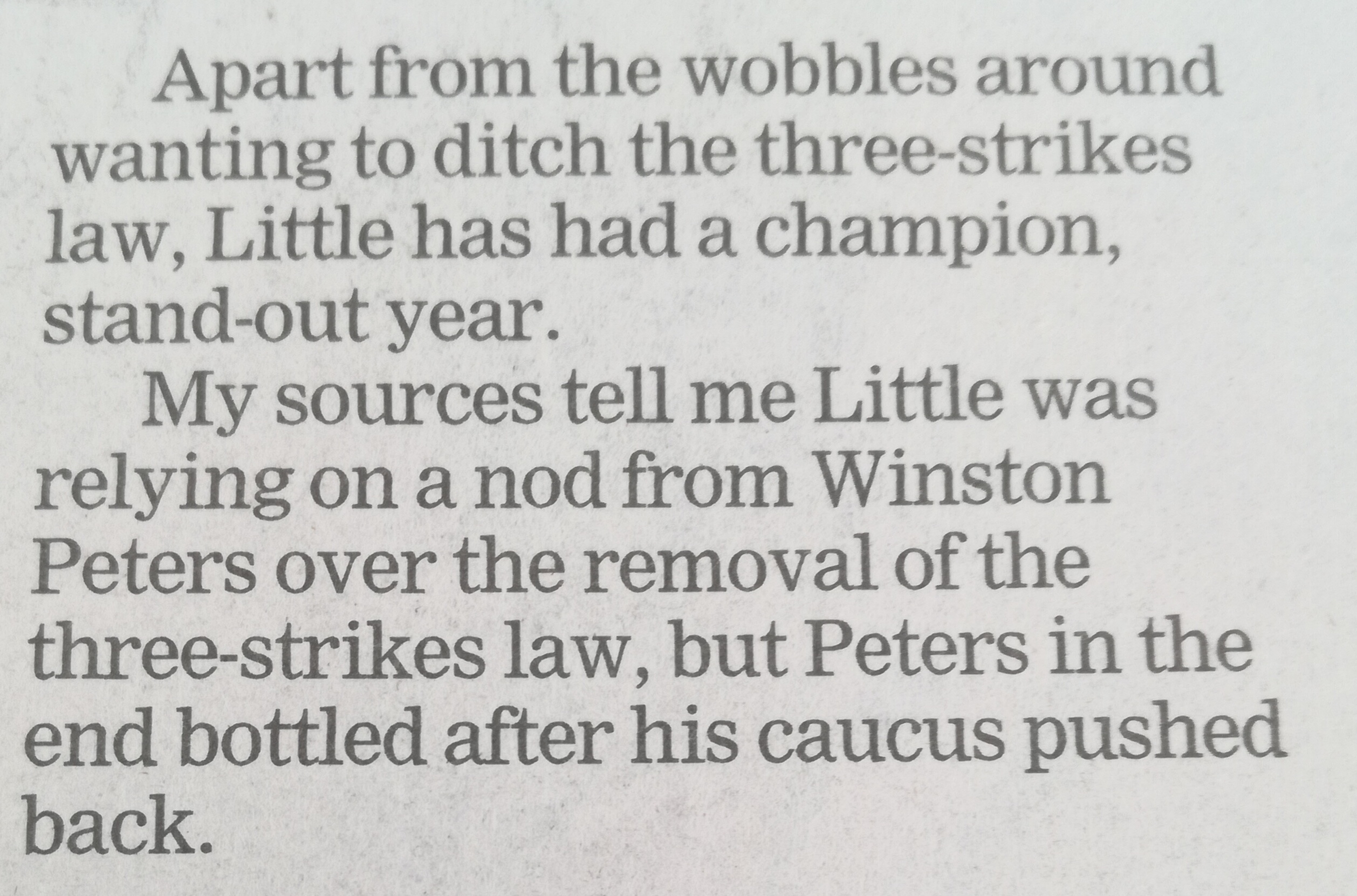
.@DuncanGarnerNZ shows @NZFirst caucus aren’t puppets @sst_nz
04 Aug 2018 Leave a comment
in economics of crime, law and economics, politics - New Zealand Tags: crime and punishment, law and order, three-strikes
Press Council complaint: The Side Eye: Inequality Tower 2018 @XTOTL @MaxRashbrooke @TheSpinoffTV
01 Aug 2018 1 Comment
in politics - New Zealand, public economics
Dear The Spinoff,
I wish to make a Press Council complaint about the Side Eye: Inequality Tower 2018 by Toby Morris and Max Rashbrooke published yesterday for breaches of standards regarding factual accuracy.
We have a capital gains tax
Let us start with what is plainly untrue for an opinion article, graphic and even a cartoon. Morris and Rashbrooke claim that
for those on the top, housing rises in value all the time, and when you sell it you do not even pay tax …
All residential property sellers, be they citizens, residents or non-residents, must complete a Residential land withholding tax declaration (IR1101). The bright line test for capital gains tax liability as explained by IRD on its website is
If you buy and sell a residential property within five years, you’ll pay tax on the income you earn from the sale, unless you’re selling your family (main) home or another exclusion applies. This is regardless of your intention at the time of the purchase. A withholding tax may also be deducted at the time of sale.
The bright-line test only applies to residential properties bought and sold on or after 1 October 2015.
Properties purchased on or after 1 October 2015 through to 28 March 2018 inclusive are subject to the bright-line test if sold within two years.
For other sellers, capital gains tax liability depends upon your intent when you purchased, your history of buying and selling, and whether you’re in or associated with the property industry. The previous government beefed up the resources at IRD to investigate capital gains tax avoidance.
If Morris and Rashbrooke had said “when you sell a house you might not even pay tax”, that would be a fair description of the current capital gains tax liability regime for residential property sellers. Stating that residential property sellers do not even pay tax is untrue. They might. More will in time.
We already have a capital gains tax
Later in the same Inequality Tower, Morris and Rashbrooke suggest that “we could try a capital gains tax…” which cannot be true as New Zealand already has a capital gains tax. If the authors proposed to reduce income and wealth inequality by trying to raise the top tax rate to 33%, readers would conclude the authors and their editors had lost touch with reality because the top tax rate is already 33%. Instead, they did something equally groundless in fact by suggesting that New Zealand try a tax we already have. They are suggesting an extension to the current capital gains tax regime. The authors are not suggesting trying a new tax, they are suggesting an extension to an old tax.
Meet the new capital gains tax, almost the same as the old capital gains tax
A true statement of the policy status quo for capital gains taxes would require the authors to say that “we could try extending the capital gains tax for a 3rd time in 3 years”. Their error is worrying because a factual reminder that the capital gains tax has been extended for property investment by the previous and current governments undermines their narrative in the Tower about the political powerlessness of those who are not rich. Two capital gains tax extensions in 2 years and a foreign buyer’s ban suggests considerable political responsiveness to concerns about housing affordability. It is hard to maintain a narrative of wealth inequality leading to political powerlessness by putting forward a proposal that meekly suggests extending the capital gains tax for the 3rd time in 3 years and for the 2nd time in the first year of the new government. Hardly a rousing call to the barricades.
Honest errors should be random
The errors when presented in a less than generous light to an uncharitable mind are all conveniently in the same direction of the central narrative of the tower that wealth inequality leads to political inequality. When there is a random error of fact, these random errors of fact sometimes overstate and sometimes understate the situation you are trying to describe and should cancel out in the long run. All the errors of fact I am complaining about are in the same direction of sexing up the numbers.
A capital gains tax is about housing affordability, not affordable rents
Another factual error in the suggestion that trying a capital gains tax will help make rents more affordable. A central narrative of the Tower is exorbitant rents paid by people already struggling.
The capital gains tax debate in New Zealand is about making housing more affordable for home buyers by reducing the incentive for investors to buy houses. By reducing the competition from investors, home buyers will pay less when they buy their first house. Rarely are the implications of a capital gains tax for rents discussed. The only technical discussion in the last 10 years is by Andrew Coleman at Motu who concluded that a capital gains tax would increase rents because of the reduced incentive to invest in rental properties; the supply of rental properties would fall.
Just listen to what the politicians say
No knowledge of technical economics is required to know that a capital gains tax will increase rents. Just listen to what the politicians promise from a capital gains tax and what they do not discuss.
The political purpose of a more extensive capital gains tax is to reduce investment in residential property by investors to make those properties more affordable for homebuyers. But if there is less investment in residential property by investors, there is less investment in rental properties because that is the type of property investors buy and sell. Fewer new residential rental properties will be built because profits from the sale of that investment might be liable to capital gains tax.
You do not increase the supply of rental properties and reduce rents by taxing residential property investment. What makes housing more affordable does not necessarily make rents more affordable
Latitude is granted to opinion articles provided they do not directly contradict themselves. A capital gains tax cannot make housing more affordable by reducing residential property investment but also make rents more affordable by reducing residential property investment. You can only have one.
Proposed correction
A correction should be made to admit that housing sales might be subject to capital gains tax, New Zealand already has a capital gains tax, and the Inequality Tower 2018 is calling for that capital gains tax to be extended for the 3rd time in 3 years.
Reply to @DomPost op-ed another reason for @jamespeshaw to come clean on cost of #globalwarming to NZ
31 Jul 2018 3 Comments
in applied price theory, applied welfare economics, environmental economics, global warming, politics - New Zealand Tags: climate alarmism
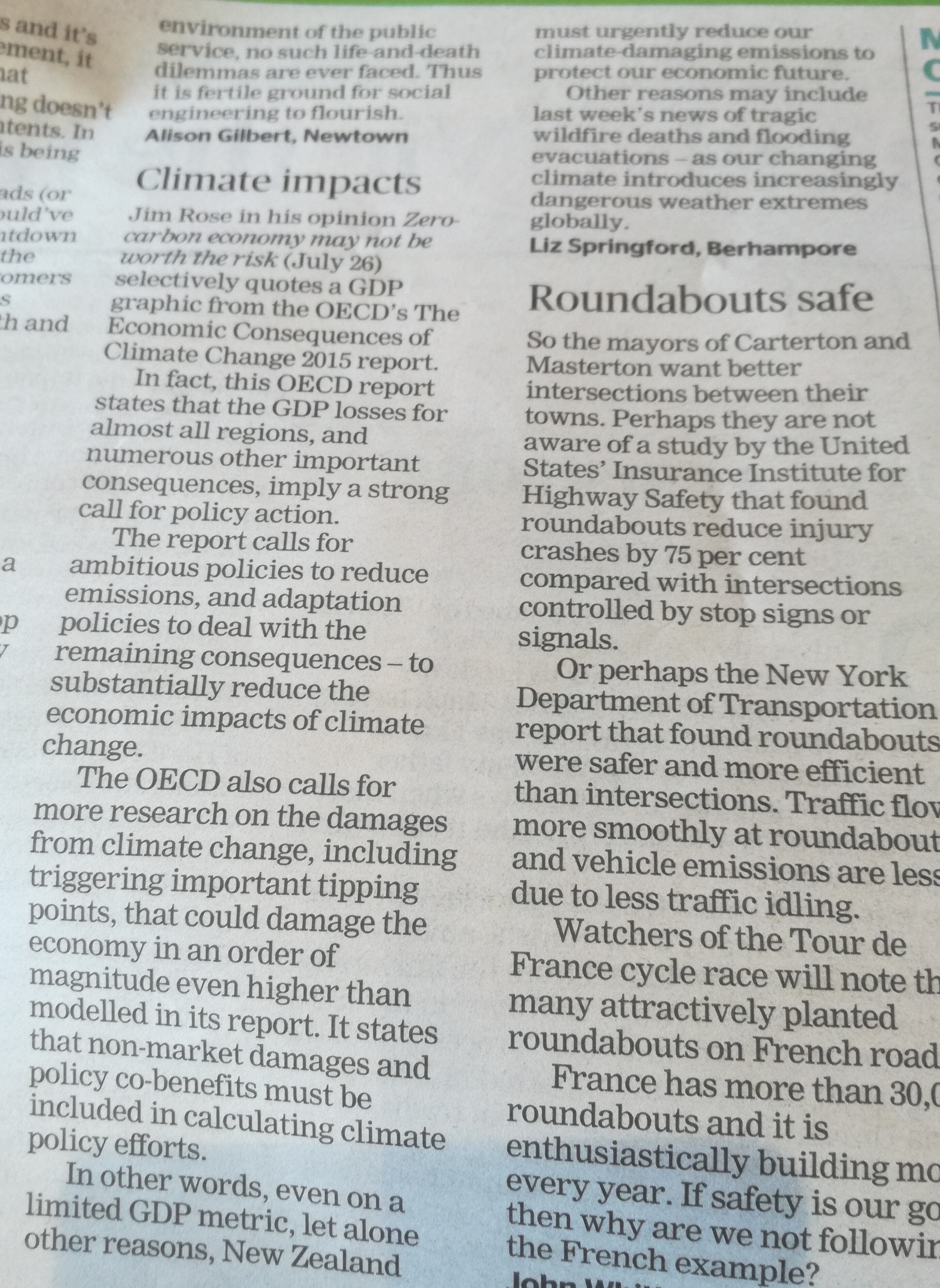
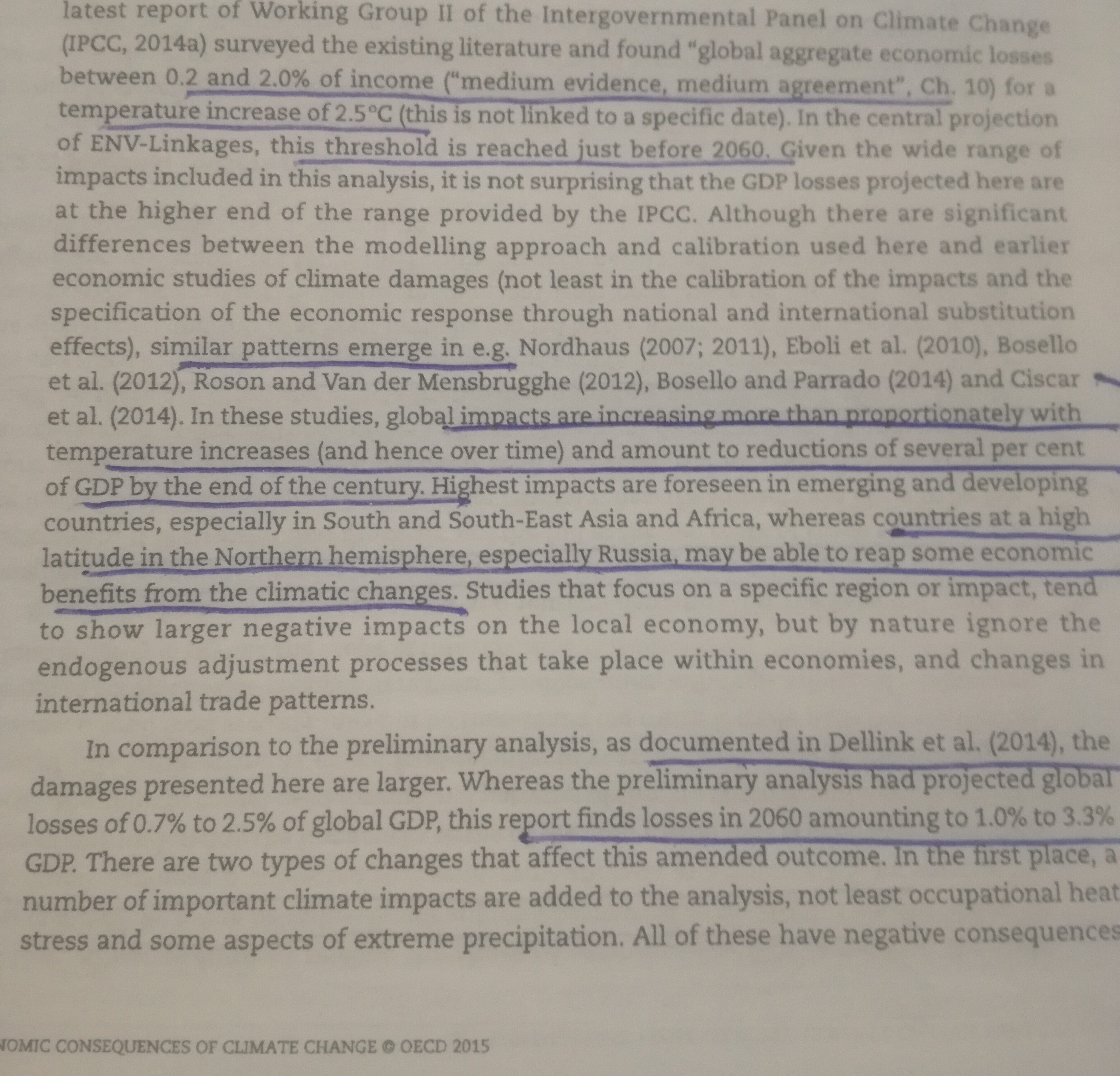
More reasons for @jamespeshaw to come clean on cost of #globalwarming to NZ GDP
28 Jul 2018 Leave a comment
in applied welfare economics, economics of bureaucracy, economics of natural disasters, energy economics, environmental economics, global warming, politics - New Zealand, Public Choice Tags: climate alarmism


Recent Comments