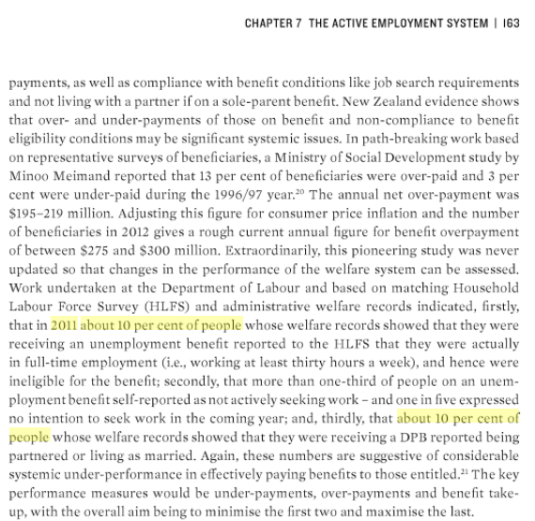
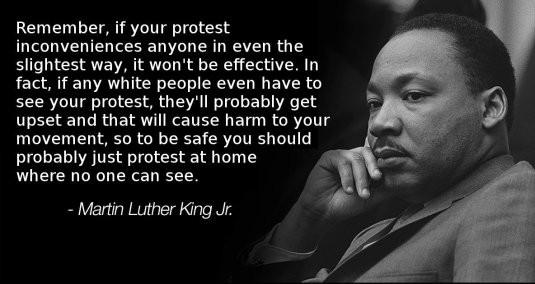
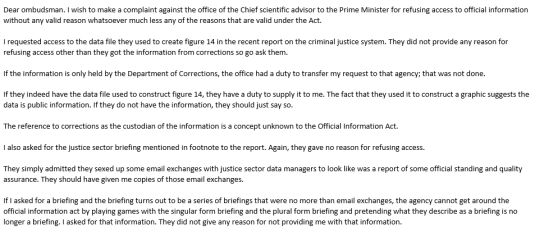
So @top_nz wants the European approach to crime and punishment! Fewer prisoners, more violent crime

Is ethical investing a dud? @NZSuperFund @JordNZ @EricCrampton @GreenpeaceNZ

Imagine how much more would be available for funding old age pensioners, schools, hospitals and kidney machines if you have a passively invested portfolio rather than an ethically invested portfolio. Virtue signalling is not free. Ethical investing significantly underperforms the market even if done by the best of the passive investing funds such as Vanguard.

The pay equity settlement is unfair to fair employers

My objection to the $2 billion pay equity settlement is an employer can live a morally upright life, hiring on merit, paying the most he can while still staying in business, and still be successfully sued. Their good names are blackened forever.

The court case and the pay equity bill before Parliament are not about anything the retirement home employers did wrong. They paid the going rate. The case was about what was paid in other industries based on the contentious concept of comparable worth.

The notion that the same job should not pay different rates because of sex is a question on which all agree. Comparing pay in a job to jobs in other industries because more men work in them requires many leaps in reasoning that is less to do with justice and is more about ideology and economics.

The most obvious of which is the extent to which you accept the market setting wages. That is a different dispute to someone being paid a different pay in the same job because of their sex.

Employers hiring on merit is a basic practice of any business who wants to survive in competition. Not hiring the best regardless of sex and race sacrifices profit for bigotry.

Anyone suggesting that the immorality of the market is open and shut was watching the other channel when the Berlin Wall fell and extreme poverty dropped by two thirds in China, India and elsewhere since 1990. The market has at least an arguable case as an acceptable way to set wages.

Many tweet their moral contempt for the market on a smart phone that would have cost many millions of dollars to make when the Berlin Wall fell, and they would not give up the Internet for life in return for $1 million. Are we all millionaires just because of the digital economy?

Adam Smith wrote that matters of distributive justice can only be resolved if people distance themselves from the grubby particulars of their own positions in particular disputes. This evolved into John Rawls arguing that the justice of social institutions should be tested from behind a veil of ignorance where people don’t know their particular place in society or their individual talents.

Rawls argued that a society is fair if you would not mind turning up anywhere in it at random. Inequality is OK if the poor are looked after better than in a more equal society. It is better to be poor in a rich society than poor in a poor society. Rich societies can afford generous welfare states.

Behind Rawls’s veil of ignorance, most would easily agree on equal liberty, equal opportunity and all jobs to be filled on merit. Would agreement on having a market economy be just as quick?

Strong competitive markets do not favour one individual over another. They harness self-interest to generate massive wealth, widely distributed. The income of the poorest, along with the whole of society, benefit from competition in a market economy. Behind the veil of ignorance, not knowing where we will turn up at random in a society, rational people would support competitive markets.

The market delivered the Industrial Revolution. Yesterday, today and every day, 200,000 plus people escape extreme poverty in developing countries because of the spread of capitalism. Yes, this involved inequality and markets determining wages but living standards increased 30-fold since the dawn of the Industrial Revolution; life expectancy doubled since 1900.

OK, you do not have the luxurious life of billionaires, seven of the top eight were self-made I might add. Oddly enough, you probably enjoy a better life than John D. Rockefeller did 100 years ago. Rockefeller lived in a big draughty house with lots of servants. Cars were primitive as was medicine. No refrigerators, washing machines or other domestic appliances we take for granted. Running water, much less safe tap water were brand new inventions at best.

The living wage in New Zealand is set high enough to afford mobile phones, the Internet, overseas holidays and Sky TV too. All beyond the reach of Rockefeller despite his billions.

Would you step into a time machine to go back to the good old days of the 1970s before Rogernomics? You must leave everything from your iPhone to cheap international travel at the door, knock a few years off your life expectancy, and watch two TV channels with no VCR. How many remember what a VCR is? I would pack a few recently invented medicines to ever contemplate stepping back in time to the good old days before neoliberalism no matter how much money was waiting for me at the other end.

Even the biggest critics of neoliberal New Zealand only go so far as to claim that the good old days of the 1970s was an egalitarian paradise except if you were female, Maori or gay. That is two-thirds of the population! The good old days were a very boy’s own good old days.

The road to a more just society is still full of trade-offs. We should have a hard head as well as a soft heart. The case for the pay equity settlement and against the market setting wages is not open and shut.

If I was to spend $2 billion more in the health sector, distributive justice would mind me to spend it on Pharmac and hospital waiting lists. Mental health workers want a flow on of the pay equity settlement. I would spend that money on hiring more mental health workers, not paying the existing ones more.

Who loses from Morgan’s #UBI of $11,000?

.@XTOTL claim that women & Maori being screwed by neoliberalism since 1984

Toby Morris claimed in an inequality graphic on thewireless.com in 2015 that subsequent to the 1980s economic reforms, the rich got the income of the rich double while the incomes of the majority of New Zealanders was largely static. He then claimed that

in short, regular Kiwis were screwed, especially women, Maori and Pacific Island communities

Figure 1 shows that real household incomes increased pretty much evenly across all 10 income deciles between 1994 and 2013, ranging between 40 to 50%.

Figure 1: Real household incomes (BHC), changes for top of income deciles, 1994 to 2013


Source: Bryan Perry, Household incomes in New Zealand: Trends in indicators of inequality and hardship 1982 to 2013. Ministry of Social Development (July 2014).

The figure below shows that since the end of the recession in the early 1990s, there has been rapid income growth including from Maori and Pacifika, at least 50%, if not 70%.


Source: Bryan Perry, Household incomes in New Zealand: Trends in indicators of inequality and hardship 1982 to 2016. Ministry of Social Development (2017).

The massive improvements in Māori incomes since 1992 were based on rising Māori employment rates, fewer Māori on benefits, more Māori moving into higher paying jobs, and greater Māori educational attainment. Māori unemployment reached a 20-year low of 8 per cent from 2005 to 2008.

New Zealand has the smallest gender wage gap of any country; 60% of university graduates are now women.


Greg Mankiw on comparable worth #payequity

Source: Greg Mankiw’s Blog: A Comeback for Comparable Worth.

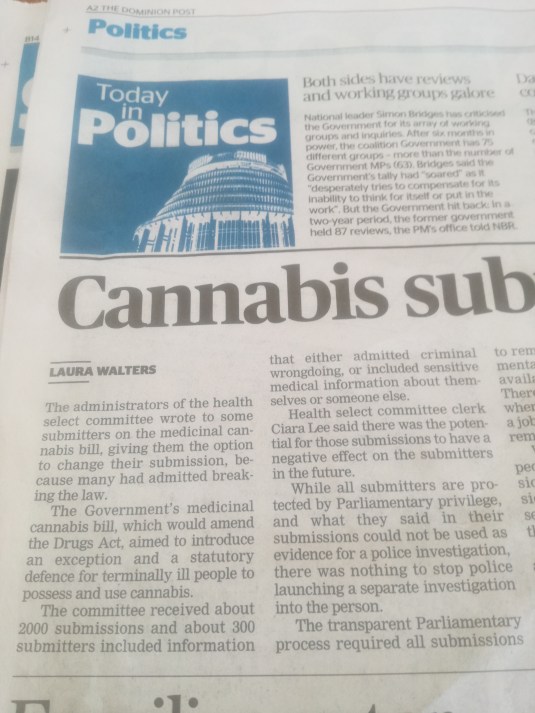
Hutt city infighting beats @nzgreens 4 @dompost front page

Chaos in @nzgreens p. 2 column in @dompost

Did @NZGreens polling get a bump this week off the back of social justice wedge politics?

Image

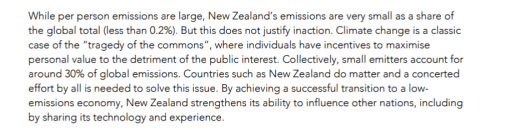
Unilateral carbon emissions as an international public good explained

Image

Are the @NZGreens @Metiria ok with mum of 10 not naming father?

dav

dav

NZ top 1% should be drummed out of the international ruling class? @EricCrampton

What a poor effort! The US top 1% is going from strength to strength by whatever explanation or conspiracy theory is your poison. The NZ top 1% is failing completely on its job as the ruling class extracting the labour surplus without mercy or pity to immiserise the proletariat just because it thinks that is a viable long-term strategy for its class.

Source: The material wellbeing of NZ households: Overview and Key Findings from the 2017 Household Incomes Report and the companion report using non-income measures (the 2017 NIMs Report) prepared by Bryan Perry, Ministry of Social Development, Wellington, July 2017.

The income share of the New Zealand top 1% has been falling and falling for a long time now. The class struggle has been cancelled in New Zealand. What is a point of the class war if the ruling class is losing and the proletariat winning. Marxists have nothing to whine about.

NZ more homeless than Mexico? @MaxRashbrooke @EricCrampton @tslumley

https://twitter.com/MPD_NZ/status/887960123259277312

Source: OECD Affordable Housing Database – http://oe.cd/ahd OECD – Social Policy Division – Directorate of Employment, Labour and Social Affairs Last updated on 21/02/2017 HC3.1 HOMELESS POPULATION via http://www.oecd.org/social/affordable-housing-database.htm

Debt repayment does not rule out tax cuts

The case for a tax cut is a distinct issue from repaying the recent large budget deficits and balancing the budget over the business cycle.

Ministers of Finance should pay more attention to the concept of tax smoothing. Unless something special is happening, income tax rates should be similar from one year to another. We should keep tax rates fairly smooth by borrowing during recessions and emergencies.

Instead, the Government not indexing the income tax thresholds for inflation collected $2.1 billion in extra revenue since 2008 according to Parliamentary Library calculations. Raising the income tax rate thresholds is becoming more pressing. Income growth is starting to push many ordinary taxpayers uncomfortably close to the next threshold and a much higher marginal tax rate. For example, 30% rather than the 17.5% income tax rate many taxpayers face.

New Zealand is already left behind on company tax rates; ours is currently 28%. The Australian company tax rate may drop to 25%; the British company tax rate is going down to 17% by 2020.

Large public deficits have their place

Prudent public debt management dictates that governments run temporary budget deficits in recessions and other emergencies such as the Canterbury earthquake and repay that debt as better times return. Recessions and natural disasters are infrequent so this extra debt should be paid down at a measured speed, not a frantic pace at the expense of other tax policy goals.

An increase in the budget deficit smooths over these bad times and avoids taxes going up and down like a Jack-in-the-Box over the business cycle. Who raises taxes in a recession?

Beware of foul-weather fiscal conservatives

After the start of the recession in 2009, foul weather fiscal conservatives wanted to do just that. The same usual suspects who always advocate bigger government argued for higher taxes rather than running a larger budget deficit, which New Zealand did. Imagine the massive income tax rises required every recession and in the last recession in particular if the large budget deficits were not run?

The large public debt from the temporary budget deficits that smoothed over the last recession is no special or additional reason to postpone income tax cuts. A sound long-term fiscal strategy has tax rates at levels that make up on the deficits in bad times with surpluses in the good times. Slowly repaying debts accumulated in a recession is a routine part of prudent public debt management.

There is room for tax cuts

Every budget allocates about $1.5 billion for new policy proposals that can be adopted without the Treasury thinking that they might harm long-term fiscal stability.

New Zealand budget allows for up to $1.5 billion on new policies every year. If this new spending was justified despite the large public debt from the recent recession, some tax cuts are too. They could start with raising the income tax rate thresholds to make up for past inflation.

Badge of honour: blocked by Morgan on Twitter and now Facebook @top_nz

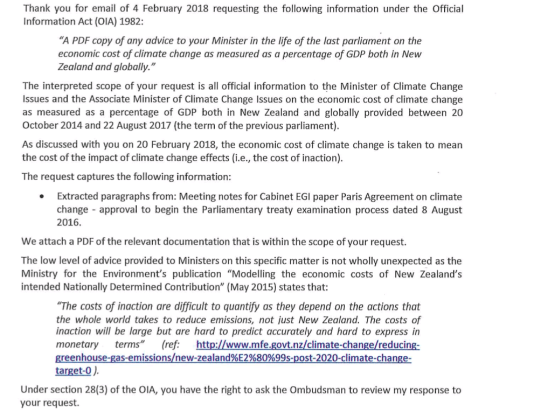
Cannot comment on Gareth Morgan’s Facebook page anymore. Can’t handle the truth. I wrote an extensive critique of his universal basic income but he does not want to discuss the evidence or the logical flaws of his policy proposal. The only people who lose out from his universal basic income are those for whom the modern welfare state was founded to protect.

What set Gareth Morgan off on his Facebook page was when I commented pointing out that the optimal rate of tax on income from capital to zero. All I said was “optimal tax theory including that pioneered by Stiglitz and Merrlees, economists of impeccable left-wing credentials, show that taxes on the income from capital should be low because the deadweight social costs of taxes on capital are very high”. His response was anti-intellectualism.

Previous Older Entries Next Newer Entries

Bassett, Brash & Hide

Celebrating humanity's flourishing through the spread of capitalism and the rule of law

Truth on the Market

Scholarly commentary on law, economics, and more

The Undercover Historian

Beatrice Cherrier's blog

Matua Kahurangi

Celebrating humanity's flourishing through the spread of capitalism and the rule of law

Temple of Sociology

Celebrating humanity's flourishing through the spread of capitalism and the rule of law

Velvet Glove, Iron Fist

Celebrating humanity's flourishing through the spread of capitalism and the rule of law

Why Evolution Is True

Why Evolution is True is a blog written by Jerry Coyne, centered on evolution and biology but also dealing with diverse topics like politics, culture, and cats.

Down to Earth Kiwi

Celebrating humanity's flourishing through the spread of capitalism and the rule of law

NoTricksZone

Celebrating humanity's flourishing through the spread of capitalism and the rule of law

Homepaddock

A rural perspective with a blue tint by Ele Ludemann

Kiwiblog

DPF's Kiwiblog - Fomenting Happy Mischief since 2003

The Dangerous Economist

Celebrating humanity's flourishing through the spread of capitalism and the rule of law

Watts Up With That?

The world's most viewed site on global warming and climate change

The Logical Place

Tim Harding's writings on rationality, informal logic and skepticism

Doc's Books

A window into Doc Freiberger's library

The Risk-Monger

Let's examine hard decisions!

Uneasy Money

Commentary on monetary policy in the spirit of R. G. Hawtrey

Barrie Saunders

Thoughts on public policy and the media

Liberty Scott

Celebrating humanity's flourishing through the spread of capitalism and the rule of law

Point of Order

Politics and the economy

James Bowden's Blog

A blog (primarily) on Canadian and Commonwealth political history and institutions

Science Matters

Reading between the lines, and underneath the hype.

Peter Winsley

Economics, and such stuff as dreams are made on

A Venerable Puzzle

"The British constitution has always been puzzling, and always will be." --Queen Elizabeth II

The Antiplanner

Celebrating humanity's flourishing through the spread of capitalism and the rule of law

Bet On It

Celebrating humanity's flourishing through the spread of capitalism and the rule of law

History of Sorts

WORLD WAR II, MUSIC, HISTORY, HOLOCAUST

Roger Pielke Jr.

Undisciplined scholar, recovering academic

Offsetting Behaviour

Celebrating humanity's flourishing through the spread of capitalism and the rule of law

JONATHAN TURLEY

Res ipsa loquitur - The thing itself speaks

Conversable Economist

In Hume’s spirit, I will attempt to serve as an ambassador from my world of economics, and help in “finding topics of conversation fit for the entertainment of rational creatures.”

The Victorian Commons

Researching the House of Commons, 1832-1868

The History of Parliament

Articles and research from the History of Parliament Trust

Books & Boots

Reflections on books and art

Legal History Miscellany

Posts on the History of Law, Crime, and Justice

Sex, Drugs and Economics

Celebrating humanity's flourishing through the spread of capitalism and the rule of law

European Royal History

Exploring the Monarchs of Europe

Tallbloke's Talkshop

Cutting edge science you can dice with

Marginal REVOLUTION

Small Steps Toward A Much Better World

NOT A LOT OF PEOPLE KNOW THAT

“We do not believe any group of men adequate enough or wise enough to operate without scrutiny or without criticism. We know that the only way to avoid error is to detect it, that the only way to detect it is to be free to inquire. We know that in secrecy error undetected will flourish and subvert”. - J Robert Oppenheimer.

STOP THESE THINGS

The truth about the great wind power fraud - we're not here to debate the wind industry, we're here to destroy it.

Lindsay Mitchell

Celebrating humanity's flourishing through the spread of capitalism and the rule of law

Alt-M

Celebrating humanity's flourishing through the spread of capitalism and the rule of law

croaking cassandra

Economics, public policy, monetary policy, financial regulation, with a New Zealand perspective

The Grumpy Economist

Celebrating humanity's flourishing through the spread of capitalism and the rule of law

International Liberty

Restraining Government in America and Around the World