Compulsory Te Reo Māori betrays those @nzlabour represents @jacindaardern @AndrewLittleMP

This policy of Labour of making Te Reo Māori compulsory in primary school and perhaps high school is reckless and betrays those for whom Labour claims to speak.

I must first declare a bias. I struggled to pass high school English. I never scored a single mark in a phonetics test – zero every time. I was hopeless at learning Japanese. I was wise enough to resist encouragement for my dear departed mother to enrol in French classes. I had no wish to be the class dunce in French.

The only reason I went to university was Mr. Carney in the first week of grade 7 noticed that I was in the level II classes for English and social science. As all my brothers and sisters topped the school or near enough, he assumed I was hiding my light under a bushel. He promoted me to the level III classes, which put me in the stream to matriculation colleges and therefore university.

Imagine how much I would have hated study if I was required to learn a language other than English when I was struggling terribly to learn English. I am still a bad speller. I leave it to the reader to judge my grammar. Who wants to be the class dunce in both English and French?

Requiring students of modest academic ability to acquire a 2nd language when they may not be doing well in mastering the basics is playing with their lives as though they were little toys.

Learning another language is not a priority for the Pākehā children nor Māori mokupuna when you consider the poor literacy rates among Māori, Pasifika and some Pākehā

image

Source: Literacy skills of young adult New Zealanders | Education Counts.

60%of Pākehā are above the minimum level of competence to meet the prose literacy requirements of a knowledge society. This contrasts with the majority of Māori and Pasifika who are below the minimum level of competence.

Requiring children who do not have an aptitude for language or school in general to learn a language will reinforce in those who are not doing well that they are not very smart. This will give them more reasons to hate school and leave as soon as possible and never go back.

image

Source: Literacy skills of young adult New Zealanders | Education Counts.

Taking student learning time away from basic literacy skills will do little for a Māori economic development. This is because this taking of student learning time away from literacy and basic education will slow the closing of income gaps between Māori and others.

The key to helping children who do not have an aptitude to succeed at school is to find subjects where they do do well so they can get a good start to life. If students are not good at academic subjects, requiring them to do more academic studies such as study a language is fool-hardy.

Learning Te Reo Māori will not help children in their other subjects. The psychology of the transfer of learning was founded 100 years ago to explore the hypothesis that learning Latin gave the student muscle to learn other subjects, both other languages and generally learn faster.

Educational psychologists found that Latin does not help much in studying other languages and other subjects. No significant differences were found in deductive and inductive reasoning or text comprehension among students with 4 years of Latin, 2 years of Latin or no Latin at all.

The economics of tobacco addiction and #livingwage compared

image

Image

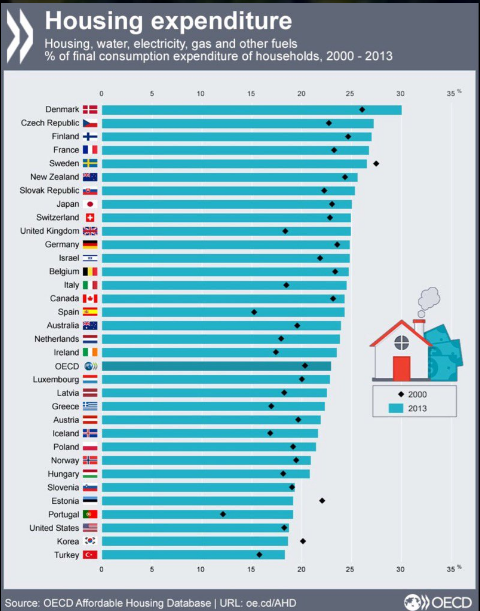
If it was 2007 again, what would @jamespeshaw @PhilTwyford do on housing affordability?

Source: Housing ‘challenge’ still not a ‘crisis’ | Radio New Zealand News.

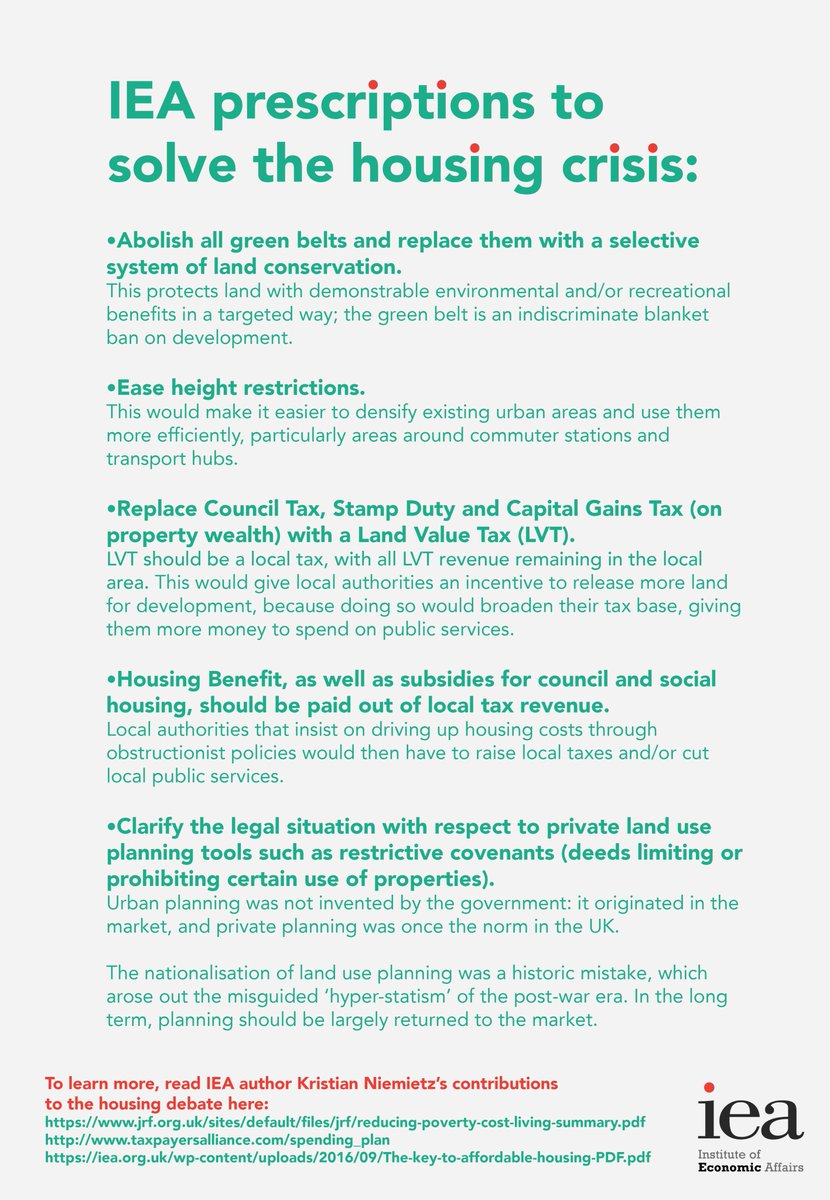
Neither Labour nor the Greens have explained where the new land will come from inside the Auckland Metropolitan Limit to build their 100,000 additional houses nor why their proposals will be granted resource consents under existing resource management legislation.

The National Party is unwilling to push shared with resource management law reform despite having 61 votes to do so because of fear of losing votes in the centre.

Why join @NZGreens rather than @nzlabour?

British political psychology data suggests systematically different personalities for the average green and average labour voter that may transfer to New Zealand. Greens are more than what Paul Keating described them: “a bunch of opportunists and Trots hiding behind a gumtree”.

Labour voters are more agreeable and emotionally stable but far less open to new experiences than the average green voter. Not surprisingly, within the green movement, they tend to prefer consensus in internal decision-making but are rather uncompromising and self-righteous in their policy demands. Labour parties in Australia prefer to avoid coalitions with the Greens now because of bad experiences with their uncompromising nature in previous alliances.

As greens are more likely to get upset and are far less conscientious than others on the political spectrum, maybe they are happy to be a political movement rather than a party of government?

To be a party of government requires compromise, a willingness to appeal to the average voter, and to adopt policies because they are wedge issues rather than because they are principled stands. The Labour Party wants to govern; Greens want to make a point.

Third term governments are an ugly sight because they are unlikely to be a re-elected. Labour governments in the throes of inevitable electoral defeat are very opportunistic about changing policies to have one last roll the dice to cling to office. This is something greens are much less likely to countenance. They prefer defeat over compromise.

Nitpicking @stevenljoyce reply 2 @TaxpayersUnion on corporate welfare @JordNZ

The best the Minister for Economic Development, Steven Joyce, could do in response to my recent report on corporate welfare was nit-picking. Joyce said my definition of corporate welfare was flawed and that spending on R&D will grow the economy. He said

“To brand things like tourism promotion and building cycle-ways as corporate welfare is, I think, creative but not accurate at all.”

Joyce also said my report was

just somebody picking out a whole bunch of government programmes that in many cases don’t involve payments to firms at all…

Those that do involve payments to firms are specifically designed to encourage the development for example of the business R&D industry. Politicians don’t choose them.

Payments in kind are business subsidies. R&D is so important to the economy that the last thing you want is its direction to be biased by funding from government. Bureaucrats have a conservative bias and do not fund oddballs and long shots. The oddballs and hippies in the picture below could only afford the photo because they won a radio competition in Arizona.

image

The R&D expenditure that was criticised in my report was commercialisation, not basic research, which was specifically praised. Which research to commercialise is for entrepreneurs.

image

There is no reason whatsoever to think bureaucrats administering R&D subsidy budgets set by politicians are any better than private entrepreneurs at picking the next big thing.

If bureaucrats were any good at picking winners, were any good at beating the market, they would go work for a hedge fund on an astronomically better salary package. The salary package of one top hedge fund manager exceeds the entire payroll budget of most New Zealand government departments including those administering R&D subsidies and other hand-outs.

image

Government expenditure in vital areas such as innovation should be justified on the basis of cost-benefit ratios and a rationale for why bureaucrats have superior access to information about the entrepreneurial prospects of unproven technologies and product prototypes. 

image

Subsidies should not be defended because of their popularity and sexiness as Mr Joyce did for the film industry, tourism promotion and ultra-fast broadband

If they told New Zealanders that in their view tourism promotion should be cancelled, the film industry should close down, that their shouldn’t be any ultra-fast broadband…I don’t think people would be that enamoured with it.

On irrigation funding, Mr. Joyce cited a report by NZIER that found irrigation contributes $2.2 billion to the economy. Irrigation is a private good which can funded by pricing it properly including the recovery of capital costs. There is no case for a subsidy.

image

Public goods have spillovers, private goods such as water and irrigation do not. Users can fund the irrigation themselves buying as little or as much water as they are willing to pay out for out their own pockets. The NZIER report noted that it was not about the case for public funding:

… we are not able to quantify the environmental or social impacts if irrigation had never occurred. We also do not attempt to investigate the relative merits of public versus private sector funding of the schemes.

image

.@MaxRashbrooke kills case for #UBI @GrantRobertson1 @JordNZ

Rashbrooke in the snap-shot quote describes the massive new taxes to fund a universal basic income as a policy shift for which middle New Zealand must be prepared properly over many years. But the purpose of these great big new taxes is to ensure that those with whom the modern welfare state was designed to protect our left no worse off, not better off, just as good as they were under the previous regime of social insurance. Why take that journey when you can target their poverty directly to the current welfare state?

Source: Is Labour really going to deliver a UBI? – Inequality: A New Zealand Conversation.

#Corporatewelfare since 2008 @JordNZ @MatthewHootonNZ @GrantRobertson1 @stevenljoyce

My latest corporate welfare report is out at the Taxpayers Union website. The company tax could be 6 percentage points lower but for this generosity of politicians picking winners.

image

Source: New Zealand Budget Papers, various years.

It is not as bad as you think under the last Labour  government budget. $700 million of  those hand-outs to business was seed capital for agricultural research institute. That institute to be run out of the investment income on that $700 million one-off injection which the incoming National Party-led government cancelled.

Another $675 million in that last Labour budget was to KiwiRail and OnTrack. Other than that, the Labour Party ran a pretty tight ship on business subsidies. There are no particular record of picking winners. Labour did buy a real loser in KiwiRail. You heard it here first.

.@GreenpeaceNZ picks & chooses its scientific consensus #GMOs #globalwarming

For a generation, a campaign by the green movement against the growing of genetically modified crops has held sway across Europe. These foodstuffs are a threat to health, the environment and the small independent farmer, NGOs have argued.

As result, virtually no GM crops have been grown on Europe’s farms for the past 25 years. Yet hard evidence to support what is, in all but name, a ban on these vilified forms of plant life is thin on the ground. In fact, most scientific reports have indicated that they are generally safe, both to humans and the environment.

This point was endorsed last week when a 20-strong committee of experts from the US National Academies of Science announced the results of its trawl of three decades of scientific studies for “persuasive evidence of adverse health effects directly attributable to consumption of foods derived from genetically engineered crops”. It found none.

Instead the group uncovered evidence that GM crops have the potential to bestow considerable health benefits. An example is provided by golden rice, a genetically modified rice that contains beta carotene, a source of vitamin A. Its use could save the lives of hundreds of thousands of children who suffer from vitamin A deficiency in the third world, say scientists.

Source: The Observer view on the GM crops debate | Opinion | The Guardian

Scientists and governments around the world overwhelmingly agree that climate change is real, is largely human-induced and needs urgent action to prevent.

There is, in fact, a broad and overwhelming scientific consensus that climate change is occurring, is caused in large part by human activities (such as burning fossil fuels), and if left un-checked will likely have disastrous consequences.

Furthermore, there is solid scientific evidence that we should act now on climate change – and this is reflected in the statements by these definitive scientific authorities.

Source: Scientific consensus | Greenpeace International.

Is @GreenpeaceNZ a pyramid scheme?

Greenpeace International spends 34% of all funds raised on fundraising; its local arm is not much better. Good to see that Greenpeace NZ pays their collectors a living wage, but not a cent more, to pester people on the street and cold-call them at home. Greenpeace has the effrontery to accuse others of being paid advocates.

Source: Greenpeace defends fundraising strategy | Stuff.co.nz

@younglabournz @YoungGreensNZ @nleemariu forgot family planning empowers women on @BackBenchesTV

Control over the number and spacing of women was central to women’s liberation. Young Labour and the Wild Greens forgot that last night on the BackbencherTV show. Neither could handle the notion that people should wait until they can afford to have children before having them. This is an old working class value with which the Young Labour panel member completely disagreed.

The number of children and the spacing between their births has been a major driver of the gender wage gap for decades. Central to greater female participation in the workforce and society outside the home is smaller families.

Many woman put-off having children to their late 20s and early 30s so they could first consolidate their education and career.

Bryan Caplan argues that there is an undeserving poor if they fail to follow the following reasonable steps to avoid poverty and hardship:

  1. Work full-time, even if the best job you can get isn’t fun.
  2. Spend your money on food and shelter before getting cigarettes and cable TV.
  3. Use contraception if you can’t afford a child

Raising a child takes a lot of effort and a lot of money.  One poor person rarely has enough resources to comfortably provide this combination of effort and money.

Young Labour in particular has forgotten the old working class value of being a responsible parent able to afford to raise your children and give them the best things in life.

Being a parent is hard work that requires a bit of discipline if child poverty is to be avoided through ill-considered choices and a lack of family planning.

Young Labour has forgotten the policy of the Labour Party on family planning

Labour believes that all individuals should have control over their own sexual and reproductive lives. An individual’s choice to determine the number and timing of one’s children cannot be compromised.

To ensure that all people can make free and informed choices about their future, Labour supports safe, affordable and universal access to contraception, sexual and reproductive services and information. Labour recognises all women have the right to make their own choices about their own bodies, and should have access to abortion services

New Zealand has a high rate of unplanned pregnancies, estimated at between 40% and 60% of all pregnancies. Labour’s health spokesperson, Annette King agrees that it is a problem and for too long people have avoided dealing with it.

@NZGreens @jamespeshaw forgot how much NZ’s deposit insurance recently cost taxpayers

The Greens co-leader James Shaw has today called for New Zealand to re-introduce deposit insurance saying that

“It would be a small levy placed on the banks, which would go into an insurance fund. It’s been operating successfully in many, many other countries.” But Mr Shaw said the Government and Reserve Bank keep putting off the change, saying customers can choose the bank they believe is most stable. “Consumers are not well educated about the stability of banks, so what that means is they tend to flow to the really big Australian-owned banks.”

Deposit insurance has a long history of promoting banking instability and irresponsible lending. It has not operated successfully in other countries nor in New Zealand. The Green Party announcement made no mention of New Zealand’s recent experience with deposit insurance

At the height of the global financial crisis and in the final days of the 2008 general election, New Zealand not only extended a deposit guarantee to its banks it also did so to finance companies. As the Auditor-General recorded in her recent report

On Sunday 12 October 2008, at the peak of the global financial crisis, the Government decided that it needed to implement a form of retail deposit guarantee scheme to avoid a flight of funds from New Zealand institutions to those in Australia. It needed to do this urgently: The Crown Retail Deposit Guarantee Scheme (the Scheme) was designed and announced that same day.

The deposit guarantee was extended to finance companies. Money flooded into previously high risk investments as investors had nothing to lose and everything to gain from the higher returns.

As the Auditor-General noted in a 2015 recent report reviewing the scheme

From the outset, the advice from officials recognised that the decision to include finance companies in the Scheme carried significant risk. Once deposits with these companies were guaranteed, depositors could safely move investments to where they would get the highest return, irrespective of the risk of company failure.

The finance companies also had less reason to minimise risk in their investment activity. The Crown was carrying much of this risk. During 2009, the Treasury watched some of that behaviour eventuate. Deposits with finance companies under the Scheme grew, in some instances significantly. We saw one example where a finance company’s deposits grew from $800,000 to $8.3 million after its deposits were guaranteed. At South Canterbury Finance Limited, the deposits grew by 25% after the guarantee was put in place.

The flood of deposits into finance company after the deposit guarantee somewhat undermines the low opinion the Greens have of depositors as investors sensitive to risk

On blunting incentives, otherwise known as ‘moral hazard’, Bill English can’t seriously expect everyday savers to analyse the loan books of banks to assess their credit risk when they open their accounts, let alone do this on a six-monthly basis.

At its height, the bank and finance company guarantees totalled over $133 billion. Ninety-six institutions were covered by the scheme – 60 non-bank deposit takers, 12 banks and 24 collective investment schemes. All guarantees had ended by December 2011.

To put context on the risk that the taxpayer, this $133 billion underwritten by the taxpayer return for little or no insurance fee was nearly twice the amount the Government spends in a year, or about 2/3rd of GDP.

If a financial institution in the Scheme failed, taxpayers would repay all of the money that eligible people had deposited or invested, up to a cap of $1 million each.

Nine finance companies out of the 30 accepted into the scheme failed. This resulted in payments by the taxpayer to the investors of $2 billion. Expected recoveries are currently estimated at about $0.9 billion after the completion of the various receiverships of these institutions according to the recent report on the scheme by the Auditor-General.

The deposit guarantee was extended to the finance companies despite 28 such companies failing between 2006 and 2008. This included some larger finance companies such as Bridgecorp Finance (New Zealand) Limited, Provincial Finance Limited, and Hanover Finance Limited.

FDR was initially opposed to deposit insurance in the USA in 1933 because it would encourage greater risk taking by banks. Sam Peltzman in the mid-1960s found that U.S. banks in the 1930s halved their capital ratios after the introduction of federal deposit insurance.

If you want to make banks safer, increase their capital ratios and require them to have more subordinated debt in their capital requirements.

Any form of deposit insurance requires extensive regulation of insured bank portfolios to prevent excessive risk-taking. The Kareken and Wallace model of deposit insurance which is based on moral hazard, predicts that if a government sets up deposit insurance and doesn’t regulate bank portfolios to prevent them from taking too much risk, the government is setting the stage for a financial crisis. The Kareken-Wallace model makes you very cautious about lender-of-last-resort facilities and very sensitive to the risk-taking activities of banks.

Kareken and Wallace called for much higher capital reserves for banks and more regulation to avoid future crises. It is much easier to require banks to put up more capital than to not take risks with the monies invested in them by depositors.


#Morganfoundation’s same #UBI of $11,000 per adult is now triple pledged

Before my two comments disappeared from Gareth Morgan’s Facebook page, I pointed out that his universal basic income of $11,000 per adult is as of last night at least triple pledged.

According to Gareth Morgan’s latest remark in the screenshot, people can use their universal basic income of $11,000 to pay their comprehensive capital tax bill. This new tax is proposed to fill the at least $10 billion gap in the funding of his universal basic income.

This is not possible because his universal basic income is already pledged to at least two other purposes that may use up a good part of the universal basic income of $11,000 per adult that he is proposing.

The first of these pledges is a by-product of adults under the age of 50 not being grandfathered in to the current level of generosity of New Zealand Superannuation – New Zealand’s universal old age pension.

Adults under the age of 50 under the Morgan Foundation’s universal basic income are expected to save part of their universal basic income. This saving is to make up for the $50 per week cut in New Zealand Superannuation when it is replaced by a universal basic income of $11,000 per adult. Gareth Morgan explains

Only people who are today under the age of 50 could be expected to retire under the UBI policy, the policy would not apply to existing superannuitants.

The key question is whether someone aged, say 40 today, would be better or worse off in retirement under the policy. And the answer is if they earn the average wage now, have an average house, they will tend to be neither better nor worse off.

For the 25 years prior to retirement they will receive the UBI on top of their wages. If they save a good portion of it they will have nest egg at retirement which they can use in retirement to supplement the UBI (which is more modest than today’s NZ Super).

In addition to this, the universal basic income makes those on a single parents benefit $150 a week worse off on the basic benefit that is not including lost accommodation supplements and additional child payments. The Morgan Foundation solution is to take part of the universal basic income of the other parent and give it to their children. Gareth Morgan explains again

It is totally feasible that the UBI of both parents could be required to be directed to support the children in the event of separation.

So in addition to the poor and ordinary families saving their universal basic income for as little as 15 years to making up for the $50 per week cut in support for old age pensioners, and the $150 plus cut in income support to single parents on a welfare benefit, the universal basic income also will be used to pay the comprehensive capital tax on the family home.

Somewhere buried in the universal basic income is it is the idea that it replaces existing welfare benefits. However, as most of the universal basic income has been pledged to other purposes such as saving for retirement, supporting children and paying the great big new tax in the family home, it will be very unwise to actually become unemployed, get sick, become a single parent or being invalid on the already meagre universal basic income as Geoff Simmons explains

With an unconditional basic income, most beneficiaries would be no better off than they are now (in fact sole parents would almost certainly receive a lower benefit).

There is a high risk that nothing will be left over from the Morgan foundation’s universal basic income to help you out when you fall in bad times because that universal basic income is already spoken for by your children, your retirement, and a capital tax bill.

Helping people out in times of misfortunes is the purpose of social insurance. The Morgan Foundation’s universal basic income fails this basic test set by Gareth Morgan

…let’s agree on what is a minimum income every adult should have in order to live a dignified life and then see what flows from that. We begin by specifying the income level below which we are not prepared to see anyone having to live.

At very best, and only very best, the Morgan Foundation’s universal basic income leaves some of those for whom social insurance was designed perhaps no worse. There are plenty of commonplace scenarios where individuals and families down on their luck are made much worse by a universal basic income replacing existing welfare benefits and plunged far deeper in poverty and hardship.


Hone’s 2011 election result proved how tiny NZ far-left is @CitizenBomber @TheDailyBlogNZ

The dreams of electoral success live on in the New Zealand far-left despite the facts of the 2011 general election.

Hone Harawira is running again in the 2017 general election so the left is getting its hopes up despite his abysmal failure in the 2011 general election.

In the 2011 general election, Hone was assured of re-election therefore any party vote for him could bring in list MPs.

I was deeply surprised how badly Hone and his friends on the far left performed. His party, Mana Movement won 1.1% of the party vote. That was not enough to bring in another MP.

When the Manna Movement had millions of dollars to spend on campaigning it 1.2% of the party vote but on a lost his seat because of his association with a German billionaire facing extradition. This is why the 2011 New Zealand election is the proper test of the size of the far left vote in New Zealand.

When Hone and Mana had a clean run for parliament, the hard left in New Zealand made up of him, Annette Sykes, Sue Bradford and John Minto got hardly any more votes that the people they know directly on social media and protest rallies and an assured vote from their mums.

There simply is not a far left of any size in New Zealand. Hone proved it.

@ALeighMP, Lindsay Mitchell v. Susan St. John on family tax credit incidence

There is some feuding in the letters to editor page of the Sunday Star Times today between Lindsay Mitchell and Susan St John about whether employers pocket some of the Working for Families tax credit by reducing the wages they offer.

I have contracted-out my reply on the economic incidence of in-work tax credits to a former ANU economics professor who is now an Australian Labour Party federal MP.

Source: Who Benefits from the Earned Income Tax Credit? Incidence Among Recipients, Coworkers and Firms by Andrew Leigh :: SSRN.

There is general agreement such as summarised by the Economist that a significant part of family tax credits goes into the pockets of employers:

An analysis of the EITC published in 2010 by Andrew Leigh of the Australian National University found that most of the benefit of the credit went to workers. Not all of it did though: a 10% increase in the credit was associated with a 5% dip in wages of high-school dropouts. By the same token, a study conducted the following year by Mr Rothstein found that for each dollar spent on tax credits, existing workers’ income rose by $0.73 (although $0.09 of this was because they chose to work more). Employers gained $0.36, as they spent less on wages.

Economists at Britain’s National Institute of Economic and Social Research are conducting a similar study of the British system of tax credits. Childless workers become eligible for the credits at the age of 25. By comparing wages either side of this threshold, they have been able to estimate how much the credits are depressing wages. Their preliminary (and unpublished) results suggest that, of the 76p an hour the government forks out in tax credits for someone on the minimum wage, 72-79% goes to workers.

In work tax credits increases labour supply, which depresses wages except where wages are pressing up against a binding minimum wage. Steve Landsberg has pointed out a paradoxe of a binding minimum wage when there is an earned income tax credit:

If you increase the EITC in a market with an effective minimum wage, you’ll get a whole lot more workers competing for the same limited number of jobs, and this competition must continue until all of the benefits have either been dissipated or transferred to employers, who are now able to demand harder work and offer fewer perquisites.

@billmaher at his best on Social Justice Warriors In Defense of Recklessness ‪#‎PCPolice‬

Previous Older Entries Next Newer Entries

Bassett, Brash & Hide

Celebrating humanity's flourishing through the spread of capitalism and the rule of law

Truth on the Market

Scholarly commentary on law, economics, and more

The Undercover Historian

Beatrice Cherrier's blog

Matua Kahurangi

Celebrating humanity's flourishing through the spread of capitalism and the rule of law

Temple of Sociology

Celebrating humanity's flourishing through the spread of capitalism and the rule of law

Velvet Glove, Iron Fist

Celebrating humanity's flourishing through the spread of capitalism and the rule of law

Why Evolution Is True

Why Evolution is True is a blog written by Jerry Coyne, centered on evolution and biology but also dealing with diverse topics like politics, culture, and cats.

Down to Earth Kiwi

Celebrating humanity's flourishing through the spread of capitalism and the rule of law

NoTricksZone

Celebrating humanity's flourishing through the spread of capitalism and the rule of law

Homepaddock

A rural perspective with a blue tint by Ele Ludemann

Kiwiblog

DPF's Kiwiblog - Fomenting Happy Mischief since 2003

The Dangerous Economist

Celebrating humanity's flourishing through the spread of capitalism and the rule of law

Watts Up With That?

The world's most viewed site on global warming and climate change

The Logical Place

Tim Harding's writings on rationality, informal logic and skepticism

Doc's Books

A window into Doc Freiberger's library

The Risk-Monger

Let's examine hard decisions!

Uneasy Money

Commentary on monetary policy in the spirit of R. G. Hawtrey

Barrie Saunders

Thoughts on public policy and the media

Liberty Scott

Celebrating humanity's flourishing through the spread of capitalism and the rule of law

Point of Order

Politics and the economy

James Bowden's Blog

A blog (primarily) on Canadian and Commonwealth political history and institutions

Science Matters

Reading between the lines, and underneath the hype.

Peter Winsley

Economics, and such stuff as dreams are made on

A Venerable Puzzle

"The British constitution has always been puzzling, and always will be." --Queen Elizabeth II

The Antiplanner

Celebrating humanity's flourishing through the spread of capitalism and the rule of law

Bet On It

Celebrating humanity's flourishing through the spread of capitalism and the rule of law

History of Sorts

WORLD WAR II, MUSIC, HISTORY, HOLOCAUST

Roger Pielke Jr.

Undisciplined scholar, recovering academic

Offsetting Behaviour

Celebrating humanity's flourishing through the spread of capitalism and the rule of law

JONATHAN TURLEY

Res ipsa loquitur - The thing itself speaks

Conversable Economist

In Hume’s spirit, I will attempt to serve as an ambassador from my world of economics, and help in “finding topics of conversation fit for the entertainment of rational creatures.”

The Victorian Commons

Researching the House of Commons, 1832-1868

The History of Parliament

Articles and research from the History of Parliament Trust

Books & Boots

Reflections on books and art

Legal History Miscellany

Posts on the History of Law, Crime, and Justice

Sex, Drugs and Economics

Celebrating humanity's flourishing through the spread of capitalism and the rule of law

European Royal History

Exploring the Monarchs of Europe

Tallbloke's Talkshop

Cutting edge science you can dice with

Marginal REVOLUTION

Small Steps Toward A Much Better World

NOT A LOT OF PEOPLE KNOW THAT

“We do not believe any group of men adequate enough or wise enough to operate without scrutiny or without criticism. We know that the only way to avoid error is to detect it, that the only way to detect it is to be free to inquire. We know that in secrecy error undetected will flourish and subvert”. - J Robert Oppenheimer.

STOP THESE THINGS

The truth about the great wind power fraud - we're not here to debate the wind industry, we're here to destroy it.

Lindsay Mitchell

Celebrating humanity's flourishing through the spread of capitalism and the rule of law

Alt-M

Celebrating humanity's flourishing through the spread of capitalism and the rule of law

croaking cassandra

Economics, public policy, monetary policy, financial regulation, with a New Zealand perspective

The Grumpy Economist

Celebrating humanity's flourishing through the spread of capitalism and the rule of law

International Liberty

Restraining Government in America and Around the World