Some public goods can be not provided much at all if even a few do not contribute – free ride. These are called weakest shot public goods. The link in the chain is only as strong as the weakest link for some public goods. The fighting against communicable diseases is an example of that.
Similar examples would be the protection of a military front, taking a convoy across the ocean going at the speed of the slowest ship, or maintaining an attractive village/landscape (one eyesore spoils the view).
Many instances of teamwork involve weak-link elements, for example moving a pile of bricks by hand along a chain or providing a theatrical or orchestral performance (one bad individual effort spoils the whole effect.)
Another example of weakest shot public goods is community cooperation after disasters. The quality of the public good provided is equal to the contribution of the weakest person who may start a criminal rampage despite the good efforts of everyone else.
People tend to be more cooperative after natural disasters. They realise their contribution is more important than normal to the maintaining of the social fabric which is currently hanging by a thread.
Vaccinations are example of a weakest shot public good. The quality of herd immunity depends fundamentally on just about everybody contributing by getting vaccinated. Not all public goods depend on the some of those contributions made. In some cases just a few people choosing to free ride can greatly undermine the public interest.
The reverse of a weakest shot public good is best shot public goods. Example of this is the development of vaccines themselves. The public good is only as good as the best effort at developing the new vaccine with all the others efforts pointless because the best of the vaccines is chosen.
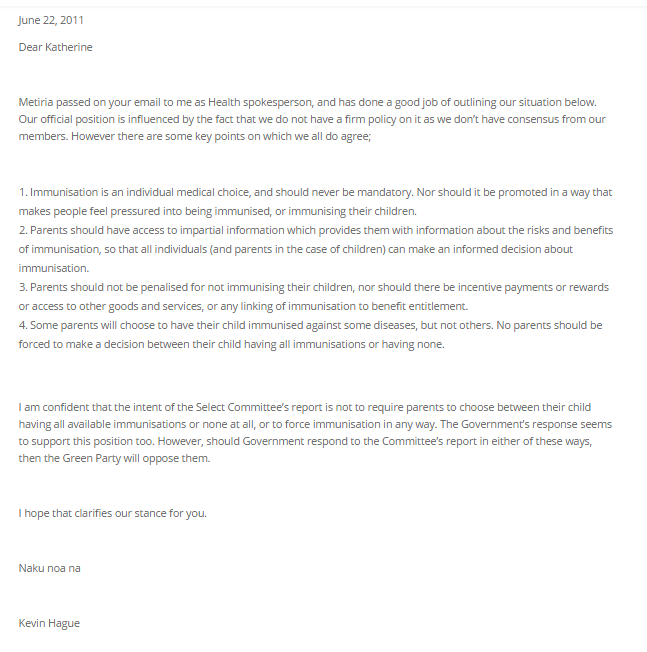
The most curious people in New Zealand to oppose measures to address the under provision of weakest shot public goods are the New Zealand Greens.
Herd immunity protects those who cannot be safely vaccinated including new babies, those for whom the vaccine fails, which occasionally happens, and those with compromised immunity such as adults receiving chemotherapy.
We are all in this together. It is time for the New Zealand Greens to stop pandering to those are only think of themselves and what a free ride on others including the very sick and new babies.
Herd immunity requires vaccination rates of about 94%. The near universal vaccination rates required for herd immunity are to smaller margin to pander to an awkward squad who do not want to vaccinate despite the harm they do to others.
Harm to others is grounds and has always been grounds for public policy and public health interventions. Instead, the Greens are anti-science, anti-public health.
Measles is the most contagious disease known to man. Seven children died in New Zealand in the last measles outbreak in 1991. The dead are already too many from the anti-vaccination quacks and cranks.
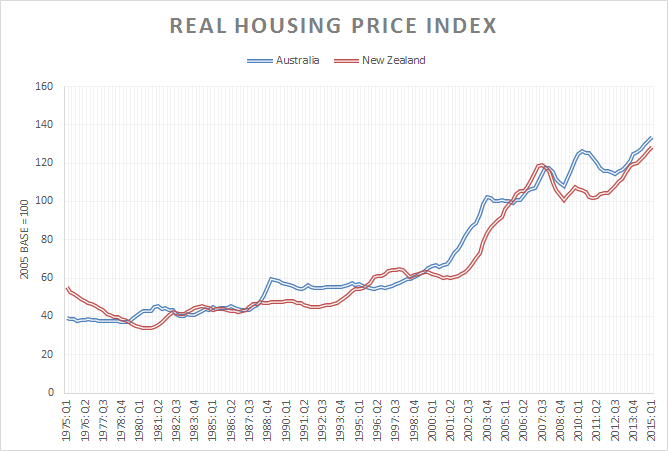
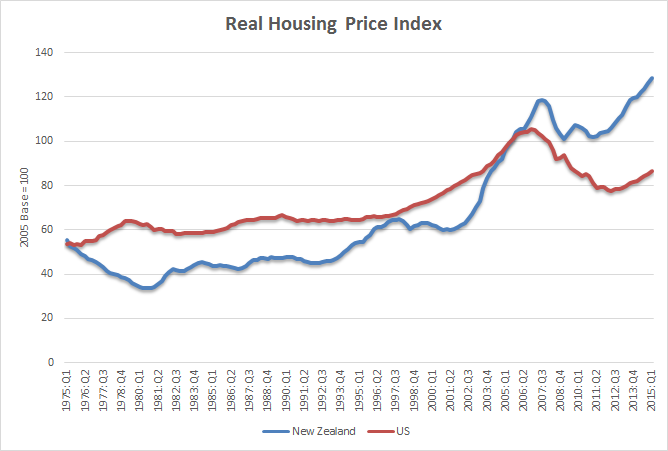
Note: The house price index series is an index constructed with nominal house price data. The real house price index is an index calculated by deflating the nominal house price series with a country’s personal consumption expenditure deflator
The large differences in personality types between Green voters and Labour voters is one of the first explanations I have seen as to why someone joins and votes for one over the other given both are left-wing parties with fewer and fewer differences in policy.
How much more will you earn by going to university? It depends hugely on which country you're from http://t.co/7RMnUTM8nj— paulkirby (@paul1kirby) September 11, 2015
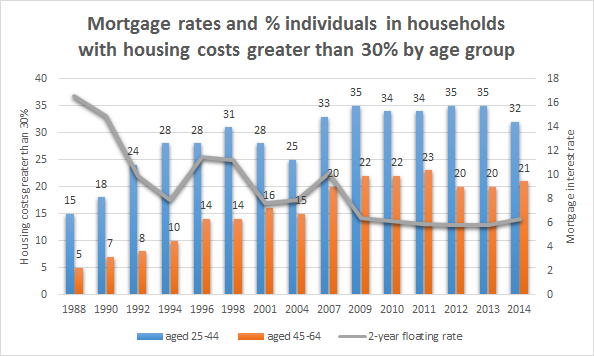
Mortgage interest rates were last in the double digits in the late 1980s and early 1990s. Since then, housing prices have exploded in New Zealand and barely paused for the recession in the wake of the Global Financial Crisis.
With house prices and mortgages several times what they used to be, the ability for any household income to absorb the sudden return of high mortgage interest rates because of a return of even moderate CPI inflation and double-digit mortgage rates is well-nigh impossible, politically.
The chart above shows that the number of 25 to 44-year-olds in New Zealand who have more than 30% of their income going to housing expenses has doubled since 1988 to nearly a third of all households. The number of 45 to 64-year-olds who pay more than 30% of their income in housing expenses has quadrupled to 20%. That is a lot of voters who would be offended by mismanagement of monetary policy.
None of these households would have much left over to absorb an increasing mortgage interest rates. That is very different political arithmetic too the last time both mortgage rates and CPI inflation were in double digits, which was more than 20 years ago. Not many New Zealanders under the age of 40 or 45 have an adult memory of high inflation and high mortgage rates.
Like McDonalds, Greenpeace globally is a brand. I read the papers every day in detail but are utterly clueless as to who its leaders are. That is a deliberate branding decision so people cannot conflate the inevitably dodgy and far left backgrounds of its leaders and activist support base with self appointed environmental do-gooders brand.
That is no longer so in New Zealand where a middle-age political junkie retiring as co-leader of the New Zealand Greens will now be their CEO in New Zealand.
What is worse is the carrying on by the Greens about the retirement of Russell Norman to lead the Greenpeace in New Zealand.
If they wanted to maintain the political effectiveness of Greenpeace, they should have made a short press release congratulating him on his retirement and wishing him well in his new job and saying little more. The Greens should stop carrying on as though you have taken over Greenpeace New Zealand.
I do not wish Greenpeace well with its anti-growth, anti-science, anti-human agenda, so I hope this was a mistake and I hope I am not interrupting them in making that mistake.
Why Evolution is True is a blog written by Jerry Coyne, centered on evolution and biology but also dealing with diverse topics like politics, culture, and cats.
In Hume’s spirit, I will attempt to serve as an ambassador from my world of economics, and help in “finding topics of conversation fit for the entertainment of rational creatures.”
“We do not believe any group of men adequate enough or wise enough to operate without scrutiny or without criticism. We know that the only way to avoid error is to detect it, that the only way to detect it is to be free to inquire. We know that in secrecy error undetected will flourish and subvert”. - J Robert Oppenheimer.


 People tend to be more cooperative after natural disasters. They realise their contribution is more important than normal to the maintaining of the social fabric which is currently hanging by a thread.






Recent Comments