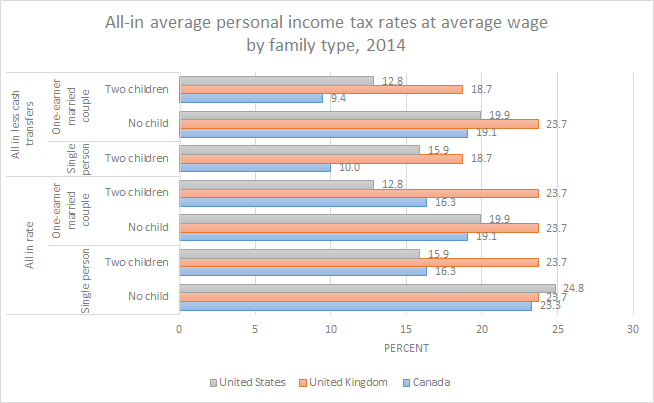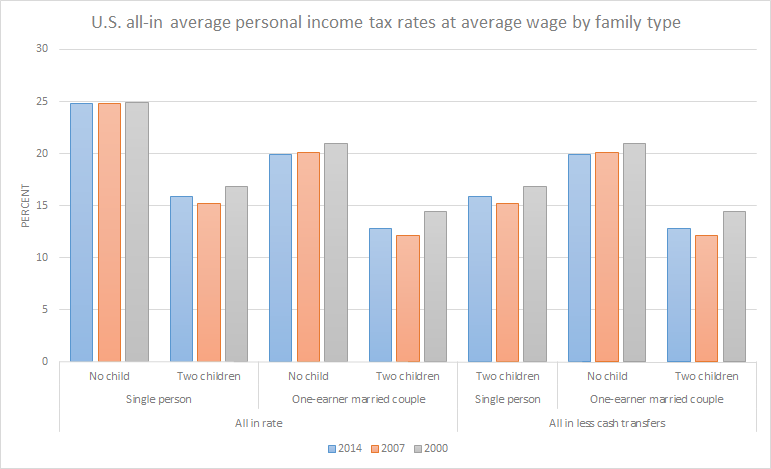
Dynamic scoring of the Republican tax plans
30 Oct 2015 Leave a comment
in applied price theory, politics - USA, public economics
Housing affordability in the USA in recent decades
30 Oct 2015 Leave a comment
in politics - USA, urban economics Tags: housing affordability, land prices, land supply, NIMBYs, zoning
Which U.S. cities are seeing rents eat more and more of your paycheck on.wsj.com/1VMhGft http://t.co/I5cwc7VmfZ—
Nick Timiraos (@NickTimiraos) July 29, 2015
New Zealand child poverty compared internationally
30 Oct 2015 Leave a comment
in labour economics, politics - Australia, politics - New Zealand, politics - USA, poverty and inequality Tags: child poverty
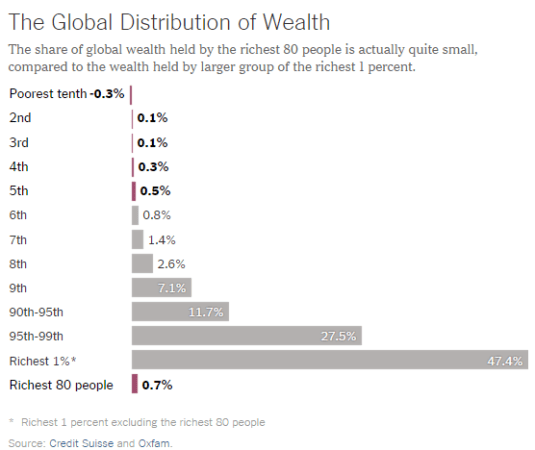
Every 3rd Child in the US lives in poverty.
(in #Norway & #Finland: https://t.co/K5Ub2QuPoE—
Max Roser (@MaxCRoser) October 21, 2015
Everything is on sale compared to 1979 @BernieSanders @jeremycorbyn
29 Oct 2015 Leave a comment
in applied welfare economics, economic history, politics - USA Tags: 2016 presidential election, good old days, Leftover Left, living standards, Twitter left
HT: Stephen Berry.
@Noahpinion wants to use teenagers for policy experiments @arindube
28 Oct 2015 1 Comment
in applied price theory, labour economics, minimum wage, politics - USA, public economics Tags: expressive voting, Leftover Left, rational ignorance, rational irrationality
Noah Smith is OK with local experiments with higher minimum wages such as a $15 minimum wage in San Francisco. At least half of these workers sold out for minimum wage policy experiments will be teenagers and young adults.

Source: Finally, an Answer to the Minimum Wage Question – Noah Smith.
My most grating experience in the public service was reversing the slope of the demand curve for labour and education and training to argue that a minimum wage would increase opportunities for the low paid.
I drafted a briefing to the minister pointing out that minimum wage increases make investments in training less attractive to lower skilled workers. This is because the minimum wage increase increases the opportunity cost of training and reduces the rewards in terms of the wage increase. The would be trainee must give up a higher minimum wage in return for a smaller wage increase because the minimum wage increase swallows part of the wage premium from the now an increasingly pointless investment in training. There is only a small literature on the impact of the minimum wage on investment in human capital.
My manager told me to argue that increases in the minimum wage will make low skilled workers more likely to seek training. That conclusion was based on a consultant’s machine-gun econometrics research showing that the confidence interval was plus or minus regarding the minimum wage and employment training. This study contradicted everything known about the minimum wage and the incentive to invest in human capital. You do not increase of demand for human capital by reducing the rewards for investments in human capital.
Does a higher minimum wage really reduce employment? econ.st/1gp4Jbs http://t.co/WGMZGLKHmI—
The Economist (@EconBizFin) July 30, 2015
Back to Noah Smith. He admits freely that increases in the minimum wage reduce employment. He tries to ride out on the conclusion that that increase in unemployment after a small minimum wage increase isn’t much.

Source: Finally, an Answer to the Minimum Wage Question – Noah Smith.
Obviously the teenagers and adults thrown onto the scrapheap of society by the increased minimum wage don’t count in the brutal utilitarian calculus Noah Smith employs.
It's pretty simple: Minimum Wage = Compulsory Unemployment http://t.co/6xiX6YCp9Z—
Mark J. Perry (@Mark_J_Perry) July 25, 2015
Fortunately, many economists prefer Pareto improvements. This is where after a policy change at least one person gains and no one loses or at least the winners compensates the losers for their losses. Not so bad and isn’t much as suggested by Noah Smith for the welfare consequences of a minimum wage increase on unemployment are not good enough from an applied welfare economics perspective.
Most of the Left over Left are of the same view about the priority of losers and the need to compensate them whenever those evil neoliberals want to deregulate or remove the tariff. The Left over Left are completely preoccupied the fate of the workers who have lost their privileges from regulation or tariff protection rather than the consumers who are now richer. Without missing a beat, the Left over Left changes sides and become brutal utilitarians when it comes to the minimum wage and unemployment and investment in human capital.
Minimum wage advocates fail to take seriously that low paid workers who lose their jobs because of minimum wage increases are real living people who suffer when their interests are traded off for the greater good of their fellow low paid workers, some of whom come from much wealthier households. As Rawls pointed out, a general problem that throws utilitarianism into question is some people’s interests, or even lives, can be sacrificed if doing so will maximize total satisfaction. As Rawls says:
[ utilitarianism] adopt[s] for society as a whole the principle of choice for one man… there is a sense in which classical utilitarianism fails to take seriously the distinction between persons.
What is underplayed in the minimum wage debate is Noah Smith, Arindrajit Dube and other scholars are careful in what they say but politicians and living wage lobbyists don’t listen to those careful qualifications.
The key qualification of these academics is there are policy trade-offs that cannot be avoided when the minimum wage is increased. Some jobs will be lost if the minimum wage increases. Some say this effect is small, others say this effect is large, hardly anyone says it’s zero.

The claims that the minimum wage can be lifted without hurting employment are a long bow from what Andrajit Dube said about small changes in the minimum wage having small adverse effects on unemployment. What Andrajit Dube said is not much different from everyone else on the minimum wage – Nuemark is an example:
a 10 per cent increase in the minimum wage could reduce young adult employment by up to 2 per cent
David Card was always very careful amount about how his pioneering research was about how small increases in the minimum wage not reducing employment in the presence of search and matching costs:
From the perspective of a search paradigm, these policies make sense, but they also mean that each employer has a tiny bit of monopoly power over his or her workforce. As a result, if you raise the minimum wage a little—not a huge amount, but a little—you won’t necessarily cause a big employment reduction. In some cases, you could get an employment increase.
Noah Smith is wrong. We do know what will happen if the minimum wage is raised $15 per hour. Some people will lose their jobs. More importantly, there is a reduced incentive for the low paid to invest in skills to improve their earning power because the minimum wage is already delivered that assuming they still have a job.
In 1965 an editor at Look asked an MIT economist why "liberal" economists hadn't signed an anti-minimum wage letter. http://t.co/ONuQKIWhG7—
Garett Jones (@GarettJones) December 02, 2014
How you handle these casualties of policy changes such as minimum wage increases is a central dilemma of applied welfare economics. This dilemma is usually solved by pointing out that it’s far less risky in terms of employment and welfare improvements and losses to increase the Earned Income Tax Credit (EITC) because that places no jobs at risk.
Now along comes Steve Landsburg to point out that the incidence of an Earned Income Tax Credit (EITC) changes when there is a minimum wage, when there is a price floor. Remember everyone agrees that when there is an earned income tax credit, some of the benefits go to the employer. When you raise the EITC, more people enter the labour market. This increase in the supply of labour drives wages down, which transfers some of the benefit of the tax credit from the workers you intended to help to the employers but not all of the benefits of the tax credit.
Steve Landsburg shows that in any labour market where the minimum wage is above the wage that would prevail but for the minimum wage law, the minimum wage cannot fall to cope with the increase in labour supply induced by the earned income tax credit. For that reason, all of the benefits of the earned income tax credit go to employers. Employers can hire more people without having to increase the wage they offer above the minimum wage. As long as the minimum wage is above the market clearing wage, more people get a job as a result of the tax credit, but no one takes home pay that is higher than the minimum wage.
One of the purposes of applied price theory, the study of economic history and even labour econometrics is to spare us policy experiments that we already know that they will not turn out well.
Real hourly minimum wage, PPP, USA, UK, Canada, New Zealand, Ireland, Germany, Australia and France before & after taxes, 2013
27 Oct 2015 Leave a comment
in labour economics, minimum wage, politics - Australia, politics - New Zealand, politics - USA

Source: OECD (2015), “Minimum wages after the crisis: Making them pay”.
@BernieSanders is dumbing down the Democratic Party
27 Oct 2015 Leave a comment
in applied price theory, politics - USA, Public Choice
There is a conceited rant by a former White House chief of staff in the Washington Post today about the dumbing down of the Republican Party.
This is at a time when a Democratic Socialist is winning considerable support in the Democratic Party presidential primaries despite his refusing all his life including to today to join the Democratic party.
Bernie Sanders is the best that the Democratic Party can do as the anyone but Hillary candidate. Sanders is not a member of the Democratic party. The notion that a democratic socialist could win the Democratic party nomination and win the presidency shows beyond doubt that you do not know anything about American politics.
Heard that conservatives are disappearing? Don't believe it: 53eig.ht/1Qp1Vej http://t.co/MPIFSAFeOs—
(@FiveThirtyEight) June 10, 2015
More importantly, the notion that democratic socialism is an answer to anything simply doesn’t understand the basis of The Great Enrichment.
Everybody was writing off the Republican Party after the 2006, 2008 and 2010 US elections. The Republican Party now controls both houses of Congress by a wide margin.
It doesn’t say much for the Democratic Party if a party which you consider to be so dumb is beating you hands down.
Right now, the supposedly intellectually superior Democratic Party cannot find a credible alternative to Hillary Clinton as candidate for president.
Moreover, you really have to be a serious American political junkie to have any idea who might be the Democratic Party candidates in 2020 if Hillary Clinton does not win this year such as the covered so bear of quality politician on the Democratic party side of American politics.
@BernieSanders @HillaryClinton the middle class is shrinking because more people are becoming rich
27 Oct 2015 Leave a comment
in applied welfare economics, economic history, politics - USA
In 1967, only 1 in 12 US households made $100k or more per year (in 2014 dollars). Now 1 in 4 household make $100k+ https://t.co/OPnZcRsR3y—
Mark J. Perry (@Mark_J_Perry) October 26, 2015
@arindube Vernon Smith on the cruelty of the minimum wage
25 Oct 2015 Leave a comment
in economics of education, human capital, labour economics, labour supply, minimum wage, occupational choice, politics - Australia, politics - New Zealand, politics - USA Tags: living wage, minimum wage, on-the-job training
Great quote on the cruelty of the minimum wage from Nobel economist Vernon Smith, illustrated by Henry Payne https://t.co/Lwch51acEY—
Mark J. Perry (@Mark_J_Perry) October 24, 2015
@thecounted @radleybalko police shootings of blacks by threat level @PostGraphics
25 Oct 2015 1 Comment
in economics of crime, politics - USA
The Washington Post wrote a wonderful investigative journalism article today on police shootings in the USA. The Washington Post started with a Wisconsin state trooper murdered in a shoot-out with an escaping bank robber.

The young state trooper was on his first solo patrol. State Trooper Trevor Casper was tailing a bank robber who suddenly turned his car back on him and shot repeatedly at the state trooper. Both died in the gun battle. The bank robber used armour piercing ammunition to pierce the body armour of the state trooper.

Source: Investigation: Police shootings – Washington Post.
I have augmented the graphics of the Washington Post by breaking it down for shooting of blacks, which is the main political controversy in the USA at the moment. In the chart above I broke down those with signs of mental illness only when they were attacking with a deadly weapon to avoid clutter in what is already a busy pie chart.
With your help, we've counted 928 people killed in the US by police this year. Send us tips @thecounted. https://t.co/s8ahmm6ZdK—
The Counted (@thecounted) October 23, 2015
The big secret again from the Washington Post database is don’t confront armed police with a weapon. Most people who are shot by police are either attacking police or brandishing a weapon.
Of 800 fatal shootings by police in 2015, 595 occurred after a range of violent crimes wapo.st/on-duty-under-… https://t.co/cYtbY2ohwP—
Post Graphics (@PostGraphics) October 24, 2015
Police officers who shoot an unarmed suspect at a safe distance are highly likely to be charged as I have previously argued. The Washington Post found that only 5% of the police shootings it reviewed for 2015 were suspicious in terms of police misconduct.

The Economics of Red State vs. Blue State Carbon Politics
25 Oct 2015 Leave a comment
in applied price theory, climate change, constitutional political economy, economics of climate change, economics of media and culture, economics of regulation, energy economics, environmental economics, environmentalism, politics - Australia, politics - New Zealand, politics - USA, Public Choice, transport economics, urban economics
1. My JPAM 2000 paper documents that suburbanites drive more and consume more electricity than urban residents.
2. My 2011 JUE paper documents that center city liberal resident NIMBY zoning regulation has deflected more development to the suburbs where people live a high carbon life (see paper #1 above) and then oppose carbon pricing.
3. My co-authored 2013 JPUBE paper documents that energy intensive manufacturing industries seek out cheap electricity price areas. Whether U.S carbon pricing and the resulting higher electricity prices would nudge them to move oversees remains an open question.
4. My co-authored 2012 EER paper documents that more educated people are more likely to have installed solar panels and to go off the grid and thus not pay higher electricity prices.
5. My 2013 EI paper documents that Congress Representatives oppose carbon mitigation regulation when they are conservative, their district is poorer and their district is high carbon. Nancy Pelosi and Tom Steyer are in liberal, rich, low carbon San Francisco. There, it is easy to comply with carbon regulation. They will pay few new costs for such low carbon regulation.
6. My co-authored 2015 JAERE paper documents that even in California and within counties that suburbanites vote against low carbon regulation relative to center city residents. Since we control for the fact that liberals live in center cities, this 3rd variable does not explain the urban form/voting correlation.
7. In my co-authored 2015 JUE paper we document that U.S protectionism through the Buy America Act has hindered the improvement of our bus fleet as a green technology.
Source: Environmental and Urban Economics: The Economics of Red State vs. Blue State Carbon Politics
Tertiary educational attainment by age and gender, USA, UK, Canada and Australia, 2013
25 Oct 2015 Leave a comment
in discrimination, economics of education, gender, human capital, labour economics, occupational choice, politics - Australia, politics - USA Tags: Australia, British economy, Canada, reversing gender gap
There are marked differences in progress in tertiary educational attainment between countries and across the generations. For example, while a few more American women have tertiary degrees as compared to their mothers, there’s been no change for American men for a generation.
Source: Indicators of Gender Equality in Education – OECD.
Canada is firing ahead in both tertiary educational attainment and reversing the gender gap in education for good. Two thirds of prime age Canadian women have a tertiary degree as compared to half of their mothers.
The number of British women with tertiary degrees is also much higher than their mothers. British men are trying their best to keep up.
The bye-bye Biden effect on the Democratic presidential hopefuls
23 Oct 2015 Leave a comment
The bye-bye Biden effect on the Democratic presidential hopefuls econ.st/1ZZW958 https://t.co/1y7c3rjWAo—
The Economist (@ECONdailycharts) October 22, 2015
Keep calm and carry on – the British gender pay gaps at the 10th, 50th and 90th percentiles
23 Oct 2015 Leave a comment
in discrimination, gender, human capital, labour economics, occupational choice, politics - New Zealand, politics - USA, population economics Tags: gender wage gap
Unlike New Zealand or the USA, there is been steady progress up and down the entire British labour market in closing the gender pay gap.
Source: OECD Employment Database.
Recent Comments