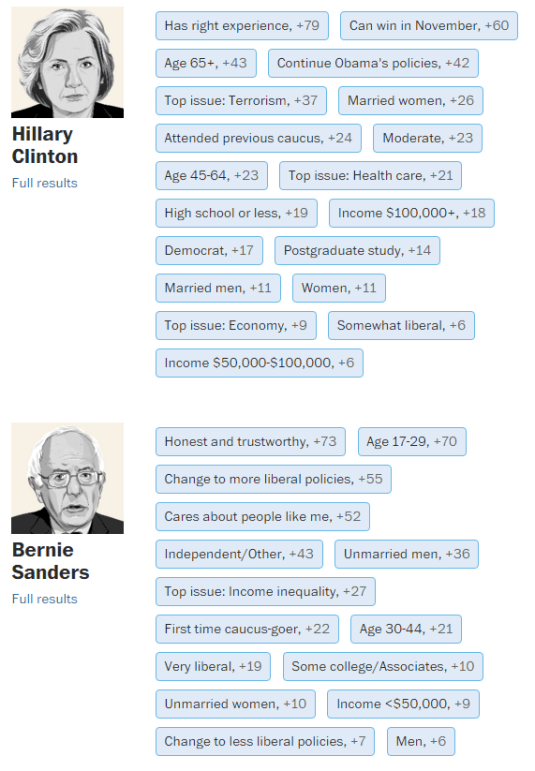
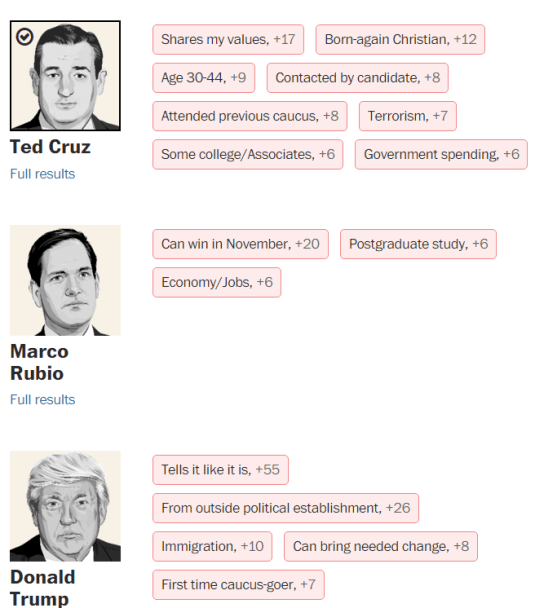
@BernieSanders @HillaryClinton an average American works 11% less than in 1950, but earns 246% more
05 Nov 2015 Leave a comment
in economic history, politics - USA Tags: 2016 presidential elections, antimarket bias, good old days, Leftover Left, living standards, pessimism bias, rational ignorance, rational rationality, The Great Enrichment, Twitter left
Most of the gender pay gap explained by age, marriage, hours worked
05 Nov 2015 Leave a comment
in discrimination, economics of love and marriage, gender, human capital, labour economics, labour supply, occupational choice, politics - USA Tags: asymmetric marriage premium, compensating differentials, female labour force participation, gender wage gap, marital labour supply
HT: Lorenzo Michael Warby.
The demise of the Green Book and the decline of racism in America
04 Nov 2015 1 Comment
in applied price theory, constitutional political economy, discrimination, entrepreneurship, industrial organisation, liberalism, politics - USA, Public Choice, rentseeking
The Green Book was an indispensable survival guide to black Americans traveling in America in the Jim Crow Era if they wish to “sidestep humiliation (or worse) on the journeys”. As Richard Epstein noted when reflecting on the 50th anniversary of the 1964 Civil Rights Bill:
Title II was passed when memories were still fresh of the many indignities that had been inflicted on African American citizens on a routine basis. It took little imagination to understand that something was deeply wrong with a nation in which it was difficult, if not impossible, for African American citizens to secure food, transportation, and lodging when traveling from place to place in large sections of the country. In some instances, no such facilities were available, and in other cases they were only available on limited and unequal terms.
The Green Guide lists the types of businesses by name and address in the southern states that were known to welcome black patrons.

The Green Book spoke in code about how to avoid “embarrassing situations”. This was code for “the violence and discrimination inflicted by bigots”. The diffusion of the car into the black middle class was a godsend to escape racism.

The founding publisher was a US postal worker who with typical entrepreneurial flair initially published the Green Book from his apartment in Virginia starting in the late 1930s. To find businesses that welcomed black patrons, Victor Green tapped into his network of fellow mailmen. His book covered the entire 50 states, parts of Canada and even extended to Europe in later editions.

The Green Book stopped publishing a mere two years after the passage of a major civil rights bill in 1964 and the voting rights bill of 1965. These two bills strengthened voter rights and outlawed discrimination by businesses and employers.

By 1966, just two years after the passage of the civil rights bill, the market collapsed for information on businesses that welcomed black patrons in America. This was because so many businesses now welcome black patronage in every part of the southern states and elsewhere in America that a special booklet no longer had buyers. At the height of its popularity, the Green Book sold 15,000 copies per year.

Yes, there were law reforms but the closing of the Green Book is a sign of surprisingly rapid social change given the dogged resistance of the Democratic Party led southern states to all previous attempts at racial integration.
As an example of this tenacious resistance to civil rights legislation, Texas divided itself into 252 counties and delegated considerable responsibility to them. Local sheriffs in southern states would campaign on slogans such as “the man who can take care of situations that may arise”.
Control of the police and local courts was central to the enforcement of racial segregation in the southern states of America. This was backed up by the monopoly that the Democratic Party had over local and state offices.
To register to vote in Texas, for example, a black voter had to register with the local voter registration board in one of the 252 counties. Assuming you could find a member – they came in late, took long lunches and went home early – they would fail the applicant on the literacy test or some other criteria.
Can you pass a literacy test given to Black voters in the 1960's http://t.co/mtOIr7XE50—
History In Pictures (@historyepics) August 28, 2015
The aggrieved black would be voter would then have to take is local voter registration board all the way to the Supreme Court to overturn that decision. The members of the local voter registration board would refuse to follow the orders of the US District Court orders. The criminal contempt citation would be appealed all the way to the Supreme Court.
Once the criminal contempt citation is upheld by the Supreme Court, the voter registration board resigned so the litigation would have to start all over again against the new board members. This was because the state of Texas could not be named as a co-defendant under the 1957 civil rights law – the first past 100 years by Congress.
Such was the hostile legal environment, the lawlessness, the FBI had an eight part go to strategy in case a local sheriff arrested FBI agents in southern states when they are enforcing civil rights law. Black civil rights leaders in the USA were keen gun owners and owned a lot of them for home defence and they used them.
Plenty of school busing orders by courts were appealed for years and years and were resisted at every turn in both northern and southern states. One or two states closed their entire school systems and threatened to transfer the assets to private hands to prevent racial integration.
James Heckman was one of the first economist to note the rapid social change in the southern states of America over the course of the 60s. Heckman spent two years as a teenager in the late 1950s in racist Southern States of America and returned in 1963 and in 1970. His parents were received a delegation of neighbours upon their arrival to explain Southern ways.
Civil disobedience at its best, 1950s http://t.co/WzszCj1zBf—
Historical Pics (@VeryOldPics) September 20, 2015
There was organised segregation in 1963 when Heckman visited again as a college student. His 1963 visit with a college roommate from Nigeria was monitored by the local sheriff. In Birmingham, they stayed at the black YMCA. The people at the YMCA were frightened to death because Heckman and his Nigerian friend were breaking the local Jim Crow laws. Shops closed in New Orleans to avoid serving them.
In 1970, Heckman re-visited New Orleans as an academic, going back to the same places as in 1963. They were completely integrated, totally changed. This rapid social change fascinated him.
The Civil Rights Act of 1964 broke the control of segregationists over their political and legal institutions. The racial segregation collapsed because it could no longer rely on Jim Crow laws and the private violence and boycotts through the White Citizens Councils which police turned a blind eye too when they were not actively involved.
Unlike the Ku Klux Klan, the White Citizens’ Councils met openly and was seen as “pursuing the agenda of the Klan with the demeanour of the Rotary Club” by “unleashing a wave of economic reprisals against anyone, Black or white, seen as a threat to the status quo”. In Mississippi, the State Sovereignty Commission funded the Citizens’ Councils.

The 1957 and, particular, the 1964 civil rights laws overthrew racial segregation because more Black Americans could vote in the Southern States in state and local elections. Politicians soon courted those votes and there was a political realignment and a social revolution. The lawlessness that back-up most of segregation quickly came to an end because its victims could now vote. Richard Epstein explains:
With Jim Crow in the South this set of insidious practices was not accomplished by explicit laws mandating racial segregation. Rather, those inflexible social and economic patterns were supported by four interlocking strategies. First, illicit control of the electoral franchise, which in turn translated into control of the police and the courts. Second, corrupt use over the infrastructure translated into an ability to deny water and electrical hook-ups to firms that did not toe the segregationist line. Third, private violence to which southern police forces turned a blind eye when they did not actively support it. Fourth, social ostracism to those who spoke up against the system. Sensible people either left, stayed away or remained silent.
LBJ was behind the first civil rights bill of the 20th century. This was the 1957 civil rights bill. LBJ’s astute understanding of public choice processes was central to how he crafted the 1957 bill.
Then Senator Johnson could see that his fellow Southern Democrats would not live with racial integration at the social level. But he knew from his dealings with the Southern Democrats that in their heart of hearts that they could not ultimately deny that people have a right to vote. LBJ knew that if Black Americans in the Southern States could secure the right to vote, all the other rights they sought would soon follow and would be protected by law. He was right.
The Voting Right Act had a huge impact on many southern states. For example, black voter registration rates in Mississippi increased from a mere 6.7 percent in 1965 to 59.8 percent in 1967, according to the US Commission for Civil Rights. For a state that’s historically around 40 percent black, this represented a massive shift in politics — a change that much of the predominantly white leadership at the time feared but would have to accept due to the Voting Rights Act.

Timur Kuran in “Sparks and Prairie Fires: A Theory of Unanticipated Political Revolutions,” suggested that political revolutions and large shifts in political and social opinion will catch us by surprise again and again because of people’s readiness to conceal their true political preferences proclivities under perceived social pressure.
Kuran begins with a simple, even mundane point: social pressures can make people say that they want and believe something that they really don’t want or believe… The result of social pressures is to produce what Kuran calls “preference falsification,” a phenomenon that occurs when you make an inaccurate public statement about your actual preferences (or beliefs). Falsified preferences might be described more simply, of course, as lies; but they are a distinctive, and distinctly interesting, kind of lies, with particular social implications… People joined organizations they abhorred, followed orders they considered nonsensical, cheered speakers they despised and ostracized dissidents they greatly admired.
Those ready to oppose racism or who were lukewarm about it, kept their opposition private until a coincidence of factors gave them the courage to bring their views into the open. In switching sides, they encouraged other hidden opponents to switch. Fear changes sides. Genuine supporters of the old older falsify their publically professed preferences, pretending that they support the new order. These are late-switchers. Do not trust them. These opportunists will just as easily switch back.
Plenty of people have had personal experiences of this in the 1980s and the 1990s when there was rapid change in social and political attitudes about racism, sexism and gay rights. A few people had to stand up for what was right and a surprisingly large number quickly joined their side.
Once Blacks in the southern states started voting for the local sheriff and judges and for state-wide officials, the local legal infrastructure helped the market work rather than frustrated it. As Richard Epstein noted when writing a freedom of association but his remarks equally apply to the market process:
The practice of freedom of association cannot survive in a society that has corrupt electoral institutions, corrupt provision of public services, corrupt use of public force, and unrestrained use of private violence. The hard question in these settings is to ask exactly what legal changes should be made. In one sense, the thought that some non-discrimination principle could gain hold through legislation seems laughable. Indeed, it was only because federal legislation could work, with much huffing and puffing, to override state legislation that the local monopoly was broken… The competitive market works well when supported by well-ordered public institutions.
The rapid demise of the Green Book is a testament to the shallowness of racism in America apart from a hard-core full of hatred of whatever comes along. Certainly, the collapse in the market for a specialised information on businesses willing to accept black patch and suggests that many southern businesses opened their doors to black customers once it was physically safe to do so. The Civil Rights Bill of 1964 bought an end to lawlessness in the South principally because black people could now vote. Epstein again:
At its best, and in its original form, the Civil Rights Act of 1964 sought to break the control of the local segregationist forces over their political institutions. First on the list was Title I, which attacked exclusion from voting.
How the first world war changed the world
04 Nov 2015 Leave a comment
in politics - Australia, politics - New Zealand, politics - USA, war and peace Tags: Armistice Day, World War I
#Dailychart: How the first world war changed the world econ.st/1rvj6tW http://t.co/OldeGaiJEe—
The Economist (@ECONdailycharts) July 28, 2014
@jeremycorbyn @BernieSanders oppose the one path to peace
04 Nov 2015 Leave a comment
in international economics, liberalism, politics - USA, war and peace Tags: British politics, capitalism and freedom, China, expressive voting, free trade, game theory, populists, rational ignorance, rational irrationality, Richard Cobden, World War I

Jeremy Corbyn is in trouble again, this time for describing World War I as pointless.
Corbyn has, for all his life, opposed the only means of securing peace either in Europe or anywhere else. He is against trade agreements, the European Union and NATO. Bernie Sanders is equally as misguided.
Corbyn and Sanders thinks you can make peace just by talking with people. Peace is made by trading with hostile countries to make them depend on you for their prosperity as well as yours. By growing rich through free trade, it’s in no ones interest to go to war or have poor relations with each other or each other’s friends.
More on Down and Out in America
03 Nov 2015 Leave a comment
in applied welfare economics, politics - USA Tags: living standards, The Great Enrichment
In addition to being patient No. 1 of Bush derangement syndrome, @NYTimeskrugman suffers from wrong headedness as well
03 Nov 2015 Leave a comment
in comparative institutional analysis, personnel economics, politics - USA
Why are so many Silicon Valley start-up founders libertarian Democrats?
03 Nov 2015 Leave a comment
in economics of media and culture, entrepreneurship, income redistribution, industrial organisation, politics - USA, Public Choice, rentseeking, survivor principle Tags: creative destruction, entrepreneurial alertness, expressive voting, rational ignorance, Silicon Valley, start-ups, voter demographics
@EconomicPolicy showed gender pay equality when arguing the opposite @CHSommers @Mark_J_Perry
02 Nov 2015 2 Comments
in applied price theory, applied welfare economics, discrimination, gender, human capital, labour economics, labour supply, occupational choice, politics - USA Tags: asymmetric marriage premium, compensating differentials, gender wage gap, marital division of labour, power couples, top 1%, top incomes, Twitter left, union power, union wage premium
The Economic Policy Institute were good enough to dig out unit record data on the unadjusted US gender wage gap by percentiles. In attempting to show there was a persistent gender pay gap, the impeccably left-wing Economic Policy Institute showed that the unadjusted gender pay gap has all but disappeared in the USA.
There is next to no gender wage gap even in unadjusted terms towards the bottom of the labour market. This is despite all the protestations of the Left of an inherent inequality of bargaining power between the bosses and workers.
The low paid are supposed to be powerless unless unionised. Declining unionisation is a leading explanation on the Left of the rising income shares of the top 10%, top 1% in the top 0.1%.

If that inherent inequality of bargaining power trundled out at every opportunity by the Twitter Left explains anything in the labour market, this inequality of bargaining power should be operating with greatest strength at the bottom of the labour market.
Clearly the inherent inequality of bargaining power between the bosses and workers is not doing its job regarding the gender wage gap. The gender wage gap in the USA increases as you move up the income ladder rather than the other way around.
The explanation of the Economic Policy Institute for greater gender pay equality at the bottom is the minimum wage and male wage stagnation:
It is interesting to note that the wage gap between genders is smaller at the 10th percentile than at the 95th. At the 10th percentile, women earn 91 percent of men’s wages while women make only 79 percent of men’s wages at the 95th percentile.
The minimum wage is partially responsible for this greater equality among the lowest earners—it sets a wage floor that applies to everyone, which means that people near the bottom of the distribution are likely to make more equal wages. Also, low-wage workers are disproportionately women, which means that the minimum wage particularly bolsters women’s wages.
…Although women have seen modest wage gains in the last several decades, the main reason the gender wage gap has slowly narrowed is that the vast majority of men’s wages have stagnated or declined.
It is a bit rich for the Economic Policy Institute to praise the minimum wage as a force for increasing incomes after spending so much of its time saying how the minimum wage has fallen way behind wages growth in general.
The gender gap lingers at the top of the labour market despite the quite substantial wage gains for women as compared to men over the past 15 years. The Economic Policy Institute dismissed the substantial gains as modest despite their own documenting of them.
It is even richer for the Economic Policy Institute to start extending the male wage stagnation hypothesis to the top 20% and top 10%.
The top of the income distribution has not been known previously known as victims of wage stagnation.
The gender wage gap remains stubbornly high at the top end of the US labour market at 20% for the last few decades. The gender wage is so large and has stayed large at the top half of the labour market for the past few decades because of compensating differentials. Women on higher incomes are balancing families and careers in choosing the occupations that best suits each individual woman, their talents and educational choices.
Source: OECD Employment Database.
Studies of top earning professionals show that they make quite deliberate choices between family and career. The better explanation of why so many women are in a particular occupation is job sorting: that particular job has flexible hours and the skills do not depreciate as fast for workers who take time off, working part-time or returning from time out of the workforce. Low job turnover workers will be employed by firms that invest more in training and job specific human capital.
- Higher job turnover workers, such as women with children, will tend to move into jobs that have less investment in specialised human capital, and where their human capital depreciates at a slower pace.
- Women, including low paid women, select careers in jobs that match best in terms of work life balance and allows them to enter and leave the workforce with minimum penalty and loss of skills through depreciation and obsolescence.
This is the choice hypothesis of the gender wage gap. Women choose to educate for occupations where human capital depreciates at a slower pace. This gender wage gap for professionals can be explained by the marriage market combined with assortative mating:
- Graduates are likely to marry each other and form power couples; and
- There tends to be an age gap between men and women in long-term relationships and marriages of two years.
This two-year age gap means that the husband has two additional years of work experience and career advancement. This is likely to translate into higher pay and more immediate promotional prospects. Maximising household income would imply that the member of the household with a higher income, and greater immediate promotional prospects stay in the workforce.
This is consistent with the choice hypothesis and equalising differentials as the explanation for the gender wage gap. As Solomon Polachek explains:
At least in the past, getting married and having children meant one thing for men and another thing for women. Because women typically bear the brunt of child-rearing, married men with children work more over their lives than married women. This division of labour is exacerbated by the extent to which married women are, on average, younger and less educated than their husbands.
This pattern of earnings behaviour and human capital and career investment will persist until women start pairing off with men who are the same age or younger than them.
In low-paying jobs, there is little in the way of trade-offs other than full-time or part-time work. Low-paid jobs do not involve choosing majors at university, choosing careers, industries and employers that call for long hours and uninterrupted careers or not so long hours, fewer human capital and promotional penalties for time off and more work-life balance. The choice hypothesis is the far better explanation for the persistence of the unadjusted gender wage gap in the USA as Polachek explains:
The gender wage gap for never marrieds is a mere 2.8%, compared with over 20% for marrieds. The gender wage gap for young workers is less than 5%, but about 25% for 55–64-year-old men and women.
If gender discrimination were the issue, one would need to explain why businesses pay single men and single women comparable salaries. The same applies to young men and young women. One would need to explain why businesses discriminate against older women, but not against younger women. If corporations discriminate by gender, why are these employers paying any groups of men and women roughly equal pay?
Why is there no discrimination against young single women, but large amounts of discrimination against older married women? … Each type of possible discrimination is inconsistent with negligible wage differences among single and younger employees compared with the large gap among married men and women (especially those with children, and even more so for those who space children widely apart)
The main drivers of the gender wage gap are unknown to employers such as whether the would-be recruit or employer is married, their partner is present, how many children they have, how many of these children are under 12, and how many years are there between the births of their children.
@GreenpeaceNZ @RusselNorman Can We Rely on Wind and Solar Energy? @NZGreens
02 Nov 2015 Leave a comment
in energy economics, environmental economics, global warming, politics - Australia, politics - New Zealand, politics - USA Tags: Big Solar, Big Wind, bootleggers and baptists, expressive voting, green rent seeking, rational irrationality, renewable energy, solar power, wind power
@economicpolicy Top incomes and the decline of unions in the US, UK, Australia and New Zealand
02 Nov 2015 4 Comments
in applied welfare economics, labour economics, Marxist economics, politics - Australia, politics - New Zealand, politics - USA, unions Tags: top 1%, union power, union wage premium
The Left in the USA and the UK like to show correlations between top incomes and the decline of union membership.
I thought I would check how this hypothesis travelled to European offshoots such as Australia and New Zealand. For example, in the USA, top income shares have been increasing while union membership has been in decline since 1960.

Source: OECD Stat and Top Incomes Database.

Source: OECD Stat and Top Incomes Database.
In the UK, the relationship between union membership and top incomes is gentler than in the USA.

Source: OECD Stat and Top Incomes Database.

Source: OECD Stat and Top Incomes Database.
Moving down under, the relationship between top incomes and union membership is non-existent in New Zealand.

Source: OECD Stat and Top Incomes Database.

Source: OECD Stat and Top Incomes Database.
The same pretty much goes for Australia in terms of no relationship between top incomes in union membership to extent that this relationship is anything more than a spurious correlation.

Source: OECD Stat and Top Incomes Database.

Source: OECD Stat and Top Incomes Database.

Recent Comments