Jobless rates by education
Less than HS: 8.4%
HS: 5.4%
Some college: 5.1%
College: 2.7%http://t.co/jjj1v9Pxol pic.twitter.com/1IZYLdcjsi— Josh Zumbrun (@JoshZumbrun) March 6, 2015
Unemployment by education
11 Mar 2015 Leave a comment
in business cycles, great recession, human capital, job search and matching, labour economics, labour supply, occupational choice, politics - USA, unemployment Tags: labour demographics
The UN Special rapporteur on torture dropped the ball on impartiality
11 Mar 2015 2 Comments
in economics of crime, law and economics, politics - USA Tags: boat people, border protection, illegal immigration, media bias, UN
Fox News is the most trusted news source among independents, the American term for the swinging voter
11 Mar 2015 Leave a comment
in economics of media and culture, politics - USA Tags: Fox News, media bias
Figure 1: Whose news coverage do you trust the most?

Democrats See The Media As Biased Against Clinton | FiveThirtyEight
11 Mar 2015 Leave a comment
in economics of media and culture, politics - USA Tags: 2016 presidential election, Hillary Clinton, media bias

It’s usually Republicans who rely on “media bias” as a political defense and GOP voters who think the press is gunning for their candidates. Democrats are more likely to trust the media.
via Democrats See The Media As Biased Against Clinton | FiveThirtyEight.
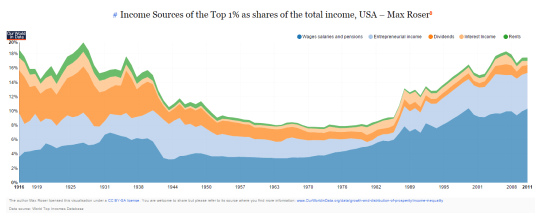
The rise and rise of the working rich in the top 1% in the USA
10 Mar 2015 1 Comment
in applied welfare economics, politics - USA
Most of the income of the top 1% in the USA is now from wages, salaries and entrepreneurial income. They make it themselves. They do not sit back and collect dividends from passive investments.

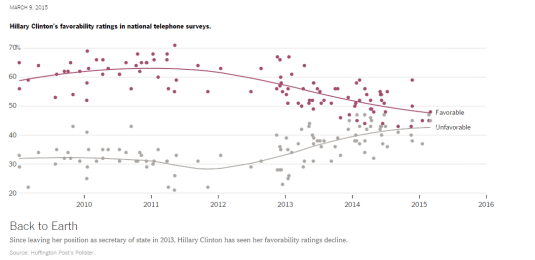
Hillary Clinton Is More Vulnerable in 2016 Than You Think
10 Mar 2015 Leave a comment
in economics of media and culture, politics - USA
This question should be asked more often about the regulation of purported natural monopolies
09 Mar 2015 Leave a comment
Child poverty in America using the Supplementary Poverty Measure of the Census Bureau
09 Mar 2015 Leave a comment
in politics - USA, population economics, poverty and inequality, welfare reform Tags: child poverty, measurement of poverty

Measuring child poverty after tax and income transfers from the welfare state make a big difference to the measurement of poverty in the USA.


via What If We Had Measured Poverty Differently for the Past 50 Years? – CityLab.
Environmental and Urban Economics: The Drought Causes War Hypothesis: Evidence from Syria
09 Mar 2015 Leave a comment
in applied price theory, environmental economics, global warming, politics - USA, war and peace Tags: Syria, water markets

I am an economist so permit me to make one Econ 101 point.
As drought conditions unfolded in Syria, did water prices rise? Is water metered and paid for in Syria? How do farmers and residential water customers access water?
If there had been a market signal of increased scarcity, water prices would have gone up and rational households and firms would reduce their consumption.
In the presence of such well functioning water markets, no “excess conflict” would have resulted. Capitalist markets thus can diffuse violence as increasingly scarce resources are allocated efficiently and water consumers are incentivized to invest in strategies and actions to reduce their water demand.
So, to repeat my point; if the PNAS authors are correct then it is the synergistic effect between increased drought conditions and the absence of water markets that caused the problem. If the nation had well functioning water markets, then I would strongly predict that there would be no extra violence.
via Environmental and Urban Economics: The Drought Causes War Hypothesis: Evidence from Syria.
The new gender gap in education
09 Mar 2015 Leave a comment
in discrimination, economic history, gender, labour economics, labour supply, politics - USA
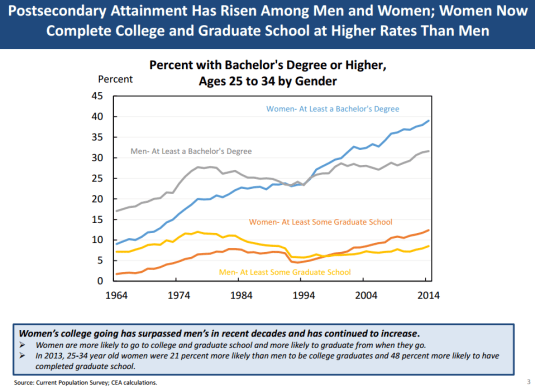
Source: whitehouse.gov


Recent Comments