

via Republicans Or Democrats More Likely To Survive The Apocalypse? | FiveThirtyEight.
Celebrating humanity's flourishing through the spread of capitalism and the rule of law
07 Mar 2015 Leave a comment
in economics of media and culture, politics - USA Tags: Apocalypse, doomsday scenarios, gun control
07 Mar 2015 Leave a comment
in discrimination, economic history, economics of education, gender, labour economics, labour supply, occupational choice, politics - USA Tags: economics of fertility, engines of liberation, female labour supply, gender wage gap, reversing gender gap, The Pill

Source: whitehouse.gov
07 Mar 2015 Leave a comment
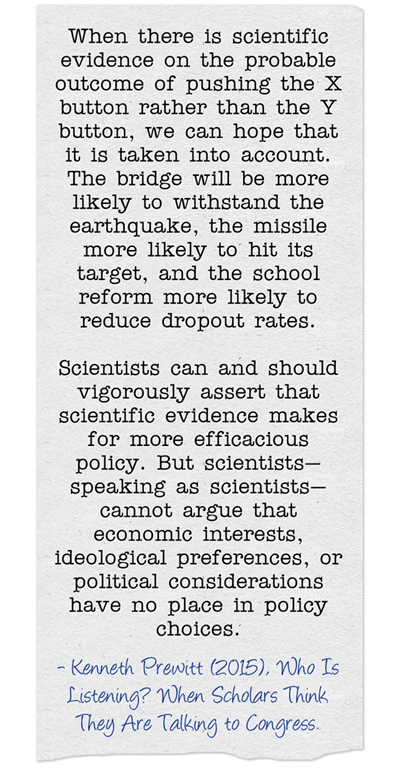
in comparative institutional analysis, politics - Australia, politics - New Zealand, politics - USA, Public Choice Tags: evidence-based policy, expressive voting, rational ignorance, rational irrationality, science and public policy
06 Mar 2015 1 Comment
in politics - Australia, politics - New Zealand, politics - USA, war and peace Tags: Darwin awards, ISIS, Middle-East politics, Twitter, war on terror


Every time they tweet they put a well-deserved target on their back.

via Defining and describing the population of ISIS supporters on Twitter | Brookings Institution.
06 Mar 2015 Leave a comment
in economics of crime, entrepreneurship, law and economics, organisational economics, politics - New Zealand, politics - USA Tags: do gooders, law and order, prisons
I was listening to a radio show the other day on the introduction of close circuit television into New Zealand prisons that were to be monitored by both male and female guards. This is regarded as an indignity by some because these new close circuit cameras would be in showers and toilets.

The initial commentators on the radio programme immediately said they had watched plenty of TV programs where people were shanked in the showers.

The close circuit television was for the safety of prisoners. Close circuit cameras in all parts of prisons made prisons a safer place and that was that. It was the price of safety, especially for prisoners vulnerable to intimidation and sexual assault.

Greg Newbold, a New Zealand criminologist and an ex-prisoner in itself, then came on air to criticise the introduction of close circuit televisions in showers and other intimate areas such as toilets as an indignity on prisoners. Prisoners have a right to intimate privacy in his view. He said only 12 prisoners had been murdered in the New Zealand prisons since 1979.
Only 12 murders is 12 murders too many. Every one of those murders would have been subject of outrage about the failure of the prison administration from the bleeding hearts brigade.
The most interesting thing that Greg Newbold said on the radio was about how these close circuit television systems first emerged in prisons, initially in the USA.
Close circuit television systems will put throughout prisons initially in private prisons to avoid being sued for wrongful death and injury. The private prisons introduced this rather obvious security measure to reduce liability in the civil courts.
Public prisons are supposedly a safer place for prisoners to be if you listen to the bleeding hearts brigade and the Left over Left. Pubic prisons but never got around introducing what seems to me to be a rather basic security measure in confined areas of prisons. Close circuit television systems would protect both inmates and guards.
The different incentives facing public and hybrid prisons, in this case, exposure to litigation, is an illustration of the superior efficiency of private prisons.

Private prisons did something because it affects the bottom line. One way to reduce liability for deaths and injuries is prison security measures that reduce the number of deaths and injuries in prisons.
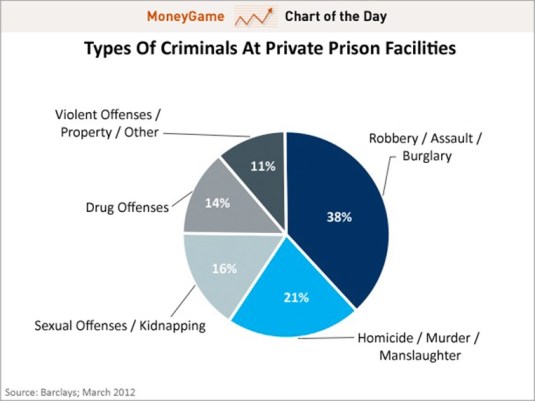
More importantly, private prisons have unforgiving critics in the form of the bleeding hearts brigade and Left over Left. No one on the Left will defend or protect a prison that is private from closure out of a knee-jerk defence of the public sector, and in particular, public-sector unions.
Oddly enough the only prison that the Left over Left want to close in New Zealand is the highest performing prison, Mt Eden, which happens to be privately run.

The main problem with private prisons is contracting over quality where it is difficult to define quality and measure performance against quality standards specified in a contract as Andrew Shleifer explains:
…critics of privatization often argue that private contractors would cut quality in the process of cutting costs because contracts do not adequately guard against this possibility
Privatisation for many government services is simply an extension of the make-or-buy decision. Every firm faces a make-or-buy decision – should the firm buy a production input from outside suppliers or should it make what it needs itself with existing or additional internal resources?
As any industry grows, there is more room for more specialised producers to supply to firms of all sizes at a lower cost than in-house production (Stigler 1951, 1987; Levy 1984). As an example, all with the largest firms intermittently hire legal, accounting and many other professional skills from specialists.
By contracting-out to these more specialised and niche suppliers, firms can enjoy all available economies of scale in production unless its needs are unique or the firm has some special competency in producing the input in-house (Lindsay and Maloney 1996; Shughart 1997; Roberts 2004). Firms in most industries capture all available economies of scale at relatively small sizes after which they have a long region of production where their marginal cost of further increases in production are constant (Stigler 1958; Lucas 1978; Barzel and Kochin 1992; Shughart 1997).
Put simply, an entrepreneur makes what he or she cannot buy at the quality preferred through contracting in market:
The case for in-house provision is generally stronger when non-contractible cost reductions have large deleterious effects on quality, when quality innovations are unimportant, and when corruption in government procurement is a severe problem. In contrast, the case for privatization is stronger when quality reducing cost reductions can be controlled through contract or competition, when quality innovations are important, and when patronage and powerful unions are a severe problem inside the government.
The way in which the market process dealt with chiselling on quality where quality reducing cost reductions where costly to control through contract or competition was the emergence of non-profit institutions. The competitive edge of these non-profit institutions was they had fewer incentives to dilute hard to measure qualities of the product transacted.

Any additional profits from this dilution of quality were not distributed to the owners because the non-profit organisation was either run by a charity or was owned mutually by the customers. The proceeds from cutting corners on quality could not be paid out to the owners in dividends because there were none.
Examples of non-profits competing successfully in the market are obvious, such as life insurance. Until recent decades, most life insurance companies were mutually owned by the policyholders. Life insurance companies were mutually owned as an assurance that no one could run off with the money by paying high dividends to the owners before policyholders died many years after they have paid their premiums.
Most private universities are run as non-profit institutions even when they are set up by private developers with profits in mind. The private university itself is owned by a charity with esteemed persons on the board to assure quality and probity. The active involvement of alumni is encouraged as a further guard of the future quality of the University from which they graduated. The private developers make their profit on the surrounding land as the university grows and prospers. Land grant universities in the USA may have operated this way.
Other examples of the emergence of non-profit institutions to assure quality in a competitive market are private schools, private hospitals, and private day care centres where concerns about the private provision of a quality service arise, with or without justification. Andrew Shleifer again:
…entrepreneurial not-for-profit firms can be more efficient than either the government or the for-profit private suppliers precisely … where soft incentives are desirable, and competitive and reputational mechanisms do not soften the incentives of private suppliers [to dilute quality].
Of course, any proper analysis must compare like with like and compare the dismal record of public prisons date in terms of prisoner and prison guard safety and preventing escapes with any scandals in the private prison systems. Few do that.
05 Mar 2015 Leave a comment
in discrimination, economic history, gender, labour economics, labour supply, politics - USA

Source: whitehouse.gov
05 Mar 2015 Leave a comment
in applied welfare economics, defence economics, economic history, politics - USA Tags: industry policy, picking winners, R&D, smart industry policy, space programme

…many people believe that Project Apollo was popular, probably because it garnered significant media attention, but the polls do not support a contention that Americans embraced the lunar landing mission.
Consistently throughout the 1960s a majority of Americans did not believe Apollo was worth the cost, with the one exception to this a poll taken at the time of the Apollo 11 lunar landing in July 1969.
And consistently throughout the decade 45-60 percent of Americans believed that the government was spending too much onspace, indicative of a lack of commitment to the spaceflight agenda. These data do not support a contention that most people approved of Apollo and thought it important to explore space.
HT: Moondoggle: The Forgotten Opposition to the Apollo Program – The Atlantic.
05 Mar 2015 Leave a comment
in labour economics, minimum wage, politics - Australia, politics - New Zealand, politics - USA Tags: minimum wage, purchasing power parity
05 Mar 2015 Leave a comment
in economics of media and culture, environmental economics, global warming, politics - USA Tags: Antarctic ice, Artric, climate alarmism
04 Mar 2015 1 Comment
in economics of education, human capital, politics - New Zealand, politics - USA, unions Tags: charter schools, School choice
The New Zealand teachers union went into a very curious rant against chartered schools in a letter to the Dominion Post today. Instead of saying that they do not improve student outcomes, the usual propaganda, the author of the letter focused on system-wide outcomes after the introduction of charter schools.

It is usual for the teachers union to say that the schools themselves fail rather than argue that adding five or 10 schools to a system of thousands of public schools in New Zealand will through competition from these few schools to lift the entire system. For example, the teachers union sets a very high standard for the charter schools:
The United States has had charter schools for a more than a decade and there has been no measurable improvement in that country’s overall performance in literacy, maths and science. The United States lags far behind New Zealand on recent performance tests in all those areas.
It is unwise to say there is no evidence because that leaves you open to the cheap shot that will find one piece of evidence and then ask why you making things up. For example, the Maxim Institute found that:
The evidence from the small body of research that exists is mixed: some studies have found the presence of charter schools to have had a small negative impact on pupil achievement in regular state schools, while other studies have found charter schools to have had either a negligible or small positive impact…
There my work is done. All I had to show was that there was some evidence showing that charter schools improved the performance of neighbouring schools.

Why is the teachers union pretending that this evidence is not there when it can be found and so easily on the Internet?

Is the reason that the evidence that charter schools improve the outcomes of students that go to them is so strong that they have to move to new reasons for opposing them? The evidence is some chartered schools do very well and in particular for minority students. Their greatest strength is they are closed if they fail. No similar standard applies to failing public schools.

At a minimum, the teachers unions have conceded that the charter schools seem to work and that they do no harm to the rest of the system? If there was evidence of that, they would be quick to put it forward.
Celebrating humanity's flourishing through the spread of capitalism and the rule of law
Celebrating humanity's flourishing through the spread of capitalism and the rule of law
Celebrating humanity's flourishing through the spread of capitalism and the rule of law
Celebrating humanity's flourishing through the spread of capitalism and the rule of law
Celebrating humanity's flourishing through the spread of capitalism and the rule of law
Celebrating humanity's flourishing through the spread of capitalism and the rule of law
Celebrating humanity's flourishing through the spread of capitalism and the rule of law
Celebrating humanity's flourishing through the spread of capitalism and the rule of law
A History of the Alt-Right
Econ Prof at George Mason University, Economic Historian, Québécois
Celebrating humanity's flourishing through the spread of capitalism and the rule of law
Scholarly commentary on law, economics, and more
Beatrice Cherrier's blog
Celebrating humanity's flourishing through the spread of capitalism and the rule of law
Celebrating humanity's flourishing through the spread of capitalism and the rule of law
Celebrating humanity's flourishing through the spread of capitalism and the rule of law
Why Evolution is True is a blog written by Jerry Coyne, centered on evolution and biology but also dealing with diverse topics like politics, culture, and cats.
Celebrating humanity's flourishing through the spread of capitalism and the rule of law
A rural perspective with a blue tint by Ele Ludemann
DPF's Kiwiblog - Fomenting Happy Mischief since 2003
Celebrating humanity's flourishing through the spread of capitalism and the rule of law
The world's most viewed site on global warming and climate change
Tim Harding's writings on rationality, informal logic and skepticism
A window into Doc Freiberger's library
Let's examine hard decisions!
Commentary on monetary policy in the spirit of R. G. Hawtrey
Thoughts on public policy and the media
Celebrating humanity's flourishing through the spread of capitalism and the rule of law
Politics and the economy
A blog (primarily) on Canadian and Commonwealth political history and institutions
Reading between the lines, and underneath the hype.
Economics, and such stuff as dreams are made on
"The British constitution has always been puzzling, and always will be." --Queen Elizabeth II
Celebrating humanity's flourishing through the spread of capitalism and the rule of law
Celebrating humanity's flourishing through the spread of capitalism and the rule of law
WORLD WAR II, MUSIC, HISTORY, HOLOCAUST
Undisciplined scholar, recovering academic
Celebrating humanity's flourishing through the spread of capitalism and the rule of law
Res ipsa loquitur - The thing itself speaks
In Hume’s spirit, I will attempt to serve as an ambassador from my world of economics, and help in “finding topics of conversation fit for the entertainment of rational creatures.”
Researching the House of Commons, 1832-1868
Reflections on books and art
Posts on the History of Law, Crime, and Justice
Celebrating humanity's flourishing through the spread of capitalism and the rule of law
Exploring the Monarchs of Europe
Cutting edge science you can dice with




Recent Comments