Half of Australians live in the red areas. And they still have insane housing prices! pic.twitter.com/6ayfjqLcDB
— Paul Kirby (@paul1kirby) January 4, 2016
Half of Australians live in the red areas
27 Jan 2016 Leave a comment
in population economics, urban economics Tags: Australia, geography
The changing age of British mothers
12 Jan 2016 Leave a comment
in population economics Tags: economics of fertility
Rooms per person across the OECD member countries
07 Jan 2016 Leave a comment
in politics - Australia, politics - New Zealand, politics - USA, population economics, urban economics Tags: housing economics, living standards
There are quite large differences in the number of rooms per person in the European offshoots and the countries in Europe. Americans have much more room per person than the much exalted welfare states of northern Europe.
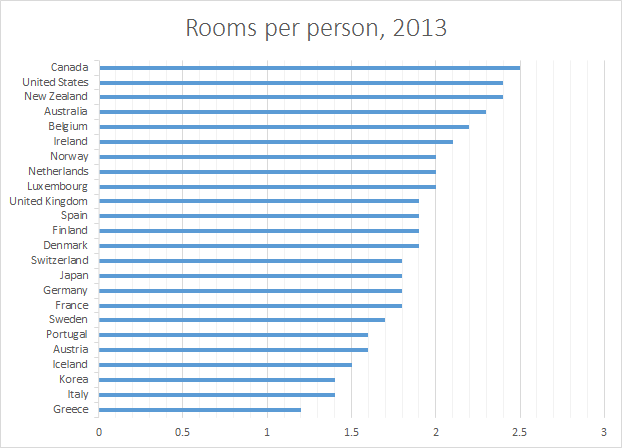
Source: OECD Better Life Index – Data extracted on 07 Jan 2016 06:55 UTC (GMT) from OECD.Stat
The world’s most populous countries: Comparison between 2015 and 2060
06 Jan 2016 Leave a comment
in development economics, population economics Tags: Economcis of fertility
A Day in the Life of Americans
01 Jan 2016 Leave a comment
in labour economics, labour supply, population economics Tags: labour demographics
Most populous countries, 1950-2060
01 Jan 2016 Leave a comment
in development economics, economic history, population economics Tags: economics of fertility
Median ages in the USA and Japan
31 Dec 2015 Leave a comment
in economic history, population economics Tags: Japan
How India will pass China to become world’s most populous country
30 Dec 2015 Leave a comment
in development economics, growth miracles, population economics Tags: China, India
How many people have ever lived?
26 Dec 2015 Leave a comment
in population economics Tags: Population demographics
The World's current population compared to everyone who's ever lived and died http://t.co/Ymxgb8tUMY—
Incredible Data (@Incredible_Data) July 04, 2015
The 35 year old American woman, 1970-2010
16 Dec 2015 Leave a comment
in economics of love and marriage, gender, labour economics, population economics Tags: economics of fertility, economics of the family, family demographics, female labour force participation, labour demographics
How insightful was The Population Bomb
14 Dec 2015 Leave a comment
in development economics, economic history, energy economics, environmental economics, environmentalism, growth miracles, population economics, resource economics, technological progress Tags: cranks, doomsday prophets
% British, German, French and Australian children in jobless sole parent households
13 Dec 2015 Leave a comment
in gender, labour supply, population economics, welfare reform
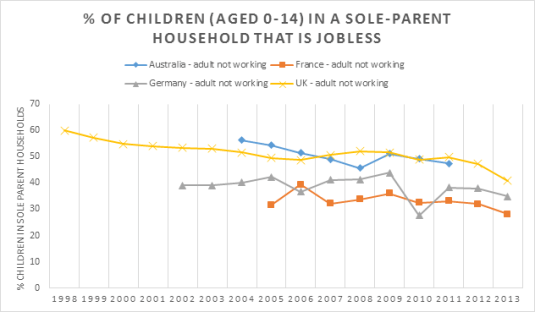
Source: OECD Family Database.

 Utopia, you are standing in it!
Recent Comments