Croft v Royal Mail: between a rock and a hard place

Maya Forstater's avatarsingle sex spaces

They say “hard cases make bad law“. What little case law there is about single sex spaces and transgender people’s access to them falls into that category.

Croft v Royal Mail was an employment case which considered the issue of toilets and changing rooms. It went to the Employment Appeal Tribunal and then to the Court of Appeal in 2003. The outcome is not popular with anyone, since it does not give a clear answer either way.

It says that

“acquiring the status of a transsexual does not carry with it the right to choose which toilets to use”

Lord Justice Pill, Court of Appeal

But it it also suggests that employers can not solve the issue by simply offeringa unisex alternative. The Court of Appeal said that at some point a male person should be considered transitioned enough to gain access to women’s facilities, even if they had not…

View original post 1,686 more words

The Truth About Crime, Race, and Policing in America

Lost on the woke

Image

I always knew your shortsightedness will be your downfall

How ‘Dark’ were the Dark Ages?

@AOC @BernieSanders @ACLU

5 Animals With (Understandably) Poor Judgment

Welcome To Country

adolffinkensen's avatarNo Minister

When one attends a public function in Australia one is likely to endure a nauseating ‘welcome to country’ or ‘acknowledgement of country’ before the real business begins.

Welcome to Country

A typical example might start off like this:-

‘Our meeting/conference/workshop is being held on the lands of the [Traditional Owner’s name] people and I wish to acknowledge them as Traditional Owners.

I would also like to pay my respects to their Elders, past and present, and Aboriginal Elders of other communities who may be here today.’

These little speeches are meant to remind everyone that Aboriginals at some time or other occupied the particular piece of land on which the public function is being held. There is a implication that, in fact, these Aboriginals still own it. They are also meant to remind Australians that any property they own was stolen from Aboriginals. Readers will know of the movement to have Australia Day…

View original post 335 more words

Ian Plimer: The Australian Press Council is a hive of climate zealots

oldbrew's avatarTallbloke's Talkshop

Photosynthesis: nature requires carbon dioxide
Truth-starved climate propaganda and its backers get a good going-over from the ever-robust Professor.

H/T Climate Change Dispatch
– – –
As a result of an activist campaign, the Australian Press Council took exception to my article in The Australian on November 22, 2019, says Ian Plimer @ Spectator AU.

They claimed that my statement that there “are no carbon emissions. If there were, we could not see because most carbon is black. Such terms are deliberately misleading, as are many claims” was false.

Journalists in the Press Council should know basic English and the difference between an element (carbon) and a compound (carbon dioxide).

This is elementary schoolkid’s science. For the Press Council to claim that this is factually incorrect shows breathtaking ignorance.

View original post 435 more words

A critique of ‘Modern Monetary Theory’

julianhjessop's avatarPlain-speaking Economics

Imagine that the government could simply print whatever amount of money it needed to guarantee everyone a decent income, fantastic public services, and a secure job if they wanted one – with enough left over to save the planet too. That, for many, is the promise of a new economic paradigm known as “Modern Monetary Theory” (MMT).

If you’re already thinking that this sounds too good to be true, you are not alone. Many economists – myself included – think that MMT is a frustrating muddle.

To be fair, MMT has a respectable academic pedigree, helpfully summarised here, which some trace all the way back to Keynes himself. It has several prominent advocates, notably Professor Stephanie Kelton, author of The Deficit Myth and an advisor to the US Democrats.

MMT also appears to offer a credible alternative to conventional thinking on the importance of balancing the government’s books. The…

View original post 1,018 more words

Robert Topel summarises Piketty

Image

Digging It: Mines, Minerals, and “Green” Energy: A Reality Check

stopthesethings's avatarSTOP THESE THINGS

It takes audacity to suggest that the wholesale environmental destruction wreaked by the wind and solar industries is all for the good of planet.

Michael Moore’s Planet of the Humans managed to lift the lid on green hypocrisy, focusing on the raft of inconvenient truths behind the greatest economic and environmental fraud of all time.

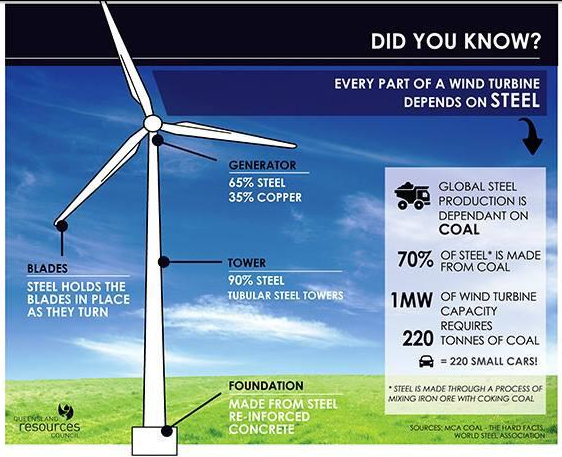
Such as the fact that those ‘planet saving’ solar panels that give virtue signallers such a warm inner glow are really ‘coal’ panels, where the core ingredient is made from strip-mined quartz, which is converted to silica using coal-fired furnaces. Inconvenient for those claiming renewable energy piety, but true enough.

Mark P Mills treads the same path with his investigation into hypocritical claims that renewable energy is all about saving the planet when, in reality, wind and solar are simply devouring it.

Mines, Minerals, and “Green” Energy: A Reality Check
Manhattan Institute
Mark P Mills

View original post 593 more words

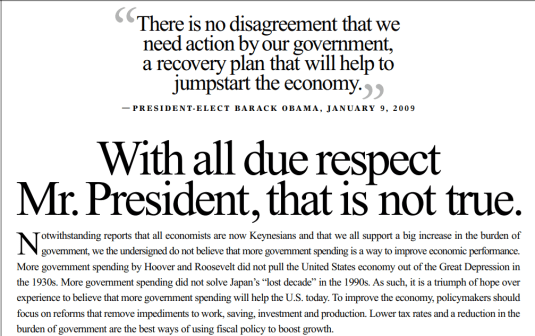
From @Cato ad in @WSJ on 2009 fiscal stimulus @taxpayersUnion @JordNZ

From https://www.cato.org/sites/cato.org/files/pubs/pdf/cato_stimulus.pdf

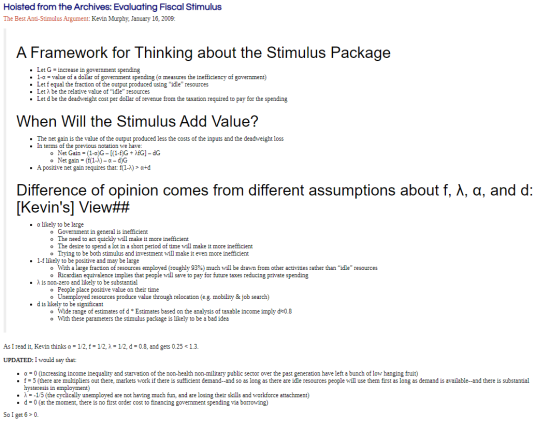
Best Anti-Stimulus Argument in 2009 was from Kevin Murphy @TaxpayersUnion @JordNZ

From https://www.bradford-delong.com/2011/10/hoisted-from-the-archives-evaluating-fiscal-stimulus.html and see too https://www.wsj.com/articles/SB123423402552366409

At https://www.chicagobooth.edu/research/igm/events-forums/myron-scholes-forum/speaker-series/2009-01-16 Murphy says

Kevin Murphy sketched out a simple equation—into which anyone could easily plug their own assumptions—to compare the benefits and costs of stimulus spending. The advantage, he argued, is the equation helps everyone to be clear about exactly what they are assuming and why it supports their approach to the stimulus. According to Murphy, the main items everyone should be clear about are: the fraction of the economy’s resources that are idle; the value of keeping those resources idle (e.g., most people value their time, and will not work without compensation); the deadweight loss from raising taxes in the future to pay for the spending; and the cost of allocating spending through government, if it is allocated less efficiently as a result (this can be negative —i.e., a benefit—if government is better than the private sector at allocating resources).

Murphy did not consider the stimulus a good proposal, but he explained how his assumptions about each element of his framework differed from those of president-elect Obama’s team. “It’s easy to see what you have to assume in order to make the stimulus make sense,” Murphy said. Regarding the tax cut measures in the stimulus plan, Murphy thought they were designed in an especially inefficient way. Since marginal tax rates are what matter for incentives, he argued, it was not helpful that the Obama plan would give tax cuts in the form of direct credits to certain taxpayers without lowering rates. That the president would likely address the resulting deficit by raising rates in the future would exacerbate the problem.

And Robert Lucas adds

Robert Lucas pointed out that the US economy was already 4 percent below its long-term trend level in January 2008. In addition, consensus forecasts—which “mean a lot” over short horizons such as a year—suggested the economy would be 8 percent below after another year. This would be larger than any other postwar recession, though nowhere near as bad as the 30 percent gap in the 1930s. “It’s not the worst in my lifetime, but it’s the worst in Obama’s,” Lucas said, “and it would be foolish not to take some actions to deal with it.”

Monetary measures to deal with the recession make a lot of sense, said Lucas, who added that many of the Fed’s actions were beneficial. The trouble was the fiscal stimulus did not seem designed to deal with the real problem. A good approach, Lucas said, would be to use the fiscal stimulus “as another way of getting cash into circulation in the private sector.” He mentioned hypothetical examples that Milton Friedman—dropping money from helicopters—and John Maynard Keynes—paying people to dig and refill ditches—had posed as ways of achieving this. “If fiscal stimuli are designed to be effective, they’re going to be effective because they carry along a monetary policy of the sort that raises the dollar spending level,” Lucas said. Based on the plans and information he had seen from president-elect Obama’s advisors, however, Lucas said that this did not seem to be what the new administration was planning. Instead, he said, “all they’re talking about is transferring resources, additional levels of spending, from one use to another,” which, he argued, would have no substantial effect on the average level of spending and thus would not help fight the recession.


 

The colorful and erudite J.B.S. Haldane: my take and a new biography

whyevolutionistrue's avatarWhy Evolution Is True

UPDATE: Greg Mayer noted that Jonathan Weiner reviewed the new Haldane bio in the New York Times, also favorably. The link is below, and here’s one quote from Weiner’s review:

“A Dominant Character” is the best Haldane biography yet. With science so politicized in this country and abroad, the book could be an allegory for every scientist who wants to take a stand. “In the past few years,” Subramanian writes, “as we’ve witnessed deliberate assaults on fact and truth and as we’ve realized the failures of the calm weight of scientific evidence to influence government policy, the need for scientists to find their voice has grown even more urgent.” Haldane’s political principles were “unbending and forthright,” as Subramanian says, and his science illuminated all of life. In both these ways, for all his failings, he was “deeply attractive during a time of shifting, murky moralities.”

___________________

J. B…

View original post 1,464 more words

Previous Older Entries Next Newer Entries

Coordination Problem

Celebrating humanity's flourishing through the spread of capitalism and the rule of law

Libertarian Land

Celebrating humanity's flourishing through the spread of capitalism and the rule of law

Arin’s Substack

Celebrating humanity's flourishing through the spread of capitalism and the rule of law

David Andolfatto

Celebrating humanity's flourishing through the spread of capitalism and the rule of law

Monetary Non-Neutrality

Celebrating humanity's flourishing through the spread of capitalism and the rule of law

Reason Magazine

Celebrating humanity's flourishing through the spread of capitalism and the rule of law

Coyote Blog

Celebrating humanity's flourishing through the spread of capitalism and the rule of law

Thoughts from the North

Celebrating humanity's flourishing through the spread of capitalism and the rule of law

Fardels Bear

A History of the Alt-Right

Vincent Geloso

Econ Prof at George Mason University, Economic Historian, Québécois

Bassett, Brash & Hide

Celebrating humanity's flourishing through the spread of capitalism and the rule of law

Truth on the Market

Scholarly commentary on law, economics, and more

The Undercover Historian

Beatrice Cherrier's blog

Matua Kahurangi

Celebrating humanity's flourishing through the spread of capitalism and the rule of law

Temple of Sociology

Celebrating humanity's flourishing through the spread of capitalism and the rule of law

Velvet Glove, Iron Fist

Celebrating humanity's flourishing through the spread of capitalism and the rule of law

Why Evolution Is True

Why Evolution is True is a blog written by Jerry Coyne, centered on evolution and biology but also dealing with diverse topics like politics, culture, and cats.

NoTricksZone

Celebrating humanity's flourishing through the spread of capitalism and the rule of law

Homepaddock

A rural perspective with a blue tint by Ele Ludemann

Kiwiblog

DPF's Kiwiblog - Fomenting Happy Mischief since 2003

The Dangerous Economist

Celebrating humanity's flourishing through the spread of capitalism and the rule of law

Watts Up With That?

The world's most viewed site on global warming and climate change

The Logical Place

Tim Harding's writings on rationality, informal logic and skepticism

Doc's Books

A window into Doc Freiberger's library

The Risk-Monger

Let's examine hard decisions!

Uneasy Money

Commentary on monetary policy in the spirit of R. G. Hawtrey

Barrie Saunders

Thoughts on public policy and the media

Liberty Scott

Celebrating humanity's flourishing through the spread of capitalism and the rule of law

Point of Order

Politics and the economy

James Bowden's Blog

A blog (primarily) on Canadian and Commonwealth political history and institutions

Science Matters

Reading between the lines, and underneath the hype.

Peter Winsley

Economics, and such stuff as dreams are made on

A Venerable Puzzle

"The British constitution has always been puzzling, and always will be." --Queen Elizabeth II

The Antiplanner

Celebrating humanity's flourishing through the spread of capitalism and the rule of law

Bet On It

Celebrating humanity's flourishing through the spread of capitalism and the rule of law

History of Sorts

WORLD WAR II, MUSIC, HISTORY, HOLOCAUST

Roger Pielke Jr.

Undisciplined scholar, recovering academic

Offsetting Behaviour

Celebrating humanity's flourishing through the spread of capitalism and the rule of law

JONATHAN TURLEY

Res ipsa loquitur - The thing itself speaks

Conversable Economist

In Hume’s spirit, I will attempt to serve as an ambassador from my world of economics, and help in “finding topics of conversation fit for the entertainment of rational creatures.”

The Victorian Commons

Researching the House of Commons, 1832-1868

The History of Parliament

Articles and research from the History of Parliament Trust

Books & Boots

Reflections on books and art

Legal History Miscellany

Posts on the History of Law, Crime, and Justice

Sex, Drugs and Economics

Celebrating humanity's flourishing through the spread of capitalism and the rule of law

European Royal History

Exploring the Monarchs of Europe