Privilege, Libel and the long road to Stockdale v. Hansard, Part I: from Strode’s Case to Article IX

Paul Seaward's avatarReformation to Referendum: Writing a New History of Parliament

In 1836 the House of Commons published a series of reports of the new prison inspectors appointed under an Act of Parliament passed the year before. The 1835 Act, one of several interventionist initiatives of the whig government elected in 1832, was designed to drive up standards in the locally-run prison system. That the inspectors’ report was generally available, rather than hidden in decent obscurity, as the result of another praiseworthy new initiative – a decision by the House of Commons in 1835 to allow all of its publications to be sold to the public through agents. The inspectors’ remark concerning a book with explicit plates of human reproductive organs that was found in the possession of one of the prisoners in Newgate jail set off a chain of unintended consequences that led to a series of law suits that are collectively referred to as Stockdale v. Hansard, a…

View original post 2,234 more words

In view of continuing racial disparities, should orchestras eliminate “blind” auditions?

whyevolutionistrue's avatarWhy Evolution Is True

After two black musicians accused the New York Philharmonic in 1969 of racial discrimination, the Philharmonic, and many other American orchestras, began auditioning prospective members behind a screen, so that neither the race nor the sex of the individual could be discerned. All that mattered was musical quality. (As I recall, women were told not to wear high heels so their sex couldn’t be sussed out by the clack-clack they made as they walked across the stage.)

Now, as a critic in the New York Times argues, while this procedure has been wildly successful in increasing the representation of women in orchestras, the proportion of blacks and Hispanics remain low. The solution, offered in an opinion piece by Anthony Tommasini, the Times‘s head classical-music critic, is to ditch the blind auditions and go back to the way things were. This argument has put me in a bit of a…

View original post 1,459 more words

Access will be reduced arguments from @nzdrug @_chloeswarbrick fatally discredit the Yes case in the marijuana referendum

Health insurance in the US

Image

Flash N The Pan – Hey St. Peter

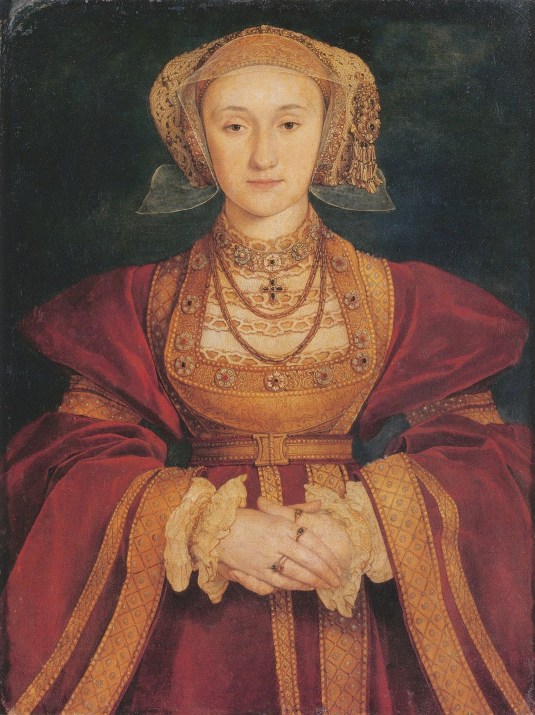
July 16, 1557: Death of Anne of Cleves, Queen Consort of England and Ireland.

liamfoley63's avatarEuropean Royal History

Anne of Cleves (1515 – July 16, 1557) was queen consort of England from January 6, to July 9, 1540 as the fourth wife of King Henry VIII. Anne was born in 1515, on either 22 September, or more probably 28 June. She was born in Düsseldorf, the second daughter of Johann III of the House of La Marck, Duke of Jülich jure uxoris, Cleves, Berg jure uxoris, Count of Mark, also known as de la Marck and Ravensberg jure uxoris (often referred to as Duke of Cleves) who died in 1538, and his wife Maria, Duchess of Jülich-Berg (1491–1543). She grew up in Schloss Burg on the edge of Solingen.

77169ED7-244B-4535-B751-B415ECE0F184
Anne of Cleves

Not much is known about Anne before 1527, when she became betrothed to François, Duke of Bar, son and heir of Antoine, Duke of Lorraine, although their marriage did not proceed.

In March 1539, negotiations for…

View original post 945 more words

Richard Posner (1997) on critical race theory

The Smithsonian Institution purveys Critical Race Theory

whyevolutionistrue's avatarWhy Evolution Is True

We cannot be free of wokeness in college, nor while reading the liberal media. Now we encounter it in America’s national museums as well.

I learned of the site at hand from a tweet, and then checked it out for myself to ensure it was kosher. The page in question appears at the website of the National Museum of African American History & Culture, a museum in Washington, D.C. that’s part of the Smithsonian Institution. (I’ve long meant to visit it, but haven’t been back “home” in a long time.)

I applauded the museum when it was conceived and then opened, but I had no idea it would be used as a vehicle to purvey Critical Race Theory, along with its narrative of structural racism, white privilege, microaggressions, white fragility, intersectionality, and so on, to the public. There are even video lectures by Robin DiAngelo and bell hooks. It…

View original post 400 more words

In which I deconstruct a NYT profile of Steve Pinker

whyevolutionistrue's avatarWhy Evolution Is True

The New York Times has a new profile of Steve Pinker, with a photo that, while nice, doesn’t include his cowboy boots. It concentrates mostly on the letter signed by 550+ academics calling for the Linguistic Society of America to rescind Pinker’s “distinguished fellow” and “media expert” status. Since I’ve discussed that letter in detail, I won’t go over it here, but simply give my take on some of the statements in the NYT’s generally fair profile. I’ll just add, by way of self-aggrandizement, that you read about that here  (as well as the letter in Harper’s that Pinker signed) well before it appeared in the paper of record. And the NYT’s report adds little to what I said. Further, you can read me for free!

Click on the screenshot to read.

The Times comments are indented, while mine are flush left.

The linguists demanded that the society revoke…

View original post 1,132 more words

Wealth taxes debate

Prisons in Ancient Rome

Sade – The Sweetest Taboo

A Prototype; Warship

#OTD

Image

‘Palace letters’ show the Queen did not advise, or encourage, Kerr to sack Whitlam government

The Constitution Unit's avatarThe Constitution Unit Blog

com.google.Chrome.vxw6lk.jpg

Four decades after the dismissal of the Whitlam government, letters between the Palace and the Governor-General of Australia have been made public. Anne Twomey explains that they show the Queen acted properly, neither advising or encouraging the government’s dismissal, recommending simply that he obey the Australian Constitution.

For more than four decades, the question has been asked: did the Queen know the governor-general, Sir John Kerr, was about to dismiss the Whitlam government, and did she encourage or support that action? The release of the ‘palace letters’ between Kerr and the palace can now lay that question to rest. The answer was given, unequivocally, by the Queen’s private secretary, Sir Martin Charteris, in a letter to Kerr on November 17 1975. He said:

‘If I may say so with the greatest respect, I believe that in NOT informing The Queen what you intended to do before doing it, you acted…

View original post 910 more words

Previous Older Entries Next Newer Entries

Coordination Problem

Celebrating humanity's flourishing through the spread of capitalism and the rule of law

Libertarian Land

Celebrating humanity's flourishing through the spread of capitalism and the rule of law

Arin’s Substack

Celebrating humanity's flourishing through the spread of capitalism and the rule of law

David Andolfatto

Celebrating humanity's flourishing through the spread of capitalism and the rule of law

Monetary Non-Neutrality

Celebrating humanity's flourishing through the spread of capitalism and the rule of law

Reason Magazine

Celebrating humanity's flourishing through the spread of capitalism and the rule of law

Coyote Blog

Celebrating humanity's flourishing through the spread of capitalism and the rule of law

Thoughts from the North

Celebrating humanity's flourishing through the spread of capitalism and the rule of law

Fardels Bear

A History of the Alt-Right

Vincent Geloso

Econ Prof at George Mason University, Economic Historian, Québécois

Bassett, Brash & Hide

Celebrating humanity's flourishing through the spread of capitalism and the rule of law

Truth on the Market

Scholarly commentary on law, economics, and more

The Undercover Historian

Beatrice Cherrier's blog

Matua Kahurangi

Celebrating humanity's flourishing through the spread of capitalism and the rule of law

Temple of Sociology

Celebrating humanity's flourishing through the spread of capitalism and the rule of law

Velvet Glove, Iron Fist

Celebrating humanity's flourishing through the spread of capitalism and the rule of law

Why Evolution Is True

Why Evolution is True is a blog written by Jerry Coyne, centered on evolution and biology but also dealing with diverse topics like politics, culture, and cats.

NoTricksZone

Celebrating humanity's flourishing through the spread of capitalism and the rule of law

Homepaddock

A rural perspective with a blue tint by Ele Ludemann

Kiwiblog

DPF's Kiwiblog - Fomenting Happy Mischief since 2003

The Dangerous Economist

Celebrating humanity's flourishing through the spread of capitalism and the rule of law

Watts Up With That?

The world's most viewed site on global warming and climate change

The Logical Place

Tim Harding's writings on rationality, informal logic and skepticism

Doc's Books

A window into Doc Freiberger's library

The Risk-Monger

Let's examine hard decisions!

Uneasy Money

Commentary on monetary policy in the spirit of R. G. Hawtrey

Barrie Saunders

Thoughts on public policy and the media

Liberty Scott

Celebrating humanity's flourishing through the spread of capitalism and the rule of law

Point of Order

Politics and the economy

James Bowden's Blog

A blog (primarily) on Canadian and Commonwealth political history and institutions

Science Matters

Reading between the lines, and underneath the hype.

Peter Winsley

Economics, and such stuff as dreams are made on

A Venerable Puzzle

"The British constitution has always been puzzling, and always will be." --Queen Elizabeth II

The Antiplanner

Celebrating humanity's flourishing through the spread of capitalism and the rule of law

Bet On It

Celebrating humanity's flourishing through the spread of capitalism and the rule of law

History of Sorts

WORLD WAR II, MUSIC, HISTORY, HOLOCAUST

Roger Pielke Jr.

Undisciplined scholar, recovering academic

Offsetting Behaviour

Celebrating humanity's flourishing through the spread of capitalism and the rule of law

JONATHAN TURLEY

Res ipsa loquitur - The thing itself speaks

Conversable Economist

In Hume’s spirit, I will attempt to serve as an ambassador from my world of economics, and help in “finding topics of conversation fit for the entertainment of rational creatures.”

The Victorian Commons

Researching the House of Commons, 1832-1868

The History of Parliament

Articles and research from the History of Parliament Trust

Books & Boots

Reflections on books and art

Legal History Miscellany

Posts on the History of Law, Crime, and Justice

Sex, Drugs and Economics

Celebrating humanity's flourishing through the spread of capitalism and the rule of law

European Royal History

Exploring the Monarchs of Europe