Rationing in WWII (British Homefront)
01 Jun 2020 Leave a comment
in defence economics, war and peace Tags: World War II

What Was Hygiene Like On Pirate Ships?
01 Jun 2020 Leave a comment
in defence economics, economic history, economics of crime, health and safety, labour economics, law and economics, occupational choice, transport economics
An Audience with Neil Armstrong (2011 interview)
01 Jun 2020 Leave a comment
in economics of media and culture Tags: moon landings, space
#OTD
01 Jun 2020 Leave a comment
in discrimination, economics of crime, law and economics, politics - USA Tags: 2020 presidential election, crime and punishment, law and order, police shootings

Dick Clark Interviews Split Enz – American Bandstand 1981
01 Jun 2020 Leave a comment
in Music, television
Mystery of how Earth barely escaped an atomic bomb-scale mega meteor
31 May 2020 Leave a comment

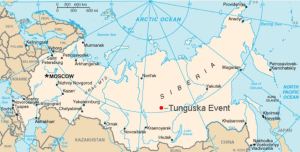 Credit: Wikipedia
Time for another Tunguska meteor theory.
– – –
When a meteor zooms toward Earth at 45,000 mph with the strength 10-15 megatons of TNT—185 times more energy than the Hiroshima atomic bomb—it could possibly take out the entire planet, says Syfy.
If something like that doesn’t scream total annihilation, it’s hard to say what does, except this time it just missed.
Scorched earth and flattened trees were all that was left of the mysterious object after it passed dangerously close to the Tunguska region of Siberia in 1908.
Theories have ranged from a black hole colliding with Earth to a clash of matter and antimatter to an alien spaceship crash-landing. An eyewitness even swore the sky was being ripped in two. But why no crater? No debris?
View original post 278 more words
Five key questions about coronavirus and devolution
31 May 2020 Leave a comment


The coronavirus is a once in a generation event that has required an almost unprecedented response from government at all levels, from Westminster to West Lothian. Akash Paun argues that it has raised five crucial questions about the politics of devolution at a time when efficient and effective intergovernmental relations are crucial.
Coronavirus has hit all parts of the UK and has required a comprehensive response by government at all levels – central, devolved and local. The crisis has raised (at least!) five big questions about devolution, intergovernmental relations and the politics of the Union:
- Does the crisis show that the UK and devolved governments can cooperate effectively?
- To what extent does devolution enable policy divergence between the UK nations?
- How is the crisis affecting the operation of the devolved institutions themselves?
- How is the pandemic response being funded – and with what impact on devolution?
- What might this period…
View original post 2,144 more words
Save Our Jobs: Australia’s Economic Recovery Demands Reliable & Affordable Coal-Fired Power
31 May 2020 Leave a comment


Whatever policies are directed at recovering from the coronavirus lockdown, without reliable and affordable power Australia’s energy hungry businesses are doomed. With rocketing power prices, and an intermittent supply, mineral processors and manufacturers are terminal, and have been for years.
Politicians and academic boffins have been giving lip service to improving Australia’s “resilience” and “self-sufficiency”, resulting in the renaissance of Australian manufacturing and industry.
With Australian businesses suffering among world’s highest power prices (thanks to its obsession with intermittent wind and solar, South Australian households and businesses suffer the highest prices in the world), the rebirth of manufacturing and industry sounds like so much wishful thinking.
International supply chains may have ground to a halt and the orderly flow of goods to market disrupted, but, before too long China will regain its primacy as the world’s manufacturing powerhouse. Two factors are responsible for China’s dominance in that domain: a…
View original post 2,467 more words
Edward Prescott on the Great Recession
31 May 2020 Leave a comment
in business cycles, Edward Prescott, financial economics, global financial crisis (GFC), great recession, macroeconomics, monetary economics Tags: real business cycle theory

Unpleasant arithmetic hyperinflation – Tom Sargent is lecturing via YouTube
31 May 2020 Leave a comment
in budget deficits, economic history, financial economics, fiscal policy, macroeconomics, monetarism, monetary economics Tags: hyperinflation, monetary policy
Pandemic redux: 1918 vs. now, and the advent of “mask slackers”
31 May 2020 Leave a comment

Reader Charles Sawicki contacted me with two links to articles about the 1918 “Spanish Flu” pandemic that killed 5 million people worldwide (the first victim was actually in Kansas), and the similarities between those times and ours. In particular, the two articles below and the photos sent by Charles, deal with the mandatory wearing of face masks in the early pandemic, decreed by several cities and states. Then, like now, there were strong opponents of mask wearing. (One person was even shot for not wearing one.) Here’s Charles’s note:
There are interesting similarities between the Spanish flu and our present situation. For example, San Francisco required masks and had an anti-masking league form to resist mask wearing. People were arrested for not wearing masks and as we have seen today, violence sometimes resulted. The same sort of hand washing was recommended as well as some crazy preventative measures. It seems…
View original post 350 more words


Recent Comments