Barbarossa, African Jews, and the fate of PoWs in Germany – WW2 – Out of the Foxholes 009
10 Apr 2020 Leave a comment
in defence economics, laws of war, war and peace Tags: World War II
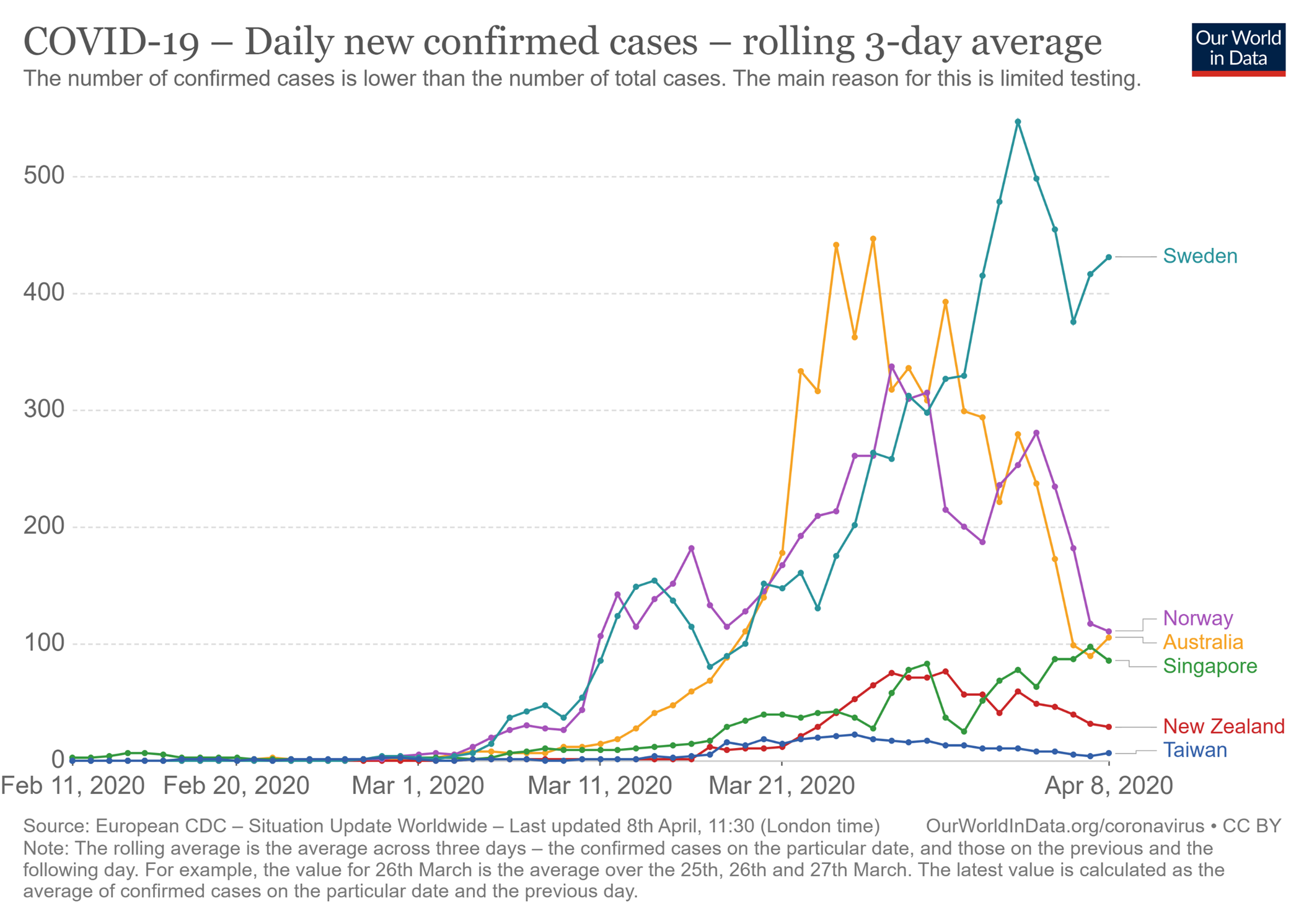
Why coronavirus mortality rates are so different #COVID19
10 Apr 2020 Leave a comment
in health economics Tags: economics of pandemics
Bankrupting America
09 Apr 2020 Leave a comment
in fiscal policy, health economics, public economics Tags: economics of pandemics
Krishan Nadesan: Can Parliament replace the House of Lords?
09 Apr 2020 Leave a comment

 Parliament can do anything – except replace the House of Lords? For over a century, replacing the House of Lords has brooked no delay. Now, at last, the Government seems tempted to dam the brook, by substituting an elected Senate for the old Second Chamber. At first glance, this is constitutionally straightforward. Whatever Parliament enacts is law – so surely an Act of Parliament can lawfully replace the House of Lords? But such an Act may be open to challenge.
Traditionally, parliamentary sovereignty admits of one exception – ‘Parliament cannot … bind its successors by the terms of any statute‘ (Alpheus Todd, Parliamentary Government in the British Colonies (Boston, 1880), p.192). To use the technical jargon, Parliament has continuing sovereignty, which it cannot limit. A successful challenge, then, could only be mounted if (1) parliamentary sovereignty is continuing, and (2) replacing the House of Lords violates continuing sovereignty…
View original post 2,024 more words
How costly are pension reform reversals?
09 Apr 2020 Leave a comment

Daniel Baksa, Zsuzsa Munkacsi and Carolin Nerlich in this research:
Europe’s population is ageing, and this trend is expected to continue over the coming decades. The demographic changes are captured by the change in the old-age dependency ratio, which measures the size of the elderly population – defined as people aged 65 years and older – in relation to the working-age population – aged 15-64. According to Eurostat, between now and 2070 the ratio for the euro area will rise strongly from 30% to 52%, with considerable differences across countries. Two-thirds of this increase will be concentrated in the next decade and a half, as the large “baby boom” generation born 1955-70 will be over 65, while life expectancy will keep rising and the fertility rate will remain low or fall even further.
Ageing societies are facing major macroeconomic challenges. Labour forces are shrinking and precautionary savings are likely increasing, while…
View original post 213 more words
Some Labour strategists may agree with Peters that the election should be delayed
09 Apr 2020 Leave a comment
The election will be about what can you do for me next.
Parties with credible platforms to rebuild the economy will win more votes than the Labour Party’s natural reluctance to embrace deregulation and fiscal austerity to pay off the borrowed money and the green’s natural response to everything which is to say more free stuff.

NZ First leader Winston Peters today said he wants the election held on November 21, Radio NZ reported. He says he believes the health system would be under the pump in September with the winter flu season and the country potentially still dealing with the impacts of Covid-19.
Prime Minister Jacinda Ardern announced the September election date before the Covid-19 pandemic began.
Peters said he had fought for the November date originally, because his party believed summer elections were better, but given the pressures of Covid-19 he will again raise delaying it by two months.
“Having a good look at it now and with the compounding problems of coronavirus and all the distractions and efforts going in elsewhere, perhaps the sound thing is to say November 21 is the right date and we should go ahead then,” he said.
View original post 722 more words
What happens when the Prime Minister is incapacitated?
09 Apr 2020 Leave a comment


Boris Johnson’s admission to hospital has led to speculation about who is ‘in charge’, if he is not able to fulfil his duties. Former Unit Director Robert Hazell outlines the constitutional position when the serving Prime Minister is incapacitated, arguing that our parliamentary system allows for greater flexiblity than a system in which a president is directly elected.
Since Boris Johnson was admitted to an Intensive Care Unit, the airwaves have been full of speculation about how government will be conducted in his absence, and what would happen if his condition worsens; or worse still, if he fails to recover.
When he formed his government, Boris Johnson appointed Dominic Raab as First Secretary of State as well as Foreign Secretary, and when he went into intensive care Johnson asked Raab to lead the government in his absence. So Dominic Raab will chair meetings of the Cabinet and…
View original post 838 more words
Central bank watch
09 Apr 2020 Leave a comment

Our Reserve Bank has been all over the place on monetary policy going back to last year.
There was the totally out-of-the-blue 50 basis point OCR cut last year. It may or may not have been substantively justified, but they never had a compelling rationale at the time and were reduced to dreaming up (quite reasonable) stories after the event. The concern about minimising the risk of falling expectations was one of those stories – good, but clearly an ex post rationalisation (since all the contemporary statements made little or no mention of the issue).
In the wake of that cut, the Governor gave quite a few interviews. One of the most substantial was with Newsroom’s Bernard Hickey (there is a full transcript at the link). In that interview – barely eight months ago – we learned that the Governor had no particular qualms about a negative OCR…
View original post 3,112 more words
1896: Tupper & Laurier Debate the Role of Governor General and Popular vs Parliamentary Sovereignty
09 Apr 2020 Leave a comment

 Governor General Lord Aberdeen
Introduction
On 8 July 1896, Governor General Lord Aberdeen forced Prime Minister Sir Charles Tupper from office by refusing to promulgate his constitutional advice and sign off on Orders-in-Council to summon senators and make other appointments. Tupper sought to fill up vacancies knowing full well that the Liberals had just won a parliamentary majority for the first time since 1874 in the general election held on 23 June 1896. When Aberdeen refused to sign the Orders-in-Council, Tupper wrote back that he had no choice but to resign the premiership, because the prime minister cannot remain in office after a governor general has rejected his constitutional advice and withdrawn his confidence from him. Lord Aberdeen then appointed Sir Wilfrid Laurier as Prime Minister, and Laurier would stand astride Canadian politics like a colossus for the next fifteen years. At Tupper’s insistence and at Aberdeen’s acquiescence, their written…
View original post 7,897 more words
‘Where the disease is desperate, the remedy must be so too’: debating the 1721 Quarantine Act
09 Apr 2020 Leave a comment

The latest blog for the Georgian Lords considers the topical issue of quarantine. In the 1720s the government was forced to update its quarantine legislation, but as Dr Charles Littleton of our Lords 1715-1790 project shows, it received spirited opposition from members of the House of Lords...
In the face of pressure from opposition parties and its own back-benchers, the Johnson government substantially amended the recently-passed Coronavirus Act (2020) enabling Parliament to scrutinize and renew the bill every six months. This was not the first time Parliament has tried to modify the power of the executive in the face of a national emergency. In earlier centuries the great fear was an even more indiscriminate killer, bubonic plague. London in particular had suffered from outbreaks of ‘the plague’ throughout the 17th century, the most famous being the Great Plague of 1665. The question of quarantine, of enforcing an involuntary 40-day…
View original post 902 more words
Doomsday Fatigue: Corona-Mania Leaves Climate Change Hysteria For Dead
09 Apr 2020 Leave a comment


COVID-19 has spread its share of misery, made all the worse by the doomsday cult that cry ‘apocalypse’ at every challenge humanity faces. This is the same class of character who, barely weeks ago, were dressing up like goblins and gluing themselves to the roads in order to save us from, you guessed it, the apocalypse. Except the looming doom predicted by those pasty-faced hysterics was all about changes in the weather.
Those with sufficient memory will recall that the world was being urged, in pretty strident terms, to destroy our energy supplies, and with it our way of living, by throwing everything at chaotically intermittent wind and solar.
As every good self-interested panic merchant well-knows, it pays to have a (very profitable) non-solution to a never-ending, non-problem.
Keep complaining about the weather (dressed up as the portents of doom) and the subsidies to wind and solar would just keep…
View original post 808 more words
Bernie Sanders drops out of Presidential race
09 Apr 2020 Leave a comment

This was almost inevitable, and my first thought is, “Will his supporters vote for Biden, or will they stay home?” If the latter, we’re screwed come November. Oh, and will Sanders endorse Biden? I suspect so.
Click on the screenshot to read the CNN report:

And discuss below if you wish.
UPDATE: Here’s an article that’s no longer relevant, since it argues that Bernie should drop his candidacy because he appeals to only one of three factions of Democrats, according to a division proposed not by Edsall, but by Shom Mazumder, a political scientist at Harvard,:
An excerpt:
“Establishment” voters, in this scheme, means center-left voters who make up just over 60 percent of the total. They stood out as favorably inclined to Nancy Pelosi, Chuck Schumer, Barack Obama and the Democratic National Committee — in other words, to the Democratic establishment.
“Progressive left” Democrats, at just under…
View original post 92 more words


Recent Comments