German car industry calls on EU to drop tighter CO2 emission targets
04 Apr 2020 Leave a comment

 Image credit: autocarbrands.com
H/T The Global Warming Policy Forum (GWPF)
The public turns out not be persuaded by EU bureaucrats that expensive short-range BEVs with high depreciation, limited recharge options and uncertain battery life are the way to go. And the current virus situation only reduces spending power, leaving car makers with nowhere to go but down as massive fines for missing absurd CO2 targets begin to bite.
– – –
The German car industry is calling for stricter EU climate requirements to be overturned or to be delayed as car sales plummet to lowest level in nearly three decades.
It has urged the government to back them in efforts to make the European Union drop a planned tightening of emission limits on cars, reports Süddeutsche Zeitung.
View original post 71 more words
Power Point(Less): Routine Total Output Collapses Mean Wind Power’s Worse Than Useless
04 Apr 2020 Leave a comment

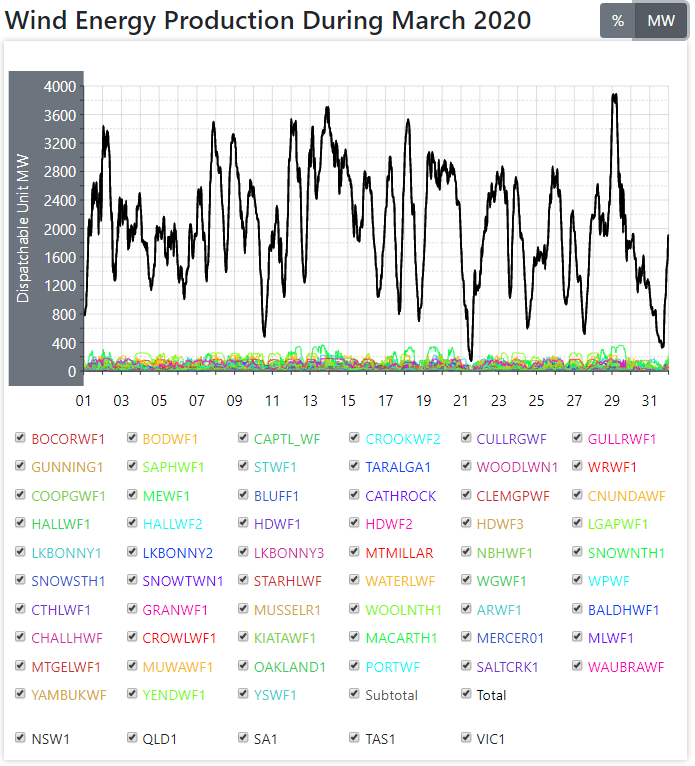
Weather-dependent wind power has no inherent commercial value, simply because it can’t be delivered as and when it’s needed. The only “value” is the massive and endless subsidies that it attracts.
The graph above depicts the output for the month of March, from every wind turbine connected to Australia’s Eastern Grid, with a total notional capacity of 6,960 MW. Those turbines are spread between Far North Queensland, all along the ranges of NSW, all over Victoria, the north coast of Tasmania and across the central parts of South Australia.
Collapses of anywhere between 2,000 to 3,000 MW over the span of an hour or less are matched sudden surges of equal magnitude.
If you were looking for a definition of “chaos”, what’s thrown out by Australia’s wind power fleet on a daily basis should do the trick.
Rafe Champion adds detail to that definition, with a little wind watching of…
View original post 338 more words
He was just a naughty boy
04 Apr 2020 Leave a comment
in entrepreneurship, human capital, occupational choice
DR SUCHARIT BHAKDI
04 Apr 2020 Leave a comment
A factor unique to Italy is a high level of air pollution in Northern Italy that would account for more than 8,000 fatalities even without the virus. Air pollution increases the risk of viral lung
diseases in very young and in the very old. A household feature of Italy is the cohabitation of the very young and the very old (27.4% of the population) such that the very young can pass the virus to the very old who are at a high risk of death from the virus.


STATEMENT BY DR SUCHARIT BHAKDI ON COVID-19 EPIDEMIOLOGY
MARCH 2020
SOURCE DOCUMENT: [LINK] THE VIDEO IN GERMAN: [LINK]
BELOW IS AN EDITED AND ABBREVIATED VERSION OF THE BHAKDI ANALYSIS
As Emeritus of the Johannes-Gutenberg-University in Mainz and long time
director of the Institute for Medical Microbiology, I feel obliged to critically
question the far-reaching restrictions on public life that we are currently taking
on ourselves in order to reduce the spread of the COVID-19 virus. It is expressly not my intention to play down the dangers of the virus or to spread a political message. However, I feel it is my duty to make a scientific contribution to put the current data and facts into perspective. In addition, to ask questions that are in danger of being overlooked in the heat of the debate. My concern is that unforeseeable socioeconomic consequences of the drastic containment measures which are…
View original post 764 more words
The OECD stylised estimates of direct GDP effects
04 Apr 2020 Leave a comment

Earlier this week the OECD put out a useful little note Evaluating the initial impact of COVID-19 containment measures on economic activity.
It is less than five pages long, including a couple of charts, and isn’t even attempting to offer definitive answers. And what it offers isn’t an assessment of the impact of the differing containment measures being adopted in each country, but of the likely impact of the initial economic structure of each country’s economy to a set of common assumptions about the extent of containment and associated changes in economic activity. Thus when, as local media have reported, this chart shows that New Zealand is one of the most adversely affected economies
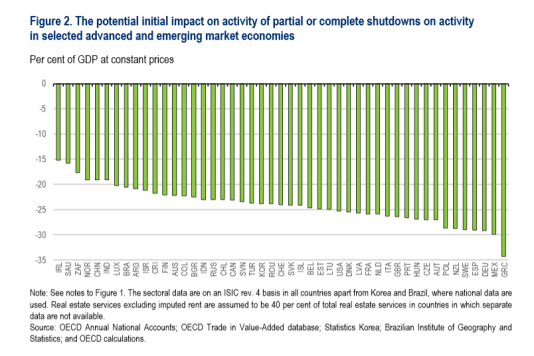
it isn’t telling you anything about the impact or intensity of New Zealand policies, but simply about the pre-existing structure, given the (common across countries) assumptions OECD staff make about which sectors…
View original post 896 more words
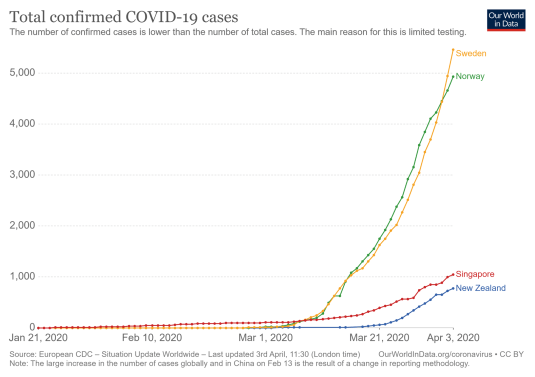
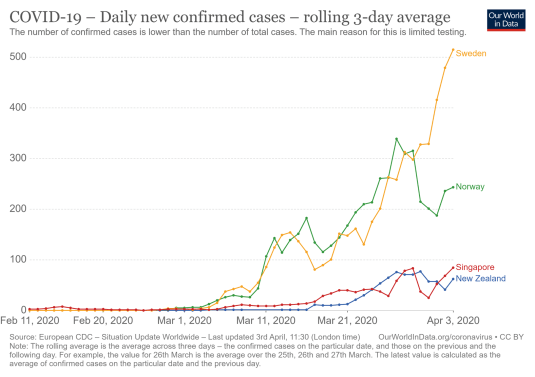
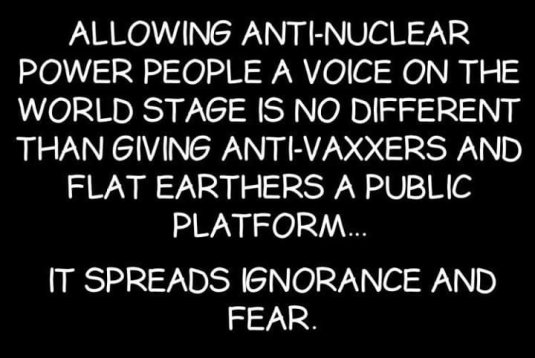
Anti-science @greenpeaceusa @Greens @NZGreens #globalwarming #climateemergency
04 Apr 2020 Leave a comment
in energy economics, environmental economics, global warming, politics - Australia, politics - New Zealand, politics - USA Tags: Anti-Science left, nuclear energy


Recent Comments