The exception to the BBC rule on place names
14 Feb 2020 Leave a comment

A browse through the BBC News style guide reveals plenty of examples of the BBC’s policy of moving away from the use of place names introduced or preferred by foreign conquerors and past rulers.
“Belarus
formerly part of the Soviet Union as Byelorussia; now independent. Adjective, Belarusian.”
“Burma
The BBC has been moving towards calling the country Myanmar. We should use Myanmar rather than Burma in headlines and summaries. Inside the body of our stories, preferably on first mention, we should include the wording “Myanmar, also known as Burma”. Further references should be to Myanmar. We should talk about the main commercial city as “Yangon, also known as Rangoon”, and thereafter Yangon.”
“Calcutta
As of early 2015, our style is to use Kolkata for the Indian city. It may be helpful for readers if we use this construction once high up in the story: People in the Indian city of Kolkata (Calcutta)…”
“Chennai
As of…
View original post 173 more words
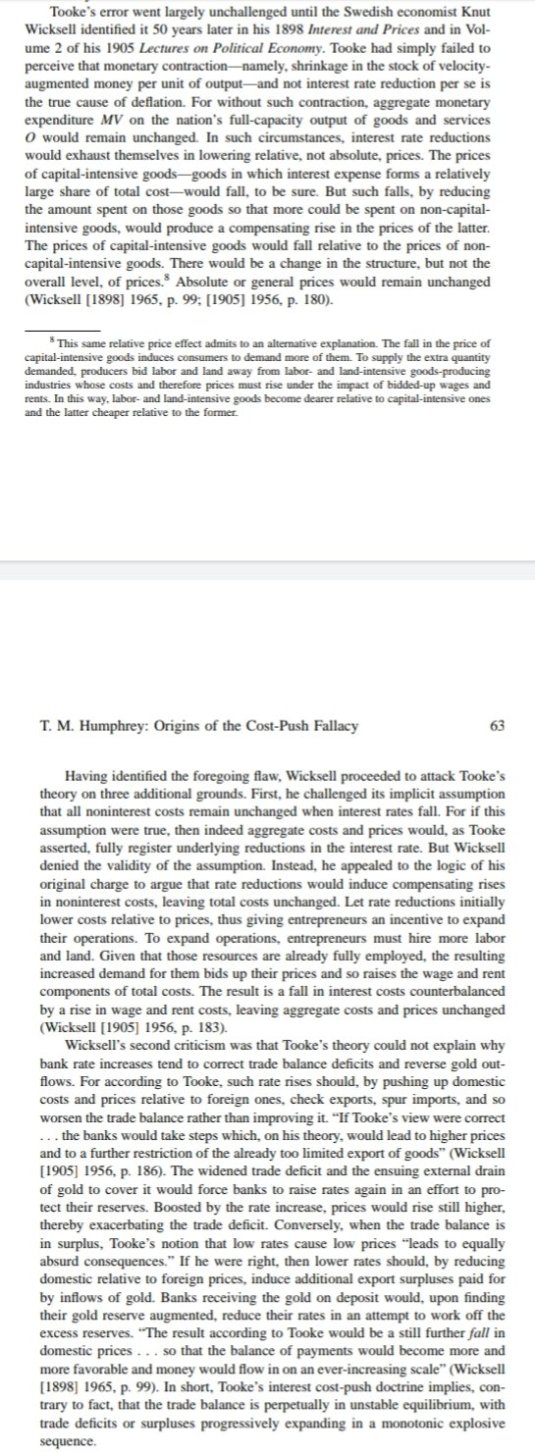
Interest rates and cost-push fallacies
14 Feb 2020 Leave a comment
in business cycles, history of economic thought, macroeconomics, monetary economics Tags: monetary policy
Michael Bloomberg and the Imperious Presidency
14 Feb 2020 Leave a comment
in economics of crime, law and economics, politics - USA, war and peace Tags: 2020 presidential election, meddlesome preferences
Should social media platforms censor hate speech? | Nadine Strossen | Big Think
14 Feb 2020 Leave a comment
in economics of crime, economics of education, economics of information, economics of regulation, economics of religion, law and economics, politics - Australia, politics - New Zealand, politics - USA, property rights Tags: free speech

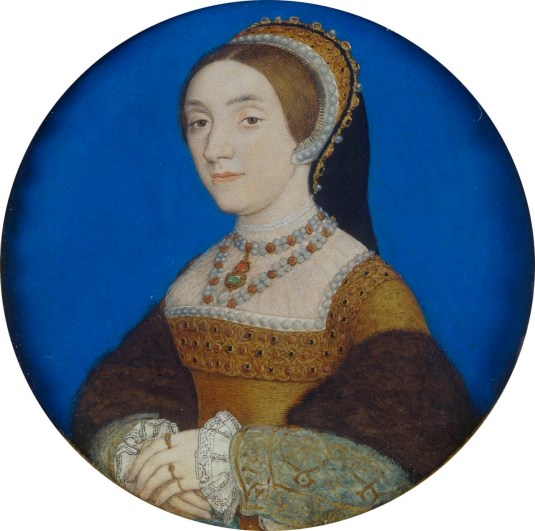
On this date in History: February 13, 1542 Execution of Catherine Howard, 5th wife of King Henry VIII of England and Ireland.
14 Feb 2020 Leave a comment

On this date in History: February 13, 1542 Execution of Catherine Howard, 5th wife of King Henry VIII of England and Ireland.
Catherine Howard (c. 1523 – February 13, 1542) was Queen of England from 1540 until 1541, as the fifth wife of Henry VIII. She (then 16 or 17) married him (then 49) on July 28, 1540, at Oatlands Palace, in Surrey, almost immediately after the annulment of his marriage to Anne of Cleves was arranged.
Catherine’s uncle, the Duke of Norfolk, found her a place at Court in the household of the King’s fourth wife, Anne of Cleves. As a young and attractive lady-in-waiting, Catherine quickly caught Henry’s eye. The King had displayed little interest in Anne from the beginning, but on Cromwell’s failure to find a new match for Henry, Norfolk saw an opportunity. The Howards may have sought to recreate the influence gained during Queen Anne’s reign…
View original post 1,443 more words
Plausible scenarios for climate change: 2020-2050
14 Feb 2020 7 Comments

by Judith Curry
A range of scenarios for global mean surface temperature change between 2020 and 2050, derived using a semi-empirical approach. All three modes of natural climate variability – volcanoes, solar and internal variability – are expected to act in the direction of cooling during this period.
View original post 4,140 more words
ACLU continues defending the right of medically untreated men who claim they’re women to compete in women’s sports
14 Feb 2020 Leave a comment

I used to admire the American Civil Liberties Union (ACLU); I used to donate to the ACLU and was a member of the ACLU; the ACLU took my case when I was drafted illegally, and got me (and several thousand COs) out of our alternative service when the courts ruled unequivocally that the government had violated its own rules. Over history, the ACLU has been a fantastic organization for preserving the civil liberties of everyone, particularly those who are oppressed.
But now they’re going woke, and thereby going downhill. Like the Southern Poverty Law Center, they have decided to get into the social-justice arena—which would be okay except that they are taking positions that are neither reasonable nor supportable. In this case, they’re trying to argue that it’s discriminatory to prohibit biological men who claim that they’re women—”transgender” athletes who have undergone neither surgical nor hormone therapy—from competing in…
View original post 1,300 more words
Resolved: The Government Should Cut Off All Funding to Colleges and Universities
14 Feb 2020 Leave a comment
in economics of education, economics of information, human capital, labour economics, labour supply, managerial economics, occupational choice, organisational economics, personnel economics Tags: asymmetric information, signaling
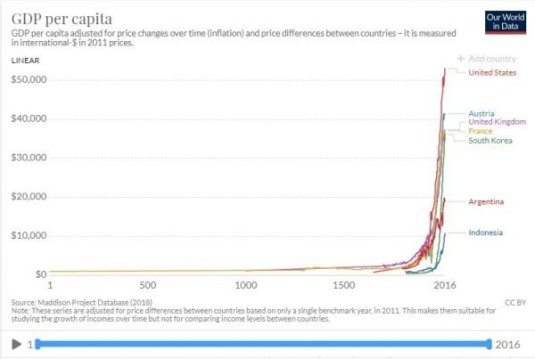
The hockey stick @AOC @BernieSanders
14 Feb 2020 Leave a comment
in development economics, economic history, growth miracles Tags: The Great Enrichment, The Great Escape
The New Archbishop of Canterbury | The Blackadder | BBC Comedy Greats
14 Feb 2020 Leave a comment
in television
The Biggest Rocket ever Designed? – The Sea Dragon
14 Feb 2020 Leave a comment
in transport economics Tags: space
Corruption at elections in Britain in the 19th century
13 Feb 2020 Leave a comment

Following on from Martin Spychal’s blog about the paper he gave at last month’s ‘From “Old Corruption” to the New Corruption?’ conference, organised jointly by Oxford Brookes and Newman Universities, we hear from our assistant editor Kathryn Rix. She gave the conference keynote, looking at parliamentary efforts to tackle the problem of electoral corruption in the nineteenth century.
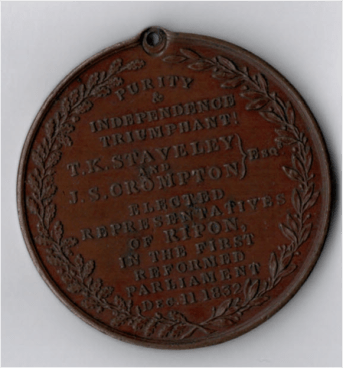 Election medal, Ripon, 1832. Image (c) K. Rix
In December 1832 voters in the Yorkshire borough of Ripon went to the poll for the first time in more than a century. The victory of the Reformers Thomas Staveley and Joshua Crompton over their two Conservative rivals was commemorated with a medal, depicting ‘The genius of patriotism driving corruption from the constitution’ and bearing the inscription ‘Purity and independence triumphant!’ In other constituencies, too, hopes were expressed that the 1832 Reform Act would mark the beginning of a new era of electoral…
View original post 1,054 more words


Recent Comments