Watch @SenWarren Lie About Her Son’s Private School Education
30 Jan 2020 Leave a comment
in economics of bureaucracy, economics of education, politics - USA, Public Choice, public economics Tags: 2020 presidential election, School choice
Steven Pinker: The Political Correct Mob and Academia
30 Jan 2020 Leave a comment
in economics of education, politics - Australia, politics - New Zealand, politics - USA Tags: academic bias, free speech, political correctness, regressive left
The Western Link: A new failure highlights the overbuild of Scottish Wind and raises new questions
30 Jan 2020 Leave a comment

 [image credit: beforeitsnews.com]
In short, Scottish wind power often produces too much for the electricity system to handle, yet more is planned. Meanwhile the super-expensive Western Link is failing miserably to draw off the excess power. Matt Ridley is trying to blow the whistle on this fiasco in the House of Lords, with some success.
Last weekend the Italian cable manufacturing company, Prysmian, released a statement announcing to the markets that the Western Link High Voltage Direct Current (HVDC) interconnector between Hunterston and Deeside had failed again, on the 10th of January, says the Renewable Energy Foundation.
This grid link, which is a joint venture between Scottish Power Transmission (SPT) and National Grid (NG), employs cables manufactured by Prysmian.
This £1 billion project has a peak transit capacity of 2.25 GW and was designed solely to facilitate the export of Scottish wind power to the English and Welsh…
View original post 354 more words
Sir Winston Churchill’s Funeral: A World In Remembrance (1965) | British Pathé
30 Jan 2020 Leave a comment
in economic history Tags: British history
Ross McKitrick – Breaking the #globalwarming #climateemergency Stalemate
30 Jan 2020 Leave a comment
in economics of information, energy economics, entrepreneurship, environmental economics, financial economics, global warming, Public Choice Tags: carbon tax
Where the real seigniorage is
30 Jan 2020 Leave a comment
in budget deficits, business cycles, economic growth, economics of information, financial economics, fiscal policy, macroeconomics, monetary economics Tags: monetary policy, sovereign defaults

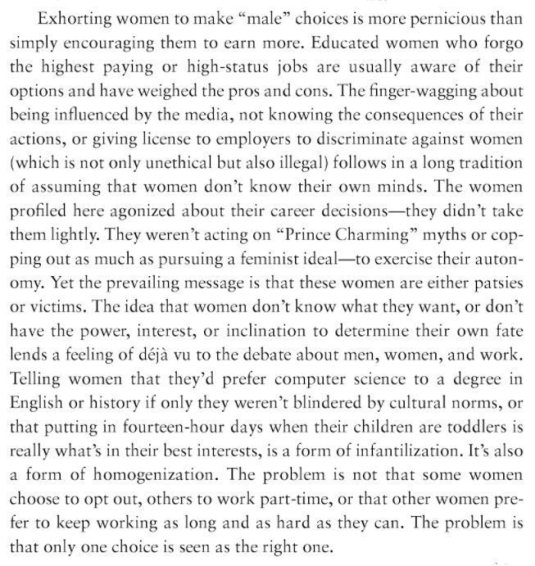

How 30 Students and a Dog Fled to a Safe Room from Christina Hoff Summers
30 Jan 2020 Leave a comment
in discrimination, economics of education, gender, human capital, law and economics, occupational choice, politics - USA, poverty and inequality Tags: free speech, political correctness, regressive left
J. S. Mill, the Prime Directive, and the Theory of Moral Intervention
29 Jan 2020 Leave a comment

 John Stuart Mill [left] and Jean-Luc Picard [right, drawing by gerardtorbitt]
This is the penultimate post of our five-week roundtable on science fiction and imperial history, co-edited by Marc-William Palen and Rachel Herrmann. You can read our call for posts here, and the other posts in the series here, here, here, here, here, here, and here. We look forward to hearing your thoughts!
“No starship may interfere with the normal development of any alien life or society.”
— Prime Directive (United Federation of Planets General Order 1)
“The Prime Directive is not just a set of rules; it is a philosophy…and a very correct one. History has proven again and again that whenever mankind interferes with a less developed civilization, no matter how well intentioned that interference may be, the results are invariably disastrous.” – Capt. Jean-Luc Picard
The Victorian political philosopher…
View original post 1,164 more words
The Trial of Charles I, King of England, Scotland and Ireland.
29 Jan 2020 Leave a comment

Charles was moved to Hurst Castle at the end of 1648, and thereafter to Windsor Castle. In January 1649, the Rump House of Commons indicted him on a charge of treason, which was rejected by the House of Lords. The idea of trying a king was a novel one. The Chief Justices of the three common law courts of England – Henry Rolle, Oliver St John and John Wilde – all opposed the indictment as unlawful.
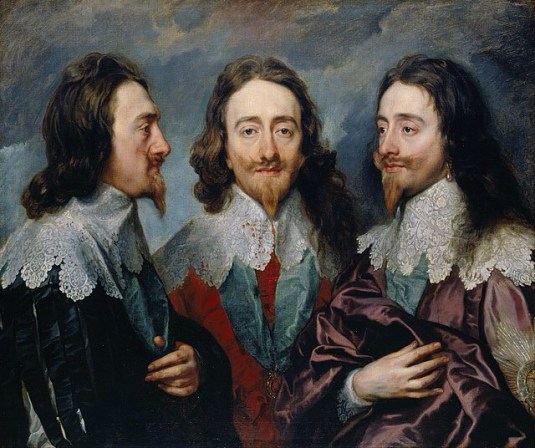
The Rump Commons declared itself capable of legislating alone, House of Lords passed a bill creating a separate court for Charles’s trial, and declared the bill an act without the need for royal assent. The High Court of Justice established by the Act consisted of 135 commissioners, but many either refused to serve or chose to stay away. Only 68 (all firm Parliamentarians) attended Charles’s trial on charges of high treason and “other high…
View original post 557 more words
“Hymen’s war terrific”: George III’s younger sons and the succession crisis of 1817-20
29 Jan 2020 Leave a comment

As we prepare to celebrate the birth of a new member of the royal family, Dr Charles Littleton, senior research fellow in the House of Lords 1660-1832 section, considers the circumstances surrounding the birth of Queen Victoria, whose 200th anniversary is celebrated later this month.
Two events this May 2019 provide an interesting light on the history of the royal succession. We are expecting (or may just have seen) the birth of the first child of the duke and duchess of Sussex. This further secures the succession to the crown down to the generation of the queen’s great-grandchildren. British history, though, shows that a smooth succession, with numerous candidates waiting in reserve, should never be taken for granted. For example, this month we also celebrate the bicentenary of the birth of Queen Victoria, on 24 May 1819. The birth of this symbol of the security and longevity of the…
View original post 1,002 more words
The ‘Interruption’ of Parliament and the quest for political settlement, October 1659
29 Jan 2020 Leave a comment

In the first of a new blog series charting the collapse of the British Republic, Dr Vivienne Larminie of the Commons 1640-1660 section discusses the military coup which temporarily suspended the Rump Parliament 360 years ago...
On the morning of Thursday 13 October 1659 ‘at his usual time’, Speaker William Lenthall was making his way by coach from his London residence to preside over a day’s business in the House of Commons when he encountered a check [Publick Intelligencer no. 198, p. 796]. Overnight, troops had positioned themselves along King Street (now Abingdon Street) and occupied Westminster Hall and Westminster Abbey Yard. Furthermore, a sturdy barricade had been erected at Millbank, ‘to hinder all Accesse from those places: And some Boates well manned with Souldiers, did row up and down the Thames about Westminster, and permitted none to land thereabouts’. Initially Lenthall ‘had passage through the ranks of…
View original post 909 more words


Recent Comments