Charles Murray on Coming Apart
23 Jan 2020 Leave a comment
in economic history, economics of education, economics of information, economics of media and culture, economics of natural disasters, economics of religion, human capital, labour economics, labour supply, Marxist economics, occupational choice, politics - USA, poverty and inequality, Public Choice, public economics, transport economics, unemployment, urban economics, welfare reform
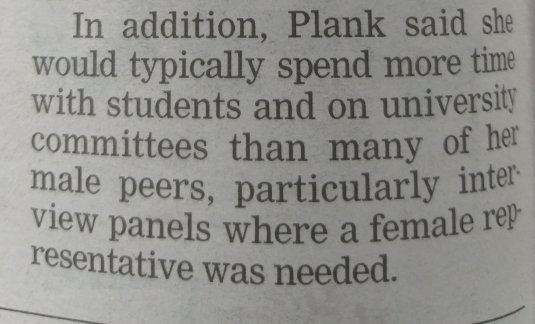
Do gender equality policies drive the academic gender pay gap? @moturesearch @women_nz
23 Jan 2020 Leave a comment
in discrimination, economics of education, gender, human capital, labour economics, labour supply, law and economics, managerial economics, occupational choice, organisational economics, personnel economics, politics - USA Tags: gender wage gap, unintended consequences
John Cleese: “So, Anyway…” | Talks at Google (Los Angeles)
23 Jan 2020 Leave a comment
in movies, Music, television
The United States Goes Dry – Alcohol Prohibition I THE GREAT WAR
23 Jan 2020 Leave a comment
in defence economics, economics of bureaucracy, economics of crime, economics of regulation, health economics, industrial organisation, law and economics, politics - USA, Public Choice, war and peace Tags: economics of prohibition, World War I
A BBC journalist’s portrayal of an armed infiltration from the Gaza Strip
23 Jan 2020 Leave a comment

On the evening of January 21st an infiltration took place on the border with the Gaza Strip.
“IDF soldiers opened fire at a group infiltrating the border fence along the Gaza-Israel border on Tuesday, hitting three Palestinian suspects who used the inclement weather to hide in a wooded area near Kibbutz Kissufim.
The IDF reported that one of the terrorists hurled a grenade or an explosive charge at a force that surrounded the three.”
As local media reported, the IDF released video evidence of the infiltrator throwing the explosive device.
To date the BBC has not produced any reporting on that incident but the next morning the BBC’s Jerusalem correspondent Tom Bateman did put out three related Tweets in which he found it appropriate to focus on the age of the armed border infiltrators and unnecessarily qualify the facts of the incident using the well-worn “Israel says” formula.
View original post 15 more words
History’s most amazing photo?
23 Jan 2020 Leave a comment

I almost never visit the My Modern Met site, but it must be good, as I often get suggestions from readers about articles there. I think I found this one on my own, but probably through Facebook. It’s the story of how an enterprising young photographer, Jon Carmichael, took a spectacular photo of a solar eclipse. Click on the screenshot to see the story.

The date was August 21, 2017, and you may remember that there was a total eclipse that day visible in much of the U.S. (I saw part of it, though it was overcast in Chicago). Carmichael decided to try to photograph the eclipse from in the air—on a commercial flight.
He chose a Southwest flight from Portland, Oregon to St. Louis, Missouri, which would put him in the path of the eclipse when he was in the air. But he neglected to buy the early…
View original post 219 more words
11. Corporate CEOS Can Make Constructive Contributions and Prevent Poor Policies
23 Jan 2020 Leave a comment
in applied welfare economics, energy economics, environmental economics, global warming Tags: climate alarmists


January 22, 1901: Death of Queen Victoria of the United Kingdom, Empress of India.
23 Jan 2020 Leave a comment

Victoria (Alexandrina Victoria; May 24, 1819 – January 22, 1901) was Queen of the United Kingdom of Great Britain and Ireland from June 20, 1837 until her death. On May 1, 1876, she adopted the additional title of Empress of India. Known as the Victorian era, her reign of 63 years and seven months was longer than that of any of her predecessors. It was a period of industrial, cultural, political, scientific, and military change within the United Kingdom, and was marked by a great expansion of the British Empire.

Victoria was the daughter of Prince Edward, Duke of Kent and Strathearn (the fourth son of King George III and Duchess Charlotte of Mecklenburg-Strelitz), and Princess Victoria of Saxe-Coburg-Saalfeld, the fourth daughter and seventh child of Franz Friedrich, Duke of Saxe-Coburg-Saalfeld, and Countess Augusta of Reuss-Ebersdorf. After both her father the Duke of Kent and his father, King George III, died…
View original post 587 more words
The United States Goes Dry – Alcohol Prohibition I THE GREAT WAR
23 Jan 2020 Leave a comment
in defence economics, economics of love and marriage, economics of regulation, health economics, law and economics, politics - USA, Public Choice, public economics, rentseeking, war and peace Tags: economics of prohibition, World War I


Recent Comments