#OTD Inventing the Airplane, Changing the World
18 Dec 2019 Leave a comment
in economic history, entrepreneurship, transport economics
An In-Depth Interview with @Ayaan Hirsi Ali on Islam and the Defense of Western Civilization
18 Dec 2019 Leave a comment
in development economics, discrimination, economic history, economics of crime, economics of information, economics of religion, gender, human capital, labour economics, labour supply, law and economics, liberalism, occupational choice, property rights, Public Choice Tags: Age of Enlightenment
Is Climate Change a Real Threat? – @RossMcKitrick
18 Dec 2019 Leave a comment
in applied welfare economics, development economics, economic history, energy economics, environmental economics, global warming, growth miracles, Public Choice Tags: climate alarmists, pessimism bias
Awkward doubts from Charles Plosser (1990)
18 Dec 2019 Leave a comment
in business cycles, econometerics, economic history, macroeconomics, Milton Friedman, monetarism, monetary economics Tags: monetary policy

Coal demand to remain stable amid climate concerns: IEA
18 Dec 2019 2 Comments

 Credit: Coal India Limited
As the COP 25 summit ends in disarray, all attempts to stoke up fears of a man-made ‘climate crisis’ are not going well, in some parts of the world at least. Hard to see developing countries turning away from reliable and affordable energy any time soon.
The demand for coal will remain steady over the next four years due to demand from Asia, which comes despite fears of the climate crisis, the International Energy Agency (IEA) said Tuesday.
Coastal areas across Southeast Asia have already seen major floods and seawater incursion linked to climate change, claims Phys.org.
“Global coal demand has rebounded since 2017,” the IEA said in a report.
View original post 148 more words
Not all ‘occupied territories’ are equal for the BBC
18 Dec 2019 Leave a comment

As readers are no doubt well aware the BBC rarely, if ever, passes up on an opportunity to remind its audiences that certain geographical areas appearing in its coverage are “occupied territories” or “occupied Palestinian land” and that “settlements are illegal under international law”. The BBC’s ‘style guide’ on “Israel and the Palestinians” has instructions for its journalists on the topic – including: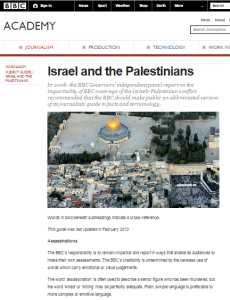
“Israel occupied East Jerusalem in 1967. A law in 1980 formalised an administrative measure tantamount to the annexation of land taken as a result of the 1967 War. The claim to East Jerusalem is not recognised internationally. Instead, under international law, East Jerusalem is considered to be occupied territory. […]
The BBC should say East Jerusalem is ‘occupied’ if it is relevant to the context of the story. For example: “Israel has occupied East Jerusalem since 1967. It annexed the area in 1980 and sees it as its…
View original post 344 more words

24% percent of girls had science as their best subject, 25% of girls’ strength was math, and 51% excelled in reading. For boys, the percentages were 38 for science, 42 for math, and 20 for reading
18 Dec 2019 Leave a comment
in discrimination, economics of education, gender, human capital, labour economics, labour supply, occupational choice Tags: gender wage gap, reversing gender gap

David Friedman and George Shultz – The Soviets, Negotiation and the Pentecostals
17 Dec 2019 Leave a comment
in defence economics, economic history, economics of bureaucracy, economics of religion, international economics, law and economics, politics - USA, Public Choice Tags: fall of communism
Glenn Loury & David Neumark [The Glenn Show] Minimum wage
17 Dec 2019 Leave a comment
in econometerics, economic history, economics of regulation, industrial organisation, labour economics, labour supply, minimum wage, politics - USA, poverty and inequality, unemployment Tags: offsetting behaviour, The fatal conceit, unintended consequences
A mobile prison?
17 Dec 2019 Leave a comment
in economics of religion, law and economics, liberalism Tags: Age of Enlightenment, Freedom of religion


Recent Comments