
Remember: Ice Age is Coming 1978 Science Facts
05 Dec 2019 9 Comments
in economic history, environmental economics, television Tags: global cooling, ice ages
AAA: Cold weather can cut electric car range over 40 percent
05 Dec 2019 Leave a comment


One for the ‘worse than we thought’ file. Anyone running out of power in an EV in winter due to sudden cold weather range reduction has no in-car way to keep warm while waiting for rescue.
Cold temperatures can sap electric car batteries, temporarily reducing their range by more than 40 percent when interior heaters are used, a new study found.
The study of five electric vehicles by AAA also found that high temperatures can cut into battery range, but not nearly as much as the cold, reports TechXplore. The range returns to normal in more comfortable temperatures.
View original post 305 more words
Study Shows Electric Cars Become Practically Useless In Cold Weather
05 Dec 2019 Leave a comment
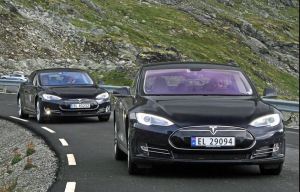 Teslas in Norway [image credit: Norsk Elbilforening (Norwegian Electric Vehicle Association)]
EVs are looking like yet another ‘save the planet’ fiasco in the making. Some of the points made here were already known, but these studies reinforce them. As many EVs on the road are still relatively new, the full extent of any problems may not yet be clear. With the help of large subsidies and other incentives they sell well in Norway despite the cold winters there.
According to recent studies, cold temperatures significantly reduce the performance of electric cars, especially when it comes to battery life.
One study by AAA suggested that cold temperatures can reduce the range of the batteries in most electric cars by over 40 percent, reports Anonymous News.
It was also noted that the performance can be even worse when the interior heaters are used.
View original post 172 more words
Labour’s poll slide: let’s see if Jacindamania (and a tax cut?) can compensate for Cabinet’s incompetents
05 Dec 2019 Leave a comment

Labour’s rating with voters has dropped to its lowest in two years, according to the latest Colmar Brunton poll. This has provoked a flurry of action by ministers, with a $400m new spend on schools and promises of big infrastructure projects to be announced in the half-year fiscal update.
Finance Minister Grant Robertson is sticking to his mantra that the economy continues to grow at faster rates than the countries it compares itself with, notably Aust, the UK and the US—even though the Treasury says overall NZ GDP growth is likely to fall below Budget forecasts.
Two per cent GDP growth is hardly likely to create any surge of enthusiasm, especially if it keeps trending down. For the man and woman in the street, cost of living inflation is eroding the impact of any recent wage increases.
As for the politics, the government’s claim for its performance in what was …
View original post 641 more words
Champ and Freeman on bank capital reserves
05 Dec 2019 Leave a comment
in applied price theory, applied welfare economics, business cycles, economic history, economics of information, economics of regulation, financial economics, global financial crisis (GFC), great depression, great recession, industrial organisation, macroeconomics, monetary economics, politics - New Zealand, Public Choice, survivor principle Tags: adverse selection, agent principal problem, deposit insurance, economics of central banking, monetary policy, moral hazard, prudential regulation
David Friedman – Trying to stop Global Warming may not be the solution
05 Dec 2019 Leave a comment
in applied welfare economics, David Friedman, energy economics, environmental economics, global warming Tags: climate alarmism
What Do Entrepreneurs Actually Do?
05 Dec 2019 Leave a comment
in economic history, economics of information, entrepreneurship, fisheries economics, human capital, income redistribution, industrial organisation, labour economics, labour supply, managerial economics, Marxist economics, occupational choice, organisational economics, personnel economics, politics - USA, poverty and inequality, property rights, Public Choice, public economics, survivor principle Tags: creative destruction, entrepreneurial alertness, superstar wages, superstars, top 1%
.@jeremycorbyn on NATO
05 Dec 2019 Leave a comment
in defence economics, war and peace Tags: British politics, NATO


The British Blitz Spirit is a Myth – WW2 – War Against Humanity 005
04 Dec 2019 Leave a comment
in defence economics, war and peace Tags: World War II
Canadian Club: Wind Industry Furious: Ontario Rips Up 750 Wind Power Contracts
04 Dec 2019 Leave a comment


Proving, yet again, that the absence of mandates, targets and massive subsidies the wind industry would disappear in a heartbeat, the decision to cancel hundreds of government contracts with wind power developers in Ontario has left rent seekers furious, and wondering where their next meal might come from?
Ontario’s Premier Doug Ford couldn’t conceal his delight in announcing the demise of hundreds of projects, thereby avoiding thousands of these things being speared across Ontario’s rural heartland. Not to mention saving power consumers hundreds of millions of dollars, over the long haul.
Doug Ford ‘proud’ of decision to tear up hundreds of green energy contracts
The Canadian Press
Shawn Jeffords
21 November 2019
Premier Doug Ford said Thursday he is “proud” of his decision to tear up hundreds of renewable energy deals, a move that his government acknowledges could cost taxpayers more than $230 million.
Ford dismissed criticism that his Progressive…
View original post 506 more words
Britain’s Plastic Bag Fee Is Producing a Huge Spike in the Consumption of Thicker, ‘Reusable’ Plastic Bags
04 Dec 2019 Leave a comment

The law of unintended consequences rears its ugly head.
Christian Britschgi | 12.2.2019 – Reason
The results of plastic bag bans and restrictions are frequently disappointing, and occasionally counter-productive. Take the United Kingdom, where a country-wide bag fee is encouraging consumers to switch from single-use bags to thicker, reusable bags that use more plastic.
Last Thursday, Greenpeace and the Environmental Investigation Agency (EIA), a non-profit, released a report on the plastic consumption of British grocery stores that found they were actually using more plastic even as customers switch from using thin, disposable plastic bags to thicker reusable “bags for life.”
The report found that use of these “bags for life” increased from 960 million in 2018 to 1.5 billion in 2019. That’s a big single-year increase and well above the 439 million reusable plastic “bags for life” dispensed by the seven largest British grocery stores in 2014, according to a…
View original post 135 more words


Recent Comments