Marijuana referendum Yes case needs rescuing, fast

The Yes case for marijuana legalisation in the past few short months have turned favourable polling into a likely defeat. The reason is their current arguments do not pass the laugh test.

The first of these arguments is to carry on about the 870 people currently in prison for low-level drug offences. The effective Yes case slogan is “Too many drug dealers are in prison”. Not a winner.

Only seven people were sent to prison last year just for marijuana drug possession. The maximum term for marijuana possession is three months. Given that, you might suspect that those seven people were mostly gang members on the receiving end of some well-deserved police harassment.

Next up we have Chloe Swarbrick tweeting herself most earnestly into knots arguing that a legal market for marijuana will be smaller than the current illegal market. That claim is straight after long arguing that prohibition failed to contain consumption of marijuana. Somehow less regulation will reduce cannabis consumption and the harm that goes with it than a complete ban.

The Yes case can’t have it both ways. Argue that the war on drugs was lost long ago because everyone has easy access to marijuana if they want it but then argue legalisation will reduce access because users will only use legal outlets and pay tax.

You can find your nearest marijuana shop on Google maps and on marijuana apps in California; both the 400 odd legal marijuana dispensaries along with at least 4000 illegal dispensaries. Illegal marijuana is readily available and 50% cheaper than from the legal supply in Canada. That assumes you are near the about five or so shops in your entire province that legally sell marijuana.

Prohibition is supposed to always fail but alcohol prohibition in the US in the 1920s was more effective than commonly thought, especially if you base your knowledge on TV gangster programs. Prohibition reduced alcohol consumption in the 1920s by 1/3rd in the USA by the best estimates. Prohibition also greatly reduced public drunkenness and hospital admissions for alcohol-related liver and other diseases. Trends in violence and murders were even ambiguous because there were many more gangland murders but there was also less alcohol-related domestic violence.

Prohibition ended because so many people were still drinking that the public corruption and gang violence became unpopular. Also, prohibition repeal advocates campaigned openly carrying signs saying ‘we want beer’. They were willing to take the good with the bad from the end of prohibition. The fact that 1930s depression hit governments were short of tax revenues was important too.

The experience in the USA and Canada is the illegal trade continues, often to avoid tax. Existing drug dealers lack the clean records to be licensed legally so they stay in business illegally selling tax free. The cover of legality turns legal marijuana states into export states including to Mexico. It can’t be ruled out that if marijuana is legalised here, we will become a cannabis exporter to Australia!

Legal dispensaries may well card check the age of their buyers. But age restrictions have not stopped teenagers having an older mate buy for them or use a fake ID. The District Court regularly convicts licensed premises for selling alcohol to the underaged after a police sting operation. Using a fake ID requires less courage and bluster at a legal dispensary than going to a gang tinny house.

The last time I attended a nightclub, a long time ago I must admit when I was in my late-20s, everyone but my two friends and I were card checked at the door. We notice this because we were drinking for an hour in sight of the door to the nightclub upstairs. We found everyone being card checked amusing and this led us to go upstairs to see if we were card checked. When we walked inside the popular nightclub, we seemed to be the only patrons in the place that looked over 18.

If the Yes case is to win, and I wanted to win, it must show that there is a net benefit from more people using marijuana. The harm reduction model that is currently the flagship of the Yes case must explain why an up to 1/3rd increase in cannabis use is a net social benefit but it cannot. The Yes case must stop denying that there are hard social trade-offs to be made if marijuana is to be legalised.

The No case is middle-class, dope smoking successful professionals still want to be able to say marijuana is illegal when feuding with their kids about bad grades. These successful professionals light up a joint on a Saturday night, but remember friends at university drifting off into a haze of smoke. They don’t want their all too often spoilt kids going the same way and dropping out.

The Yes case can win by focusing on getting gangs out of the supply chain. Right now, because the gangs are in the supply chain, young people are offered free samples of harder drugs all too often.

The middle-aged, middle-class, dope smoking voters who are the swinging voters in the referendum fear hard drugs use far more than they fear their kids smoking a little bit too much puff.

If young people are to be the face of the Yes case, they need a comeback to Mike Hosking saying you are young, you know nothing, you have never raised a family. Come back when you have done that. Perhaps it is a bit of karma when young activists are caught short by the lived experience argument used by Mike Hosking, an argument they so often deploy themselves to close down discussion.

The answer to the lived experience of Mike Hosking as a parent is older people are certainly more experienced but can be crotchety, stubborn and sometimes a bit out of touch. Young people know that when they buy marijuana, they can be offered free samples of harder drugs. That is not like the long-time respectable middle-class suppliers to equally middle-aged dope smoking parents who are planning to vote No if they don’t hear any better arguments than treated dope as a health issue.

Young people know that some of their friends will be tempted to try these free samples of harder drugs. Let young people buy at legal suppliers who will not lead them into this temptation.

Adam Perry: Enforcing Principles, Enforcing Conventions

Constitutional Law Group's avatarUK Constitutional Law Association

Did the UK Supreme Court enforce a constitutional convention in Miller (No 2)? Most writers say no. I say yes.

Miller (No 2)

I won’t go through the case in detail. For my purposes three points matter.

First, the UKSC says that there is a constitutional ‘principle of Parliamentary accountability’. It gives three examples of ministerial accountability in practice: (1) ministers’ duty to answer questions in Parliament; (2) ministers’ duty to appear before Parliamentary committees; and (3) Parliament’s opportunity to scrutinise delegated legislation.

Second, the court says that this principle imposes a ‘legal limit’ on the power to prorogue. Specifically, a decision to prorogue or to advise the monarch to prorogue Parliament is unlawful if it frustrates or prevents Parliament’s ability to carry out its function as the the body responsible for supervising the executive, without reasonable justification. By ‘supervising’ it is clear the Court means to include holding…

View original post 1,182 more words

Op-ed at The Times: Corbyn is merely a ‘critic of the Likud government’

Adam Levick's avatar

In an op-ed at The Times, Gabrielle Rifkind, a psychotherapist and “Middle East specialist in conflict resolution”, argues that British Jews and Jeremy Corbyn need to “reconcile” their ‘differences’.

The piece, “We need a path towards reconciliation for Labour and British Jews”, Dec. 3, includes the following:

There is now a need to hold morally complex ideas together that both abhor antisemitism but are also even-handed and capable at looking at constructive solutions and outcomes to the Palestine-Israel conflict. The election of Jeremy Corbyn as leader has exacerbated the problem as his sympathies lie with the Palestinians. Whilst it is understandable that one identifies with the weaker party, to resolve conflict it is essential to engage with all sides to find solutions.

Jeremy Corbyn is seen as hostile to the state of Israel. More accurately, he is a critic of the current Likud government. He had a close…

View original post 555 more words

Vanderbilt students protest Steve Pinker’s appearance because of his “ties” to Jeffrey Epstein

whyevolutionistrue's avatarWhy Evolution Is True

From the Vanderbilt Hustler, the student newspaper of that Nashville, Tennessee university, we learn that the demonized people subject to being deplatformed by the Left is—you guessed it—Steve Pinker. Read the article below, which describes a petition the students are putting together demanding that Pinker get booted from an upcoming panel on global issues. The reason is given in the sub-headline: Pinker’s “history of ties to Jeffrey Epstein.”


To be sure, there are only about 120 signatures on the petition, and the chances that it will work seem quite low. What’s important is that Pinker is increasingly regarded by the woke as ideologically polluted, regardless of the value of his books and works, because he had a tangential connection with Epstein—a connection that doesn’t implicate Pinker in any misconduct, sexual or otherwise.

Here’s a small excerpt from the Vanderbilt piece:

Junior Edie Duncan started a petition Nov. 25 to…

View original post 1,228 more words

three questions for activist-scholars

fabiorojas's avatarorgtheory.net

I am not opposed to scholars being politically active, nor using their scholarly skills to tackle public issues. Still, I am a proponent of the compartmentalization of scholarship and activism. Values are important, but so is science and that has to be done in a way that does not bias your research or undermine your claims to truth.

When you mix the two – activism and scholarship – you get some real problems. To illustrate, a series of questions:

  1. Let’s say you are an activist-scholar and you are on a job search committee. Someone applies, has a strong CV, and says they are an activist-scholar… for the other side. Do you seriously consider them or toss the application?
  2. Let’s say that you are on television defending your research and a critical journalist says, “Why should I believe what you say? Don’t ‘activist-scholars’ just dress up their opinions in data? They…

View original post 210 more words

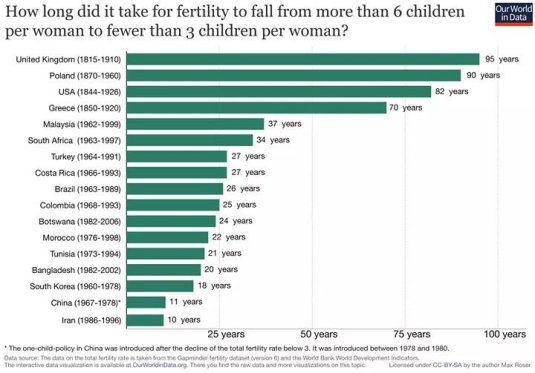
The demographic transition

Image

Mariah Carey – Silent Night (Live at St. John The Divine)

La maquinaria de la libertad (Entrevista) | David Friedman

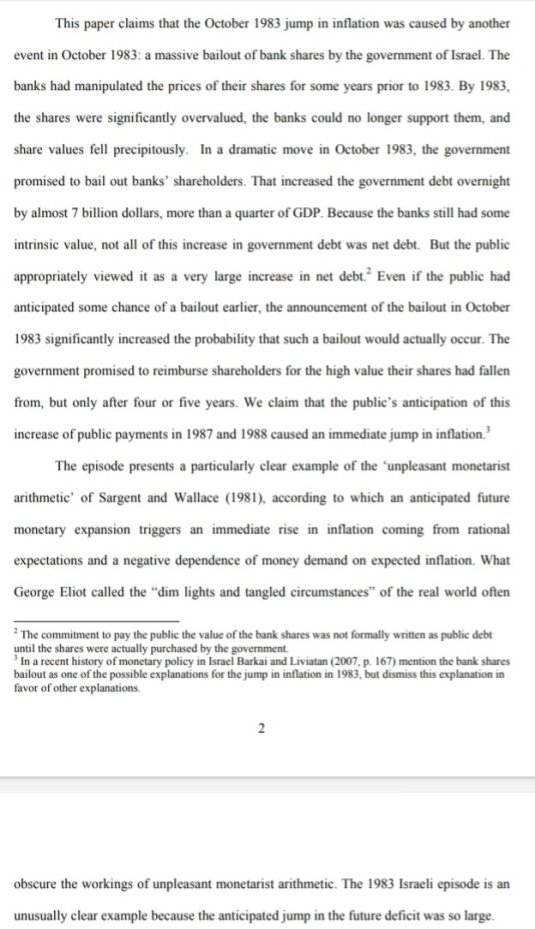
Sargent on sudden hyperinflation as a fiscal phenomenon

Image

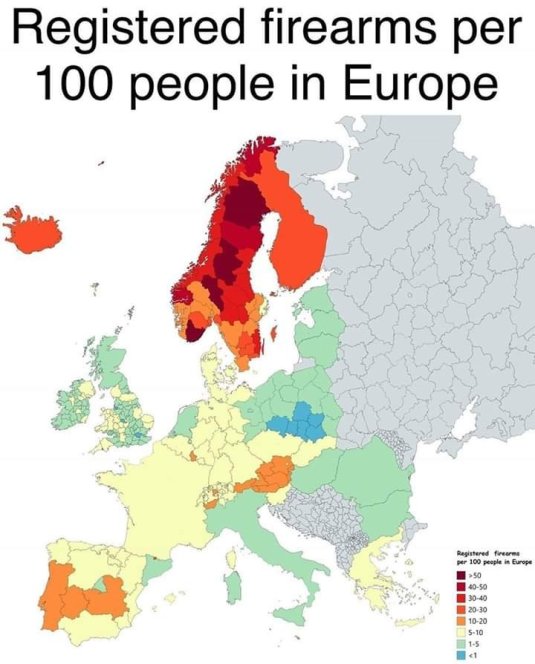
Every second Scandinavian is armed?

Image

Steven Pinker: Human nature and the blank slate

The Courage to Do Nothing about Climate Change

Ron Clutz's avatarScience Matters

At Human Events, Gregory Wrightstone writes Principled Inaction in the Face of Climate Change Extremism. Excerpts in italics with my bolds.

President Trump’s courageous commitment to America first on the issue of energy emissions.

The 2019 United Nations Climate Change Conference, “COP25,” began with a cryptic address by U.N. Secretary-General António Guterres: “By the end of the coming decade we will be on one of two paths, one of which is sleepwalking past the point of no return … Do we want to be remembered as the generation that buried its head in the sand and fiddled as the planet burned?”

According to Guterres, “What is still lacking is political will.” And yet, despite all this “lack of political will,” some 70 countries have pledged carbon neutrality by 2050. Conspicuously absent from the proceedings, however, is the Trump Administration. No senior member of President Trump’s administration is in attendance at…

View original post 1,179 more words

The Hungarian Romanian War & The Downfall of the Hungarian Soviet Republic I THE GREAT WAR 1919

Focus group: Can Tories win over @UKLabour supporters who back Leave?

Selection Bias: Will You Make More Going to a Private University?

Previous Older Entries Next Newer Entries

The War on Prices

Celebrating humanity's flourishing through the spread of capitalism and the rule of law

The Bleeding Heart Libertarian

Celebrating humanity's flourishing through the spread of capitalism and the rule of law

More Stories from the Stories I Publish!

Celebrating humanity's flourishing through the spread of capitalism and the rule of law

In My Tribe

Celebrating humanity's flourishing through the spread of capitalism and the rule of law

Coordination Problem

Celebrating humanity's flourishing through the spread of capitalism and the rule of law

Libertarian Land

Celebrating humanity's flourishing through the spread of capitalism and the rule of law

Arin’s Substack

Celebrating humanity's flourishing through the spread of capitalism and the rule of law

David Andolfatto

Celebrating humanity's flourishing through the spread of capitalism and the rule of law

Monetary Non-Neutrality

Celebrating humanity's flourishing through the spread of capitalism and the rule of law

Reason Magazine

Celebrating humanity's flourishing through the spread of capitalism and the rule of law

Coyote Blog

Celebrating humanity's flourishing through the spread of capitalism and the rule of law

Thoughts from the North

Celebrating humanity's flourishing through the spread of capitalism and the rule of law

Fardels Bear

A History of the Alt-Right

Vincent Geloso

Econ Prof at George Mason University, Economic Historian, Québécois

Bassett, Brash & Hide

Celebrating humanity's flourishing through the spread of capitalism and the rule of law

Truth on the Market

Scholarly commentary on law, economics, and more

The Undercover Historian

Beatrice Cherrier's blog

Matua Kahurangi

Celebrating humanity's flourishing through the spread of capitalism and the rule of law

Temple of Sociology

Celebrating humanity's flourishing through the spread of capitalism and the rule of law

Velvet Glove, Iron Fist

Celebrating humanity's flourishing through the spread of capitalism and the rule of law

Why Evolution Is True

Why Evolution is True is a blog written by Jerry Coyne, centered on evolution and biology but also dealing with diverse topics like politics, culture, and cats.

NoTricksZone

Celebrating humanity's flourishing through the spread of capitalism and the rule of law

Homepaddock

A rural perspective with a blue tint by Ele Ludemann

Kiwiblog

DPF's Kiwiblog - Fomenting Happy Mischief since 2003

The Dangerous Economist

Celebrating humanity's flourishing through the spread of capitalism and the rule of law

Watts Up With That?

The world's most viewed site on global warming and climate change

The Logical Place

Tim Harding's writings on rationality, informal logic and skepticism

Doc's Books

A window into Doc Freiberger's library

The Risk-Monger

Let's examine hard decisions!

Uneasy Money

Commentary on monetary policy in the spirit of R. G. Hawtrey

Barrie Saunders

Thoughts on public policy and the media

Liberty Scott

Celebrating humanity's flourishing through the spread of capitalism and the rule of law

Point of Order

Politics and the economy

James Bowden's Blog

A blog (primarily) on Canadian and Commonwealth political history and institutions

Science Matters

Reading between the lines, and underneath the hype.

Peter Winsley

Economics, and such stuff as dreams are made on

A Venerable Puzzle

"The British constitution has always been puzzling, and always will be." --Queen Elizabeth II

The Antiplanner

Celebrating humanity's flourishing through the spread of capitalism and the rule of law

Bet On It

Celebrating humanity's flourishing through the spread of capitalism and the rule of law

History of Sorts

WORLD WAR II, MUSIC, HISTORY, HOLOCAUST

Roger Pielke Jr.

Undisciplined scholar, recovering academic

Offsetting Behaviour

Celebrating humanity's flourishing through the spread of capitalism and the rule of law

JONATHAN TURLEY

Res ipsa loquitur - The thing itself speaks

Conversable Economist

In Hume’s spirit, I will attempt to serve as an ambassador from my world of economics, and help in “finding topics of conversation fit for the entertainment of rational creatures.”

The Victorian Commons

Researching the House of Commons, 1832-1868

Books & Boots

Reflections on books and art