
Is this re-imprisonment high or low? @sst_nz @justspeaknz @NZJusticeIdeas @actionstations
29 Nov 2019 Leave a comment
Why does Russia Own Kaliningrad/ Königsberg?
29 Nov 2019 Leave a comment
in defence economics, economic history, International law, Public Choice, war and peace Tags: fall of communism, German unification, World War I, World War II

Gender gap in chosiness
29 Nov 2019 Leave a comment
in discrimination, economics of love and marriage, gender Tags: dating market, martial search

Talking in the Clive James Library Series 3 – Jonathan Miller
28 Nov 2019 Leave a comment
in television
CLIMATE SCIENTIST : Snowfall Will Become A Very Rare And Exciting Event…Children Just Aren’t Going To Know What Snow Is
28 Nov 2019 Leave a comment

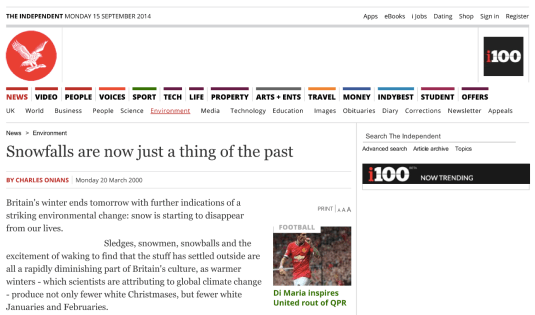 SNOWFALL Will Become “A Very Rare And Exciting Event…” | Climatism
SNOWFALL will become “A very rare and exciting event…
Children just aren’t going to know what snow is.”
Dr David Viner – Senior scientist, climatic research unit CRU (2000)
“Winters with strong frosts and lots of snow
like we had 20 years ago will no longer exist at our latitudes.”
– Professor Mojib Latif (2000)
“Good bye winter. Never again snow?” – Spiegel (2000)
“Milder winter temperatures will decrease heavy snowstorms” – IPCC (2001)
“End of Snow?” – NYTimes (2014)
***
Hat Tip@twawki2
ONE of the more memorable instances of global warming climate change fear-mongering, gone awry, is that of the bold prediction made by Dr David Viner, of the UK’s Climate Research Unit (CRU), in an interview with The Independent’s Charles Onians.
THE now infamous dud-prediction became The Independent’s most cited (now deleted) article in its history…
View original post 937 more words
Andrew Geddis: Restoring the Voting Rights of (Some) New Zealand Prisoners
28 Nov 2019 Leave a comment

The issue of whether prisoners should have the right to vote (and, if so, which prisoners) has long troubled a number of democracies. The current position in the United Kingdom is that no prisoner serving a custodial sentence after conviction can vote, albeit that the Scottish and Welsh Assemblies currently are taking steps to allow some prisoners to do so in devolved elections (see Neil Johnston, “Prisoners’ voting rights: developments since May 2015”, Commons Briefing papers CBP-7461, Sept. 30, 2019). New Zealand currently mirrors the UK in barring all sentenced prisoners from voting.
However, New Zealand’s Minister of Justice recently announced that the law will be amended before the next general election in late 2020 to enfranchise prisoners serving sentences of less than three years. This change follows sustained criticism of the complete ban on prisoner voting, including a formal judicial declaration that it is inconsistent with the right…
View original post 1,532 more words
Impeachment hearings prompt media references to heroic-journalist myth of Watergate
28 Nov 2019 Leave a comment

It doesn’t take much for journalists to conjure the heroic-journalist myth of Watergate. The trope has such narrative power that it’s easy to invoke, if usually too good to check.
Perhaps an inevitable by-product of the recent bombshell-free and wholly unrevealing impeachment hearings conducted by the House of Representatives Intelligence Committee were news media references to the Watergate scandal and the myth that the Washington Post’s reporting brought down Richard Nixon’s presidency in 1974.
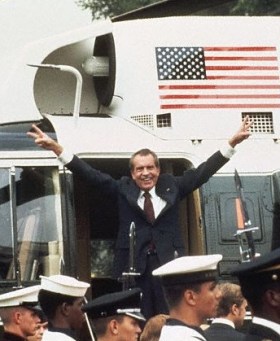 Not the Post’s doing: Nixon quits
That’s the heroic-journalist trope of Watergate. It centers around the work of Bob Woodward and Carl Bernstein, the Post’s lead reporters on the scandal, and it was invoked blithely.
Last week, for example, the Guardian of London referred to the Post as “the paper that owned the [Watergate] story and ultimately brought down the presidency of Richard Nixon.”
As the House committee’s hearings were about to go public, David
View original post 873 more words
THE AMBASSADORS: AMERICAN DIPLOMATS ON THE FRONT LINES by Paul Richter
28 Nov 2019 Leave a comment

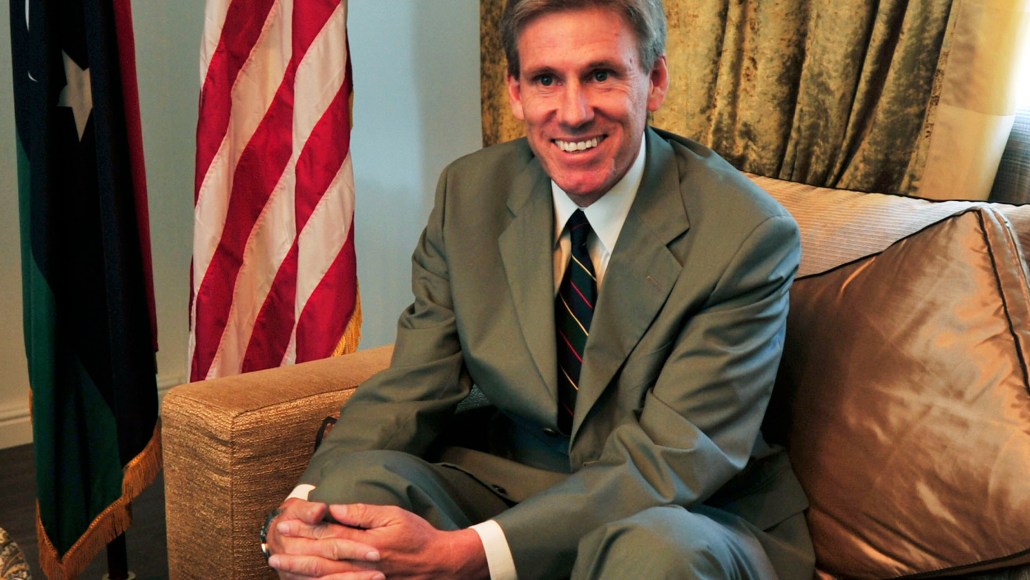 (American Ambassador to Libya Christopher Steven)
The past two weeks the American people witnessed the professionalism and commitment to American national security on the part of diplomatic personnel before the House Intelligence Committee. Career diplomats like acting Ambassador to the Ukraine, William B. Taylor, Jr., Deputy Assistant Secretary of State George Kent, Fiona Hill, a former official at the U.S. National Security Council specializing in Russian and European affairs, and Ambassador Marie Yovanovitch who was fired as ambassador to the Ukraine by President Trump, along with a number of others displayed their honesty and integrity as they were confronted by conspiracy theories and lies developed to defend administration attempts to coerce and bribe Ukrainian President Volodymyr Zelensky to encourage him to launch investigations into former Vice President Joe Biden and his son Hunter. The preciseness of their presentations left no doubt as to their credibility and points to the importance…
View original post 2,024 more words
“I’ll never be hungry again”
28 Nov 2019 Leave a comment

“… No, nor any of my folk. If I have to lie, steal, cheat, or kill, as God is my witness, I’ll never be hungry again.”
Gone With the Wind
1913-1919
Steven Pinker wrote an important book, The Better Angels of Our Nature, arguing that along a number of dimensions and on a number of time scales, human societies have been getting less violent over time. I think he’s probably right, but there’s an obvious problem to be wrestled with, the battle deaths in the First and Second World Wars and further associated deaths from starvation, disease and other mass killing. Here’s a figure from his book:

Pinker argues that there’s a lot of random variation around the long-term trend to reduced violence. The frequency distribution of sizes of wars (measured by war deaths) looks like random noise following a power law (like the frequency distributions of the magnitudes…
View original post 489 more words


Recent Comments