
Steven Pinker How The Mind Works
22 Nov 2019 Leave a comment
in economics of education, health economics Tags: cognitive psychology, evolutionary psychology
Claudius: Rome’s Accidental Emperor
22 Nov 2019 Leave a comment
in comparative institutional analysis, constitutional political economy, defence economics, Public Choice Tags: Roman empire
Popper on measurement without theory
21 Nov 2019 Leave a comment
in Karl Popper Tags: philosophy of science

.@_AAAP_ @RMarchNZ @_chloeswarbrick @GarethMP
21 Nov 2019 Leave a comment
in applied price theory, comparative institutional analysis, economics of information, economics of regulation, politics - New Zealand, Public Choice, urban economics

Should FEMA act as a national zoning board or use market incentives to reduce disaster risk?
21 Nov 2019 Leave a comment

Last week, a nominee to lead the Federal Emergency Management Agency generated fireworks when, during his confirmation hearing, he said he does not know the cause of climate change. The comment reignites the debate over how FEMA, which provides subsidized flood insurance and disaster relief, should respond to the risk climate change poses for both functions. Fortunately, given FEMA’s role, the cause of this increased risk shouldn’t matter. If FEMA recognizes the risk, the only question is figuring out whether and how to respond to it.
Climate change, to the extent it increases the risk of sea level rise and destructive natural disasters, substantially affects FEMA programs. It increases the National Flood Insurance program’s liabilities, if the risks are not appropriately priced (as they’re usually not). And it may increase the frequency and costs of FEMA disaster responses. But that climate change may pose risks that FEMA should account for…
View original post 561 more words
Lessons from IBM in Nazi Germany (How top companies just kept doing business with Nazis..)
21 Nov 2019 Leave a comment

Prof Geoff Jones of HBS has recently written a case on role of IBM in Nazi Germany.
He discusses the case and its broad lessons in this superb interview:
View original post 1,119 more words
Jordan Peterson: Why Postmodernists are Wrong about Western Civilization
21 Nov 2019 Leave a comment
in economic history, economics of education, law and economics Tags: Age of Enlightenment, moral psychology, political psychology, The Great Enrichment
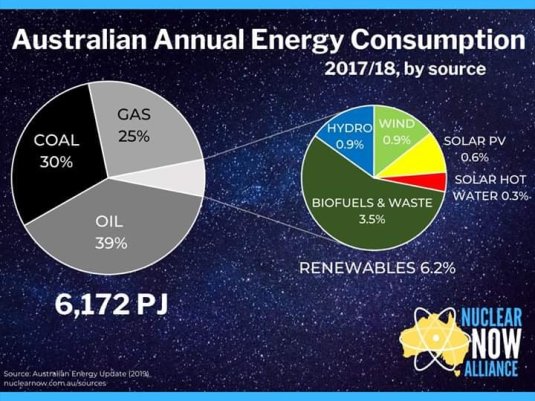
Renewables have a long way to go
21 Nov 2019 2 Comments
in energy economics, environmental economics, global warming, politics - Australia Tags: nuclear power, solar power, wind power
book spotlight: open borders, the science and ethics of immigration by bryan caplan and zach weinersmith
21 Nov 2019 Leave a comment


It is rare that you pick up a book and just say, ” wow, this is an achievement.” For the last five years or so, Bryan Caplan has immersed himself in the extremely large social science literature on immigration and its impacts. You would expect a 300 page academic monograph. But that’s not what you get. Instead, he teamed up with Zach Weinersmith of SMBC fame to write a graphic novel. Open Borders: The Science and Ethnics of Immigration is truly something else. It’s a slim tome that lays out the argument for unrestricted migration. It’s joyful , it’s beautiful, and most importantly, it’s right.
View original post 354 more words
Championing social democracy not productivity
21 Nov 2019 Leave a comment

Not unlike the OECD, our Productivity Commission tends to lean left. Not usually in some overtly partisan sense, but in a bias towards government solutions, a disinclination to focus on government failures as much as “market failures”, and a mentality that is often reluctant to look behind symptoms (which government action can sometimes paper over) to look at deeper causes and influences.
Sometimes the cheerleading for the left becomes more overt. There was a streak of that evident in their climate change report a year or two back, but it seems particularly evident in their latest draft report out this morning. Reflecting the change of government, the political complexion of key personnel of the Commission, the Commissioners – while each individually capable – appears to have shifted leftwards.
The Productivity Commission’s inquiries are into topics selected by the government of the day. The current Minister of Finance has…
View original post 2,329 more words


Recent Comments