
Anarchy and Efficient Law with David Friedman
21 Nov 2019 Leave a comment
in comparative institutional analysis, constitutional political economy, David Friedman, economics of crime, law and economics, property rights
Not every culture had an Age of Enlightenment
20 Nov 2019 Leave a comment
in liberalism, Thomas Sowell Tags: Age of Enlightenment, political correctness, regressive left

David Levine on the lack of Keynesian depressions
20 Nov 2019 Leave a comment
in business cycles, great depression, macroeconomics, monetary economics Tags: Keynesian macroeconomics

Are breakup songs even legal now under digital harassment laws?
20 Nov 2019 Leave a comment
in economics of crime, law and economics, Music Tags: dating market, marriage and divorce

Deadly Dawn: ‘Transition’ to Wind Powered Future Means Wholesale Bird & Bat Slaughter
20 Nov 2019 1 Comment

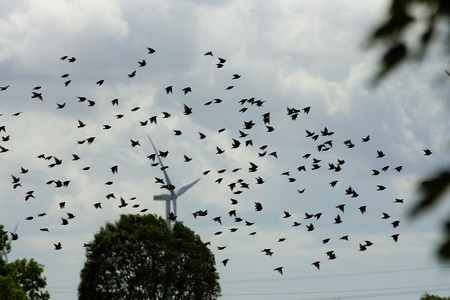
The wind cult works overtime to avoid the bloody reality that their beloveds are responsible for millions of bird and bat deaths, every year. Lying, dissembling and attempting to bury the evidence is just the start. There follows a game of moral equivalence, asserting that more bats and birds are clobbered by cars, cats and tall buildings.
Cars, cats and skyscrapers don’t kill healthy Eagles – like the critically endangered Tasmanian wedge-tailed eagle, but 60 m wind turbine blades with their tips travelling at 350 Kph routinely smash them out of existence.
As part of the same race to the periphery, wind worshippers also spin the line that evil fossil fuels are responsible for even more avian carnage. Except, as James Taylor points out below those claims ring just a little hollow.
Wind apologists laughably claim fracking harms wildlife
CFACT
James Taylor
3 November 2019
Apologists for wind power…
View original post 436 more words
I draw the lines the same
20 Nov 2019 Leave a comment
in economics of media and culture, property rights Tags: vegetarianism


November 19, 1600: Birth of King Charles I of England, Scotland and Ireland. Part I.
20 Nov 2019 Leave a comment

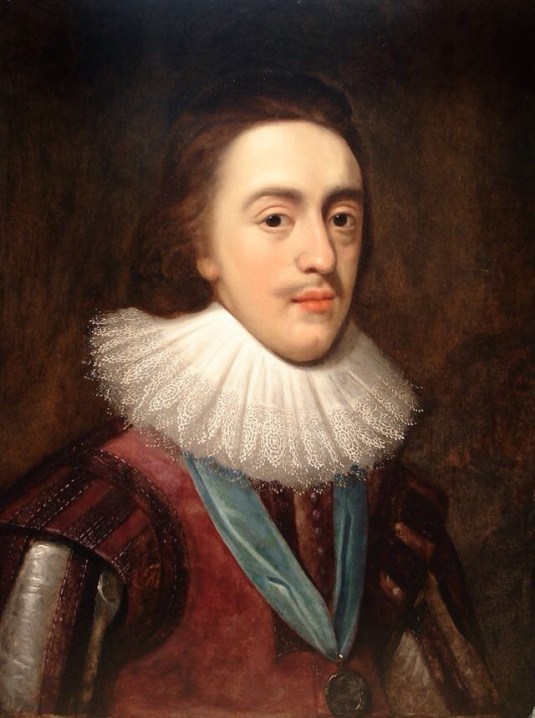
Today I will begin a series on the life of King Charles I of England. In the coming weeks I will include entries on his marriage his accession to the throne, his reign and the English Civil War, culminating in his trial which I will cover on its anniversary this January.
Charles I of England was the second son of King James VI of Scotland and Anne of Denmark, Charles was born in Dunfermline Palace, Fife, on November 19, 1600. At a Protestant ceremony in the Chapel Royal of Holyrood Palace in Edinburghon 23 December 1600, he was baptised by David Lindsay, Bishop of Ross, and created Duke of Albany, the traditional title of the second son of the King of Scotland, with the subsidiary titles of Marquess of Ormond, Earl of Ross and Lord Ardmannoch.
James VI was the first cousin twice removed of Queen Elizabeth I of England…
View original post 243 more words
Let Science Students Handle Doubt and Diversity
20 Nov 2019 Leave a comment


Jerry Ravetz writes at Nature Stop the science training that demands ‘don’t ask’.Jerry Ravetz is an associate fellow at the Institute for Science, Innovation and Society, University of Oxford, UK.Excerpts In italics with my bolds and images.
It’s time to trust students to handle doubt and diversity in science.
As a child, I realized that my parents spoke in Yiddish when they didn’t want me to know what they were talking about, so I became aware that some knowledge was intended only for grown-ups — don’t ask. In college, I was taught an elegant theory of chemical combination based on excess electrons going into holes in the orbital shell of a neighbouring atom. But what about diatomic compounds like oxygen gas? Don’t ask; students aren’t ready to know. In physics, I learnt that Newton’s second law of motion is not an empirical, approximate relation such as Boyle’s…
View original post 947 more words
What kind of government for Israel, or third election?
20 Nov 2019 Leave a comment

(Some questions at the end about comparative context. Help, please!)
This Wednesday night, Benny Gantz’s period as designated formateur expires. His odds of successfully forming a government look bleak. Nothing has changed to make it any easier than when I last wrote on the topic of government-formation options. And at least one thing has changed to make it harder. It is important to understand that a third election (April 2019, Sept. 2019, and potentially March 2020) is the default if no agreement is reached. There is actually a 21-day period after Gantz’s mandate expires before the election becomes automatic, but there’s scant reason to believe the next 21 days would result in an agreement. (During this 21-day period, it requires 61 Knesset members’ signatures to nominate a PM. Fat chance.)
The change that makes forming a government harder than it was in April or even immediately after the September election…
View original post 933 more words


Recent Comments