How to Harvest – Plant – Cook CASSAVA. a potentially lethal plant became the third most important crop in the tropics. The plant is very resilient, surviving where many other crops fail, and involves less human investment per calorie than potatoes. It is often poorer communities that rely on cassava for their survival.
13 Oct 2019 Leave a comment
in health economics Tags: agricultural economics
The Risk-Monger’s Five Sacrifices to Save the Planet
13 Oct 2019 Leave a comment
“The climate denial accusation is code to scare people from having a rational discussion on the best means to address the climate change challenges. There is no longer a serious “Us versus Them” on whether climate change is happening but rather a series of complex questions on the best way to manage the situation, over which time-frame and at which cost society is prepared to pay.”

People are getting remorseful about everything tied their personal ecological footprint. They are told the meat on their plate is choking mother nature, their car represents capitalism’s suffocation of the planet and that they will have to give up the idea of flying for a holiday or to visit their family abroad. A year ago, we were consumers; now we’re disgraceful polluters.
It’s painful and every day we hear from gurus and virtue signalling campaigners how ashamed we should be for having consumed. The imminent extinction of all humanity is urgently guilting us into some public sacrifice to save the planet: cathartic climate cleansing … atonement with a selfie-stick.
That is until the Risk-Monger suggested on social media to the Extinction Rebellion catastrophe peddlers that we should also then give up our pets (they eat a lot of meat). He even launched the #PetFree2020 hashtag (it failed to take off)…
View original post 2,246 more words
Op-ed in science journal Nature disses science and “scientism”, questions Enlightenment values
13 Oct 2019 Leave a comment

Nathaniel Comfort, author of the risible Nature essay at hand (click on screenshot below), is a professor in the history of medicine at Johns Hopkins University. We’ve met him three times before on this site; he seems to be a postmodernist who dislikes genes, New Atheism, and Richard Dawkins. Now he’s written about. . . . well, it’s hard to discern. If you read the essay (and I both pity you if you do and challenge you to see its point), you’ll see it’s laced with criticisms of Enlightenment values, white males, scientism, and the oppression of the disabled. Oh, and it lauds postmodernism, especially its “other ways of knowing”.
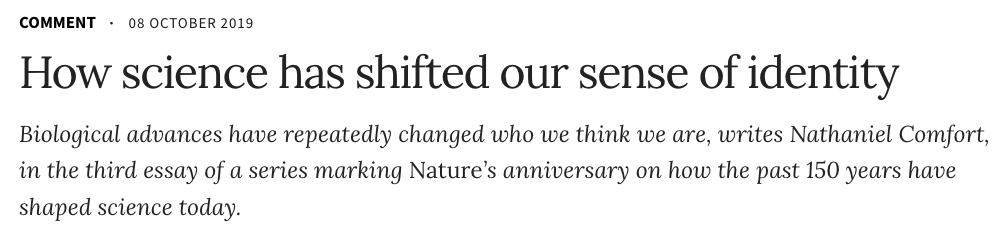
One of Comfort’s main points, at least as I discern it, is that science has somehow deeply changed how humanity has perceived itself. Not so much in the Darwinian way, in which we now see ourselves as part of the…
View original post 1,721 more words
Activists Push Climate Snake Oil
13 Oct 2019 Leave a comment


From the “Don’t just stand there, Do Something” file, a recent article points out tonics on offer from climatists. Not only are their prescriptions useless against the supposed problem, worse they do actual harm in and of themselves. Bjorn Lomborg writes at New York Post Climate change activists are focused on all the wrong solutions. Excerpts in italics with my bolds.
As it is becoming obvious that political responses to global warming such as the Paris treaty are not working, environmentalists are urging us to consider the climate impact of our personal actions. Don’t eat meat, don’t drive a gasoline-powered car and don’t fly, they say. But these individual actions won’t make a substantial difference to our planet, and such demands divert attention away from the solutions that are needed.
Even if all 4.5 billion flights this year were stopped from taking off, and the same happened every year…
View original post 598 more words
Camille Paglia would have a lot to say to Harvey Weinstein
13 Oct 2019 Leave a comment
in economics of crime, law and economics, movies Tags: sexual harassment
Want to Make a Big Bet on Oil Prices? Try Measuring Shadows | @WSJ
13 Oct 2019 Leave a comment
in defence economics, economic history, economics of information, energy economics, entrepreneurship, financial economics, industrial organisation, international economics, market efficiency, survivor principle, transport economics, war and peace Tags: entrepreneurial alertness
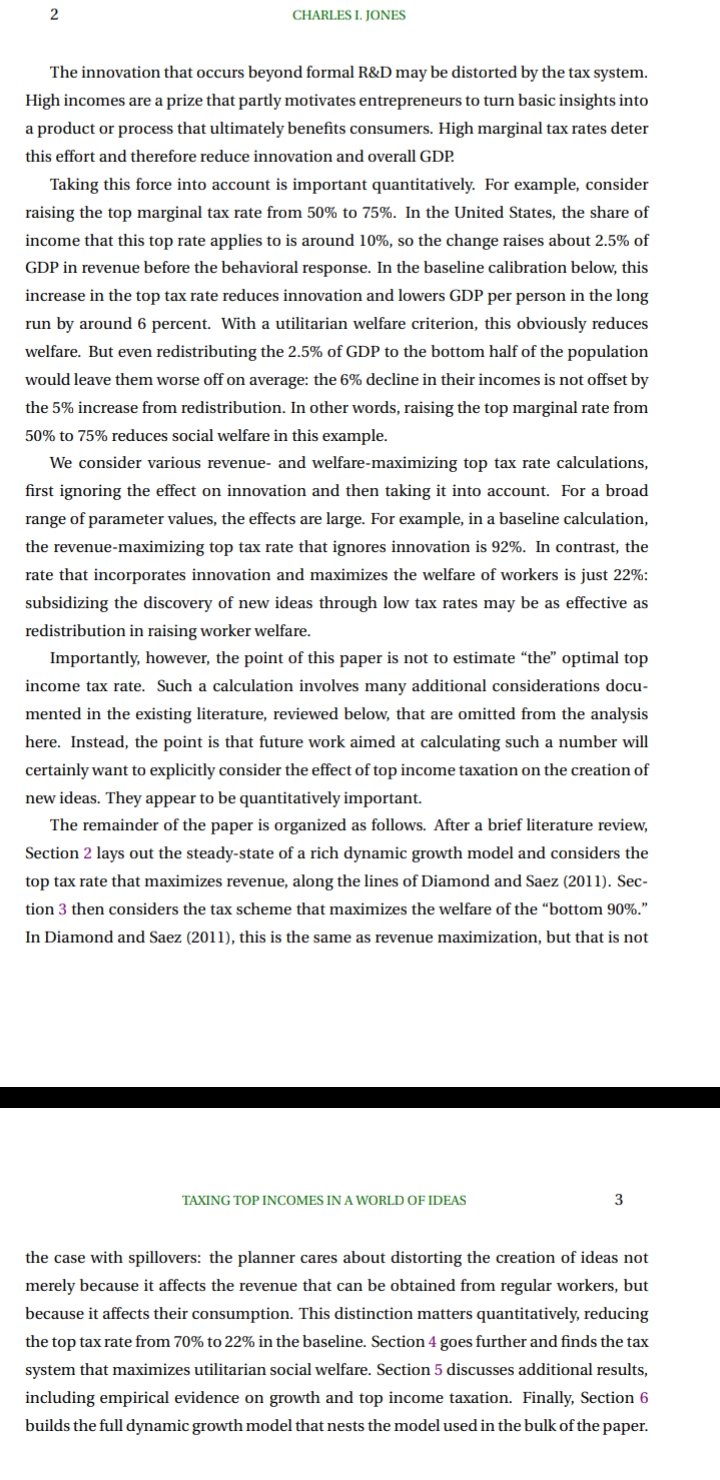
Piketty provoked economists to think more deeply on optimal top tax rates and how low they could be
13 Oct 2019 Leave a comment
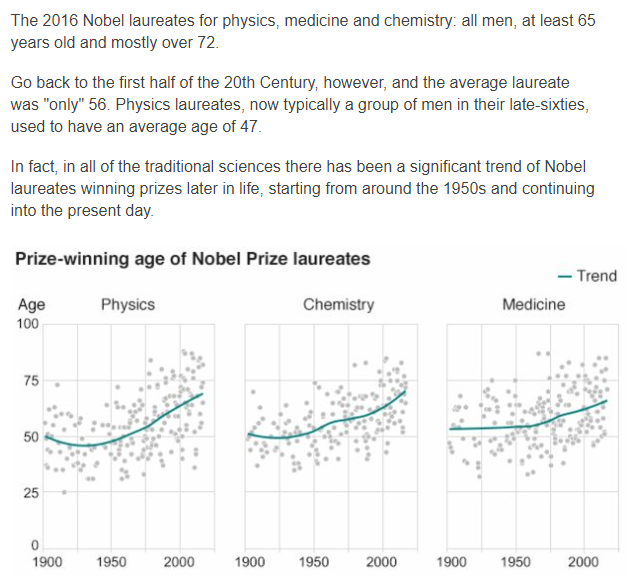
Few Nobel prize winners in science because few women undertook long duration degrees in the 60s because of no reliable contraception
12 Oct 2019 Leave a comment
in discrimination, economics of education, economics of love and marriage, gender, human capital, labour supply, occupational choice
Pielke Jr.: Net-zero CO2 emissions by 2050 requires a new nuclear power plant every day
12 Oct 2019 Leave a comment

 Ringhals nuclear power site, Sweden [image credit: Vattenfall]
Or, theoretically at least, an equivalent amount of power from other so-called ‘green’ sources, requiring vastly greater amounts of non-renewable mined materials than are currently available – assuming they even exist on such large scales. Not to mention all the other practical difficulties of such dodgy ideas.
What makes achieving Net Zero by 2050 impossible is a failure to accurately understand the scale of the challenge and the absence of policy proposals that match that scale, says Roger Pielke Jr. @ Forbes (via The GWPF).
More than a decade ago, Gwyn Prins and Steve Rayner characterized climate policy as an “auction of promises” in which politicians “vied to outbid each other with proposed emissions targets that were simply not achievable.”
For instance, among Democrats competing for the presidency in 2020, several, including Joe Biden, have committed to achieving net-zero carbon dioxide emissions by…
View original post 254 more words
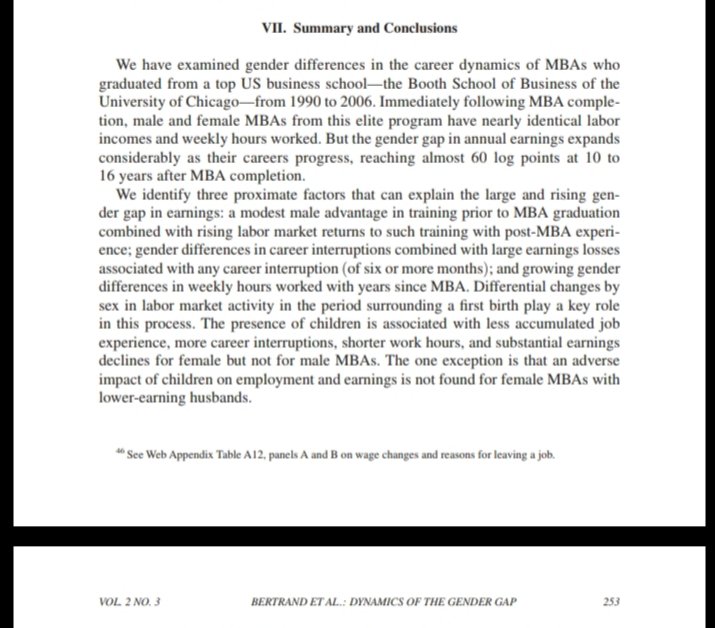
How to eliminate the gender wage gap in one easy step! Marry down? @women_nz @JulieAnneGenter
12 Oct 2019 Leave a comment
in applied price theory, discrimination, economic history, economics of love and marriage, entrepreneurship, gender, human capital, labour economics, labour supply, law and economics, occupational choice, poverty and inequality Tags: asymmetric marriage premium, gender wage gap, marriage and divorce
Nozick on equality and self-esteem
12 Oct 2019 Leave a comment
in Rawls and Nozick Tags: distributive justice, envy, social justice


Recent Comments