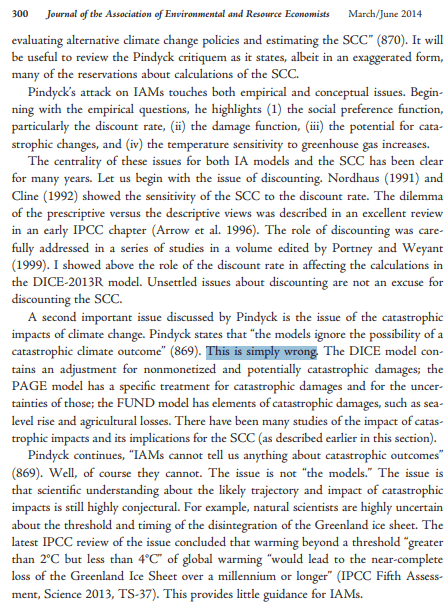
William Nordhaus on DICE, PAGE and FUND not modelling tipping points
10 Oct 2019 Leave a comment
in applied welfare economics, econometerics, energy economics, environmental economics, global warming, public economics
My favourite economist joke as told by David Friedman
10 Oct 2019 Leave a comment
in applied price theory, David Friedman, economics of crime, economics of information, law and economics Tags: agent principal problem, asymmetric information, moral hazard

Robert Trivers Remebering Darwin
10 Oct 2019 Leave a comment
in economics of education Tags: evolutionary psychology
Watch “The Unforeseen Issue With Skyscraper Canyons and trees – Cheddar Explores
10 Oct 2019 Leave a comment
in environmental economics, transport economics, urban economics Tags: air pollution
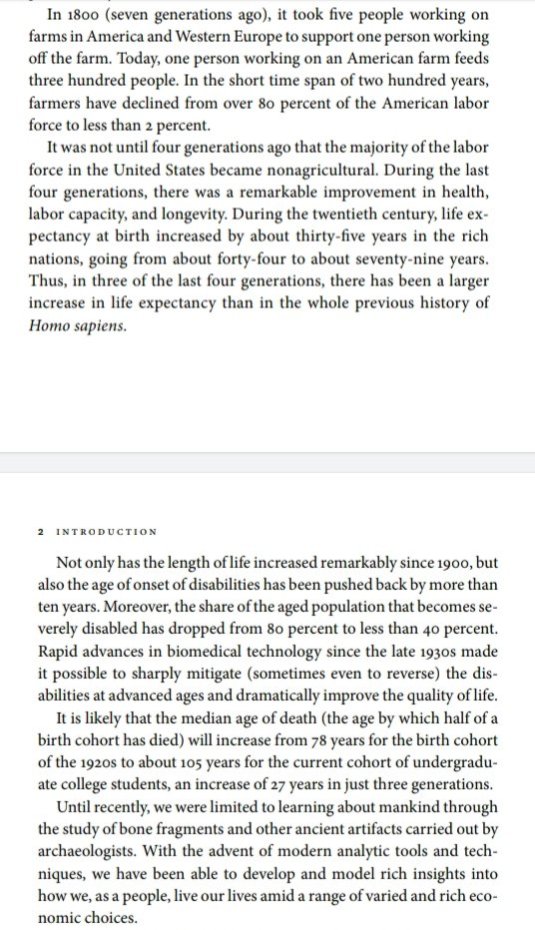
Steven Pinker: Modern Denial of Human Nature
10 Oct 2019 Leave a comment
in economics of education, economics of information, economics of media and culture, economics of religion, health economics Tags: evolutionary psychology
Why do we take some environmental impacts for granted?
09 Oct 2019 Leave a comment

As California tries to reduce the risk of catastrophic wildfire, the state has run into an unexpected obstacle: air pollution regulation. The New Yorker reports on how this regulation has paradoxically blocked prescribed burns and other risk-reduction methods, even though they reduce air pollution overall:
The California Air Resources Board restricts prescribed burns to days when pollution is at acceptable levels and the weather likely to disperse emissions from fire. In practice, this means that burning can occur only during a few weeks in the spring. In summer and autumn—the seasons when forests would burn naturally—the state’s air usually falls foul of the Clean Air Act. These are also the months that are most prone to uncontrollable wildfires, whose smoke is far more damaging to human health than that from prescribed fire. But, perversely, because wildfires are classified as natural catastrophes, their emissions are not counted against legal quotas.
This…
View original post 345 more words
Jeff King: The Prime Minister’s Constitutional Options after the Benn Act: Part I
09 Oct 2019 Leave a comment

 This is the first of a two-part discussion of this theme. This first part addresses the obligations under the Benn Act and the legal response to attempts to frustrate it; the second part will address non-confidence motions, resignation and change of Government.
There has been significant confusion about options open to Government and the opposition parties after the enactment of the European Union (Withdrawal) (No.2) Act 2019 (the “Benn Act”). Prime Minister Boris Johnson (the PM) has affirmed repeatedly that he would neither breach the Act nor send the request for an extension of the negotiating period that it straightforwardly requires. This raises concerns about whether the Government has a clever plan to evade or neutralize the requirements of the Benn Act. It also has invited speculation about the possible role of a vote of non-confidence, prime ministerial resignation, and an early election. All of these issues depend to a…
View original post 1,516 more words
The writing of history: RNZ sets the record straight by listening to modern-day iwi and discounting Cook’s journals
09 Oct 2019 Leave a comment
Rawls writes:
Burdened societies, while they are not expansive or aggressive, lack the political and cultural traditions, the human capital and know-how, and, often, the material and technological resources needed to be well-ordered. The long term goal of (relatively) well-ordered societies should be to bring burdened societies, like outlaw states, into the Society of well-ordered Peoples. Well-ordered peoples have a duty to assist burdened societies. (Rawls 1999a, 106)

Radio New Zealand journalist Meriana Johnsen – without any hint of a blush, we imagine – reported that “Gisborne iwi are setting the record straight on Captain James Cook…”
In other words, we have been told this is what really happened when Cook and his crew first arrived in New Zealand.
These Gisborne iwi – and Johnsen perhaps – will now be awaiting their invitations to contribute to the history books to be introduced to our schools.
Johnsen’s report is headlined “Gisborne iwi on British ‘collisions’: ‘They started swimming away but Cook started shooting’.”
Cook started shooting?
Not his crewmen?
View original post 1,212 more words
A day for celebration
09 Oct 2019 Leave a comment
Primitive societies react violently to strangers because the their experience is strangers come to conquer and kill.That’s why they are primitive. The concept of peace and trade is foreign to them.

I reckon today should have been a public holiday, to mark 250 years – quarter of a millennium – since these remote islands had opened to the world. That is something to celebrate.
Maori had, of course, been here for perhaps 500 years prior to the arrival of Lt James Cook and Endeavour. But it seems that they’d then become cut off from the rest of the world, with little or no evidence of any ongoing contact with anything or anyone beyond these shores. Material living standards were low. Abel Tasman had come by a bit of the coast 137 years earlier, and had given the name New Zealand, but after the killing of several of his crew, he didn’t land and soon went away again, initiating no ongoing contact.
But after Cook, and the other European explorers around these shores at much the same time, the…
View original post 1,713 more words


Recent Comments