Deplorables: Trump, Brexit and the Demonised Masses
24 Sep 2019 Leave a comment
in economic history, economics of crime, economics of education, income redistribution, international economic law, international economics, International law, labour economics, labour supply, law and economics, politics - USA, Public Choice Tags: 2016 presidential election, Brexit, populism, regressive left
Book Review
24 Sep 2019 3 Comments

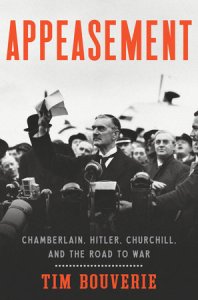 Faith in appeasement, the central tenet of British foreign policy throughout the 1930s, remained strong among the most devout long after it had been exposed as entirely bankrupt. Even as it lay in tatters with the German military massing on the Polish frontier for the invasion of Poland in the late summer of 1939, the virtually disloyal British ambassador to Berlin Sir Nevile Henderson recommended the Polish government concede to Hitler’s demands, while in London R.A.B. Butler, member of parliament, despaired that the British Foreign Office was displaying an unwarranted “absolute inhibition” to pressure the Poles to negotiate. After the German invasion of Poland, Prime Minister Neville Chamberlain and his government prevaricated one last time before finally declaring war on Germany.
Appeasement was “the attempt by Britain and France to avoid war by making ‘reasonable’ concessions to German and Italian grievances.” The long list of “reasonable concessions” when finally catalogued included…
View original post 719 more words
THE MAINZEAL OUTRAGE
24 Sep 2019 Leave a comment

There’s a lot of silliness currently being talked about building industry sub-contractors being left unpaid following the failure of building companies. Calls for builders to maintain trust funds ignore practicalities.
But let’s get one thing straight. Being left out of pocket through commercial failure goes with the territory of running any business. My company here and abroad would lose on average over a decade, 5 to 10 million dollars through lessee failure. So too suppliers to retailers, and retailers themselves through hire purchase failures, theft, unsold stock and so on. Publishers produce books which bomb, retailers buy a line of goods customers reject, and so it goes. No‑one is immune, even professionals when their clients go belly‑up.
View original post 327 more words
My @DomPost op-ed on viewpoint discrimination in the abortion bill restrictions on clinic protests @familyfirstnz @NZFreeSpeech
24 Sep 2019 Leave a comment
in applied price theory, law and economics, politics - New Zealand, politics - USA, Public Choice Tags: abortion law reform, free speech

Policy costings office: a perspective from Australia
24 Sep 2019 Leave a comment
45 staff to run spreadsheets with no dynamic scoring!

Over the years I’ve written a fair bit here about the idea of some sort of independent fiscal analysis body (most recent post here, with links to earlier ones). There are ever-increasing numbers of such agencies around the world, partly because the EU says each of its member countries has to have one. As I’ve argued here, I think there is a reasonable case for some sort of such body here – small and focused on all macro policy rather than just fiscal policy – but I’ve become increasingly sceptical of the sort of direction the current government has chosen to take. They seem to be looking at something that serves mostly as free research for MPs costing policies, perhaps most closely resembling the Australian Parliamentary Budget Office set up a couple of election cycles ago.
The Treasury yesterday held an excellent guest lecture on the issue…
View original post 1,783 more words


Malcolm Gladwell and other authors who make big errors in their books
24 Sep 2019 Leave a comment

When I started writing books for the general public (“trade books”, as they call them), I was surprised to find out that I alone was responsible for the accuracy of their content. While publishers do have their legal departments vet books that may violate laws against libel, or cause other legal troubles, publishers have neither the time nor the money to have books thoroughly fact-checked. This is one reason why authors put references for many factual statements at the end of the book, as I did with my two.
Even so, errors slip in, and sometimes those errors are numerous. A new piece in the New York Times cites some serious or numerous mistakes in popular books. Here are four that are highlighted:
Accusations of sloppiness and journalistic malpractice now quickly explode on social media. Ms. [Jill] Abramson was pilloried on Twitter by sources and other journalists this year for…
View original post 1,184 more words

Creative Destruction: Technology and Trade
24 Sep 2019 Leave a comment
in development economics, economic history, history of economic thought, industrial organisation, labour economics, labour supply, politics - Australia, politics - New Zealand, politics - USA, Public Choice, survivor principle Tags: creative destruction
Terrorism and Just War – Michael Walzer
24 Sep 2019 Leave a comment
in defence economics, laws of war, war and peace Tags: just wars, war against terror


Recent Comments