The share market speaks
19 Sep 2019 Leave a comment
in development economics, financial economics, Public Choice

If political correctness is just good manners, why is the woke left so rude?
18 Sep 2019 1 Comment
in economics of information, law and economics, Marxist economics, politics - Australia, politics - New Zealand, politics - USA Tags: free speech, political correctness, regressive left

Vaccines matter
18 Sep 2019 Leave a comment
in economics of information, health economics Tags: political psychology, vaccines

The role and power of the House of Lords
18 Sep 2019 Leave a comment

 To mark Parliament Week 2018, our editor Dr Philip Salmon looks at a key element of Parliament which we don’t usually have much opportunity to reflect on in our work on Victorian MPs and constituencies: the House of Lords. Yet, as he explains below, the upper chamber played a vital role in many important 19th century reforms and continued to wield significant influence even after the 1911 Parliament Act.
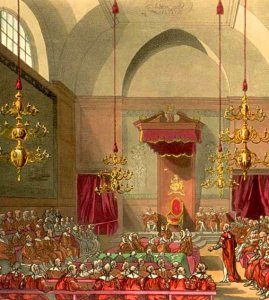 The pre-1834 Lords (Court of Requests)
The House of Lords remains a rather neglected subject in modern British political history. One recent study has even suggested that ‘for the last half-century and more it has been largely ignored’ (but note the reading list below). Most studies constructed around the traditional theme of democratic development inevitably tend to downplay the significance of the ‘unelected’ chamber. The Lords, however, should not be under-estimated.
Over half the twenty prime ministers of the 19th century…
View original post 1,317 more words
Political Prorogations: a view from the Victorian Commons
18 Sep 2019 Leave a comment
It’s been a long time since the business of suspending Parliament and starting a new session has generated so much political controversy. Throughout most of the 20th century prorogations invariably tallied with the expectations of most parliamentarians, neatly book-ending a government’s legislative programme. Scroll back a little further into the 19th century, however, and a rather different picture emerges …
Parliament’s historic procedures and conventions have generated a huge amount of public interest recently. Responding to popular demand, the latest version of Erskine May’s Parliamentary Practice, detailing the ‘law, privileges, proceedings and usage of Parliament’, has even been uploaded online. What readers won’t find in the latest edition, however, is much information about prorogation. Beyond stating that it is a personal prerogative power exercised by the Crown on the advice of the prime minister, which ends the current session of Parliament, there is remarkably little discussion of how and…
View original post 888 more words
AGU Statement on Climate Change
18 Sep 2019 Leave a comment

by Judith Curry
Human induced climate change requires urgent action. – AGU
View original post 2,482 more words
@jeremycorbyn is an unpractised liar
18 Sep 2019 Leave a comment
in defence economics, economics of crime, law and economics, Marxist economics Tags: British politics, regressive left, war against terror

The Great Escape @AOC @SenSanders
18 Sep 2019 Leave a comment
in development economics, economic history, growth miracles, politics - USA Tags: pessimism bias, regressive left, The Great Escape

The Balance of Power: States, Societies, and the Narrow Corridor to Liberty – James Robinson
18 Sep 2019 Leave a comment
in comparative institutional analysis, constitutional political economy, defence economics, development economics, economic history, economics of crime, growth disasters, growth miracles, income redistribution, law and economics, property rights, Public Choice, rentseeking Tags: rent seeking
Electing a new Speaker: what happens next?
18 Sep 2019 Leave a comment

 After over ten years as Speaker, John Bercow has announced his intention to stand down at the end of October. As for who will replace him, that is unclear and will be decided by an election amongst MPs, several of whom have already declared their candidacy. But how does that election work? Mark Bennister offers a guide to the process.
During yet another dramatic day in the House of Commons on Monday 9 September, the Commons Speaker John Bercow announced he would be stepping down either ’when this Parliament ends’ (if the Commons voted for an early election) or on 31 October. As the motion for an early election under the Fixed-term Parliaments Act did not secure the required two-thirds majority, this means he will be in the Chair for some further drama until the end of October.
On 22 June 2019, John Bercow marked his tenth anniversary as…
View original post 1,558 more words
Louis CK on Helen Lovejoyism
18 Sep 2019 Leave a comment

Steven Horwitz points to an example of Helen Lovejoyism at Liberty & Power:
You’ve all seen them. Those ubiquitous TV ads where a simple little pill transforms a man suffering from erectile dysfunction, or ED, into a virile tiger who puts a smile on the face of his now beaming wife.
Well, Representative Jim Moran (D-VA) has seen them too, and you’d be hard pressed to see a smile on his face when he talks about the ads. “A number of people,” he says, “have come up, including colleagues, and said I’m fed up. I don’t want my three or four-year old grandkid asking me what erectile dysfunction is all about. And I don’t blame them.”
Comedian Louis CK (hat tip to Bryan Caplan for pointing to another Louis CK clip which prompted me to view others) sums up the Helen Lovejoyist argument against same-sex marriage. I’m not normally…
View original post 15 more words
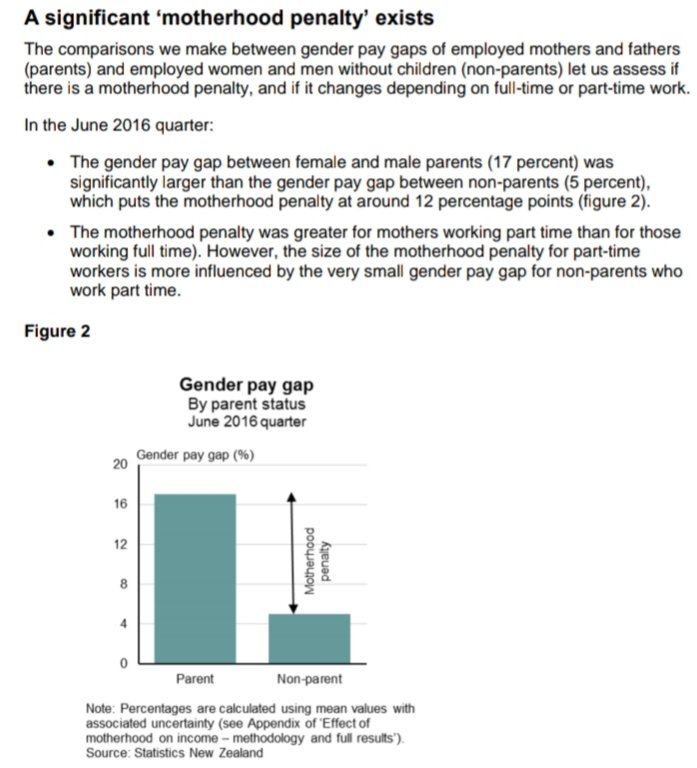
@women_nz explains why the gender wage gap has nothing to do with employer discrimination @JulieAnneGenter @JanLogie
18 Sep 2019 Leave a comment
in discrimination, economics of education, economics of information, economics of love and marriage, gender, human capital, labour economics, labour supply, occupational choice Tags: gender wage gap, motherhood penalty
The biggest gender wage gap anomaly explained from the professional women’s point of view
18 Sep 2019 Leave a comment
in applied price theory, economics of information, economics of love and marriage, human capital, labour economics, labour supply, occupational choice Tags: dating markets, gender wage gap


Recent Comments