Why Do We Use Money?
19 Jun 2019 Leave a comment
in applied price theory, comparative institutional analysis, economic history, economics of regulation, history of economic thought, law and economics, macroeconomics, Milton Friedman, monetary economics, property rights
David Friedman: Should We Abolish Criminal Law?
19 Jun 2019 Leave a comment
in comparative institutional analysis, constitutional political economy, David Friedman, economics of crime, law and economics
Astronauts left poop on the moon. We should go get it.
19 Jun 2019 Leave a comment
in economics of media and culture
Guardian omits ties between pro-Palestinian “charity” and Hamas
19 Jun 2019 Leave a comment

A Guardian report on damages awarded to the UK-based pro-Palestinian “charity” Interpal has obfuscated the organisation’s terror ties.
The June 13th article by Matthew Weaver (“Daily Mail pays damages over hate festival allegations”) reported that the Daily Mail “paid £120,000 in damages plus costs to a UK-based humanitarian charity after the paper falsely accused it of funding a “hate festival” in Palestine which acted out the murder of Jews”.
Though that particular charge appears to have been untrue, the Guardian journalist then goes on to downplay the fact that interpal is widely reported to be affiliated with Hamas.
The second article, which appeared on the Mail Online website, referred to Interpal as a “specially designated global terrorist organisation”. It failed to mention that this referred to a contested designation made by the George Bush administration in 2003, which the charity has always denied and for which the US has…
View original post 473 more words
Note for @jamespeshaw @NZGreens @Greenpeace @AOC #endoil
18 Jun 2019 Leave a comment
in energy economics, environmental economics, global warming Tags: The fatal conceit

Renewables ‘Transition’: UK Solar Industry Doomed as Subsidies Slashed – Panel Sales Plummet by 94%
18 Jun 2019 Leave a comment

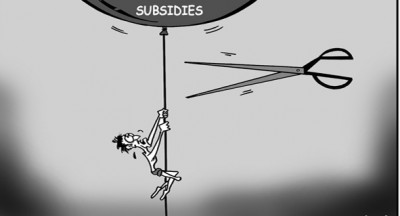
Wasn’t it only yesterday we were told that wind and solar are so cheap that our RE ‘transition’ was inevitable? Well, that was then, this is now.
Proving the point, we make almost every day – namely that there wouldn’t be wind turbines or solar panels, on any serious scale, anywhere in the world, in the absence of massive and endless subsidies – when the UK cut subsidies to solar panels in April, the solar ‘industry’ literary collapsed, overnight.
The only thing ‘inevitable’ about wind and solar is the inevitable collapse that follows any reduction in the subsidies that sustain them. Even the mere mention of tinkering with the subsidies sends renewable energy rent seekers into apoplexy.
Here’s Jo Nova rubbing a little more salt into the RE zealots’ wounds.
UK withdraws life support for Solar Industry and 94% of orders disappear
Jo Nova Blog
Jo Nova
7 June 2019
View original post 373 more words
Justice Jackson on Brian Tamiki’s latest outburst
18 Jun 2019 Leave a comment
in economics of religion, law and economics, politics - New Zealand Tags: free speech

Rise of the Nations I BETWEEN 2 WARS I 1918 1 of 2
18 Jun 2019 Leave a comment
in defence economics, economic history, war and peace Tags: World War I, World War II
The White Ignorance of Milton Friedman
18 Jun 2019 Leave a comment
in discrimination, Milton Friedman


White people have the luxury of not thinking about race if they don’t want to. Marginalized people, on the other hand, are forced to think about their own oppression all the time if they want to get by in the world. One way to think about this luxury is what philosopher Charles Mills calls “white ignorance.” In scholarship, one way the white ignorance is displayed is by white scholars, whom Critical Race Theorist Richard Delgado called “imperial scholars,” who ignore the scholarship of people of color. The poster child for white ignorance may well be Milton Friedman.
Milton Friedman was one of the most famous economists of the twentieth century. The leading light of the “Chicago School of Economics,” the most influential economics department in the world, Nobel prize-winner in Economics in 1976. If there were an All-Star team of economists, Friedman would be in the…
View original post 2,355 more words
More Libertarians: Murray Rothbard and Competitive Racism
18 Jun 2019 Leave a comment
[NB: I quote a lot from Professor Peter Klein‘s comment on this thread regarding Murray Rothbard. I want to make quite clear that my comments about Rothbard are about Rothbard and not about Professor Klein. I thank him for raising Rothbard’s name in this context because he spurred me to write up my thoughts about Rothbard and racism. In no way do I want to impute Rothbard’s beliefs to Professor Klein. Just so we are clear on that.]
Murray N. Rothbard (1926-1995), has been called “the most gifted libertarian writer of his generation” (p. 251). Rothbard prided himself as, in Nancy MacLean‘s words, libertarianism’s “most scathing guardian of libertarian orthodoxy” (p. 147). He was an “anarcho-capitalist” who believed that all governmental functions should be privatized, including national defense and police forces. Unlike someone like JamesBuchanan, or indeed, most academics, who often work within institutional structures…
View original post 2,308 more words
Attention @NZGreens @greenpeace #EndOil
18 Jun 2019 Leave a comment
in energy economics, environmental economics, global warming

Voltaire and the one-liner
18 Jun 2019 Leave a comment

To mark the publication at Oxford University Press of his new book ‘Voltaire: A Very Short Introduction’, a contribution to their Very Short Introductions series, Nicholas Cronk has written the following post about the wit and wisdom of Voltaire for the OUP Blog.
 Voltaire: A Very Short Introduction by Nicholas Cronk is published by Oxford University Press.
As we mark Voltaire’s 323rd birthday – though the date of 20 February is problematic, – what significance does the great Enlightenment writer have for us now? If I had to be very very short, I’d say that Voltaire lives on as a master of the one-liner. He presents us with a paradox. Voltaire wrote a huge amount – the definitive edition of his Complete works being produced by the Voltaire Foundation in Oxford will soon be finished, in around 200 volumes. And yet he is really famous for his short sentences. He…
View original post 1,009 more words
A flat tax? Alas, RNZ burnt up its interview time while grilling Seymour about free speech and the racism bogey
18 Jun 2019 Leave a comment

RNZ’s Morning Report yesterday led us to hope we would hear something about the attractions of a flat tax, an idea once promoted by Roger Douglas when he was Minister of Finance in the Lange government.
A flat tax – adopted in some American states and European countries – is among the tax reforms favoured by the Act party as it tries to refresh its image.
We were led to believe the Morning Report team would kick this around with Act leader David Seymour just before 8am yesterday because they mentioned it in their introduction to an interview with him.
Presenter Corin Dann said Act is targeting free speech “and radical tax reform” as it works to lift voter support heading into next year’s election.
The party had re-launched with the slogan ‘Act for freedom’.
View original post 802 more words


Recent Comments