Top 10 Most Challenged Books of 2017 in libraries
21 Jan 2019 Leave a comment
in liberalism, politics - USA Tags: free speech
How to read authors of earlier times who expressed views or created characters that we find repugnant today
21 Jan 2019 Leave a comment

There has been a lot of debate about how—or whether—to read authors whose views (or language) may not comport with today’s mores. Morality evolves, usually for the better, leaving older books bearing attitudes or characters that we find repugnant.
The usual result is to either denigrate or ban these books, and such opprobrium has involved works like Huckleberry Finn, To Kill a Mockingbird, The Great Gatsby, Slaughterhouse-Five, and even The Color Purple. I’m not even mentioning the many books that are deemed verboten by various religions, such as The Satanic Verses. Go to the American Library Association’s Frequently Challenged Books webpage for a comprehensive list.
How do we deal with these books? Do we remove them from libraries, as Confederate statues are removed from campuses? Do we cease teaching them in classrooms—something that’s now happening with To Kill a Mockingbird? Or do we just decry them as…
View original post 875 more words
Which graphs will be the focus of activism for @oxfam @oxfamnz?
21 Jan 2019 Leave a comment
in development economics, economic history, growth miracles, health economics Tags: China, The Great Escape

Are Helicopter Parents Ruining a Generation?
21 Jan 2019 Leave a comment
in economics of education, health economics Tags: Helicopter parents
Gordon Tullock and James Buchanan: The Calculus of Consent After 25 Years
21 Jan 2019 Leave a comment
in applied price theory, comparative institutional analysis, economics of regulation, history of economic thought, industrial organisation, James Buchanan Tags: Gordon Tullock
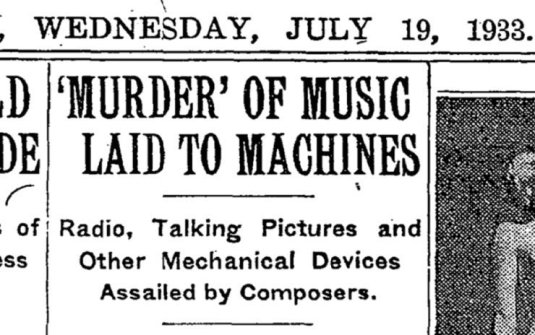
When the robots came for the musicians
21 Jan 2019 Leave a comment
in economic history, entrepreneurship, industrial organisation, labour economics, labour supply, Music, survivor principle Tags: creative destruction
The Yamato – Largest battleship in History
21 Jan 2019 Leave a comment
in defence economics, war and peace Tags: World War II
Free To Choose 1980 – The Tyranny of Control – Markets
21 Jan 2019 Leave a comment
in Adam Smith, applied price theory, comparative institutional analysis, economics of regulation, entrepreneurship, history of economic thought, industrial organisation, market efficiency, Milton Friedman, Public Choice, rentseeking Tags: invisible hand
Chomsky & Foucault – Justice versus Power
21 Jan 2019 Leave a comment
in Marxist economics Tags: Noam Chomsky
What Does Hyperspace Really Look Like? (Because Science w/ Kyle Hill)
21 Jan 2019 Leave a comment
in movies, television Tags: space
The Nixon tapes: A pivotal Watergate story that WaPo missed
21 Jan 2019 Leave a comment

Forty years ago this week, Alexander Butterfield told a U.S. Senate select committee investigating the Watergate scandal that President Richard Nixon had installed a secret audiotaping system in his offices.
Butterfield’s disclosure was one of the most decisive moments in the Watergate. It focused the scandal’s multiple investigations into a months-long pursuit of the tapes — one of which clearly revealed Nixon’s role in attempting to cover up the crimes of Watergate. That revelation forced his resignation in August 1974.
The disclosure of Nixon’s audiotaping system was a major story which the Washington Post — often and inaccurately credited with having “uncovered” or “broken” the Watergate scandal — missed badly.
How the Post fumbled that story makes for an intriguing sidebar at the anniversary of Butterfield’s stunning disclosure. The newspaper’s lead Watergate reporters, Bob Woodward and Carl Bernstein, described in a book about their reporting…
View original post 455 more words
Newspaper rant deplores ‘debasement of reality’ but invokes prominent media myth
21 Jan 2019 Leave a comment
The Seattle Times seemed almost apoplectic the other day in deploring “the debasement of reality” in “the age of Trumpism,” declaring that “lies” have become “the new currency of political discourse.”
It was a long-form screed alright, which appeared in the newspaper’s Sunday magazine. It was not unlike many otherrantswritten during the war between the press and President Donald Trump.
 Journos didn’t do it
What most interested Media Myth Alert was not so much the hyperventilating as the credulous reference to the heroic-journalist myth of Watergate — that reporters brought down Richard Nixon’s presidency.
“The American press didn’t have a spotless record in the past,” the Seattle Times article asserted, adding:
“But more often than not, reporters got it right, from uncovering the ghastly conditions in slaughterhouses [presumably a reference to Upton Sinclair’s novel The Jungle] to forcing a president’s resignation in the Watergate scandal.”
View original post 715 more words
Romeo, Juliet and the Friar – Saturday Night Live Don Rickles
21 Jan 2019 Leave a comment
in television
Jordan Peterson interviewed by British GQ Magazine Feminist
21 Jan 2019 Leave a comment
in development economics, economic history, economics of education, economics of information, economics of media and culture, economics of religion, health economics, income redistribution, labour economics, liberalism, Public Choice Tags: political correctness, political psychology, regressive left


Recent Comments