The US-Canada Border Splits This Road Down The Middle
24 Dec 2018 Leave a comment
in economics of media and culture, international economics, International law, politics - USA Tags: Canada, economics of borders, maps
Norway’s Muslim immigrants attend compulsory classes on western attitudes to women @Guardian
24 Dec 2018 Leave a comment
in development economics, discrimination, economic history, economics of crime, Economics of international refugee law, economics of media and culture, gender, growth disasters, law and economics, Public Choice Tags: economics of immigration, law and order
How America Reacted to ‘The Coddling of the American Mind’ @TheAtlantic
24 Dec 2018 Leave a comment
in economics of education, health economics, politics - USA Tags: cognitive psychology, economics of mental illness, political correctness, regressive left
Proxemics: the study of personal space @Voxdotcom
24 Dec 2018 Leave a comment
in economics of media and culture
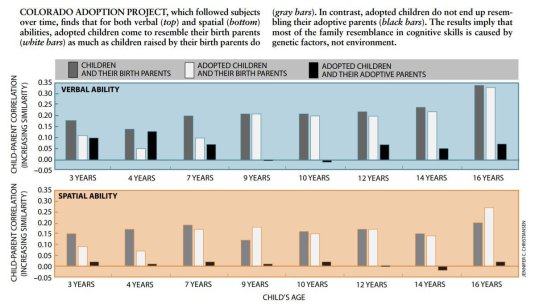
More on behavioral genetics
24 Dec 2018 Leave a comment
in economics of education, health economics Tags: child development
Lincoln University at last says it, too, includes Maori knowledge in its science classes
24 Dec 2018 Leave a comment
Students must develop their own mihi.
Never heard of mihi before.
Understand it is to allow people listening to place you. That is snobbery on steroids.
Everyone stands on their own feet and own achievements. Snobbery to place someone based on family and heritage. That is an aristocracy reload.
Loathed students at uni who bragged about their private school. Still got better grades than them despite going to a crap catholic high school in a country town.

Lincoln University administrators did some consulting before answering questions first sent to them on September 21. They finally answered the questions – about the incorporation of matauranga Maori in science classes – earlier this month but won’t say who was consulted.
The short answer is yes, it is incorporated in their science classes.
- Is Maori knowledge incorporated in science courses, at Lincolne University
Yes.
2. If so, when was it introduced to science courses, why was it introduced, and is it incorporated in all science courses or just some?
Maori knowedge content began to be introduced into some courses at Lincoln University from around 2005 by individual lecturers who were motivated to do so. Currently some courses available in 2018 have Maori knowledge content.
The university has been somewhat sparse with the information it provided and is not disclosing the identities of the people whom it consulted after insisting Bob…
View original post 441 more words
Is evolutionary psychology worthless?
24 Dec 2018 Leave a comment

There’s been a lot of kerfuffle on the intertubes about the value of evolutionary psychology, the field that studies the evolutionary roots of human thought, language, and behavior. I want to weigh in here with my answer to the question posed in the title, and my answer is, “Certainly not!”
Now I am known as a critic of evolutionary psychology, and I have been quite critical. For example, I’ve published two scathing critiques (one with Andrew Berry) of Randy Thornhill and Craig Palmer’s unfounded theories of the adaptive significance of rape (see references below). I have gone after the popular distortions of evolutionary psychology that appear in the press or books (e.g., my comments on David Brooks’s New Yorker article “Social animal”—an article subsequently turned into a dreadful book). And I have criticized some evolutionary psychologists for failing to police the speculative excesses of their colleagues. But I’ve never…
View original post 1,002 more words
A defense of evolutionary psychology (mostly by Steve Pinker)
24 Dec 2018 Leave a comment
Seems like the arguments of radical feminists that gender is separate from sex and socially constructed was developed before the recent emergence of evolutionary psychology.
I’ve been known for a while as a critic of evolutionary psychology, particularly when it first began as “sociobiology” in the Seventies. At that time there was a lot of unsupported speculation being bruited about as “science” (i.e., human males evolved to have “rape modules”, a view that I criticized strongly). But over the decades, evolutionary psychology has matured, and I now see it as a valuable way of studying the origins of human behavior. Not that it’s all perfect—the “pop” versions, such as those produced by Satoshi Kanazawa, seem pretty dire to me, debasing a field that’s striving for scientific rigor. But even Kanazawa has been rejected by serious evolutionary psychologists.
Sadly, some self-professed skeptics have decided to debunk the entire field of evo-psych, and for reasons that I see not as scientific, but as ideological and political. That is, like the opponents of sociobiology thirty years…
View original post 1,886 more words
Evolutionary psychology: gender “construction”
24 Dec 2018 Leave a comment
Whenever I post on evolutionary psychology, lurkers come out of the woodwork, enraged that I’ve criticized their own discipline and vociferously defending the crappy papers that I sometimes highlight. Recently one (or more) of the lurkers asked me to provide an example of an evo-psycho paper that I considered good. Well, that made me think a bit. Many of the papers are tolerable rather than outright lousy, but in my opinion good ones are rare. But I’ve just read one that I’d put in the “pretty good” category. Some might not consider the subject to be evolutionary psychology, but I think it is, for it’s about whether behavioral differences between males and females have a genetic basis. If they do, then one can begin to uncover their evolutionary roots. If they don’t, then we need not engage in adaptive storytelling about why males are aggressive and females are nurturing.
View original post 1,539 more words


Recent Comments