“If these turbines are only supposed to run when the sun isn’t shining and the wind isn’t blowing, then they will be extremely expensive,” he added.
Germany’s dream of building a fleet of hydrogen-fired power plants is faltering
Germany’s dream of building a fleet of hydrogen-fired power plants is faltering
08 Feb 2024 Leave a comment
in energy economics, environmental economics, global warming Tags: Germany
February 6, 1952: Death of King George VI of the United Kingdom, Emperor of India.
08 Feb 2024 Leave a comment
in economic history Tags: British history

George VI (Albert Frederick Arthur George; December 14, 1895 – February 6, 1952) was King of the United Kingdom of Great Britain and Northern Ireland and the Dominions of the British Commonwealth from December 11, 1936 until his death in 1952. He was also the last Emperor of India from 1936 until the British Raj […]
February 6, 1952: Death of King George VI of the United Kingdom, Emperor of India.
Could You Survive on British World War Two Rations?
07 Feb 2024 Leave a comment
in defence economics, health economics, war and peace Tags: rationing, World War II
Once were a trading nation
07 Feb 2024 Leave a comment
in economic history, international economics, macroeconomics, politics - New Zealand
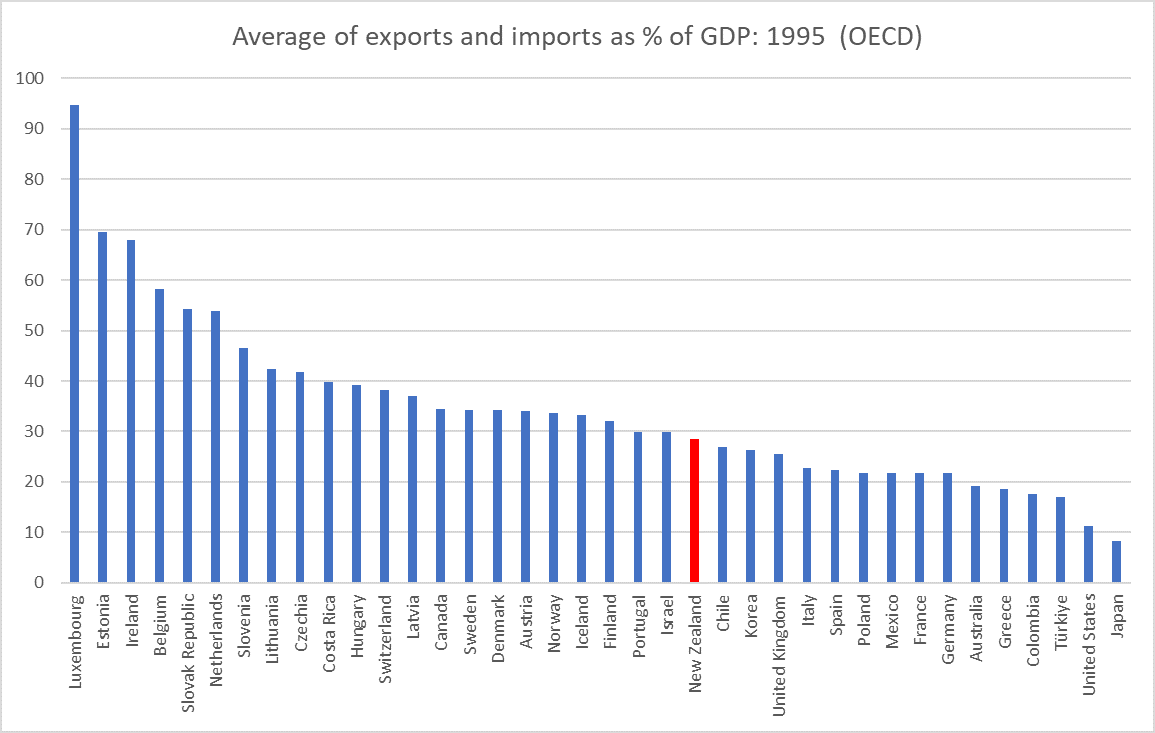
I’ve used here before the snippet from older books that in the decades before the Second World War it was generally accepted that New Zealand had the highest value of foreign trade per capita of any country. Estimates of historical GDP per capita suggest we also had among the very highest levels of real GDP […]
Once were a trading nation
King Charles, cancer, and homeopathy
07 Feb 2024 Leave a comment
in health economics Tags: British politics, cranks
This morning I received an email from a colleague that said this about the New York Times‘s article on King Charles’s cancer diagnosis: In the NY Times report there is one sentence mentioning that he is using homeopathy as part of his suite of treatments. UPDATE: My colleague, who is reliable, swears he saw this […]
King Charles, cancer, and homeopathy
RE Reverse: 2024 Marks Beginning Of The End For Wind & Solar Transition
07 Feb 2024 Leave a comment
in energy economics, environmental economics, global warming Tags: renewable energy, solar power, wind power

The closer countries get to the wind and solar transition, the faster they retreat from it. Across Europe, renewable energy targets have been ditched and replaced with policies built around always-on nuclear power. Finland, Sweden, France and Britain, for starters. Wind turbine and solar panel manufacturers are bleeding cash and their share values have been […]
RE Reverse: 2024 Marks Beginning Of The End For Wind & Solar Transition
The West’s humiliating electric car climbdown has begun
07 Feb 2024 1 Comment
in energy economics, entrepreneurship, environmental economics, global warming, transport economics Tags: electric cars
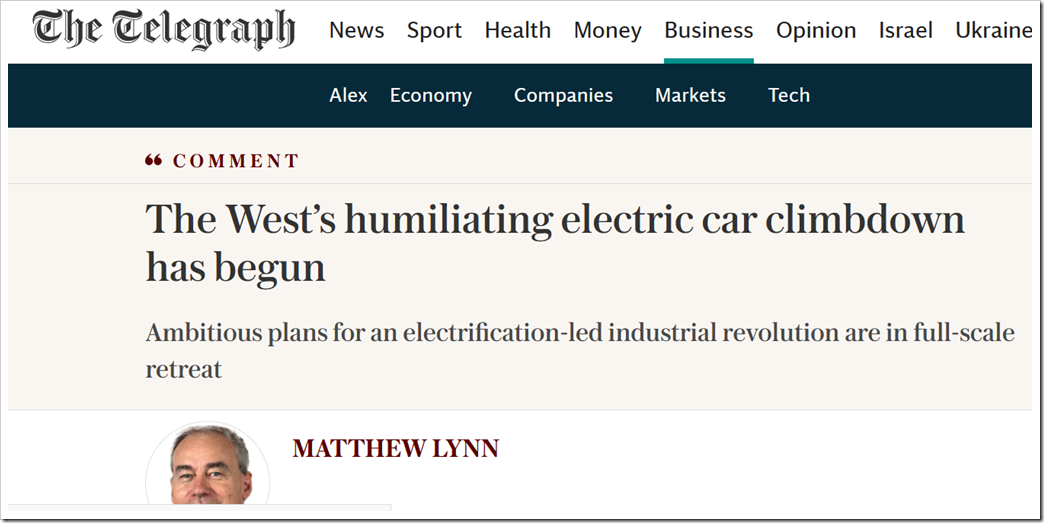
By Paul Homewood Ambitious plans for an electrification-led industrial revolution are in full-scale retreat France’s President Macron had a plan to make millions of electric vehicles a year. Chancellor Scholz planned to put 15 million on Germany’s roads by 2030. President Biden trumped the lot with a $174bn (£138bn) plan to make […]
The West’s humiliating electric car climbdown has begun
The Most Litigious Place on Earth: Disney Loses Major Challenge to Florida
07 Feb 2024 Leave a comment
in law and economics, politics - USA, property rights Tags: constitutional law

Last year, I criticized the lawsuit of Disney against Florida after losing its special status in the former Reedy Creek Improvement District. U.S. District Judge Allen Winsor in Tallahassee appears to view the matter as dimly as I did. He just dismissed the action in a major loss for the House of Mouse.
The Most Litigious Place on Earth: Disney Loses Major Challenge to Florida
Ian Lavender, actor best-known for playing Private Pike in Dad’s Army – obituary
06 Feb 2024 Leave a comment
in television, TV shows
#OTD
06 Feb 2024 Leave a comment
in comparative institutional analysis, discrimination, economic history, law and economics, politics - New Zealand, property rights Tags: constitutional law

📸 Look at this post on Facebook
https://www.facebook.com/share/4VjbNNeEwSJ6ntfW/?mibextid=RXn8sy
BRIAN EASTON: Our understanding of Te Tiriti has evolved organically.
06 Feb 2024 Leave a comment
in comparative institutional analysis, constitutional political economy, economic history, economics of bureaucracy, law and economics, politics - New Zealand, property rights, Public Choice, rentseeking Tags: Age of Enlightenment, constitutional law, Internet, political correctness, racial discrimination, regressive left
Why try to stop that evolution? Brian Easton writes – In 1956, historian Ruth Ross presented her investigations of the treaty signed at Waitangi on 6 February 1840 to a seminar concluding, ‘The [Māori and Pakeha] signatories of 1840 were uncertain and divided in their understanding of [Te Tiriti’s] meaning; who can say now what […]
BRIAN EASTON: Our understanding of Te Tiriti has evolved organically.
Open Borders and Closed Courts: How the Supreme Court Laid the Seeds for the Immigration Crisis
06 Feb 2024 Leave a comment
in economic history, labour economics, labour supply, politics - USA Tags: constitutional law, economics of immigration

Below is my column in The Hill on the worsening situation at the Southern border and how the Supreme Court laid the seeds for this crisis over a decade ago. The courts have left few options for either the states or Congress in compelling the enforcement of federal law. Here is the column:
Open Borders and Closed Courts: How the Supreme Court Laid the Seeds for the Immigration Crisis
Some Links
06 Feb 2024 Leave a comment
in applied price theory, applied welfare economics, comparative institutional analysis, constitutional political economy, development economics, economic history, economics of regulation, health economics, history of economic thought, labour economics, law and economics, macroeconomics
TweetWriting in the Wall Street Journal, David Henderson and Charley Hooper explain why we should be thankful for high drug prices. Two slices: For Americans, paying for the discovery and development of new drugs rests on our shoulders. If we pay, we get new lifesaving medicines. If we don’t, we don’t. Almost all new drugs…
Some Links
 Utopia, you are standing in it!
Recent Comments