Enviro-Imposters: Why There’s Nothing Green About Intermittent Wind & Solar Power
16 Dec 2022 Leave a comment

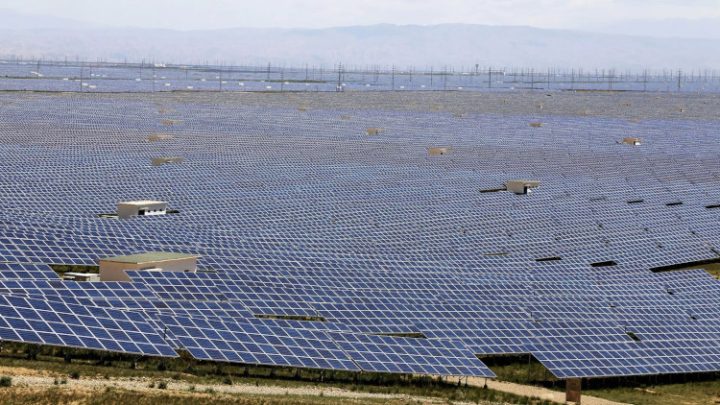
Spreading millions of solar panels and spearing thousands of wind turbines far and wide doesn’t make sense, at any level.
Intermittent and diffuse energy sources do not represent progress in the state of human affairs; that was the way of the world pre-Industrial Revolution – science, enterprise and engineering made all that a part of our miserable history.
True it is that the developing world has a way to go, but finance and meddling climate cult elites aside, the path has already been laid out and is well trodden.
At the heart of the wind and sun cult’s bleating about saving the planet is the myth that wind and solar power are actually good for the planet and the environment that we live in.
Unfortunately for the myth makers, the evidence all runs in the other direction.
Viv Forbes explains precisely what we mean. On the ball, as usual, Viv…
View original post 931 more words
Latin America La La Land
16 Dec 2022 Leave a comment

We never pay enough attention to Latin America – which includes the nations of Central and South America – except when something is in crisis, like Argentina and the Falklands War, or revolutions and military coups.
As just a small example, I’m only now adding a category for “Latin America” for posts such as this.
There are probably any number of reasons for this neglect: a non-English-speaking world; only minor involvement in two world wars and the Cold War; not big economic players in the world (yet); not a big cultural influence (what influence has occurred has been via the American entertainment industry and translations of novelists like Isabel Allende and Gabriel Garcia Marquez); a continent fractured in exactly the way North America is not.
Admittedly Africa is even more neglected in everyday Western thought and for much the same reasons, but at least there one also can point the…
View original post 932 more words
BRYCE EDWARDS’ Political Roundup: Labour was meant to save public broadcasting, not weaken it
16 Dec 2022 Leave a comment

- BRYCE EDWARDS writes –
The Labour Party used to advocate for a properly-funded, multi-platform public broadcaster. There was real merit in the proposal to set this up when Labour campaigned for it in 2017. After all, New Zealand lacks a public broadcaster along the lines of the BBC or the ABC. And the idea of merging RNZ and TVNZ meant that synergies, together with proper funding, could finally produce a broadcaster that would enhance democracy and New Zealand society. The idea had hints of transformation about it.
The plan was also to update public media for the 21st century in which the future is clearly digital. Public media needed to be online and less reliant on TV and radio. By future-proofing the public broadcasters, setting up new digital offerings that would coexist with the mega tech companies, public media operating in the public interest could survive and prosper.
View original post 1,132 more words
Scot Peterson: Constitutional Entrenchment in England and the UK
16 Dec 2022 Leave a comment

 Frequently people think that there are only two ways address flexibility in a constitution: to legally entrench an entire document and to protect it with strong judicial oversight, or to have a political constitution and a sovereign parliament, which, in the words of A.V. Dicey, ‘has … the right to make or unmake any law whatever….’ One aspect of this sovereignty is that parliament cannot bind itself: ‘That Parliaments have more than once intended and endeavoured to pass Acts which should tie the hands of their successors is certain, but the endeavour has always ended in failure.’
Parliament has regularly used language limiting its future options. The Bill of Rights (1688) says that the rights declared there ‘shall be declared, enacted, and established by Authority of this present Parliament, and shall stand, remain, and be the Law of this Realm for ever’. More recently, Parliament promised in the European Union…
View original post 376 more words
Adam Tucker: Entrenchment, Parliamentary Sovereignty, and the Limited Radicalism of the Brown Report
16 Dec 2022 Leave a comment

 The publication of the Report of the Commission on the UK’s Future is attracting widespread attention. The centrepiece of its constitutional content is the replacement of the House of Lords with a new second chamber with new composition and a reformed role, which would have particular responsibility for territorial aspects of the constitution (discussed here) and act as guardian of (newly) entrenched elements of the constitution –not just in the devolution context but also more widely.
This post develops in preliminary form some doubts about the radicalism of the entrenchment aspect of these proposals.Whilst they appear to have many of the trappings of radicalism (the language of entrenchment, a new hierarchically superior category of legislation, a novel role for the supreme court in the legislative process, suggestions of super-majorities and so on) I want to suggest that this aspect of the Report is in fact rather cautious.I’ll make four interrelated…
View original post 1,505 more words
Documentary Review: “Turn Every Page” celebrates a great biographer, his ever-patient editor and the history they’ve made together
16 Dec 2022 Leave a comment




A documentary, five years in the making, about the slow-footed race-against-time to finish an epic “three volume” biography of Lyndon Johnson’s fifth and final volume before the researcher/author and his editor pass away from very old age is nobody’s idea of an easy sale — not to a film distributor, nor to most filmgoers.
Even the title — “Turn Every Page: The Adventures of Robert Caro and Robert Gottlieb” — seems ironic, if not oxymoronic. “Turn every page” and “adventures?”
But filmmaker Lizzie Gottlieb (“Romeo Romeo” was hers), daughter of 90something editor Robert Gottlieb, has produced a filmed appreciation not just of her father and the Pulitzer Prize-winning Caro and their epic final collaboration. It’s a film about a decades-long deep dive into “power” in America and a monument to a sort of life-long collaboration we will never see again.
Turn every page” was a discipline passed on to…
View original post 943 more words
A Message From New Hampshire Voters: “Don’t Run status quo Joe”
16 Dec 2022 Leave a comment
in politics - USA Tags: 2024 presidential election
2022 prize lectures in economic sciences
16 Dec 2022 Leave a comment
in applied price theory, business cycles, comparative institutional analysis, economic history, financial economics, great depression, great recession, macroeconomics, monetary economics Tags: bank panics
Why the Prime Directive Might Actually Be a Terrible Rule
16 Dec 2022 Leave a comment
in movies, television, TV shows
Ten Minute English and British History #01 – Early Roman Britain and Boudicca’s Rebellion
16 Dec 2022 Leave a comment
in economic history, war and peace Tags: British history, Roman empire
Plain Stupid: The Only Thing Dumber Than Wind Power Is Offshore Wind Power
15 Dec 2022 2 Comments

Wind power comes with a staggering price tag, taking these things out to sea sends those costs into orbit: intermittent offshore wind power is six times the cost of gas-fired power that’s always available on demand.
Placing giant industrial wind turbines miles offshore is costly enough, but the rising costs of attempting to maintain them (and the transmission cables connecting them) in a highly corrosive marine environment are positively punitive.
So much so, that even the grandest of offshore plans have hit the skids, as Robert Bryce details below.
Scuttled Offshore Wind Plans Are Good News For Ratepayers, North Atlantic Right Whales
Forbes
Robert Bryce
18 November 2022
The hype about offshore wind energy keeps getting scuttled by reality. That’s the clear conclusion from last month’s announcement that Spanish utility company, Avangrid, was halting work on the proposed 1,200-megawatt Commonwealth Wind project because it was “no longer viable.” The…
View original post 1,367 more words
The rule of law: what is it, and why does it matter?
15 Dec 2022 Leave a comment


The rule of law is a fundamental principle underpinning the UK constitution. Its core principles include limits on state power, protection for fundamental rights and judicial independence. Lisa James and Jan van Zyl Smit argue that upholding the rule of law is a responsibility shared between politicians, officials and the public – with ministers and MPs having important roles to play.
Background
The rule of law is frequently cited in political debate, and is a key topic monitored by those worried about democratic backsliding. But what is it, and why is it so important?
The rule of law is one of the fundamental principles underpinning constitutional democracies, and its importance is not seriously questioned in any modern democratic state. But like other constitutional principles, long-running debates exist about how it can most effectively be implemented.
This briefing explains the central concepts constituting the rule of law under three broad…
View original post 1,666 more words


Recent Comments