The Insane Engineering of the Spitfire
27 Oct 2022 Leave a comment
in defence economics, war and peace Tags: World War II
Kenneth Williams…Excellent Chat Show Appearance From 1980
27 Oct 2022 Leave a comment
in movies, television, TV shows
Michael Foran: Prime Ministers, Party Members, and the Efficient Secret
26 Oct 2022 Leave a comment

 The office of Prime Minister is a creature entirely of constitutional convention. While legislation references the office itself, setting out pay for example, this is only statutory recognition of the existence of an office which arises purely by virtue of convention. It is by convention that the Monarch appoints as Prime Minister someone who is capable of commanding the confidence of the House of Commons and it is by convention that he exercises certain prerogative powers only on the advice of the Prime Minister (or another minister in his government). The mechanism for choosing a Prime Minister is, however, not entirely covered by convention. While they must command the confidence of a majority of MPs in the Commons, it is not necessary that they be chosen directly by the Commons. This is because of the party system and the presumption that the leader of a given party has the confidence…
View original post 2,154 more words
Wind & Sun Can’t Deliver: So Power-Starved Germans Demand Nuclear Plants Remain Online
26 Oct 2022 Leave a comment

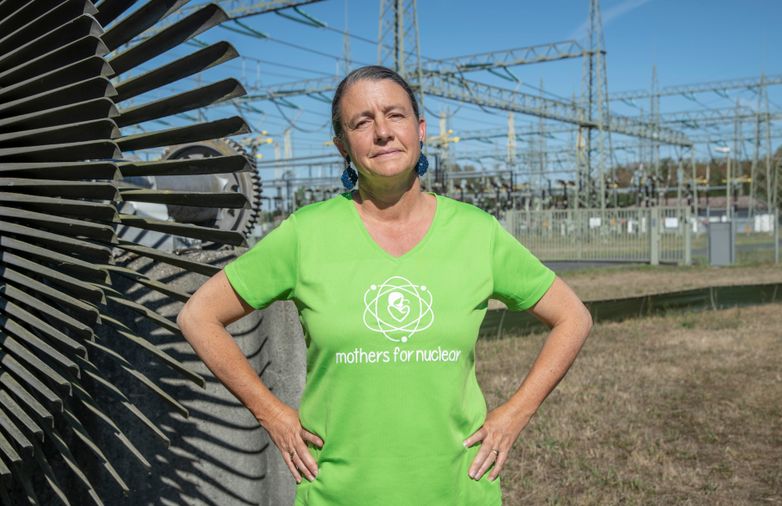
Mass civil unrest is odds-on in power starved Germany and Britain this winter, thanks to the so-called wind and solar ‘transition’.
With thousands likely to freeze to death, the collective sense of humour will soon evaporate, along with any remaining faith in the ability of wind and solar to deliver power, as and when it’s needed.
Everything about renewable energy policy is political; no one woke up 20 years ago thinking what a good idea would be to watch power prices triple and suffer power rationing every time the wind dropped and the sunset. Instead, it was a political ‘sell’ (aka lie) that the world would be an altogether happier place if only we were powered exclusively by sunshine and breezes.
Well, that didn’t pan out so well.
The political response to the disaster is all directed at preventing the proles from turning seething anger into outright revolt.
At the…
View original post 418 more words
BCG report throws light on how we might avoid the power-price shocks that Aussies are facing
26 Oct 2022 Leave a comment

Retail electricity prices in Australia are expected to rise by 50% over the next two years, with Federal Treasurer Jim Chalmers said to be weighing up market intervention to stop those costs spiralling further.
The Australian Treasury has assumed in the federal budget presented in Canberra last night that retail power prices will increase by an average of 20% nationally in late 2022 and a further 30% in 2023/24.
These startling rises stem from Australia’s drive to decarbonise its electricity supplies. After enjoying a long run of cheap electricity, Australian consumers are now facing what will be a severe attack on household budgets.
By comparison, with 80% of our electricity already coming from renewable sources, New Zealand may escape such rises.
View original post 485 more words
European Fiscal Policy Week, Part I: Italy’s Looming Fiscal Crisis
26 Oct 2022 Leave a comment

I’m in Europe to give a couple of speeches about fiscal policy, so I’m going to spend all week commenting on the continent’s (mostly miserable) fiscal policy.
Let’s start with comments about Italy, the nation most likely to suffer a crisis.
Normally, I tell people to focus on government spendingrather than red ink. After all, the economy is hurt whether spending is financed by taxes or borrowing (or printing money).
But I’ve also noted that governments sometimes spend so much money and incur so much debt that investors decide it is very risky to buy or hold debt from those governments. In other words, they begin to fear default.
When investors (sometimes known as “bond vigilantes”) reach that stage, they probably try to get rid of their holdings and definitely refuse to buy more debt. The net result is that profligate governments have to offer…
View original post 337 more words
Rishi Sunak offers greater stability, but also more pain
26 Oct 2022 Leave a comment

Let’s start with the good news. This change of Prime Minister undoubtedly makes a difference for the better. The Conservatives have finally found a leader with a decent chance of making it until the next General Election, providing some much-needed political stability.
The financial markets have reacted positively too: the pound has strengthened, the cost of government borrowing has fallen, and investors have trimmed their expectations for how far the Bank of England will raise interest rates. This should ease the pressure on the cost of mortgages, in particular.
Investors prefer certainty and Rishi Sunak is, of course, a known quantity. The new Prime Minister’s credibility has been enhanced by his warnings of what might gone wrong if his predecessor lost the confidence of the markets.
Nonetheless, the economic situation remains difficult and could be about to worsen. There are two main challenges, but it will be hard to meet…
View original post 447 more words
The Ellis decision: Tikanga and the rule of law in New Zealand
26 Oct 2022 Leave a comment

Blogging is not easy on time, which for all of us is fixed. Nobody can make any more of it. Time is the enemy for a lot of people. I have a busy work life, and a couple of other interests keep me occupied, hence the time I can dedicate to this blog is regretfully limited. I would rather spend the reasonably limited amount of time I have for writing here dedicated to things that are useful and informative, rather than comment on the day-to-day socialism and slow degradation of this once great country through either the Labour or National governments.
The Supreme Court decision in the Peter Ellis appeal is one such useful and informative matter that I feel the general populace of this once great Westminster, parliamentary democracy needs to understand. So I thought it would be helpful for the generally small number of readers here for me…
View original post 1,015 more words


Recent Comments