Northern Ireland: dangers and opportunities for London
15 Nov 2022 Leave a comment


Northern Ireland is again governed by civil servants. Alan Whysall argues that London’s self-interest requires it to give Northern Ireland serious attention in coming months. But success may require more effort and time than is currently envisaged, and a return to the approach that led to the Belfast/Good Friday Agreement. Not making this commitment could have grave consequences for the entire Union, not just Northern Ireland.
This blog draws on the Unit’s report on Northern Ireland’s Political Future, published in May (hereafter referred to as the Report).
No government again
Northern Ireland has had no functioning Executive since the DUP’s withdrawal of its First Minister, in protest at the Northern Ireland Protocol, in February. The party declined to appoint a deputy First Minister following Assembly elections in May – when, for the first time, Sinn Féin emerged the largest party, entitled to the First Minister post (the DUP…
View original post 1,882 more words
Wind & Solar Wipeout: Reliable & Affordable Power Now Part of Ancient History
15 Nov 2022 Leave a comment

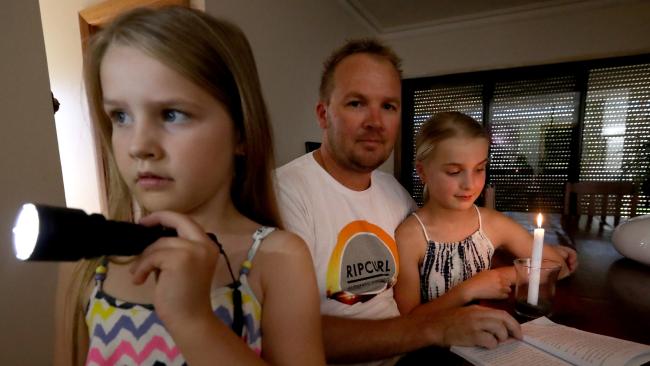
Pretty soon, the notion of having affordable power available on demand will be ancient history. Never before in the course of human existence have so few done so much damage to so many. Electricity prices are spiralling out of control in any place attempting to run on sunshine and breezes, power rationing (aka ‘demand management’) is routine and, with delusional dunderheads driving energy policy in Australia, we’ve only just begun.
As Eric Worrall describes it, Australians can look forward to a very dark and very dismal future. One where the weather dictates whether or not you and yours will be sitting freezing or boiling in the dark.
The Australian Government Vision for Our Renewable Future
Watts Up With That?
Eric Worall
16 October 2022
The government has provided a risible $224 million budget for batteries to stabilise a 33GW grid which is expected to be 82% renewable by 2030.
Record…
View original post 583 more words
Some Thoughts On The Counsellors Of State
15 Nov 2022 Leave a comment

With the news that the Prince of Wales has COVID, I’ve been asked about who might step in for the Queen if she were to fall ill as well. Under section 6(1) of the Regency Act 1937, the Sovereign can delegate their functions to Counsellors of State in the event of illness or some other indisposition. Section 6(2) of the Act states that the Counsellors must be the Sovereign’s spouse and the four individuals who are next in line for the throne and are capable of serving as a regent.[1]
Since the Duke of Edinburgh is dead and the Duke of Cambridge’s children are too young to serve, this means the Counsellors would be Prince Charles, Prince William, the Duke of Sussex, and the Duke of York. But Prince Charles is self-isolating, Prince William is out of the country, Prince Harry lives in the US, and Prince Andrew…
View original post 564 more words
What Are Counsellors Of State?
15 Nov 2022 Leave a comment
The Prince of Wales and the Duke of Cambridge will open Parliament today after the Queen had to pull out due to mobility issues. They will be acting as Counsellors of State, but what exactly does that mean?
Counsellors of State are individuals empowered by the Sovereign to discharge royal functions under section 6 of the Regency Act 1937. Unlike a Regent, who exercises the full panoply of the Crown’s power, Counsellors of State are meant to handle routine business such as signing state documents or holding meetings of the Privy Council.[1] The Monarch ultimately decides what they can and cannot do, though section 6(1) of the 1937 Act states that the Sovereign can’t delegate the power to dissolve Parliament (except on their express instructions) or create new peerages.[2] Modern convention also dictates that Counsellors of State don’t handle business from the Commonwealth Realms.[3]
When George…
View original post 588 more words
Solar and wind are bugger all
15 Nov 2022 Leave a comment
in energy economics, environmental economics, global warming Tags: renewable energy, solar power, wind power
Small Modular Reaction: Europe’s Wind & Solar Disaster Paves Way For New Nuclear Age
14 Nov 2022 Leave a comment

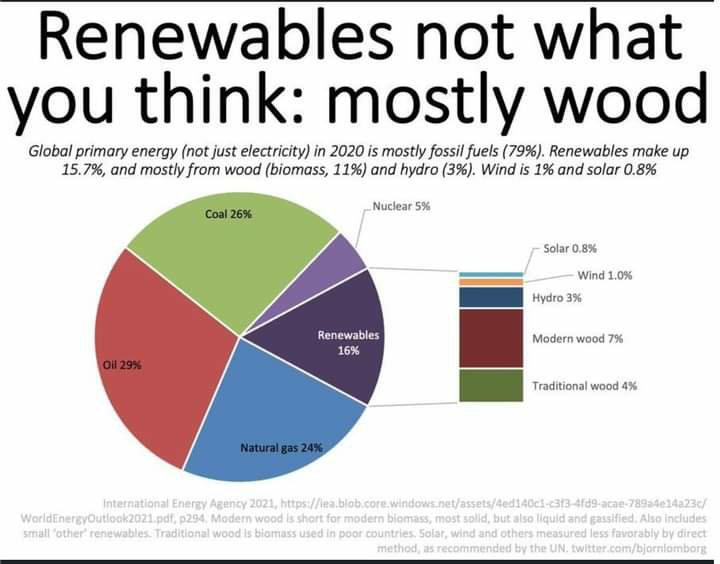
Europe’s energy disaster proves, beyond doubt, that wind and solar are an abject failure, leaving the way clear for nuclear power and any other power generation source that can dish it up, on demand.
With numerous operators seeking or obtaining licences to build Small Modular Reactors, and numerous countries signing up to have them, SMRs are here to stay.
The wind and solar cult reckon SMRs are a pipe dream, cooked up by conservative reactionaries, conveniently overlooking the 200 small nuclear reactors that are presently powering 160 ships and submarines all around the world, of the kind that have been doing so for decades.
Nuclear power is safe, affordable, reliable and the perfect antidote to arguments about human-generated carbon dioxide gas posing a threat to life on Earth – because it doesn’t generate any, while generating power on demand, irrespective of the weather, unlike inherently unreliable wind and solar.
As…
View original post 1,024 more words
New Report on Construction Costs Misses the Mark
14 Nov 2022 Leave a comment

In the last few years, ever more serious and powerful actors have begun investigating the fact of high American infrastructure construction costs. First it was Brian Rosenthal’s excellent New York Times exposé, and then it was the Regional Plan Association’s flop of a study. At the same time, I was aware that the congressional Government Accountability Office, or GAO, was investigating the same question, planning to talk to sources in the academic world as well as industry in order to make recommendations.
The GAO report is out now, and unfortunately it is a total miss, for essentially the same reason the RPA’s report was a miss: it did not go outside the American (and to some extent rest-of-Anglosphere) comfort zone. Its literature review is if anything weaker than the RPA’s. Its interviews with experts are telling: out of nine mentioned on PDF-p. 47, eight live in…
View original post 2,114 more words
Review of “Ted Kennedy: A Life” by John A. Farrell
14 Nov 2022 Leave a comment

 Ted Kennedy: A Life
by John A. Farrell
752 pages
Penguin Press
Published: Oct 2022
“Ted Kennedy: A Life” is John Farrell’s just-released biography of the youngest son of Joseph P. Kennedy. Farrell is a former correspondent for The Boston Globe who has written biographies of Tip O’Neill and Richard Nixon (a Pulitzer Prize finalist and my favorite biography of Nixon among the twelve I read during my journey through the best presidential biographies).
Edward Kennedy (1932-2009) was the youngest of nine children and presumed to be the least likely of the four sons to achieve success or sustain the Kennedy brand. Although famously flawed, Ted was elected to the US Senate at the age of 30 and spent the next forty-seven years mastering its intricacies and advocating for social justice. He was the third longest-serving US senator in American history.
Like Farrell’s biographies of O’Neill and Nixon…
View original post 409 more words
Coastal dwellers not being warned of rising sea level risk and property prices skewed, says nutty professor
14 Nov 2022 Leave a comment
Reviewing monetary policy
14 Nov 2022 Leave a comment

Way back in 1990 Parliament formally handed over the general responsibility for implementing monetary policy to the Reserve Bank. The government has always had the lead in setting the objectives the Bank is required to work to, and has the power to hire and fire if the Bank doesn’t do its job adequately, but a great deal of discretion has rested with the Bank. With power is supposed to come responsibility, transparency, and accountability.
And every so often in the intervening period there have been reviews. The Bank has itself done several over the years, looking (roughly speaking) at each past business cycle and, distinctly, what role monetary policy has played. These have generally been published as articles in the Bank’s Bulletin. When I looked back, I even found Adrian Orr’s name on one of the policy review articles and mine on another. It was a good initiative by…
View original post 2,264 more words


Recent Comments