Mystery Solved: Unreliable Wind & Solar Primary Reason For Rocketing Power Prices

stopthesethings's avatarSTOP THESE THINGS

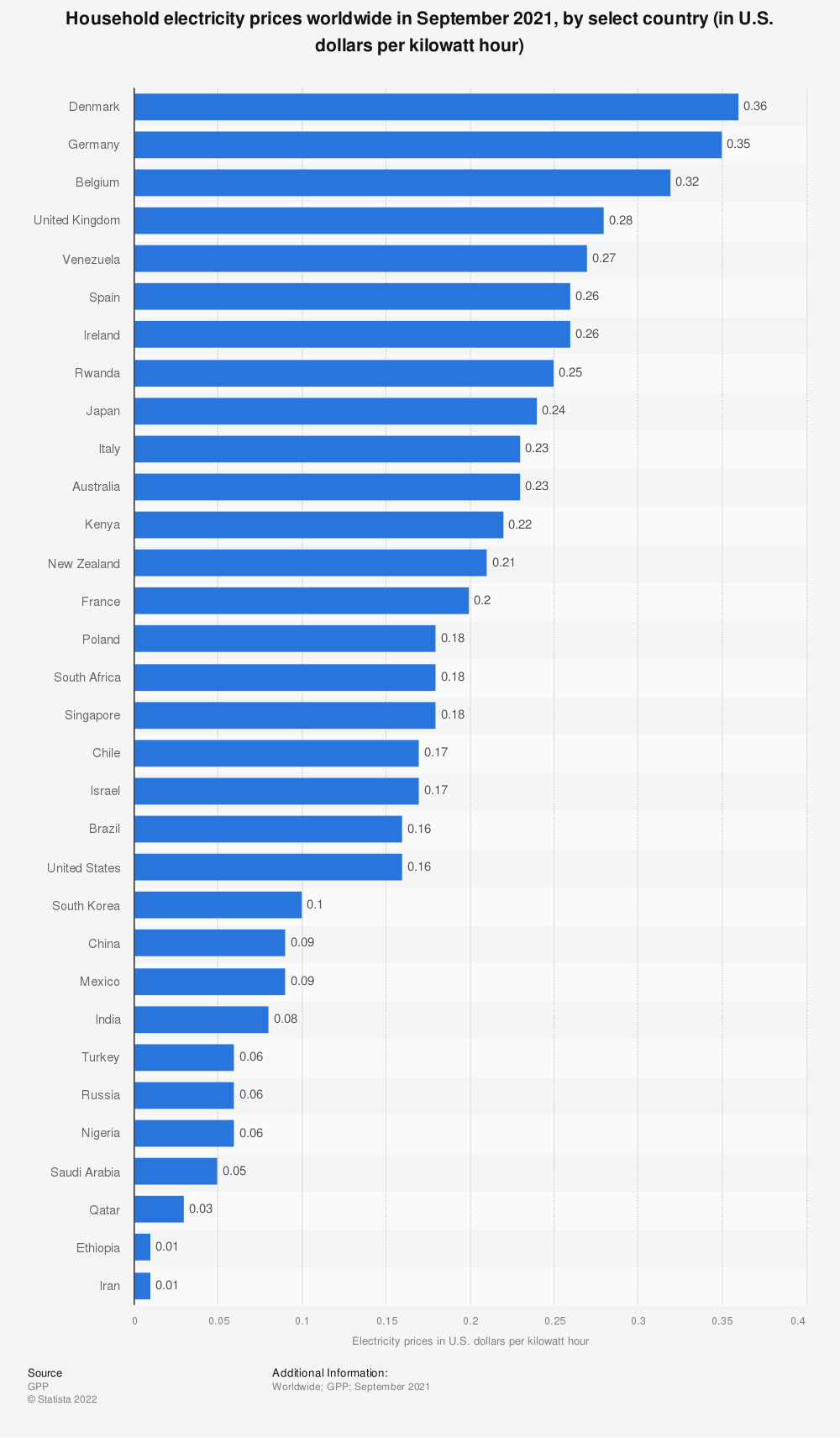
That heavily subsidised and chaotically intermittent wind and solar are driving power prices into orbit has been proved beyond all reasonable doubt.

No country that ‘invested’ in the unreliables (ie threw $millions in subsidies at wind and solar) has ever seen their retail power prices fall. No, the evidence on that score is all to the contrary.

In Europe, wind and solar ‘powered’ Germany and Denmark jockey for top spot on the power prices league table. Australia’s renewable energy capital, South Australia set the benchmark down under for crippling power prices years ago and its denizens still pay prices well above their coal-fired neighbours.

It’s no mystery, really.

The cost of additional transmission lines running from the back of beyond; the staggering cost of running highly-inefficient Open Cycle Gas Turbines (or diesel fuelled ship engines) to cope with total collapses in wind and solar output; and running traditional coal-fired…

View original post 1,663 more words

Study from German Economists Shows that Tax Competition and Fiscal Decentralization Limit Income Redistribution

Dan Mitchell's avatarInternational Liberty

If we want to avoid the kind of Greek-style fiscal collapse implied by this BIS and OECD data, we need some external force to limit the tendency of politicians to over-tax and over-spend.

That’s why I’m a big advocate of tax competition, fiscal sovereignty, and financial privacy (read Pierre Bessard and Allister Heath to understand why these issues are critical).

Simply stated, I want people to have the freedom to benefit from better tax policy in other jurisdictions, especially since that penalizes governments that get too greedy.

I’m currently surrounded by hundreds of people who share my views since I’m in Prague at a meeting of the Mont Pelerin Society. And I’m particularly happy since Professor Lars Feld of the University of Freiburg presented a paper yesterday on “Redistribution through public budgets: Who pays, who receives, and what effects do political institutions have?”.

His research produced all sorts of interesting…

View original post 557 more words

Rodger Finlay revisited

Michael Reddell's avatarcroaking cassandra

This short post is mainly for those readers who don’t follow me on Twitter.

You may recall that a couple of months ago I highlighted as being highly inappropriate the appointment to the new board of the Reserve Bank (and the establishment “transitional board”) of Rodger Finlay, who was also chair of the state-owned enterprise New Zealand Post, which in turn was the majority owner of Kiwibank, the 5th largest bank in New Zealand.

The appointment was not illegal – itself a serious weakness in the new Act – but was clearly highly inappropriate in that the new Board was picking up responsibility for prudential supervision, most notably of banks.

When a couple of journalists got interested in the story, we were given to understand that Finlay’s term as chair of NZ Post would expire on 30 June 2022, and as the new Board only took legal responsibility for the…

View original post 534 more words

Rodger Finlay revisited (2)

Michael Reddell's avatarcroaking cassandra

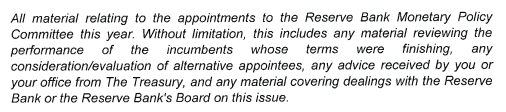
Further to my post this morning, I’ve read a few more of the papers a bit more carefully.

It is still clear that when Rodger Finlay was appointed last October to the “transitional board” of the Reserve Bank and (from 1 July 2022) to the full Reserve Bank Board that no one (Treasury, Reserve Bank, Minister of Finance) seems to have been bothered by the stark conflict of interest between his twin roles as NZ Post chair (majority owner of 5th biggest bank in New Zealand) and the proposed role on the Board of the prudential regulatory authority. Any conflict was sufficiently unimportant (in the eyes of officials) that discussions were not documented, and ministers were not even advised of the issue in the relevant Cabinet and Cabinet committee papers.

To be fair, at that point it appears that Finlay’s term as NZ Post chair expired in the first…

View original post 975 more words

Creative destruction in landlines

Visualizing the Difference Between Switzerland and Europe’s Welfare States

Dan Mitchell's avatarInternational Liberty

What accounts for Switzerland’s “improbable success“? How did a small, land-locked nation with few natural resources become so successful?

Switzerland routinely ranks very high in international comparisons of economic liberty, so that means that there are many good policies.

But since I’m a public finance economist, I think this map from the Tax Foundation helps to explain why Switzerland is a role model. As you can see, the tax burden on workers is dramatically lower than in other European nations. Indeed, Switzerland is almost 10 percentage points lower than the next-closest country.

The map shows the tax burden on a single worker with no dependents, but you find a similarly large gap when looking at the tax burden on a four-person household.

By the way, Switzerland’s value-added tax is far lower than any other European nation, so ordinary workers aren’t being indirectly pillaged (and tax “progressivity”…

View original post 126 more words

Wasting Money on Carbon Capture

Ron Clutz's avatarScience Matters

Robert Bryce explains in his Real Clear Energy article Carbon Capture Didn’t Make Sense 12 Years Ago And It Doesn’t Make Sense Now.  Excerpts in italics with my bolds and added images.

It appears the reconciliation bill that includes some $370 billion in energy-related spending is going to become law. The measure includes a panoply of tax credits for alternative energy technologies, including incentives for electric vehicles, hydrogen, energy storage, and of course, billions of dollars in tax credits for wind and solar energy.

The measure also includes, according to the Congressional Budget Office, some $3.2 billion in tax credits for carbon capture and sequestration, a technology that has plenty of supporters but precious little in the way of commercially successful projects. Back in 2018, Al Gore blasted CCS, calling it “nonsense” and an “extremely improbable solution.”

The new tax credits for CCS remind me that I…

View original post 765 more words

Chris Trotter: Mistrusting democracy

poonzteam5443's avatarPoint of Order

Political commentator CHRIS TROTTER writes ….   …  

JAN TINETTI, Associate Minister of Education, is firmly of the view that those who subscribe to “an ideology of hate” have no place on a school board of trustees. So convinced is the Minister, that she is actively seeking administrative and/or legislative changes to prevent such persons from being nominated. Though doubtless undertaken with the best of intentions, Tinetti’s initiative is deeply troubling. In a democracy, the idea that the state is qualified to decide which ideologies are acceptable for candidates for public office to hold, and which are not, should be laughed off the political stage.

Prompting the Associate-Minister’s authoritarian musings, is the revelation that the convicted white supremacist, Philip Arp, the man sentenced to 21 months imprisonment for distributing terrorist Brenton Tarrant’s recording of the Christchurch Mosque Massacre, had been nominated for a seat on the Board of Trustees of Te Aratai…

View original post 1,072 more words

Hitler’s Victories, 1939-41 | Richard J. Evans

Poison Gas Warfare In WW1 I despite a 1899 treaty banning it THE GREAT WAR Special

White Guy Speaks Code Talkers Language, Shocks Navajo Locals

Hacker VS Humphrey & The National Theatre | Yes, Prime Minister

Dating Preferences Drive Human Evolution

Why You Don’t Want the Power of Flight

Ed Davey: I’m proud to have stopped fracking, despite energy crisis

Previous Older Entries Next Newer Entries

Thoughts from the North

Celebrating humanity's flourishing through the spread of capitalism and the rule of law

Fardels Bear

A History of the Alt-Right

Vincent Geloso

Econ Prof at George Mason University, Economic Historian, Québécois

Bassett, Brash & Hide

Celebrating humanity's flourishing through the spread of capitalism and the rule of law

Truth on the Market

Scholarly commentary on law, economics, and more

The Undercover Historian

Beatrice Cherrier's blog

Matua Kahurangi

Celebrating humanity's flourishing through the spread of capitalism and the rule of law

Temple of Sociology

Celebrating humanity's flourishing through the spread of capitalism and the rule of law

Velvet Glove, Iron Fist

Celebrating humanity's flourishing through the spread of capitalism and the rule of law

Why Evolution Is True

Why Evolution is True is a blog written by Jerry Coyne, centered on evolution and biology but also dealing with diverse topics like politics, culture, and cats.

NoTricksZone

Celebrating humanity's flourishing through the spread of capitalism and the rule of law

Homepaddock

A rural perspective with a blue tint by Ele Ludemann

Kiwiblog

DPF's Kiwiblog - Fomenting Happy Mischief since 2003

The Dangerous Economist

Celebrating humanity's flourishing through the spread of capitalism and the rule of law

Watts Up With That?

The world's most viewed site on global warming and climate change

The Logical Place

Tim Harding's writings on rationality, informal logic and skepticism

Doc's Books

A window into Doc Freiberger's library

The Risk-Monger

Let's examine hard decisions!

Uneasy Money

Commentary on monetary policy in the spirit of R. G. Hawtrey

Barrie Saunders

Thoughts on public policy and the media

Liberty Scott

Celebrating humanity's flourishing through the spread of capitalism and the rule of law

Point of Order

Politics and the economy

James Bowden's Blog

A blog (primarily) on Canadian and Commonwealth political history and institutions

Science Matters

Reading between the lines, and underneath the hype.

Peter Winsley

Economics, and such stuff as dreams are made on

A Venerable Puzzle

"The British constitution has always been puzzling, and always will be." --Queen Elizabeth II

The Antiplanner

Celebrating humanity's flourishing through the spread of capitalism and the rule of law

Bet On It

Celebrating humanity's flourishing through the spread of capitalism and the rule of law

History of Sorts

WORLD WAR II, MUSIC, HISTORY, HOLOCAUST

Roger Pielke Jr.

Undisciplined scholar, recovering academic

Offsetting Behaviour

Celebrating humanity's flourishing through the spread of capitalism and the rule of law

JONATHAN TURLEY

Res ipsa loquitur - The thing itself speaks

Conversable Economist

In Hume’s spirit, I will attempt to serve as an ambassador from my world of economics, and help in “finding topics of conversation fit for the entertainment of rational creatures.”

The Victorian Commons

Researching the House of Commons, 1832-1868

The History of Parliament

Articles and research from the History of Parliament Trust

Books & Boots

Reflections on books and art

Legal History Miscellany

Posts on the History of Law, Crime, and Justice

Sex, Drugs and Economics

Celebrating humanity's flourishing through the spread of capitalism and the rule of law

European Royal History

Exploring the Monarchs of Europe

Tallbloke's Talkshop

Cutting edge science you can dice with

Marginal REVOLUTION

Small Steps Toward A Much Better World

NOT A LOT OF PEOPLE KNOW THAT

“We do not believe any group of men adequate enough or wise enough to operate without scrutiny or without criticism. We know that the only way to avoid error is to detect it, that the only way to detect it is to be free to inquire. We know that in secrecy error undetected will flourish and subvert”. - J Robert Oppenheimer.

STOP THESE THINGS

The truth about the great wind power fraud - we're not here to debate the wind industry, we're here to destroy it.

Lindsay Mitchell

Celebrating humanity's flourishing through the spread of capitalism and the rule of law

Alt-M

Celebrating humanity's flourishing through the spread of capitalism and the rule of law