AMAZING HIMALAYAN MASSAGE with TIBETAN BOWL SOUND!
19 Aug 2022 Leave a comment
in economics of media and culture
White Guy Learns Korean in 24 Hours, Shocks Korean Locals
19 Aug 2022 Leave a comment
in economics of education, economics of media and culture Tags: economics of languages
Scott Freeman on monetarism
18 Aug 2022 Leave a comment
in business cycles, history of economic thought, macroeconomics, Milton Friedman, monetarism, monetary economics
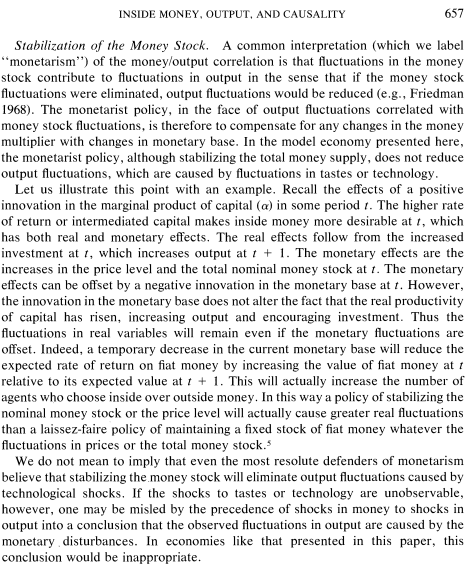
From Inside Money, Output, and Causality, Scott Freeman and Gregory W. Huffman, International Economic Review, Vol. 32, No. 3 (August 1991), pp. 645-667 Stable URL: http://www.jstor.org/stable/2527112
Robert Lucas and Real Business-Cycle Theory
18 Aug 2022 Leave a comment

In 1978 Robert Lucas and Thomas Sargent launched a famous attack on Keynes and Keynesian economics, which they viewed as having been discredited by the confluence of high inflation and high unemployment in the 1970s. They also expressed optimistism that an equilibrium approach to business-cycle modeling would succeed in replicating reasonably well the observed time-series variables relating to output and employment. In particular they posited that a model subjected to an unexpected monetary shock causing an immediate downturn from an equilibrium time path would be followed by a gradual reversion to that time path, thereby capturing the main stylized facts of historical business cycles. Their optimism was disappointed, because the model that Lucas had developed, based on an informational imperfection preventing agents from distinguishing immediately between real and nominal price changes, could not account for downturns because the informational imperfection assumed by Lucas could not account for the typical…
View original post 850 more words
Can a Society Exist Without Government? | David Friedman
18 Aug 2022 Leave a comment
in applied price theory, comparative institutional analysis, constitutional political economy, David Friedman, economic history, economics of bureaucracy, economics of crime, industrial organisation, law and economics, liberalism, libertarianism, property rights, Public Choice Tags: economics of anarchy
Socialism: A Track Record of Failure
18 Aug 2022 Leave a comment

What’s socialism?
Is it the centrally planned economies of Cuba and North Korea?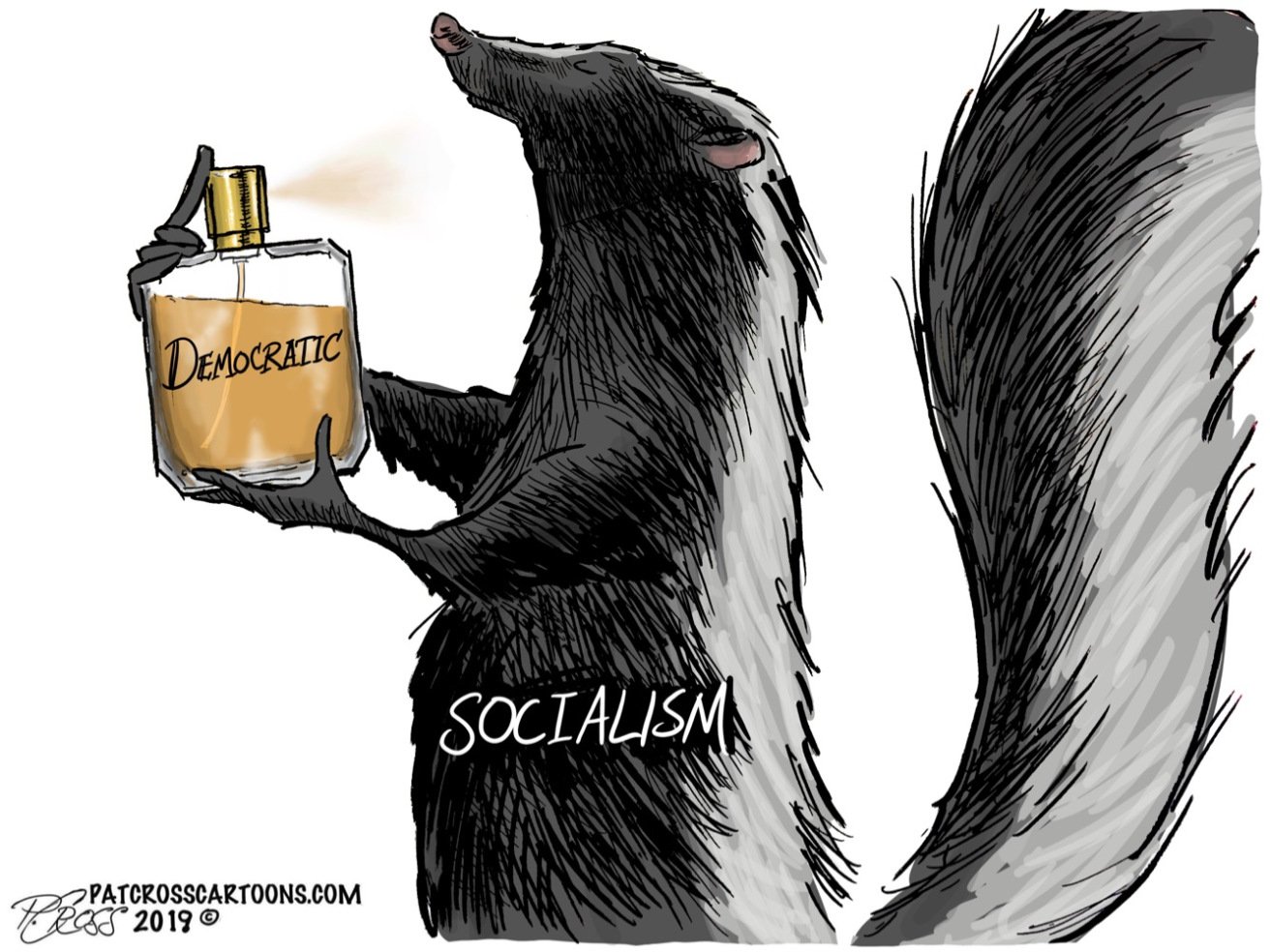 Or the kleptocracies of Zimbabwe and Venezuela?
How about the interventionist welfare states of Greece, Italy, and France? Or the redistribution-oriented Nordic nations?
Since socialism means different things to different people, the answers will be all over the map.
But there’s one constant. However it’s defined, it doesn’t work.
Joshua Muravchik, writing for the Wall Street Journal, shares the many and inevitable failures of socialism.
It’s hard to think of another idea that has been tried and failed as many times in as many ways or at a steeper price in human suffering. …Marx (1818-83)…called his vision “scientific socialism.” Inspired by the dream of proletarian revolution overthrowing capitalist immiseration, socialist parties sprouted across Europe.
Yet instead of growing poorer, workers in industrialized countries saw improvement in their living standards…
View original post 1,020 more words
Why the US climate bill ‘might’ struggle to deliver on carbon capture
18 Aug 2022 Leave a comment

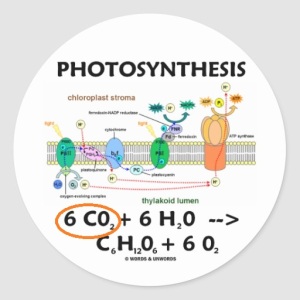 CO2 is not pollution
In the end nature determines how much of the trace gas carbon dioxide is in the atmosphere, via the carbon cycle. Certain human activities may alter the numbers up or down temporarily. There’s vast expense, including lots of pipelines nobody wants, with no known finishing line in so-called ‘carbon capture’.
– – –
Up to a fifth of emissions cuts from the Inflation Reduction Act are expected to come from carbon capture technologies, but there are major technical and political hurdles, says Climate Home News.
US president Joe Biden is expected to sign off a sweeping climate, energy and health care bill on Tuesday (16 August). It contains about $370 billion to foster clean energy development and combat climate change, constituting the largest federal climate investment in history.
Several studies project that its climate and energy provisions could enable the United States to reduce its…
View original post 292 more words
11m views of this HARDCORE Chinese Street Massage Fixes My Broken Ankle
18 Aug 2022 Leave a comment
in economics of media and culture
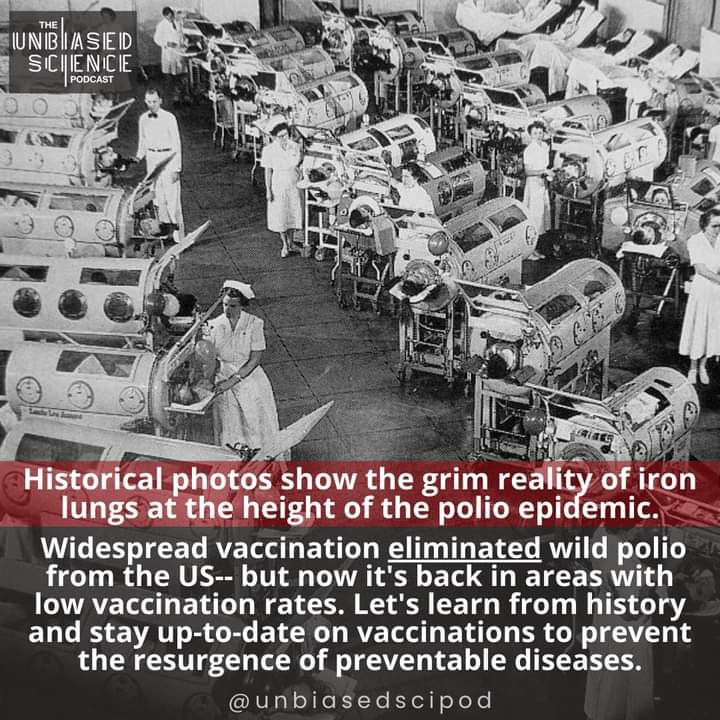
Polio
18 Aug 2022 Leave a comment
in economic history, health economics Tags: anti-vaccination movement, The Great Escape, vaccines
Why The Allies Couldn’t Overcome German Trenches in Spring 1917 (WW1 Documentary)
18 Aug 2022 Leave a comment
in defence economics, war and peace Tags: World War I
Everything You Wanted to Know about the Economics of Redistribution and Socialism in One Image
18 Aug 2022 Leave a comment
Incentives matter.
Sometimes that can be explained with wonky discussions of marginal tax rates or welfare traps.
But that may not be the best approach when trying to convince someone with no aptitude for economics. So what’s the best way of introducing such concepts to, say, a Bernie Sanders supporter?
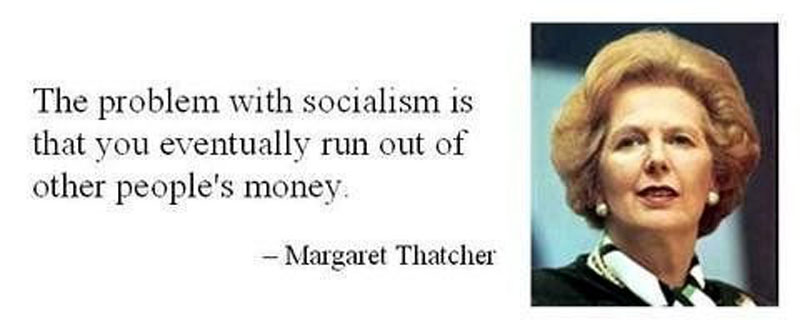 You can point to the economic chaos in places such as Greece and Venezuela and explain that Margaret Thatcher was right when she warned that socialists eventually run out of other people’s money.
But that’s probably not too effective because they’ll simply point to Sweden and Denmark and you’ll have a hard time educating them that those countries became successful when government was small and that they’ve been falling behind ever since big welfare states were imposed.
So perhaps we first need to help them understand very simple notions.
That’s why, when trying to introduce basic concepts, I’ll often…
View original post 292 more words
Cold Consequence: Europe’s Wind & Solar Obsession Promises Very Bitter Winter Ahead
17 Aug 2022 Leave a comment

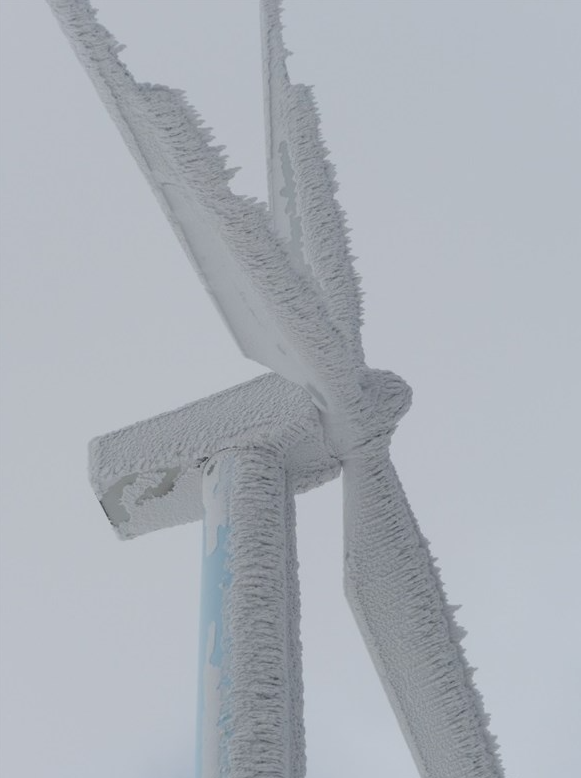
Germans are paying the price for their Green-Left government’s maniacal fixation on heavily subsidised and hopelessly intermittent wind and solar. Already suffering Europe’s highest power prices, with prices still on the ascendant, German bureaucrats have been reduced to rationing energy of all descriptions at the micro level, in a way not seen since its postwar recovery. As winter approaches, Germans are being offered the opportunity to bunch up in exhibition halls when temperatures plummet, so they can collectively stay warm in a commonly heated space.
The writing was on the wall, even before Vlad Putin stormed Ukraine and began holding Europe to ransom with threats (feigned and ultimately realised) to slash Russian gas supplies to Europe.
2021 was the year when the inherent unreliability of wind and solar revealed how everything depends upon reliable and affordable power supplies. Europe’s months-long wind drought in the last half of 2021 made the…
View original post 1,214 more words
Cold Consequence: Europe’s Wind & Solar Obsession Promises Very Bitter Winter Ahead
17 Aug 2022 Leave a comment
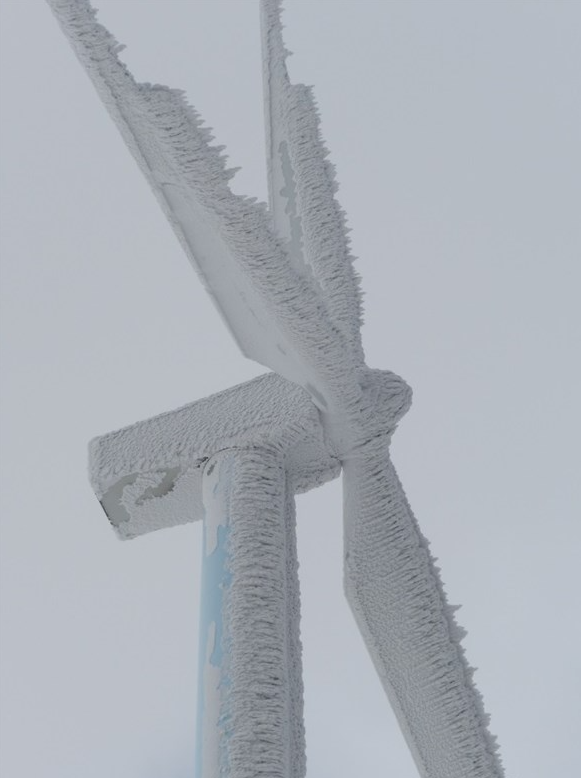
Germans are paying the price for their Green-Left government’s maniacal fixation on heavily subsidised and hopelessly intermittent wind and solar. Already suffering Europe’s highest power prices, with prices still on the ascendant, German bureaucrats have been reduced to rationing energy of all descriptions at the micro level, in a way not seen since its postwar recovery. As winter approaches, Germans are being offered the opportunity to bunch up in exhibition halls when temperatures plummet, so they can collectively stay warm in a commonly heated space.
The writing was on the wall, even before Vlad Putin stormed Ukraine and began holding Europe to ransom with threats (feigned and ultimately realised) to slash Russian gas supplies to Europe.
2021 was the year when the inherent unreliability of wind and solar revealed how everything depends upon reliable and affordable power supplies. Europe’s months-long wind drought in the last half of 2021 made the…
View original post 1,214 more words
The Dissolution of the Holy Roman Empire. Part VII: The Creation of Two New Empires
17 Aug 2022 Leave a comment

The head of the French Republic, Napoleon, assumed the title “Emperor of the French” in 1804. Among others, one of the important figures attending the coronation was Pope Pius VII, probably fearing that Napoleon planned to conquer the Papal States.
Pope Pius VII was aware that Napoleon symbolically linked his imperial coronation with the imperial coronation of Charlemagne and would most likely have caught the similarity between Napoleon’s title and Emperor of the Romans, the title used by Franz II and all Holy Roman emperors before him. Through his presence at the ceremony, Pius VII symbolically approved of the transfer of imperial power (translatio imperii) from the Romans (and thus the Franks and Germans) to the French.
Napoleon’s coronation received a mixed reaction in the Holy Roman Empire. Although a return to monarchy in France was welcomed (though unfortunate in so far that the monarch was Napoleon), the imperial title…
View original post 864 more words


Recent Comments