Thomas Sowell – Production, Inequality and Human Capital
16 Aug 2022 Leave a comment
in applied price theory, comparative institutional analysis, development economics, discrimination, economic growth, economic history, growth disasters, history of economic thought, human capital, income redistribution, labour economics, labour supply, law and economics, macroeconomics, Marxist economics, monetary economics, occupational choice, poverty and inequality, property rights, Public Choice, rentseeking, Thomas Sowell Tags: racial discrimination
Triggernometry: Andrew Doyle on Woke Comedy, Left vs Identity Politics and Free Speech
16 Aug 2022 Leave a comment

Just as relevant today, perhaps even more so
January 29, 2019
It’s the first episode of Season 2 and it’s great to be back. We’re kicking things off with a returning guest. Andrew Doyle (@andrewdoyle_com), stand-up comedian, Spiked Magazine columnist and Jonathan Pie co-writer discusses woke comedy, what makes someone left wing, identity politics, free speech and Brexit (just a bit) with the guys at TRIGGERnometry.
Top 5 Useless Megaprojects
16 Aug 2022 Leave a comment
in economic history, economics of media and culture
Daily Delivery Fails: Why Weather-Dependent Wind Power Will Always Be Utterly Pointless
15 Aug 2022 Leave a comment


Electricity that can’t be delivered as and when households and businesses need it, has absolutely no commercial value. Hence the massive and endless subsidies to chaotically intermittent wind and solar and the punitive mandates that force retailers to take it, ahead of the reliable and affordable stuff.
Random 3,000 to 4,000 MW wind power output collapses are at the heart of Australia’s self-inflicted renewable energy debacle. The consequences of an obsession with subsidised wind and solar were as perfectly predictable, as they were perfectly avoidable. Power rationing is now routine and power prices are soaring out of control.
What’s depicted above – courtesy of Aneroid Energy – is the output delivered by Australian wind power outfits to the Eastern Grid during May, when there were more than a half-dozen occasions when total output amounted to less than 1,000 MW (or 11.6% of total capacity) and three occasions when output…
View original post 1,021 more words
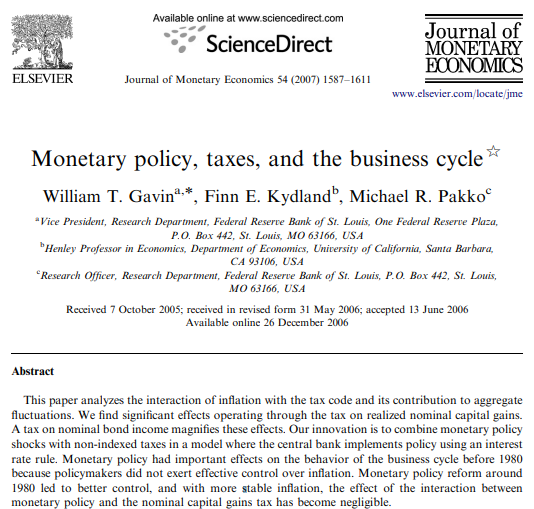
The interaction of inflation with the tax code and the business cycle
15 Aug 2022 Leave a comment
in business cycles, macroeconomics, monetary economics, public economics
Southern polytech gears up for tutoring more students by translating automotive engineering material into te reo
15 Aug 2022 Leave a comment

The polytechnic sector has been getting a bad press in recent times.
Former Otago Polytechnic chief executive Phil Ker has demanded an apology from Education Minister Chris Hipkins for turning the country’s polytechnic education system into “a national disgrace”.
The Otago Daily Times has described the centralising of New Zealand’s 16 polytechnics into one grand organisation, Te Pukenga, as a “shambles”.
National’s Tertiary Education spokesperson and Invercargill MP Penny Simmonds says polytechnics in the South are being forced to cut millions from their budgets because the Government’s mega-merger polytechnic entity Te Pūkenga is in such a mess,
Among the more disturbing reports, new data shows one-third of first year polytechnic students quit their studies last year and some qualifications were unable to retain any learners at all.
Across the country, 12,642 equivalent full-time students began courses at polytechnics last year, but 4124 – or 32.6% – dropped out , according…
View original post 932 more words


Robert Kee: Ireland – A Television History – Part 10 of 13 – ‘Civil War 1921-1923’
15 Aug 2022 Leave a comment
Robert Kee (1919-2013) was already a veteran British broadcaster, writer, historian and journalist when his 1980 thirteen part series ‘Ireland: A Television History’ was first broadcast in Ireland and Britain.
The series was highly acclaimed as Kee followed Ireland’s complex history through the island’s development from pre-Christian times, to various uprisings down the centuries, explains the famine of 1845, the 1916 Rising, Independence and up to the late 1970s, with a specific emphasis on the creation of the modern independent republic and the roots of the Troubles. More importantly, the series presented many British viewers with their first detailed insight into the history of Irish politics, especially the issues surrounding sovereignty and identity in Northern Ireland. It could also be argued that the series did much the same for many Irish viewers too.
The series proved unexpectedly timely, since its broadcast coincided with increased tensions in Northern Ireland…
View original post 110 more words
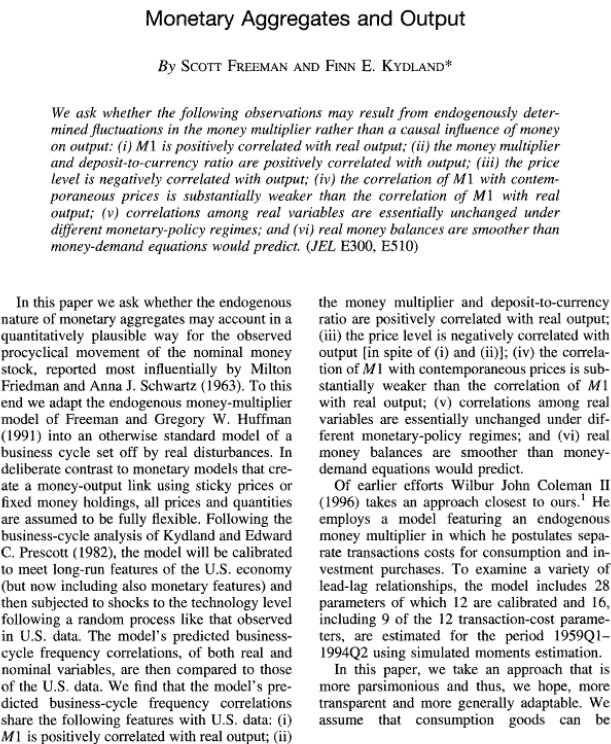
Monetary Aggregates and Output
15 Aug 2022 Leave a comment
in business cycles, macroeconomics, monetarism, monetary economics


Recent Comments