Renewables Rejected: World’s Poorest Crave Reliable & Affordable Coal-Fired Power
11 Aug 2022 Leave a comment

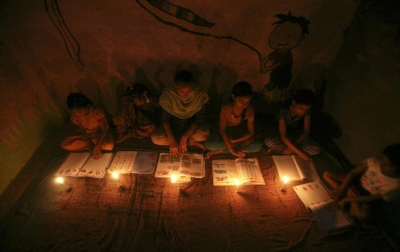
Eco-zealots ram wind and solar power down the throats of Third World governments, purporting to save the planet and drag millions out of poverty. But it never takes their targets long to work out that wind and solar power are both insanely expensive and hopelessly unreliable; sitting in the dark, night after night, generally does the trick.
The wind and solar obsessed in the first world are quite prepared to ensure the World’s poorest stay that way. With economic development agencies peddling ridiculously expensive solar panels – seen as ‘fake electricity’ by those lumbered with it – and forcing tinpot governments to sign up to costly and pointless wind and/or solar power schemes, the ratio of haves to have-nots is likely to stay that way for the foreseeable future.
One who doesn’t subscribe to the ‘keep them poor at all costs’ model is Bjorn Lomborg.
Why we can’t afford…
View original post 902 more words
The “Textbook Definition” of a Recession
11 Aug 2022 Leave a comment

Three weeks I wrote a blog post about how economists define a recession. I pretty quickly brushed aside the “two consecutive quarters of declining GDP,” since this is not the definition that NBER uses. But since that post (and thanks to a similar blog post from the White House the day after mine), there has been an ongoing debate among economists on social media about how we define recessions. And some economists and others in the media have insisted that the “two quarters” rule is a useful rule of thumb that is often used in textbooks.
It is absolutely true that you can find this “two quarters” rule mentioned in some economics textbooks. Occasionally, it is even part of the definition of a recession. But to try and move this debate forward, I collected as many examples as I could find from recent introductory economics textbooks. I tried to…
View original post 1,702 more words
The Stupidity Of Apologizing To Japan
11 Aug 2022 Leave a comment
in defence economics, laws of war, war and peace Tags: atomic bombings, Japan, World War II
The miserable truth is that our leaders don’t want us to have cheap energy–Dan Hannan
11 Aug 2022 Leave a comment
Why Russia Lifted Its Blockade of Ukraine in the Black Sea
11 Aug 2022 1 Comment
in defence economics, development economics, economic history, energy economics, growth disasters, war and peace Tags: Oil prices, Ukrainian war
Extract from ‘English History, 1914-1945’ by A. J. P. Taylor – Read by John Gielgud
11 Aug 2022 Leave a comment
in defence economics, economic history, laws of war, war and peace Tags: British empire, British history
Is the Global Warming Crusade a Scam?
11 Aug 2022 Leave a comment
in economic history, economics of bureaucracy, economics of education, energy economics, environmental economics, global warming, labour economics, law and economics, occupational choice, politics - Australia, politics - New Zealand, politics - USA, Public Choice Tags: academic tenure, climate alarmists
The fall (and rise?) of unions in the US
11 Aug 2022 Leave a comment
in labour economics, labour supply, politics - USA, unions Tags: /, union power
The Dissolution of the Holy Roman Empire. Part III
10 Aug 2022 Leave a comment

The Peace of Westphalia is the collective name for two peace treaties signed in October 1648 in the Westphalian cities of Osnabrück and Münster. They ended the Thirty Years’ War (1618–1648) and Eighty Years’ War (1568–1648), and brought peace to the Holy Roman Empire, closing a calamitous period of European history that killed approximately eight million people.
Despite resulting cessation of the Thirty Years War, the Peace of Westphalia was a significant step in the decline of the Holy Roman Empire.
The Holy Roman Emperor Ferdinand III, Felipe IV-III, King of Spain and Portugal, Louis XIV of France and Navarre, Christina, Queen of Sweden, Willem II, Prince of Orange, United Provinces (Netherlands), and their respective allies were among the princes of the Holy Roman Empire participated in these treaties.
The negotiation process was lengthy and complex. Talks took place in two cities, because each side wanted to meet on…
View original post 1,103 more words
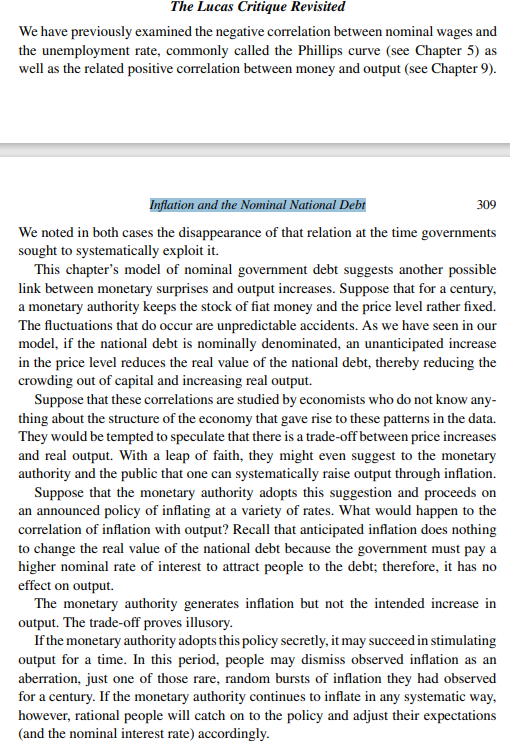
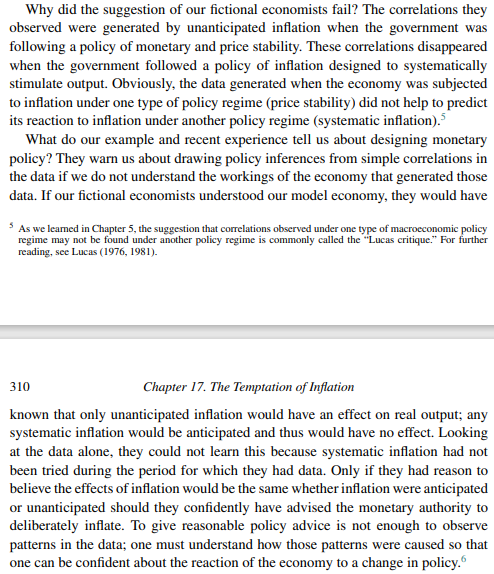
Inflation, Output and the Nominal National Debt by Freeman and Champ
10 Aug 2022 Leave a comment
in business cycles, financial economics, history of economic thought, macroeconomics, monetary economics, public economics
Reality Bites: Germany’s Wind & Solar Transition Declared Abject Failure
10 Aug 2022 Leave a comment
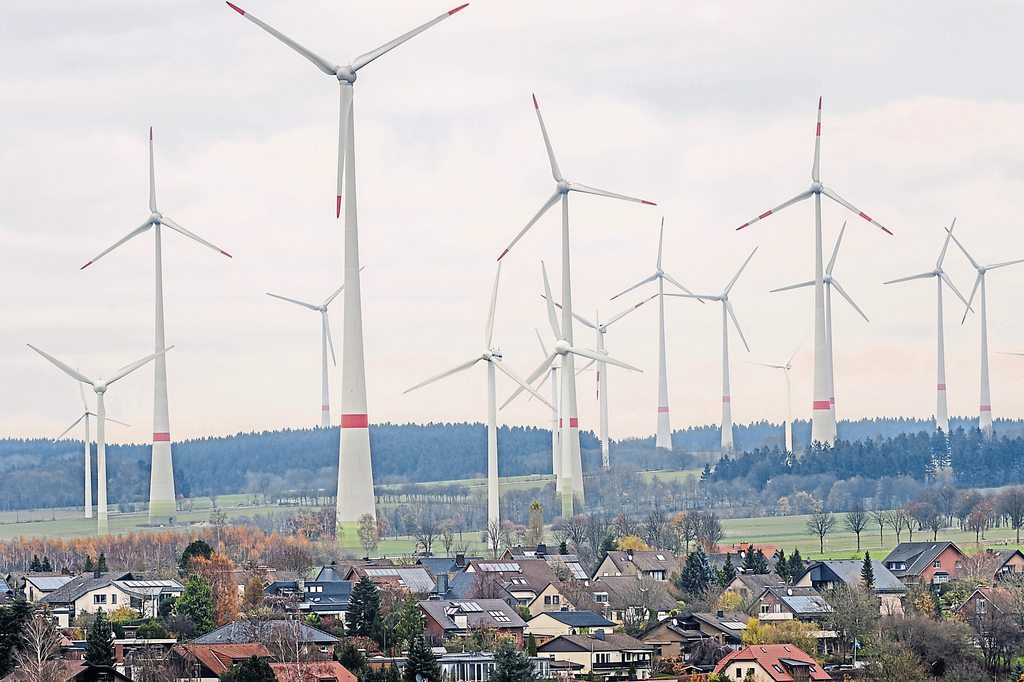
The German government’s cultish obsession with wind and solar is a mixture of wishful thinking and mass delusion. Both have collided with reality as Vlad Putin continues to put the squeeze on Europe’s gas supplies – gas which has been used to run the banks of fast-start-up gas turbines essential to backing up mammoth, sudden and unpredictable collapses in wind and solar output.
Brave talk about wiping out nuclear and coal-fired power plants has largely evaporated.
And one German State’s Prime Minister, Michael Kretschmer has come out and said what everyone has known all along: Germany’s asserted wind and solar transition is nothing short of a failure – one designed by dimwitted ideologues and cunning profiteers.
Energy Crisis: State Prime Minister Declares Green Energy Transition Has ‘Failed’
Breitbart
Peter Caddle
1 August 2022
Germany’s green energy transition from carbon fuels and nuclear energy to renewables has “failed”, a state Prime…
View original post 533 more words
Stephen Colbert: Librarians Come For The Former President | Joe “Dark Brandon” Biden Is More Powerful Than Ever
10 Aug 2022 Leave a comment
a petty offence at best

August 09,2022
The FBI’s raid of the former president’s home is apparently part of an ongoing investigation by the National Archives and Records Administration. Meanwhile, the current president’s recent accomplishments are being celebrated online with “Dark Brandon” memes.
Women’s Executions in Early Modern England
10 Aug 2022 Leave a comment

Guest post by Jennifer Lodine-Chaffey, 9 August 2022.
Critical attention to early modern execution narratives has focused primarily on men’s gallows speeches and their behavior on the scaffold, tending to overlook the unique experiences of women executed in Tudor and Stuart England.[1] A man’s execution performance was often viewed as a test of his manhood. According to historian Anthony Fletcher, men were expected to learn and perform “a social role, founded upon self-mastery and rational behaviour.”[2] Thus, when providing their final speeches and facing public execution, men endeavored to display manly courage. Witnesses judged men’s execution behavior not only on their displays of contrition and godliness but also on their show of manliness, which included a lack of fear, an upright carriage, a loud voice, and masculine eloquence. But what of women?
Like their male counterparts, the women who suffered public execution during this era were not all…
View original post 2,730 more words
The climate attribution game
10 Aug 2022 Leave a comment


As described below, when climate scientists removed the warming factors they chose to create in their models, the results showed lower temperatures. They seem unaware or uninterested that this proves little or nothing, but label it science anyway and say their studies attribute most of the blame for any observed warming to human factors.
– – –
Since 1880, the average global temperature on Earth has increased by at least 1.1 °C. The culprit? Climate change, of course, asserts Phys.org.
Getting hotter, faster
According to findings released by the World Weather Attribution (WWA) initiative, a global collaboration between climate scientists and specialists, the record temperatures would have been up to 4 °C cooler without human-caused climate change.
The hottest day ever (40.3 °C) in the UK was registered on 19 July. The WWA analysis also claims [sic] that climate change made this heatwave 10 times more likely.
. …
View original post 226 more words


Recent Comments