
August 6, 1806: The Holy Roman Empire is Dissolved
07 Aug 2022 Leave a comment

The dissolution of the Holy Roman Empire occurred de facto on August 6, 1806, when the last Holy Roman Emperor, Franz II of the House of Habsburg-Lorraine, abdicated his title and released all imperial states and princes from their oaths and obligations to the empire.
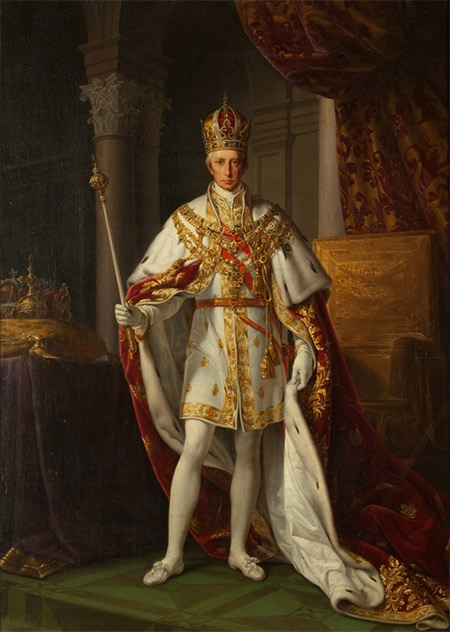 Franz II-I, Holy Roman Emperor and Emperor of Austria
The empire was dissolved following a military defeat by the French under Napoleon at Austerlitz. Napoleon reorganized much of the Empire into the Confederation of the Rhine, a French satellite.
Emperor Franz survived the demise of the Holy Roman Empire by continuing to reign as the Emperor of Austria.
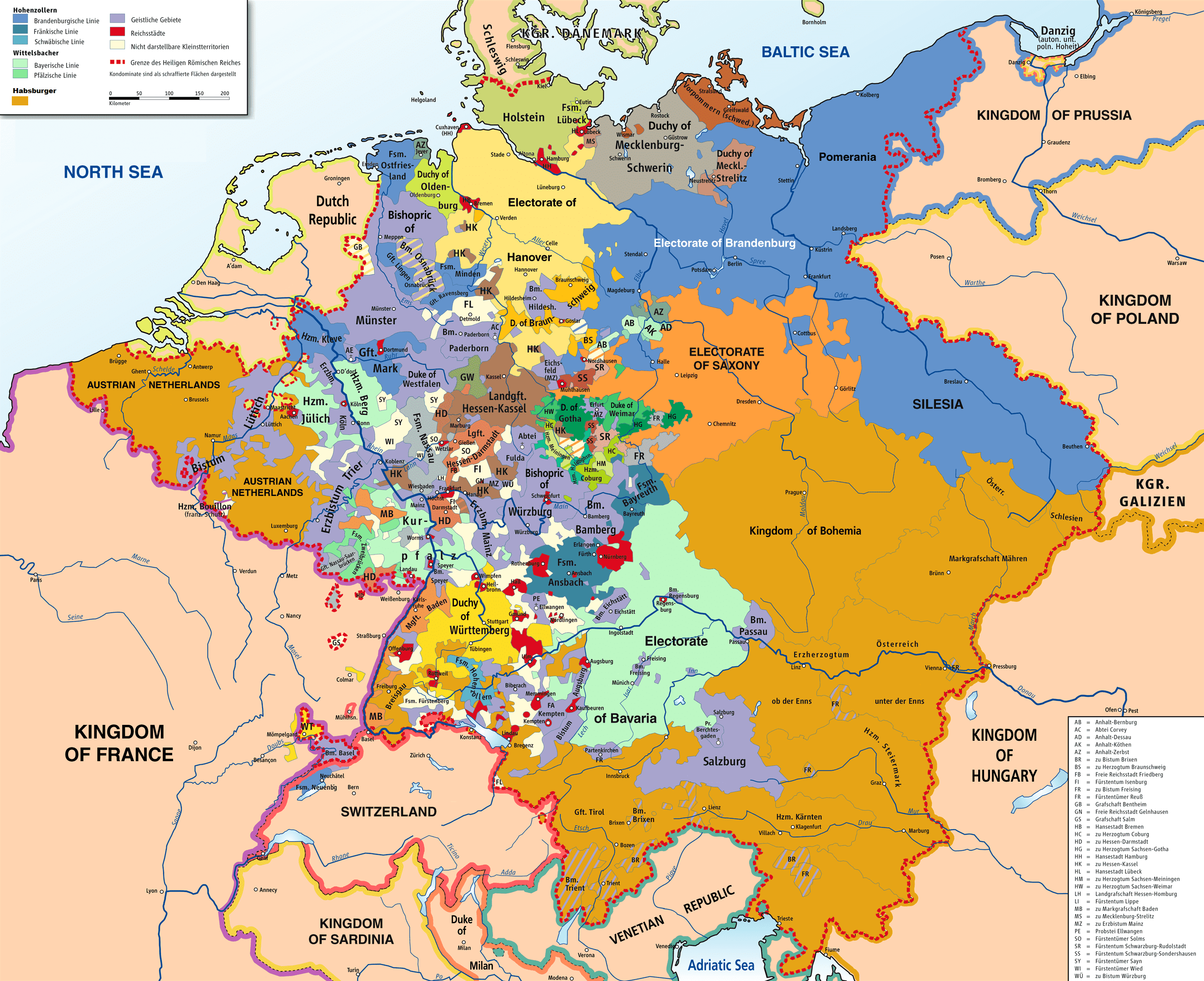 Holy Roman Empire in 1806
In 1804 Emperor Franz united his hereditary lands as Archduke of Austria and Kings of Hungary, Bohemia and Croatia into The Austrian Empire. Prior to the creation of this empire the Habsburg Holy Roman Emperors ruled these lands in person union and…
View original post 116 more words
Japan’s largest cat cafe in Kabukicho, Shinjuku, Tokyo was a relaxing and cute paradise
07 Aug 2022 Leave a comment
in cats
Kemi Badenoch MP Oct 20, 2020 FULL SPEECH on Critical Race Theory
07 Aug 2022 Leave a comment
in discrimination, economic history, economics of crime, labour economics, law and economics, politics - USA, Public Choice Tags: British history, British politics, political correctness, racial discrimination, regressive left
The Rolling Stones – Jumpin’ Jack Flash (Official Music Video) (No Makeup)
06 Aug 2022 Leave a comment
in Music
No ‘Right’ Place: Industrial Wind Turbines Don’t Belong In ANYONE’S Backyard
06 Aug 2022 Leave a comment


As wind turbines are incapable of generating power on demand and wouldn’t last a second without massive subsidies, there is no ‘right’ place for them. Any power generation source that can’t deliver electricity on demand is pointless, so talk about appropriate siting is pure nonsense. Why bother?
Rent seekers and crony capitalists are the only ones pushing to jam these things in your backyard, but rural America is pushing back.
American farming communities clearly have the upper hand in the fight to save their homes and livelihoods from the wind and solar ‘industries’ intent on destroying them.
Rural Americans are on the warpath and refuse to become roadkill for the profiteers determined to destroy their peaceful and prosperous communities. The scale and success of their resistance has clearly caught the wind and solar ‘industries’ flat-footed.
Faced with their constituents’ growing fury, local governments have sided with them; introducing laws, for…
View original post 844 more words
Franz II, the Last Holy Roman Emperor
06 Aug 2022 Leave a comment
From the Emperor’s Desk: Tomorrow, August 6th, is the anniversary of the abdication of Holy Roman Emperor Franz II, and also the disillusion of the Holy Roman Empire itself. Today I’m featuring a small biography of Emperor Franz II, and tomorrow I will give a brief telling of the end of the Holy Roman Empire, and starting next week I will do a detailed series on the end of the Holy Roman Empire.
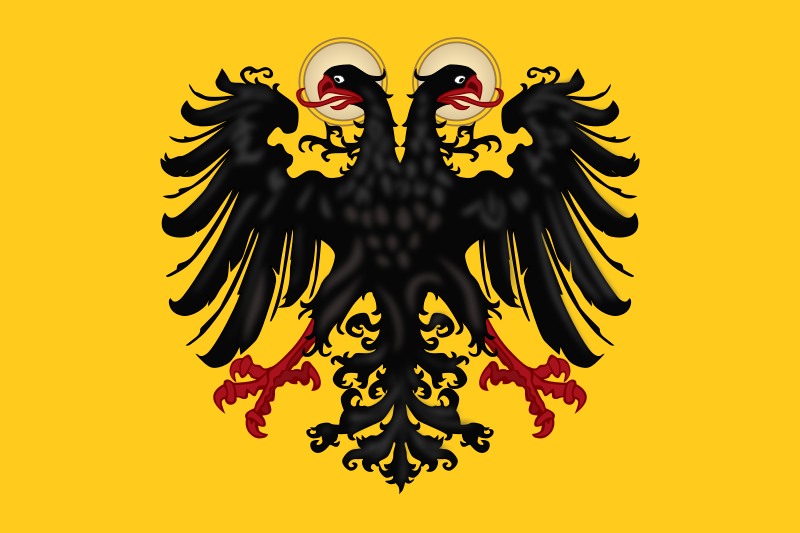 Imperial Standard of the Holy Roman Empire
Franz II (February 12, 1768 – March 2, 1835) was the last Holy Roman Emperor (from 1792 to 1806) and, as Franz I, the first Emperor of Austria, from 1804 to 1835. He also served as the first president of the German Confederation following its establishment in 1815.
Early life
As Archduke Franz of Austria he was a son of Holy Roman Emperor Leopold II (1747–1792) and his wife…
View original post 2,089 more words
Spectator TV: Douglas Murray: Why the culture wars are getting uglier
06 Aug 2022 Leave a comment

August 04, 2022
Douglas Murray, The Spectator’s associate editor, speaks to Kate Andrews about Drag Queen Story Hour, and the right’s response to it. Have they gone too far?
Read Douglas’s piece here – https://www.spectator.co.uk/article/w…
Julius Caesar by William Shakespeare (1599)
06 Aug 2022 Leave a comment

Shakespeare’s play, Julius Caesar, was first produced, in all probability, in 1599. The plot is based entirely on three of Plutarch’s biographies of eminent Romans, which Shakespeare found in Sir Thomas North’s translations into English of The Lives of the Most Noble Greeks and Romans, first published in 1579. The three lives he drew from are those of:
As you can see, whereas the assassination only takes up the last tenth of Caesar’s life, and the period from the assassination to the Battle of Philippi only takes up ten of Antony’s 87 chapters, the assassination and aftermath constitute almost all of Plutarch’s life of Brutus which may, at a very basic level, explain why Brutus emerges as the hero’ of Shakespeare’s play.
Brief synopsis
The figure the play is named after, Julius…
View original post 7,643 more words


Recent Comments