Renewable Energy Madness: Why Net-Zero CO2 Targets Herald New Miserable Dark Age
04 Aug 2022 Leave a comment


Wisdom comes with experience: people soon wise up to the reality of the wind and solar ‘transition’ once they’ve spent time freezing or boiling in the dark.
Over time, the experience will be shared by more of our compatriots on planet Earth. Obsessive, indeed maniacal, renewable energy policies are a guarantee of crippling power bills and routine power rationing; maintaining grid stability is now an expensive affair for power users and a hair-raising experience for grid managers, used to power generation sources that could be dialled up in an instant to satisfy increases in demand.
Unable to control the weather and make the sun shine on queue, the first resort is to start chopping heavy energy users from the grid under the euphemistic tagline “demand management”, where “chaotic mismanagement” would be a more accurate description of the response to routine collapses in output directly connected to sunset and/or calm weather.
View original post 3,425 more words
Ngai Tahu are given governance privileges in Canterbury and Willie Jackson gives us a rundown on “the new democracy”
04 Aug 2022 Leave a comment

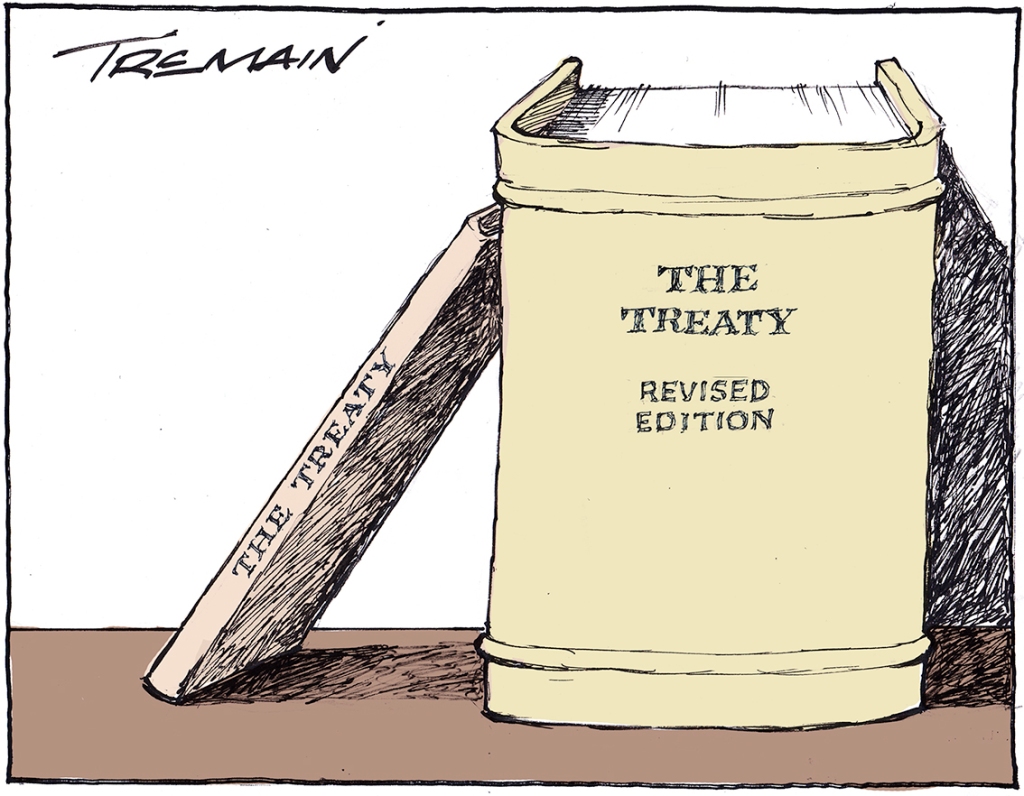
Concerns about the constitutional implications of the Canterbury Regional Council (Ngāi Tahu Representation) Bill were overwhelmed by a tsunami of Labour hubris and ballyhoo in Parliament yesterday. The weight of numbers against upholding liberal democratic values in the governance of our local authorities resulted in the Bill being supported by 77 votes (Labour 65; Green Party 10; Māori Party 2) to 43 (National 33; ACT 10).
And so – because a highly contentious interpretation of the Treaty of Waitangi has been deemed to over-ride the notion that all citizens should have equal rights – one group of people in Canterbury will be spared the need to campaign for electoral support and can simply appoint representatives to two permanent seats on the Canterbury Regional Council.
As National’s Paul Goldsmith explained during the debate, the legislation allows for 14 councillors in Canterbury to be elected by everyone in the community, including Māori. …
View original post 1,487 more words
August 2, 1830: Abdication of Charles X, King of France and Navarre. Part II.
04 Aug 2022 Leave a comment

Charles X’s reign of almost six years proved to be deeply unpopular from the moment of his coronation in 1825, in which he tried to revive the practice of the royal touch. The governments appointed under his reign reimbursed former landowners for the abolition of feudalism at the expense of bondholders, increased the power of the Catholic Church, and reimposed capital punishment for sacrilege, leading to conflict with the liberal-majority Chamber of Deputies.
Charles X also initiated the French conquest of Algeria as a way to distract his citizens from domestic problems, and forced Haiti to pay a hefty indemnity in return for lifting a blockade and recognizing Haiti’s independence.
He eventually appointed a conservative government under the premiership of Prince Jules de Polignac, who was defeated in the 1830 French legislative election. He responded with the July Ordinances disbanding the Chamber of Deputies, limiting franchise, and reimposing press censorship.
View original post 583 more words
More Evidence against the Capital Gains Tax
04 Aug 2022 Leave a comment

The capital gains tax is double taxation, and that’s a bad idea (assuming the goal is faster growth and higher wages).
Let’s consider how it discourages investment. People earn money, pay tax on that money, and then need to decide what to do with the remaining (after-tax) income.
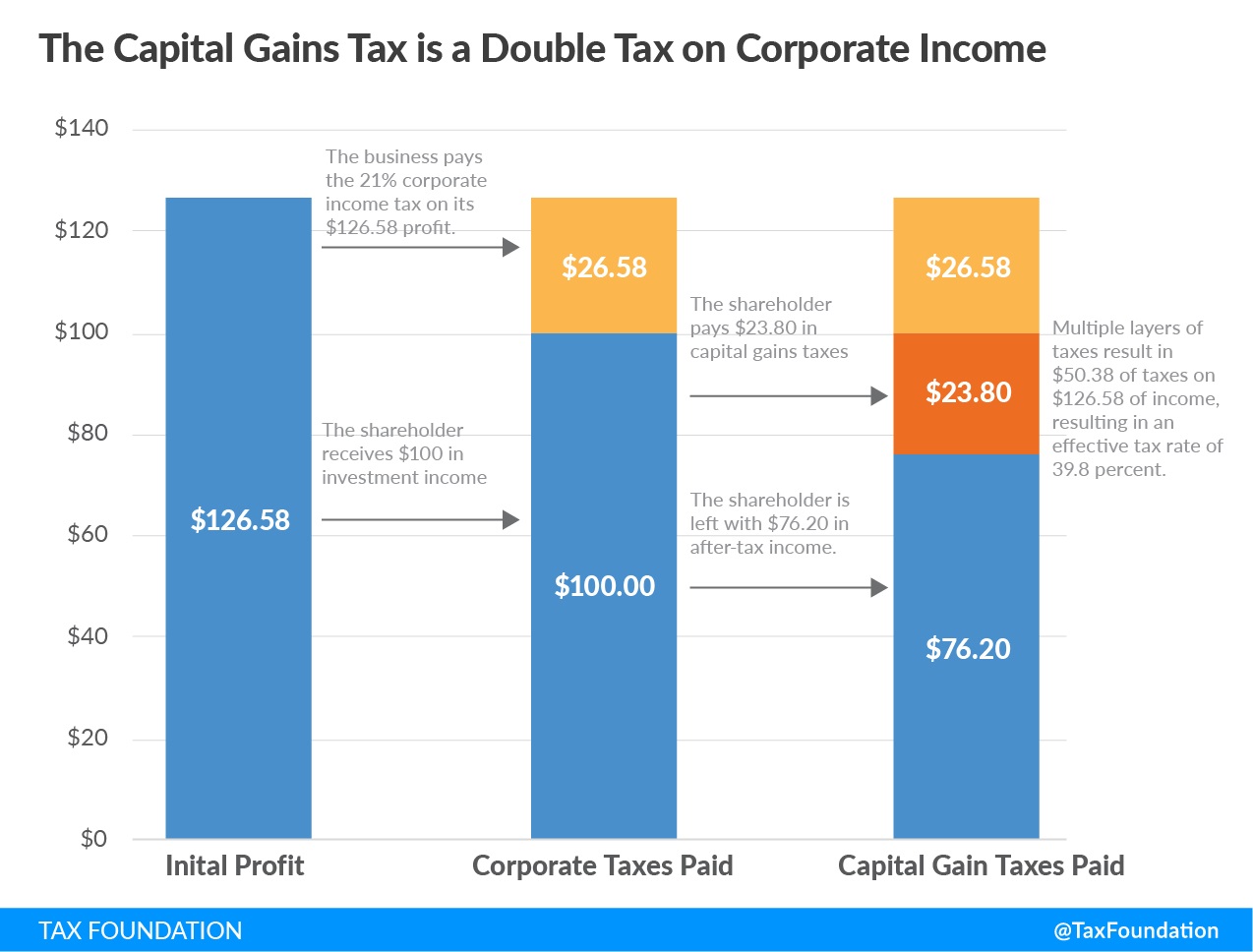 If they save and invest, they can be hit with all sorts of additional taxes. Such as the capital gains tax.
If you want to be wonky, a capital gain occurs when an asset (like shares of stock) climbs in value between when it is purchased and when it is sold.
But stocks rise in value when the market expects a company will generate more income in the future.
Yet that income gets hit by both the corporate income tax and the personal income tax (the infamous double tax on dividends).
So a capital gains tax is a version…
View original post 509 more words
What does it cost to vote your conscience? Geoffrey Brennan
04 Aug 2022 Leave a comment
in applied price theory, comparative institutional analysis, constitutional political economy, Gordon Tullock, James Buchanan, Public Choice Tags: expressive voting
$5 Most Incredible THAI STREET MASSAGE at Night by the River
04 Aug 2022 Leave a comment
in economics of media and culture Tags: Thailand
Subsidised Renewables Revolt: Entrenched Energy Poverty Source of Next Revolution
03 Aug 2022 Leave a comment

Power prices driven through the roof by subsidised and unreliable wind and solar means electricity is out of reach for thousands of struggling households.
Reliable and affordable electricity is at the heart of modern, socially stable societies. Deprive the masses of something that has been taken for granted for generations, and get set for serious civil unrest.
Across Europe, the effect of 20 years of a suicidal obsession with intermittent wind and solar is being keenly felt. Germans suffer the world’s highest power prices and power rationing for German industry is now routine.
Like their compatriots across the ditch, Britain’s energy consumers have been treated with utter contempt by their political betters. But, as the Global Warming Policy Foundation contends below, there is a reckoning in the wind.
As energy crisis threatens civil unrest, new study documents 30 years of the EU’s failed climate policies
The Global Warming Policy Foundation
View original post 662 more words
Kedi Official US Release Trailer 1 (2017) – Documentary on Turkish stray cats
03 Aug 2022 Leave a comment
in cats
Democracy, the Treaty and the coup that is embedding tribal rule into our regulatory and legislative framework
03 Aug 2022 Leave a comment
By Muriel Newman
Finally, the mainstream media is reporting that a coup is under way in New Zealand – by the Māori tribal elite.
Admittedly that observation was penned by former Labour Minister and ACT Party leader Richard Prebble in an opinion piece for the Herald – but the newspaper published it and Radio NZ reported it.
The on-line Herald headline read “Three Waters is a coup — an attack on democracy”.
That bold and compelling headline, however, didn’t last. It was changed to remove the words “a coup” and now reads: “Three Waters is an attack on democracy”.
The obvious question is why?
A clue comes from an article written last year by political journalist Andrea Vance, about Jacinda Ardern’s PR machine:
The Government’s iron grip on the control of information has tightened. At every level, the Government manipulates the flow of information.”
She then explained,
“And the prime…
View original post 1,880 more words
Three Cheers for the Industrial Revolution
03 Aug 2022 Leave a comment
At the start of this interview, I cite Economic Freedom of the World and the Index of Economic Freedom to make the point that more economic liberty is correlated with more human prosperity.
For purposes of today’s column, I want to focus on the last half of the interview. I point out that a handful of nations began to escape poverty, largely back in the 1800s, when the fiscal burden of government was very small.
But that’s just a partial explanation. As Professors Donald Boudreaux and Deirdre McCloskey explained in short videos, the adoption of capitalism in a few nations enabled a stunning increase in living standards starting a couple of hundred years ago.
If you want a one-sentence summary, all you need to know is that capitalism enabled the industrial revolution and the industrial revolution triggered a huge increase in living standards.
If you prefer to see…
View original post 732 more words
Foot-and-mouth – the stock disease that could inflict a huge economic cost on our economy if Biosecurity defences fail
03 Aug 2022 Leave a comment

Ray Smith, director-general of the Ministry for Primary Industries, sent a shiver through the NZ China Summit in Auckland when he warned that foot-and-mouth disease getting into NZ would be a “scary” and a “gigantic thing”.
The highly contagious disease has been sweeping through Indonesia and since it was first discovered in May 429,000 cases have been identified through 24 provinces including Bali, a popular holiday destination for many New Zealanders.
Indonesia is struggling to bring the disease under control, underlining what a problem it could be for NZ’s main export industries.
The disease, which could cost the country billions of dollars and more than 100,000 jobs if it ran rampant among our livestock, is causing major concern in South Asia. After the disease was discovered in Bali fragments of the virus that cause the disease have also been found in meat products entering Australia from Indonesia, creating fresh concerns…
View original post 481 more words


Recent Comments