Puritans (The Killjoys of History)
17 Jul 2022 Leave a comment
in economic history, economics of religion
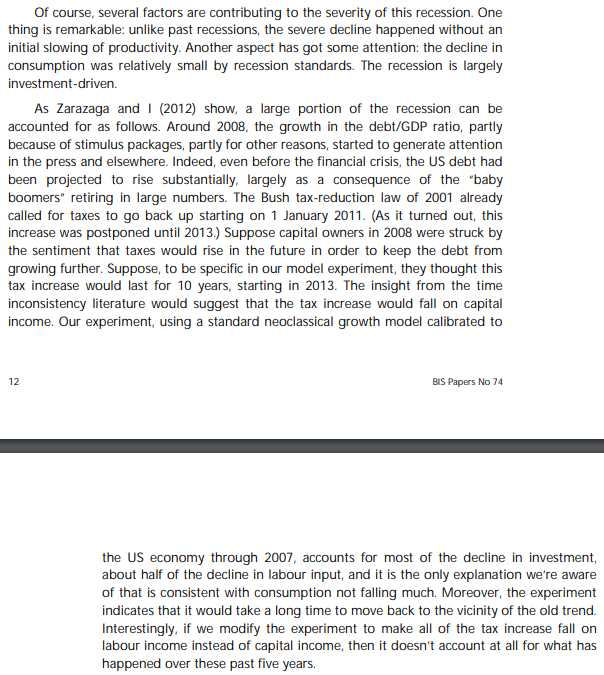
Finn Kydland on the great recession
16 Jul 2022 Leave a comment
Star Trek: Season 2, Episode One “Amok Time”
16 Jul 2022 Leave a comment

Stardate: 3372.7 (2267)
Original Air Date: September 15, 1967
Writer: Theodore Sturgeon
Director: Joseph Pevney
“Live long and prosper.”

In this classic season two opener, Dr. McCoy kicks off the episode by expressing concerns about Mr. Spock. According to Bones, Spock has been acting strange: “restive,” “nervous,” even irritable, and he is avoiding eating food (not to mention the fact that he threatened to strangle Bones). Bones and Kirk catch Nurse Chapel attempting to bring a bowl of Vulcan plomeek soup to Spock in a show of affection, but when Spock erupts at her in a rage, he immediately requests shore leave on his home planet of Vulcan. However, the Enterprise is already en route to Altair VI for the presidential inauguration ceremony, however Spock apparently redirects the Enterprise’s course to Vulcan anyway. Nevertheless, Spock continually appears agitated and confused. Kirk orders Spock to sickbay…
View original post 935 more words
PBS – American Experience: Eyes On The Prize – #1/14 – Awakenings 1954-1956
16 Jul 2022 Leave a comment

About this episode from TV Guide
“Awakenings 1954-56” profiles Mose Wright, a black Mississippian who testified against two white men accused of murder; and Rosa Parks, who refused to give up her seat to a white person on Dec. 1, 1955 in Montgomery, Ala. The incident sparked a bus boycott that lasted for one year.
About this series
Eyes on the Prize is an American television series and 14-part documentary about the Civil Rights Movement in the United States. The documentary originally aired on the PBS network and also aired in the United Kingdom on BBC2. Created and executive produced by Henry Hampton at the film production company Blackside and narrated by Julian Bond, the series uses archival footage, stills and interviews of participants and opponents of the movement. The title of the series is derived from the folk song “Keep Your Eyes on…
View original post 167 more words
PBS – American Experience: Eyes On The Prize – #5/14 – Mississippi Is This America 1962–1964
16 Jul 2022 Leave a comment
About this episode from TV Guide
The events of 1963 and ’64, when Mississippi became the battleground of the civil-rights movement. Relying on sit-ins, business boycotts and marches, blacks found their efforts thwarted by white supremacists. Included: the 1963 assassination of Medgar Evers; and the 1964 black voter-registration drive.
About this series
Eyes on the Prize is an American television series and 14-part documentary about the Civil Rights Movement in the United States. The documentary originally aired on the PBS network and also aired in the United Kingdom on BBC2. Created and executive produced by Henry Hampton at the film production company Blackside and narrated by Julian Bond, the series uses archival footage, stills and interviews of participants and opponents of the movement. The title of the series is derived from the folk song “Keep Your Eyes on the Prize,” which is used…
View original post 161 more words
Think it’s hot now? How Britain roasted in TEN-WEEK heatwave during summer of ’76
16 Jul 2022 Leave a comment
The Tumbling Giant – Russia’s Army On The Verge Of Collapse I THE GREAT WAR Week 51
16 Jul 2022 Leave a comment
in defence economics, war and peace Tags: World War I
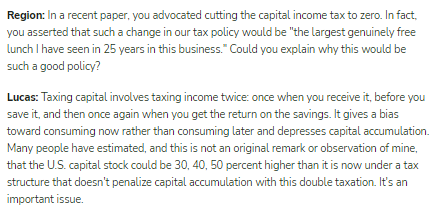
Robert Lucas on optimal taxation of capital
15 Jul 2022 Leave a comment
in applied welfare economics, economic growth, macroeconomics, public economics, Robert E. Lucas
Pro Archia by Cicero (62 BC)
15 Jul 2022 Leave a comment

Pro Archia is the shortest of the five speeches contained in the excellent Oxford University Press edition of Defence Speeches of Cicero, edited and translated by D.H. Berry (2000). It’s barely 12 pages long and yet even this slip of a thing requires a detailed three-page introduction from Dr Berry. In it he explains that: Aulus Licinius Archias was born plain Archias in Antioch in Syria in the mid-120s. As a young man he established himself as a poet and travelled round the eastern Mediterranean writing poems to order. In 102 he arrived in Rome and was welcomed into the home of Lucius Licinius Lucullus where he tutored the two young sons. He was sought out by other noble Roman families.
During this period Cicero himself took instruction from Archias (among his other achievements, Cicero was no mean poet) and explains in the speech that gratitude for his old…
View original post 3,721 more words
Krugman on 2013 vs 1958 macro
15 Jul 2022 Leave a comment
But is there all that much evidence that modern macroeconomics has had any influence on central-bank policy-making.
Greg mankiw in 2006 in his engineers versus scientists essay in the Journal of economic perspectives did a wonderful take-out of a biography of a federal reserve board member saying that his insights were sophisticated and nuanced about the macroeconomy but didn’t show any knowledge of modern macroeconomics in coming to his conclusions.
My two brothers graduated in economics in the early 1970s. I think what they knew of economics is about as much central bankers do now; they would not have to update to have a conversation with a central banker.

At the recent American Economic Association meeting in San Diego, Brad DeLong chaired a panel on ” Stimulus or Stymied?: The Macroeconomics of Recessions“, and has posted a transcript. Paul Krugman was there and picked up my claim that macroeconomics has, on balance, gone backwards since 1958. I’ve extracted his section here. Lots of useful stuff, but I’d stress this:
the whole basis on which we constructed monetary policy during the Great Moderation, which is that stabilizing inflation and stabilizing output are the same thing, is all wrong: you can have a sustained period of low but not negative inflation consistent with an economy operating far below its potential productive capacity. That is what I believe is happening now. If so, we are failing dismally in responding to this economic crisis. This is in contrast to what some central bankers are saying—that we have done well because inflation…
View original post 2,525 more words
Forget inflation — the problem is falling real wages
15 Jul 2022 Leave a comment
No one under the age of about 50 has an adult memory of high inflation and falling behind wages.
That’s the title of my new column in Independent Australia. I plan to write fortnightly from now on.
Now that quantitative easing is no longer needed, the problem is how to manage the huge increase in money balances that is driving demand. This is not a new problem; it arises every time a lot of spending is needed to handle an emergency, and we know what works and what does not. In the aftermath of World War I, governments in the UK and Australia sought to unwind the inflation created by wartime spending and return to the gold standard. The result was a long period of economic weakness, culminating in the Great Depression. By contrast, after World War II, wages and prices were allowed to rise, as wartime rationing ended and reconstruction gradually removed constraints on production.
As long as the real value of wages is maintained, a once-off…
View original post 238 more words
History of the Style “Majesty.”
15 Jul 2022 Leave a comment

Majesty (abbreviated HM for His Majesty or Her Majesty, oral address Your Majesty; from the Latin maiestas, meaning “greatness”) is used as a manner of address by many monarchs, usually kings or queens.
Majesty is not a title but a formal term of address.
Where used, the style outranks the style of (Imperial/Royal) Highness, but is inferior to the style of Imperial Majesty. It has cognates in many other languages, especially of Europe.
Origin
Originally, during the Roman republic, the word maiestas was the legal term for the supreme status and dignity of the state, to be respected above everything else. This was crucially defined by the existence of a specific case, called laesa maiestas (in later French and English law, lèse-majesté), consisting of the violation of this supreme status.
Various acts such as celebrating a party on a day of public mourning, contempt of the various rites of the…
View original post 871 more words
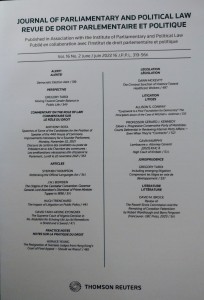
My Latest Article in the Journal of Parliamentary and Political Law: How Governor General Lord Aberdeen Reinforced the Caretaker Convention and Dismissed Prime Minister Tupper from Office
15 Jul 2022 Leave a comment

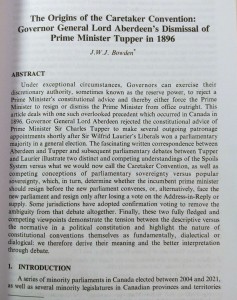
I first uncovered the correspondence in which Governor General Lord Aberdeen dismissed Prime Minister Sir Charles Tupper from office in July 1896 all the way back in 2012 while conducting research on something else. The documents have proven more fruitful and given me more ideas than I could ever have imagined at the time. But the material does not end with the correspondence between Aberdeen and Tupper. The Debates in the House of Commons between Tupper, then in opposition, and the new Prime Minister Sir Wilfrid Laurier, provided another fascinating take on these questions.
- Sessional Papers (1896), Correspondence Between Lord Aberdeen and PM Tupper
- Tupper’s Apology in the 8th Parliament
This latest article draws together all my analyses on this crucial precedent from 1896 with respect to the Caretaker Convention, when Governors General can dismiss Prime Ministers, the manner in which Governors General appoint Prime Ministers, whether Prime Ministers should…
View original post 1,512 more words
PBS – American Experience: Eyes On The Prize – #4/14 – No Easy Walk 1961–1963
15 Jul 2022 Leave a comment
About this episode from TV Guide
The rise of mass demonstrations in the civil-rights movement in the early 1960s—the largest of which was the march on Washington on Aug. 28, 1963. On that day, the Rev. Martin Luther King Jr. delivered his “I Have a Dream” speech. Also: children’s marches in Birmingham, Ala. Narrator: Julian Bond.
About this series
Eyes on the Prize is an American television series and 14-part documentary about the Civil Rights Movement in the United States. The documentary originally aired on the PBS network and also aired in the United Kingdom on BBC2. Created and executive produced by Henry Hampton at the film production company Blackside and narrated by Julian Bond, the series uses archival footage, stills and interviews of participants and opponents of the movement. The title of the series is derived from the folk song “Keep Your Eyes…
View original post 168 more words


Recent Comments