How The New York Mafia Actually Works | How Crime Works
19 Jul 2022 Leave a comment
in economics of crime, law and economics
Chris McCorkindale: The Lord Advocate’s role in vetting bills for legislation
18 Jul 2022 Leave a comment

 On 28 June 2022 the First Minister provided an update to the Scottish Parliament on the Scottish Government’s route map to a second independence referendum. In a debate characterised by entrenched positions and seeming impasse, those plans caused some surprise. First, and whilst stressing her preference to legislate for a referendum on the basis of a section 30 order, the First Minister revealed that she had invited the Lord Advocate to make use of the direct reference procedure in paragraph 34 of schedule 6 to the Scotland Act 1998 as a means to resolve the still open question as to whether or not the question contained in the proposed Scottish Independence Referendum Bill – ‘should Scotland be an independent country’ – relates to reserved matters. In response, the Advocate General for Scotland has confirmed that he will join as a formal party to the case and has argued that…
View original post 2,077 more words
Taxation 101
18 Jul 2022 Leave a comment

I’ve written a few columns that explain tax principles, but this video from the Tax Foundation may be the best place to start if you have friends or colleagues who need to learn the basics.
As part of the article that accompanies the video, the Tax Foundation explains that not all taxes are created equal. In other words, some taxes impose more damage than other taxes.
And this chart from the article is a nice summary of the three types of tax, along with the potential damage caused by varying ways of collecting tax.

As a general rule, this chart is totally accurate.
Corporate income taxes, gross receipts taxes (mentioned here), and wealth taxes do a lot of economic damage on a per-dollar-collected basis.
But I want to add a caveat to the first column.
As currently designed, there’s no question that the personal income tax…
View original post 331 more words
Wind & Solar Transition Means Transition to Power Rationing & Rocketing Power Bills
18 Jul 2022 Leave a comment


When the sun sets and calm weather sets in, wind and solar power can’t be bought at any price. Increase the capacity of the unreliables connected to your grid and get ready for not only rocketing power bills, but routine power rationing.
Once upon a time, electricity was cheap and it flowed like running water. Civil and ordered society demanded it.
Now, a group of virtue signalling elites have upended that model, replacing it with something from the pages of George Orwell’s 1984.
In 2022, smart meters, rather than telescreens, keep an eye on what the proles and Party members are up to, allowing the Ministry of Plenty to slash their access to electricity, in a heartbeat and without warning.
The only reason that governments are interfering in consumers’ power usage to that degree is that they’ve become obsessed with subsidising intermittent wind and solar while simultaneously wrecking the profitability…
View original post 644 more words
Would more tax cuts be inflationary?
18 Jul 2022 Leave a comment

One of the central arguments of Rishi Sunak’s campaign to become the next Prime Minister is that it would be irresponsible to cut taxes further until inflation is under control. Of course, there are risks here, but my view is that they are worth taking.
For a start, it is not clear that tax cuts have to be inflationary. Indeed, a recent paper from the Bank for International Settlements concluded that the inflationary effect of fiscal stimulus depends crucially on how central banks respond.
Basic economics tells you that inflation is caused by too much money chasing too few goods and services. But tax cuts in themselves do not increase the stock of money in the economy. This is largely determined by monetary policy, not fiscal policy.
Tax cuts might add to inflation by increasing the velocity of circulation of money. But it is more likely that they will simply…
View original post 429 more words
A Path to a 4-day week (with 8-hour days)
18 Jul 2022 Leave a comment
I was living in Japan as a student when that country was Transitioning from a six day working week to a five day working week. Everyone at my university came in on Saturday mornings to work 1/2 day. The result was the lost decade of growth as explained by Prescott.
I don’t know what was done at 24/7 businesses such as hospitals or how schools and universities will work on four-day weeks. Many parts of the services sectors are prone to Baumol’s disease so they don’t have an ability to increase productivity through higher morale.
Entities that compete with the international market including the tourism sector would find it tough going as well

Suppose(!) an Oz government or IR tribunal, wanted to shift the standard working week to four eight-hour days.
Here’s one possible path:
Reduce standard working week from 38 hours to 35, a demand of the trade union movement that’s been on the books for the last 50 years. With four weeks annual leave and 10 public holidays per year, that implies just over 1600 hours per year (excluding sick leave etc) 1/..
Now move to the four-day, 32 hour week, with the proviso that the full four days are worked in weeks with public holidays. That gives 1536 hours worked in a standard year 2/..
Now shift from four weeks annual leave to two, with the proviso that workers can put in up to eight 5-day weeks during the year and take the time off in an additional two-week block. That brings annual hours back up to 1600 3/…
Thoughts?
July 17, 1918: Assassination of Emperor Nicholas II of Russia and his Family.
18 Jul 2022 Leave a comment

From the Emperor’s Desk: In the past on this blog I’ve written detailed accounts of the assassination of Emperor Nicholas II and his family. Today I will focus on genealogy, his marriage and briefly cover his reign.
Nicholas II (May 18, 1868 – July 17, 1918), known in the Russian Orthodox Church as Saint Nicholas the Passion-Bearer, was the last Emperor of Russia, King of Congress Poland and Grand Duke of Finland, ruling from 1 November 1894 until his abdication on 15 March 1917.
Grand Duke Nicholas Alexandrovich was born in the Alexander Palace in Tsarskoye Selo south of Saint Petersburg, during the reign of his grandfather Emperor Alexander II. He was the eldest child of then-Tsesarevich Alexander Alexandrovich and his wife, Tsesarevna Maria Feodorovna (née Princess Dagmar of Denmark).
Grand Duke Nicholas’ father was heir apparent to the Russian throne as the second but eldest surviving son of Emperor…
View original post 1,234 more words
How Cocaine Trafficking Actually Works | How Crime Works | Insider
18 Jul 2022 Leave a comment
in economics of crime, law and economics Tags: drug dealers
Tears For Fears – Everybody Wants To Rule The World – Countdown Australia – 1985
18 Jul 2022 Leave a comment
in Music, television, TV shows
Judge Hits Wind Farm & Big Tesla Battery Owners With $4m Fines For Delivery Failures
17 Jul 2022 Leave a comment
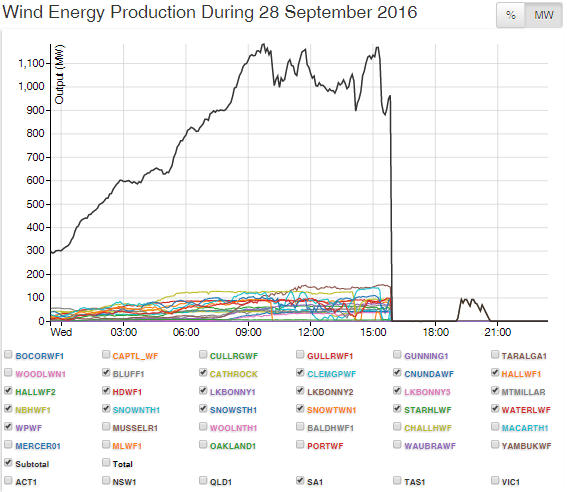
Now and again the law catches up with the shysters that run wind farms and so-called big batteries. Failing to deliver on a promise ordinarily results in an order for damages to be paid to the unwitting victim. In addition, in a regulated electricity market, the regulator will sometimes join in and seek its pound of flesh, as well.
Back in September 2016, South Australia’s wind farms were the cause of utter chaos when the automatic and instant shutdown of their turbines during a spring gale (see above) resulted in Australia’s only ever statewide blackout.
Parts of the state were left without power for over a fortnight. The operators involved cost the State’s businesses and households close to $400 million, but, for their part, walked away with a paltry $3.5 million fine (see below).
In a separate incident in October 2019, SA’s big Tesla battery had been contracted to…
View original post 679 more words
Classic TV Drama: The Onedin Line – #01 – S01 E01 – The Wind Blows Free (15 Oct 1971)
17 Jul 2022 Leave a comment

A great Brit TV Classic
James Onedin is an ambitious, headstrong sea captain working for the Callon Line. Upon returning to Liverpool in 1860, he is denied a bonus by his employer, Thomas Callon, because a portion of the cargo has been lost. Upon seeing a notice offering the old schooner Charlotte Rhodes for sale for £500, James decides to set up his own shipping company. Unfortunately, his cautious brother Robert, who has inherited their father’s chandler’s shop while he was away, refuses to put up any capital.[1]
James calls on Captain Webster to inquire about the Charlotte Rhodes. Webster rejects James’ low offer of £175 (his life savings), but his compelling spinster daughter, Anne, who deftly manages her cantankerous and drunken father, is concerned about her future. She makes James a counteroffer: the ship as dowry. Anne Webster, “on the wrong side of…
View original post 368 more words
The seven tactics that Remainers use to discredit Brexit – and why they’re wrong
17 Jul 2022 Leave a comment
Brexit has hardly featured in the race to become the next Prime Minister, but the Conservative Party is still divided on the best way forward. The new leader will be under great pressure from many quarters to keep the UK economy as close to the EU as possible, rather than pursue the ambition of a truly ‘Global Britain’. This would be a historic mistake.
Unfortunately, ‘Continuity Remain’ is alive and well, and still pushing the line that Brexit has been an economic disaster. This can be refuted simply by comparing the UK’s growth since the 2016 referendum with the big four economies in the EU, namely Germany, France, Italy and Spain. ‘Brexit Britain’ is vying with France for top spot on total growth and is sitting comfortably in mid-table on per capita GDP.
Similarly, UK inflation is little different from the average in the euro area, or the latest rate…
View original post 855 more words


Recent Comments