
Behind on my anti-vaccination blogging
22 May 2022 Leave a comment
in health economics Tags: anti-vaccination movement, vaccines
Kate Andrews debates the gender wage gap on Sky News
22 May 2022 Leave a comment
in applied price theory, discrimination, economics of education, economics of information, gender, health and safety, human capital, labour economics, labour supply, occupational choice, poverty and inequality Tags: gender wage gap, sex discrimination
How David Niven Tricked Waiters To Eat Cheap | The Dick Cavett Show
22 May 2022 Leave a comment
in movies, television
New Rule: Along for the Pride | Real Time with Bill Maher
22 May 2022 Leave a comment
in discrimination, gender, law and economics Tags: sex discrimination
Wrecking Ball: Net Zero CO2 Emissions Targets Guarantee Economic Armageddon
21 May 2022 Leave a comment

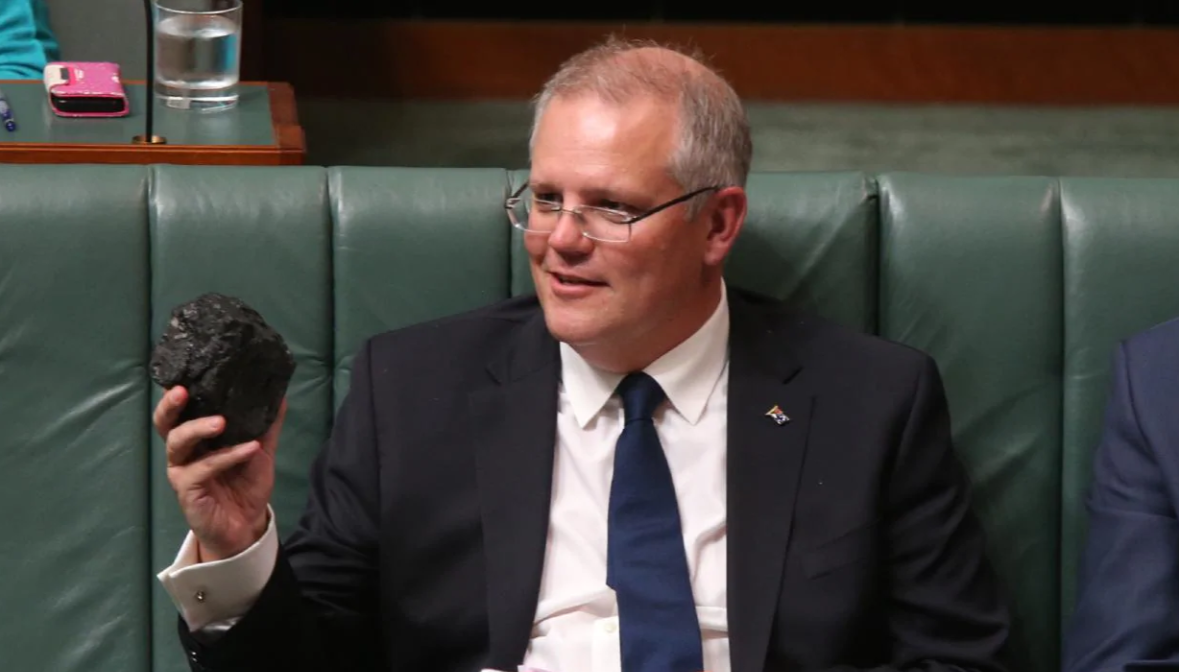
Driven by climate alarmists and rent seekers ready to profit from the wind and solar subsidy scam, net zero carbon dioxide emissions targets are just the latest woke wheeze to grip our political betters.
The idea that modern economies can function without the energy generated by fossil-fuels (whether consumed by motorcars or in power generation) is up there with living on Mars and perpetual motion machines.
In a move that first perplexed and then thoroughly alienated those who voted for him in May 2019, Australia’s PM, Scott Morrison signed Australia up to a net-zero carbon oxide gas emissions target to be reached by 2050.
At Australia’s polling booths today, the big winners from that move will be Pauline Hanson’s One Nation party and Big Clive’s United Australia Party who will attract plenty of disgruntled former Liberal voters.
The Liberals, once a notionally conservative party, have not only abandoned their base…
View original post 1,690 more words
Why We Adjust Costs for PPP
21 May 2022 Leave a comment

The Transit Costs Project adjusts all construction costs for purchasing power parities. This means that, for example, a Chinese subway is converted into dollars not at the exchange rate of $1 = 6.7¥, but at the PPP rate of $1 = 4.2¥; this means that present-day Chinese subways look 1.5 times more expensive in our analysis than in analyses that use exchange rate values, and projects from 10 years ago look twice as expensive. I believe our choice is correct, and would like to explain why, since it has gotten some criticism from serious people, who’s prefer exchange rates.
Local costs
I started this comparing mature developed countries. The US and Europe have largely separate markets for construction, and so American work is almost entirely done in dollars and European work in euros (or pounds, or kronor, etc.). Japan is likewise very local and so is China. In that…
View original post 1,105 more words
Confused Canadian Investigates AUSTRALIAN ENGLISH
21 May 2022 Leave a comment
in economics of education Tags: Australia, economics of languages
Excuses for High Construction Costs
21 May 2022 Leave a comment
I have written many postsaboutinternationaldifferencesin subwayconstructioncosts. They’ve gotten a lot of media attention, percolating even topoliticians and to a team of academics. Against this positive attention, there have been criticisms. Three come to mind: the numbers are incorrect, costs do not matter, and the comparisons are apples-and-oranges. The first criticism depends entirely on whether one disbelieves figures given in high-quality trade publications, government websites, and mass media. The second criticism I addressed at the beginning of the year, comparing the extent of subway construction in Sweden and the US. Today, after hearing people invoke the third criticism on social media to defend Ed Glaeser’s remark that it’s possible to cut US construction costs by 10% but not 75%, I want to explain why the comparisons I make do in fact involve similar projects. Some of the specific criticisms that I’m…
View original post 2,246 more words
Construction Costs and Experience
21 May 2022 Leave a comment
The most persistent criticism I have heard of my writingsonconstructioncosts, coming from YIMBY Princeton, is the importance of gradual expertise and experience. Against my claim that Americans build subways for higher costs than the rest of the world due to poor management practices, regulations, and procurement, and scope creep, YIMBY Princeton says that high costs are a result and not a cause of the rarity of American subway investment. I believe that high US costs are endogenous and therefore the US is reluctant to fund rail transit; he believes that disinterest in transit is endogenous and if the US were willing to build more rail lines, then construction costs would naturally go down through economies of scale and steady accumulation of project management expertise. I promised last year that I would go over his argument more carefully, and am going to do so in this post.
View original post 1,309 more words
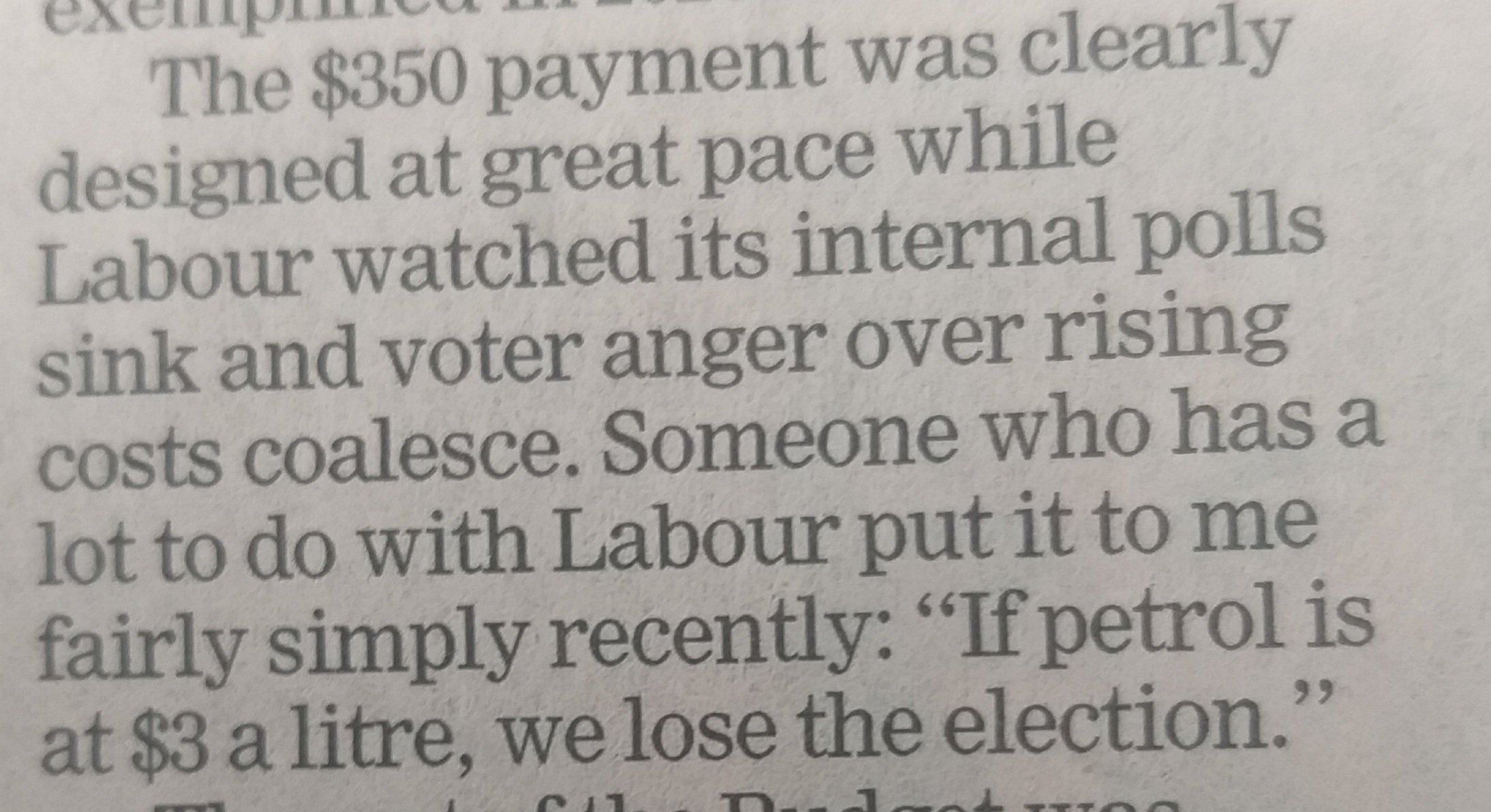
.@nzlabour polling leaks, finally
21 May 2022 Leave a comment
in energy economics, politics - New Zealand Tags: 2023 New Zealand election
Holding a border poll in Northern Ireland: when does it need to happen and what questions need to be answered?
21 May 2022 Leave a comment

 The prospect of a poll in Northern Ireland about Irish unification, provided for by the Good Friday Agreement and often termed a ‘border poll’, is now widely discussed. But the provisions and wider implications of the law and the Agreement are little explored. The Constitution Unit is considering a project to examine this, and Alan Whysall here gives an overview of the key questions.
Support for a united Ireland appears to be rising. There is little to suggest a majority for unity now, but in the context of Brexit provoking serious strains it might arise. This blog is mainly about process. But the real world risks are high. An early poll, particularly if it takes place in a political atmosphere that is strained following a hard Brexit, could seriously destabilise both parts of Ireland, and put at risk the political gains of recent decades.
Current outlook on border polls
Northern…
View original post 2,341 more words
Post-election negotiations in Northern Ireland must set the Belfast Agreement on a firmer footing and re-establish constructive politics
21 May 2022 Leave a comment

Alan Whysall, Honorary Senior Research Associate of the Constitution Unit, looks at the Northern Ireland Assembly elections held last week. He suggests that the foundations of the Belfast/Good Friday Agreement continue to weaken, and there is no sign of the government offering any response that might strengthen them; its proposals on the Northern Ireland Protocol risk making matters worse. Alan’s discussion paper on Northern Ireland’s political future: challenges after the Assembly elections was published last Friday, and is summarised in this blog, and discussed in this podcast.
The election results, though well forecast by polling, were reported in dramatic terms by media outside Northern Ireland, with coverage focusing on Sinn Féin displacing the Democratic Unionist Party (DUP) as the largest party.
They reflect the increasing polarisation of Northern Ireland politics, fuelled by unionist concerns over the Northern Ireland Protocol. So Traditional Unionist Voice, to the right…
View original post 2,095 more words
Trade, Jobs, and Wages
21 May 2022 Leave a comment

I’m a knee-jerk supporter of free trade, which simply means I don’t think politicians and bureaucrats should be able to interfere with my freedom to buy good and services from people who happen to live in other nations.
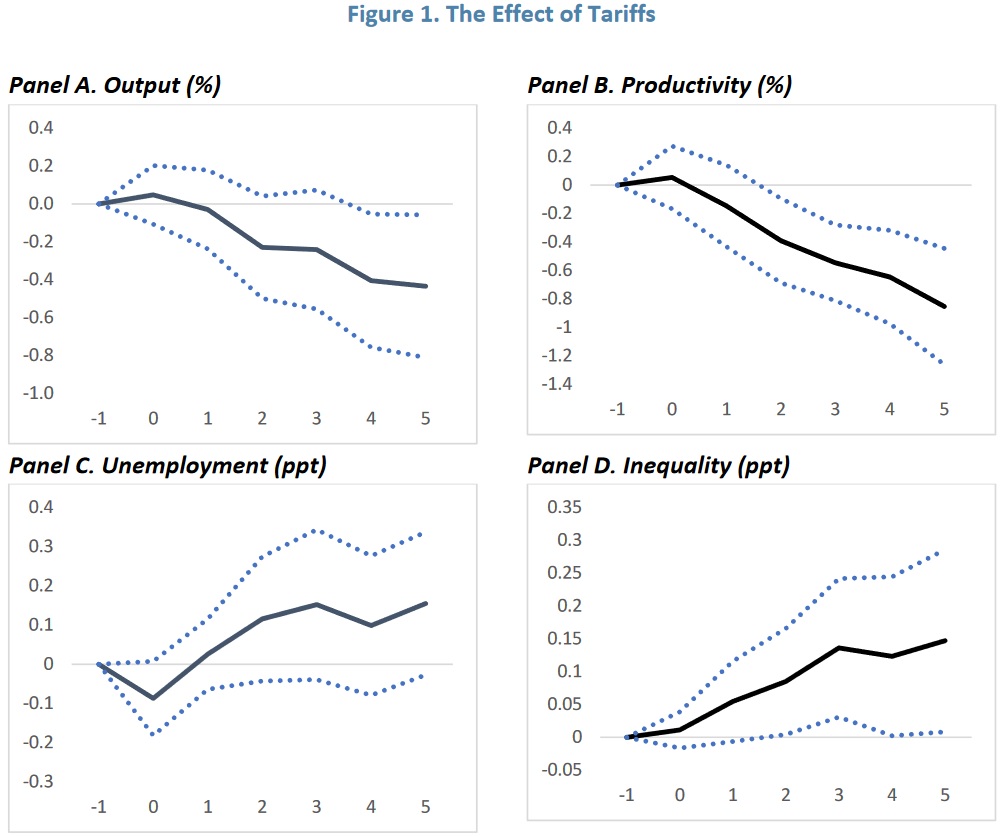 But my support for free trade is not just based on ideology. I also cite data on how trade taxes and other restrictions make nations poorer.
Simply stated, trade barriers (like other forms of government intervention) make an economy less efficient.
And the negative effects go beyond overall economic output. Researchers also find job losses, lower productivity, and increased inequality.
Today, let’s look at some new research on this topic. The IMF earlier this year released a new working paper authored by Kim Beaton, Valerie Cerra, and Metodij Hadzi-Vaskov.
Here are the main results.
…firms in countries and industries experiencing greater competition from imports reduce employment slightly. …Even so, the…
View original post 378 more words


Recent Comments