Why Steel from Before 1945 is Weirdly Expensive
04 May 2022 Leave a comment
in defence economics, economics of education
Yoram Barzel’s Tribute to Doug North
03 May 2022 Leave a comment

A guest post by Yoram Barzel.
Doug North, Some Reminiscences
| By Yoram Barzel |
By the time I arrived at the University of Washington in 1961, Doug had been there for a decade, and he stayed for two more. Moving from one Washington (the University of Washington in Seattle) to another Washington (Washington University in St. Louis) is confusing. Most people associate Doug’s career with Washington University in St. Louis, but it was in Seattle that he did the bulk of the work for which he won the Nobel Prize. His work is well known, and I focus on other aspects of his career and on personal memories.
Doug got his PhD from Berkeley, and he was the first to admit that he hadn’t learned much there. Throughout his time in Seattle, when he needed advice when it came to economic analysis, he asked for it with great humility…
View original post 1,422 more words
“Why Managers Still Matter”
03 May 2022 Leave a comment

| Nicolai Foss |
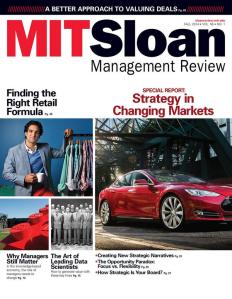 Here is a recent MIT Sloan Management Review piece by Peter and me, “Why Managers Still Matter.” We pick up on a number of themes of our 2012 book Organizing Entrepreneurial Judgment. A brief excerpt:
“Wikifying” the modern business has become a call to arms for some management scholars and pundits. As Tim Kastelle, a leading scholar on innovation management at the University of Queensland Business School in Australia, wrote: “It’s time to start reimagining management. Making everyone a chief is a good place to start.”
Companies, some of which operate in very traditional market sectors, have been crowing for years about their systems for “managing without managers” and how market forces and well-designed incentives can help decentralize management and motivate employees to take the initiative. . . .
From our perspective, the view that executive authority is increasingly passé is wrong. Indeed, we have found…
View original post 42 more words
Dad’s Army Documentary The Cast’s Secret Lives and Scandals
03 May 2022 Leave a comment
in television
After giving birth, the mother cat is always next to her cubs even when eating
03 May 2022 Leave a comment
Nozick Alone Among the Libertarians
02 May 2022 Leave a comment

I’ve been researching Nozick and his commentators for the MA course I’m giving next semester on Contemporary Political Theory (details on my university web page, see right hand column). The most vicious critics of Nozick are certainly his fellow Libertarians, including Murray Rothbard who Nozick refers to as important in converting him to a Libertarian point of view. Libertarian in this context means the capitalist version in which if the state exists at all, it should only exist to uphold property rights based on voluntary contract, and protect individuals from violence. In the Anarchist, or near Anarchist version, of which Rothbard is the best example, these laws emerge in a voluntary way without any need for a state.
Though I was already acquainted with the idea that Capitalist Libertarians/Anarcho-Capitalists are a quarrelsome lot and that most of them are on the fringe of the academic world, I was startled by…
View original post 653 more words
Rawls, Hayek and Libertarian Political Philosophy: The Rise of the Rawlsekians
02 May 2022 Leave a comment
Rawlsekian is a word that was first used, to the best of my knowledge, in the headline of a piece by Will Wilkinson for Cato@Liberty (part of the website of the libertarian foundation, Cato), ‘Is Rawlsekianism the Future?’, posted on 4th December 2006. The item builds on an idea floated by Brink Lindsey (like Wilkinson now an ex-Cato employee) of ‘liberaltarianism’, that is an alliance between libertarians and liberals (as social democrats are known in the United States) rather than the more familiar alliance between libertarians and conservatives. Hopes of a liberaltarian moment around Barack Obama’s election have now been obliterated, but the idea lives on, and is gaining influence, at the more philosophical and theoretical level, which is where Rawlsekianism enters the stage.
Rawlsekianism is one way of referring to the combination of the ideas of the political philosopher John Rawls with the ideas of the economist…
View original post 1,278 more words
Twilight of Sociology?
02 May 2022 Leave a comment
| Peter Klein |
I haven’t seen anything from our sociologist friends at orgtheory.net about Wilfred McClay’s piece in last Friday’s WSJ, “Twilight of Sociology,” so I’ll take a stab. (The gated version is here; this public link should work for a few days.) Ruminating on Seymour Martin Lipset’s death in December, McClay wonders “whether the discipline of sociology itself may now be ebbing away, as so many of its leading practitioners depart the scene without, it seems, anyone standing ready to replace them.”
McClay blames the decline of sociology on two factors: politics and scientism.
View original post 548 more words
The Institutional Revolution
02 May 2022 Leave a comment
| Peter Klein |
I’m very excited about Doug Allen’s forthcoming book The Institutional Revolution(University of Chicago Press). Trained by Yoram Barzel (and hence part of the Tree of Zvi), Doug is a leading contemporary scholar on property rights, transaction costs, contracting, and economic history. His work on agricultural contracting with Dean Lueck, including their 2002 book The Nature of the Farm, is a classic contribution to the economics literature on economic organization. He also has a very good introductory textbook. More information is at Doug’s informative (and amusing) website.
Here’s the cover blurb for the new book:
Few events in the history of humanity rival the Industrial Revolution. Following its onset in eighteenth-century Britain, sweeping changes in agriculture, manufacturing, transportation, and technology began to gain unstoppable momentum throughout Europe, North America, and eventually much of the world—with profound effects on socioeconomic and cultural conditions.
In The Institutional Revolution,
View original post 164 more words
The Platinum Jubilee and future of the monarchy
02 May 2022 Leave a comment

Queen Elizabeth II this year celebrates her Platinum Jubilee, commemorating 70 years as monarch. UCL recently hosted an event to discuss why we have jubilees, what they say about monarchies, what the process of starting the next reign will look like, the future of the monarchy at home and abroad, and what lessons can be learned from other European monarchies. A summary of the discussion is below.
On Thursday 17 March 2022, UCL hosted a webinar entitled The Platinum Jubilee and the Future of the Monarchy, chaired by Professor Robert Hazell, founder of the Constitution Unit. Robert was joined by four panellists: Dr Bob Morris, an Honorary Senior Research Associate at the Unit, Dr Craig Prescott, Lecturer in Law at Bangor University, Dr Carolyn Harris, a royal historian at the University of Toronto, and Professor Helle Krunke, Head of the Centre for European and…
View original post 1,468 more words
Electricity price briefly below zero thanks to sun and wind!?
02 May 2022 Leave a comment

There was a high production of electricity from solar and wind previous weekend (weekend of April 23-24). As expected, there was the usual cheering and celebrating of this event. One of the many was this tweet from a member of the Flemish Green party (translated from Dutch)
Still need arguments for the roll-out of renewable energy?
Electricity price briefly below zero thanks to sun and wind

He links to a newspaper article with the same title and brings forward these negative prices as a decisive argument for more solar and wind: if you weren’t convinced yet, then this surely is the argument that will.
I don’t really agree with that. Those negative prices over the last weekend are not an argument for the roll-out of solar and wind (maybe even the contrary) and it shows his poor understanding of why exactly electricity prices dipped below zero in that weekend.
View original post 371 more words


Recent Comments