The Mysterious Disease That Wiped Out the Aztecs
12 Mar 2022 Leave a comment
in development economics, economic history, health economics Tags: Age of exploration
Russia, The US, and Crude Data
11 Mar 2022 Leave a comment

Overall, I’ve been disappointed with the reporting on the US embargo against Russian oil. The AP reported that the US imports 8% of Russia’s crude oil exports. But then they and other outlets list a litany of other figures without any context for relative magnitudes. Let’s shine some more light on the crude oil data.*
First, the 8% figure is correct – or, at least it was correct as of December of 2021. The below figure charts the last 7 years of total Russian crude oil exports, US imports of Russian crude oil, and the proportion that US imports compose. That 8% figure is by no means representative of recent history. The average US proportion in 2015-2018 was 7.8%. But the US share as since risen in level and volatility. Since 2019, the US imports compose an average of 11.9% of all Russian crude oil exports.
As an exogenous shock…
View original post 757 more words
Crash (2004) Review
11 Mar 2022 Leave a comment

Crash (2004) Director: Paul Haggis

Crash is a bleak, depressing, sappy socio-political “message” movie. At the time of its release it was widely praised, even winning Best Picture at the Oscars in 2005. While I can appreciate a film with an anti-bigotry message, Crash just gets more ridiculous and overtly sentimental with time. It does not rank among the greatest of the Best Picture winners in my view.
Crash is a panorama-film. It tells the story a variety of parallel lives, people living empty, broken lives in Los Angeles, people filled with prejudice and hatred and, above all, distance from one another. So they come violently crashing into one another in a string of car accidents, robberies, and gun violence. The plot concerns a struggling Iranian family who runs a shop with a broken door, so they call a Latino locksmith who has already been accused of being…
View original post 196 more words
Accession of Queen Anne of England, Scotland and Ireland. Part III.
11 Mar 2022 Leave a comment

When Charles II died in 1685, Anne’s father became King James II of England and Ireland and also King James VII of Scotland. To the consternation of the English people, James began to give Catholics military and administrative offices, in contravention of the Test Acts that were designed to prevent such appointments.
Anne shared the general concern, and continued to attend Anglican services. As her sister Mary lived in the Netherlands, Anne and her family were the only members of the royal family attending Protestant religious services in England. When her father tried to get Anne to baptise her youngest daughter into the Catholic faith, Anne burst into tears. “The Church of Rome is wicked and dangerous”, she wrote to her sister, “their ceremonies—most of them—plain downright idolatry.” Anne became estranged from her father and stepmother, as James moved to weaken the Church of England’s power.
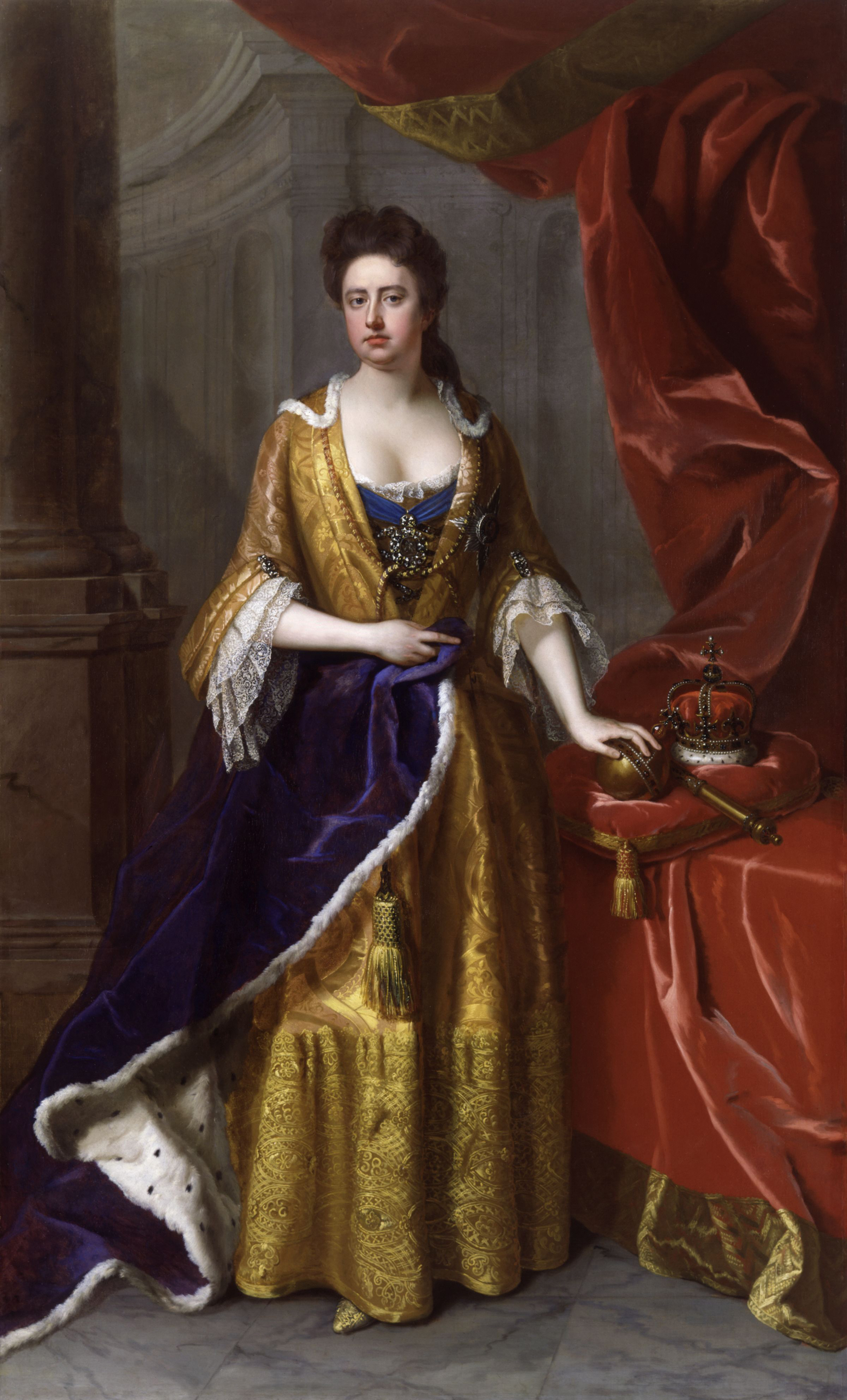 In early 1687, within…
View original post 343 more words
Since when have use of vaccine passes being under review? Another win for the Convoy?!
11 Mar 2022 Leave a comment
in health economics, politics - New Zealand Tags: economics of pandemics


The twilight of the Age of Exploration
10 Mar 2022 Leave a comment
in economic history, health and safety, labour economics, labour supply, occupational choice Tags: Age of exploration
Power Price Punishment: Cost of Subsidised Wind & Solar Killing Productive Industry & Enterprise
10 Mar 2022 Leave a comment


Reliance on intermittent wind and solar guarantees rocketing power prices and chaotic supply. Price spikes and/or power rationing when the sun sets or calm weather sets in are the death knell for a range of energy-hungry businesses and industries. Manufacturing and mineral processing are usually the first to disappear, when the true costs of running with the unreliables start to bite.
The State of Virginia provides the perfect example, with a push for an all wind and sun powered future in the not-too-distant future.
David Stevenson adds up the whopping costs and the non-existent benefits of Virginia’s plans to run on sunshine and breezes below.
Cost and Reliability Implications of the Virginia Clean Economy Act
Caesar Rodney Institute
David T Stevenson
10 January 2022
Virginia legislation requires electric power to come 100% from renewable sources by 2045. Specific targets are set for the amount of solar and onshore wind, offshore…
View original post 876 more words
The Failure of Bidenomics, Part VI
10 Mar 2022 Leave a comment

Having addressed Biden’s track record on subsidies, inflation, protectionism, household income, and fiscal policy, let’s finish our series by reviewing the president’s record on regulatory issues.
The first place to start is the Federal Register, which is Uncle Sam’s official site for new rules.
Though it gives us conflicting information. The number of pages (a crude measure of regulatory zeal, as I noted a few years ago) actually decreased during Biden’s first year. But only compared to Trump’s last year.
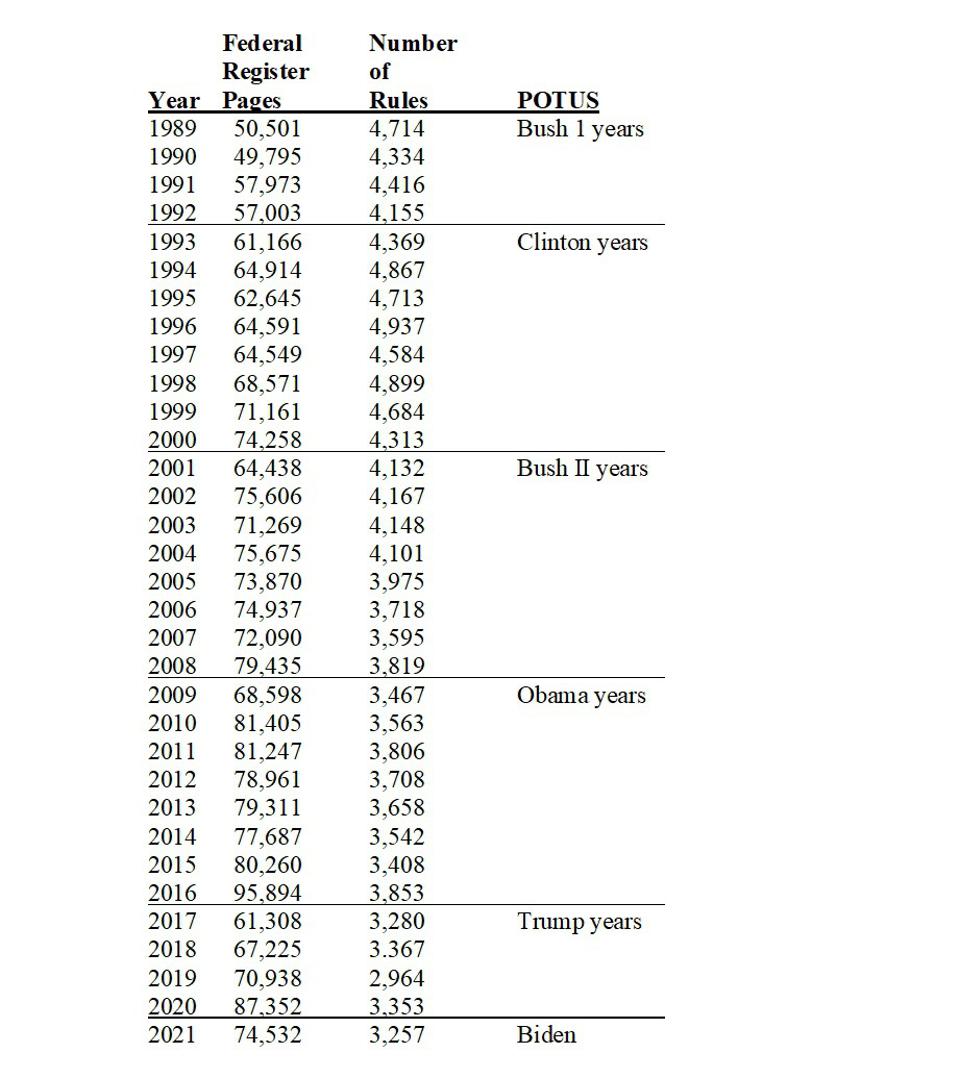
To understand what’s really going on, let’s look at the Forbesarticle from which the above table was taken.
Clyde Wayne Crews of the Competitive Enterprise Institute sifts through the data and concludes that Biden is a fan of expanded red tape.
The Federal Register is the daily depository of rules and regulations produced by hundreds of federal departments and agencies. …Under Biden, the regulatory…
View original post 714 more words
Accession of Queen Anne of England, Scotland and Ireland: Part II.
10 Mar 2022 Leave a comment
In November 1677, Anne’s elder sister, Mary, married their Dutch first cousin Willem III of Orange, at St James’s Palace, but Anne could not attend the wedding because she was confined to her room with smallpox. By the time she recovered, Mary had already left for her new life in the Netherlands. Lady Frances Villiers contracted the disease, and died. Anne’s aunt Lady Henrietta Hyde (the wife of Laurence Hyde) was appointed as her new governess. A year later, Anne and her stepmother visited Mary in Holland for two weeks.
Anne’s father and stepmother retired to Brussels in March 1679 in the wake of anti-Catholic hysteria fed by the Popish Plot, and Anne visited them from the end of August. In October, they returned to Britain, the Duke and Duchess of York to Scotland and Anne to England. She joined her father and stepmother at Holyrood Palace in Edinburgh from…
View original post 357 more words
March 1672: The Declaration of Indulgence
10 Mar 2022 Leave a comment

In March 1672 Charles II issued a document to remove harsh sanctions against religious non-conformity. But what brought about this ‘Declaration of Indulgence’ and why was a supposedly tolerant measure met with heavy criticism? History of Parliament Director Dr Paul Seaward explores…
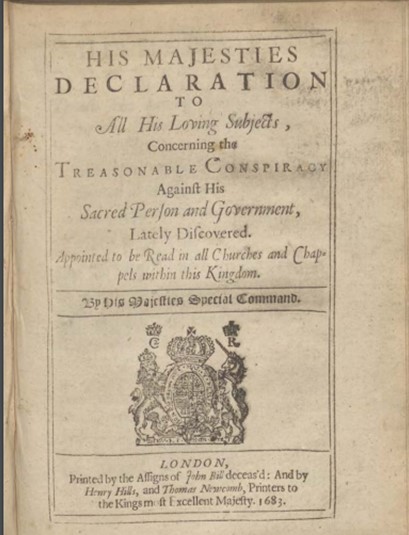
On 15 March 1672, 350 years ago, the English government issued a document headed His Majesty’s Declaration to all his loving subjects, but which has become known as the Declaration of Indulgence. It was an astonishing statement, reversing the position of English monarchical governments since Elizabeth I towards Protestant religious dissent or nonconformity. Not only that, but in explicitly suspending a large body of parliamentary legislation which required church attendance and forbade the holding of alternative religious meetings (‘conventicles’) outside the framework of the Church of England it overrode the authority of parliament itself.
View original post 1,099 more words


Recent Comments