A Bomb in the French Embassy! | Yes, Prime Minister
16 Feb 2022 Leave a comment
in television, TV shows
Anti-science left @NZGreens
16 Feb 2022 Leave a comment
in economics of education, health economics Tags: anti-vaccination movement, vaccines

House of Saxe-Coburg and Gotha: Edward VII (1901-1910)
15 Feb 2022 Leave a comment

An immensely popular, chubby-cheeked, convivial man, Edward VII was in all truth a mostly unremarkable man with hardly a moral fiber in his insubstantial body. He was known as a frivolous “Prince of Pleasure,” a man all-too familiar with the sin of gluttony. His reign represented a minor nine-year epilogue to the Victorian Age, as if to offer the Ancien Régime one final sip of fine wine and a cigar before the long dark shadow of war crept over Europe. While personally he was a rather silly man, Edward VII still managed to transform the British monarchy from the cloistered and stoic brand of Queen Victoria, into the showy offering of public pageantry we see today.
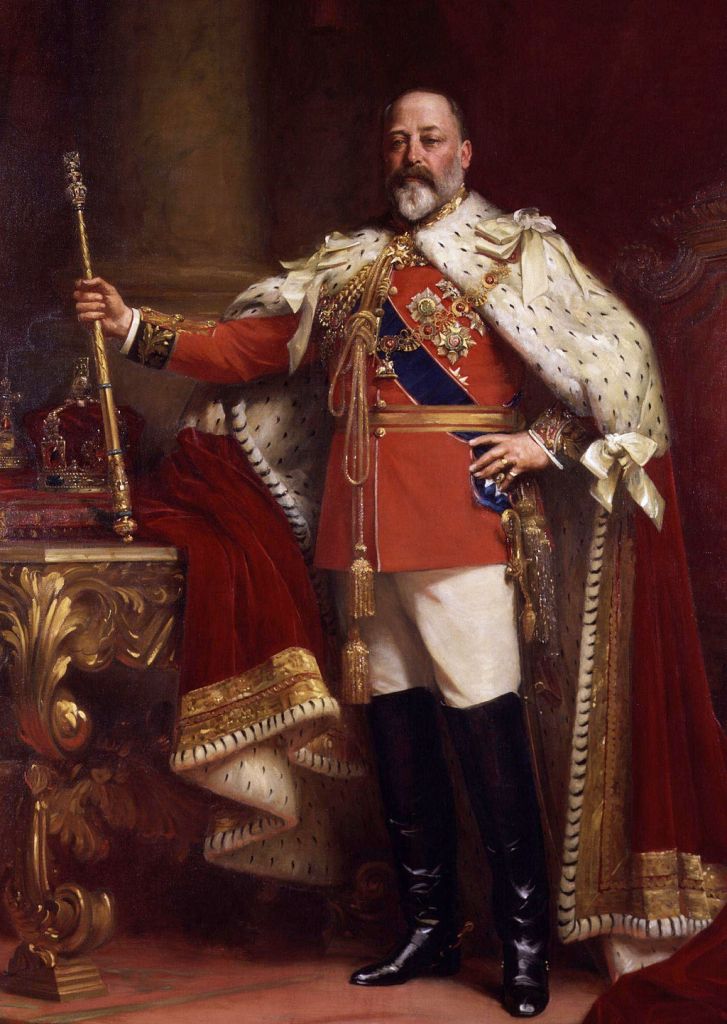
Christened Albert Edward and known to his family as “Bertie,” the future Edward VII was a self-indulgent, intransigent young man. He rebelled against his father Albert’s strenuous educational curriculum and often landed himself in…
View original post 873 more words
US Federal Court Rules Against Social Cost of Carbon
15 Feb 2022 Leave a comment

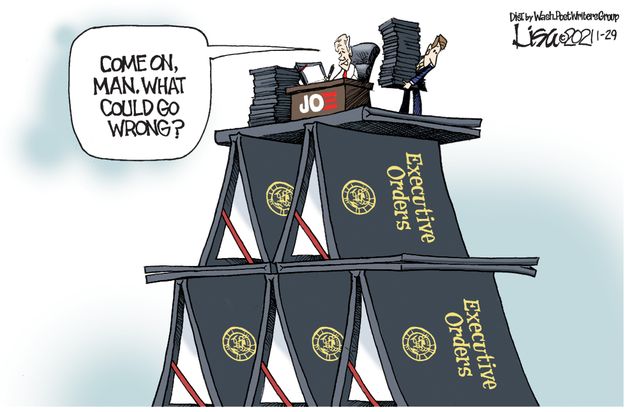
Following a Biden Executive Order, in April 2021 several states went to Louisiana District Court to stop implementation of Social Cost of Carbon with respect to federal regulations. The Memorandum Ruling regarding that case is State of Louisiana et al Versus Joseph R. Biden Jr. et al. The Plaintiff States are Louisiana, Alabama, Florida, Georgia, Kentucky, Mississippi, South Dakota, Texas, West Virginia, and Wyoming. Excerpts in italics with my bolds. H/T Francis Menton
The Issues
The Plaintiff States seek injunctive and declaratory relief on three grounds.First, they assert that the SC-GHG Estimates violate the procedural requirements of the Administrative Procedure Act (“APA”) as a substantive rule that did not undergo the requisite notice-and-comment process. See 5 U.S.C. § 553.
Second, the Plaintiff States claim that President Biden, through EO 13990, and the IWG lack the authority to enforce the estimates as they are substantively unlawful under the…
View original post 847 more words
SPQR: A History of Ancient Rome by Mary Beard (2015) 8. Assimilation
15 Feb 2022 Leave a comment

The key learning from the entire book is that the secret of Rome’s success can be summed up in one word: assimilation. Already, by the 300s BC, Romans had perfected a system which was unprecedented in the ancient world and was to give them unparalleled power and success. It was that they did not conquer and destroy their enemies then retire to their core territory: they assimilated both the people and the territories they defeated into the Roman state. They extended Roman-ness to the conquered peoples, thus extending Roman territory and Roman population, eventually to a vast and unparalleled extent (page 67).
1. An endless supply of soldiers
Instead of setting Roman administrators over a defeated tribe, the only tribute the Romans asked for was for the defeated to provide soldiers for the Roman army, to be funded by local taxation. These soldiers, regardless of tribal affiliation or…
View original post 1,485 more words
Aradhya Sethiya: The party has just begun: The Party Leader and the UK constitution
15 Feb 2022 Leave a comment

 The looming uncertainty around Johnson’s term in office is not just a perfect setting for political intrigue, but may also have something to offer to students of constitutional law. It should draw our attention to one of the fundamental questions of the UK constitutional process – how should we choose or remove a Prime Minister between general elections? The constitutional theory is straightforward. To become a Prime Minister, an MP must enjoy the confidence of the majority of the members of the House of Commons. Constitutionally, therefore, Parliament, not the electorate, selects the PM for appointment by the Queen. Hence, the House of Commons as a whole should remove and select the PM. According to this theory, then, Johnson would be removed if he loses a vote of confidence on the floor of the House of Commons. The classical formulation is neat but incomplete. Most importantly, it does not take…
View original post 1,957 more words
Reverse causation fallacy
14 Feb 2022 Leave a comment

Recently on the Australian “Sunrise” TV program co-presenter David Koch said: “There have only been 3000 deaths from COVID, far less than that from influenza in the same period, so we should oppose the lockdowns”. This statement ignored the fact that prior to and during the vaccination rollout, lockdowns are likely to have prevented many thousands more deaths.
Similarly, some people argue against counter-terrorism measures on the grounds that there have been relatively few successful terrorist attacks in Australia, ignoring the fact that counter-terrorism has deterred and disrupted many more terrorist plots than those that have been carried out.
Several years ago, I was working as a regulatory consultant helping to remake sunsetting Victorian water regulations. Amongst other things, these regulations require the installation of backflow prevention devices on the customer’s water service pipe, just after the water meter. Backflow can result in contaminants being drawn into the drinking water…
View original post 163 more words
Why Wind Power Output Collapses Are Causing Europe’s Power Prices to Rocket
14 Feb 2022 Leave a comment

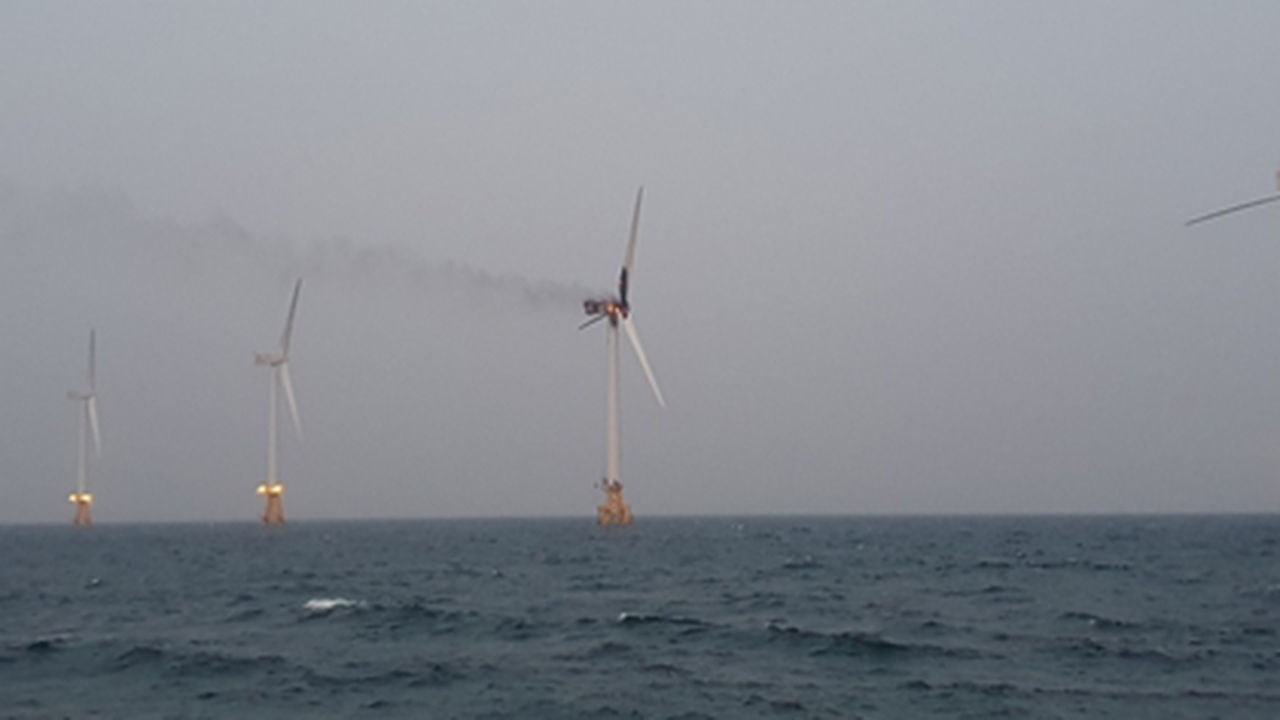
Rocketing power prices were inevitable once Europe decided to put all its energy eggs in the wind power basket. Europe has squandered billions on subsidies to construct tens of thousands of turbines both onshore and off – the Germans managed to spear more than 30,000 across their homeland and are paying a hefty price.
By giving grid preference to the erratic and occasional delivery of wind and solar, the owners of reliable on-demand generators are pushed to the back of the queue, rendering many operators uneconomic, which is all part of the plan.
The Germans, however, went further by effectively banning nuclear power generation (the plan is to shut down all of their nuclear plants) and sought to shut down their coal-fired power plants too, only to restart them in a dreadful hurry when wind power output collapsed for weeks last winter.
But it’s the chaos in the power market…
View original post 685 more words
Setting up the COVID-19 inquiry: an expert view
14 Feb 2022 Leave a comment


The inquiry into the COVID-19 pandemic is due to start work in the spring, chaired by Baroness (Heather) Hallett, a former Court of Appeal judge. It will be one of the most complex inquiries in legal history, and highly charged politically, with over 150,000 deaths so far, and the pandemic far from over. In January, the UCL Political Science Department hosted an expert panel discussion to pool advice on how best to set up a complex inquiry to ensure that it works speedily and efficiently, victims feel they have been heard, and the findings are accepted as legitimate. Ioana Măxineanu summarises their contributions.
On January 13th, the UCL Political Science Department hosted an online seminar entitled Setting Up the Covid Inquiry. The event was chaired by Robert Hazell, and brought together three distinguished panellists previously involved in high profile inquiries: Lord (Nicholas) Phillips, chair of the BSE Inquiry
View original post 1,449 more words
Vaccine persuasion is cheaper
14 Feb 2022 Leave a comment

Canadians are blocking a bridge. For Americans who like to engage in stereotypes about Canadians, this is inexplicable (even though the practice of blocking things in Canada is not new by any means). However, for me as an economist, it is entirely explicable.
Consider what vaccine mandates/passports (which is what initiated the current mayhem) do in pure economics terms: they raise costs for the unvaccinated. They do not alter the benefit of being vaccinated. All they do is raise costs. People could be more or less inelastic to this cost, but the fact that many are willing to spend time and resources (fuel, wear and tear of trucks etc.) to prevent such policies from continuing suggest that their behavior is not perfectly inelastic.
How elastic is it then? Well, we can see that by looking at what happens when we alter the benefit of being vaccinated. This is…
View original post 305 more words
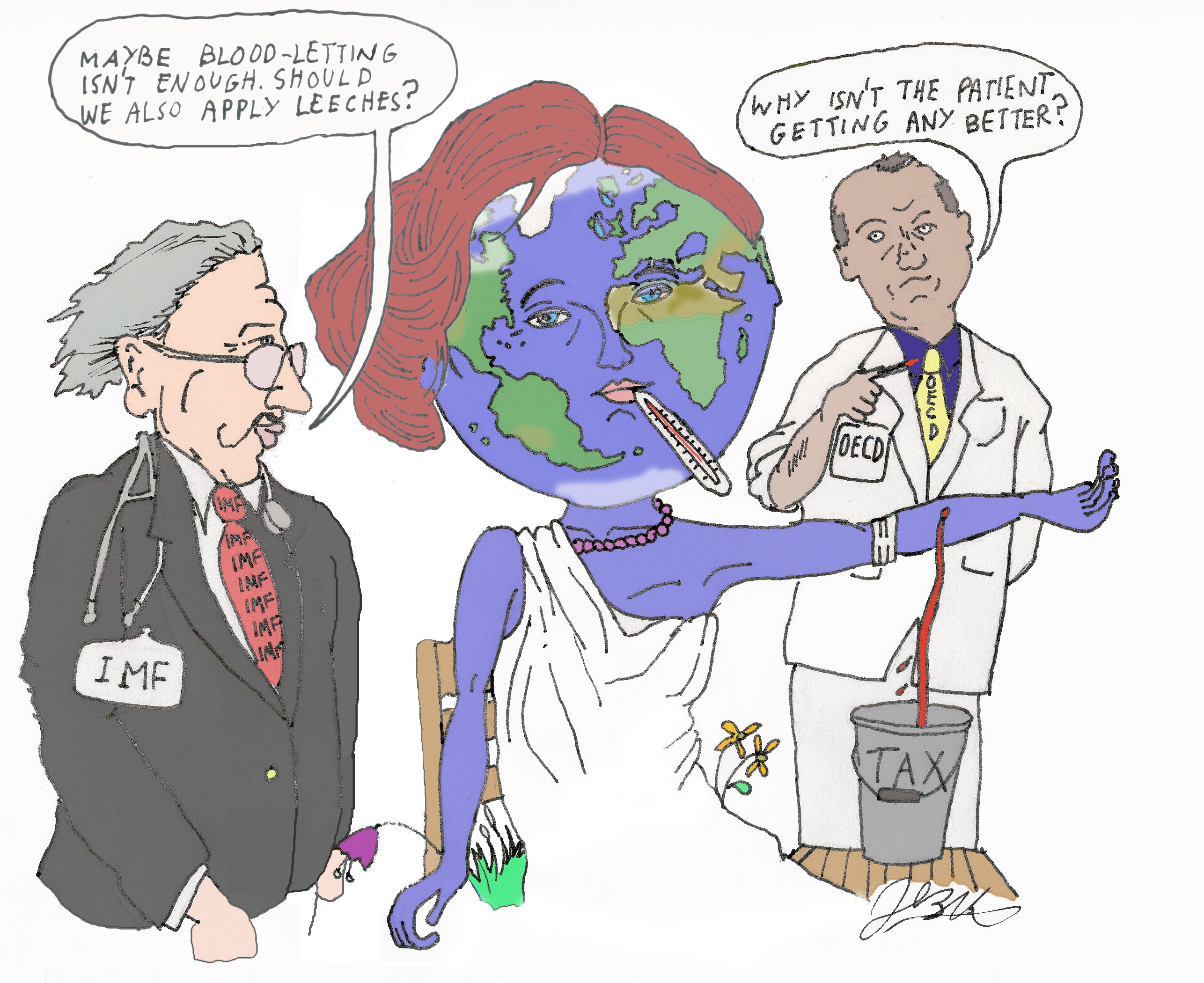
The OECD’s Narrow (and Warped) Perspective on Taxation
14 Feb 2022 Leave a comment

More than 11 years ago, the Center for Freedom and Prosperity released this video about the OECD, a Paris-based bureaucracy subsidized by American taxpayers.
As outlined in the video, there are many reasons to dislike the Organization for Economic Cooperation and Development.
As a fan of tax competition, I don’t like the OECD because the bureaucrats persecute jurisdictions with low tax burdens.
But the bureaucracy’s pro-tax harmonization campaign is a symptom of a broader problem, which is that the OECD relentlessly advocates for higher taxes.
Consider the recent publication entitled “Fighting Tax Crime – The Ten Global Principles.” As you can see, nine of those ten principles involve more power and authority for government.
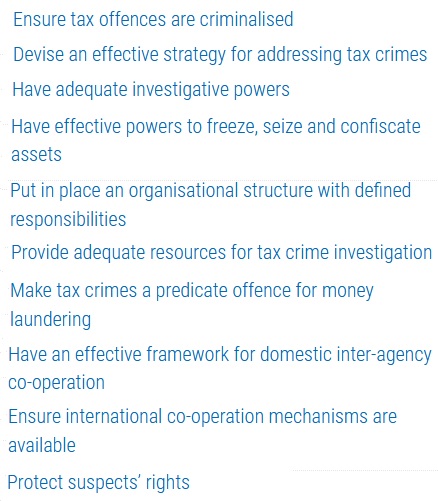
Since I’m not an anarcho-capitalist, I realize some taxation is necessary (ideally only the amount needed to finance genuine public goods).
As such, I don’t necessarily condemn enforcement policies.
 But…
But…
View original post 171 more words


Recent Comments