Sunny Boys – ‘Alone With You’ on Countdown.
29 Jan 2022 Leave a comment
in Music, television, TV shows
Let Them Freeze: Wind & Solar Generators Couldn’t Care Less About Your Welfare
29 Jan 2022 Leave a comment

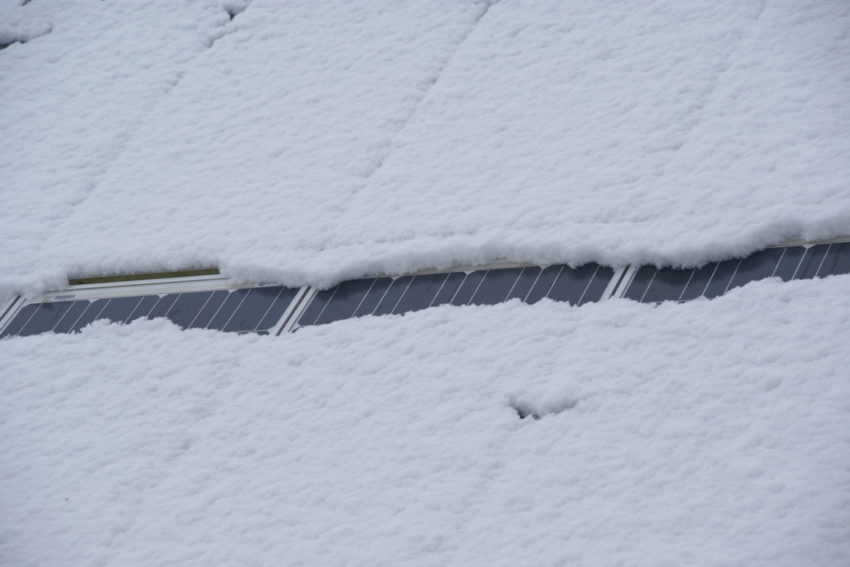
The wind and solar industries couldn’t care less whether you freeze to death when winter bites across the northern hemisphere and wind and solar output collapse.
Solar panels plastered in snow and ice produce nothing; wind turbines frozen solid during breathless, frigid weather produce even less (they actually consume power from the grid to run heating systems meant to prevent their internal workings suffering permanent damage).
So, if you’re sitting freezing in the dark, don’t expect wind and solar power generators to come to your rescue.
No, if the lights and power are on this winter, then you ought to raise a glass for the gas, coal and nuclear power generators separating you and your loved ones from a date with hypothermia and, ultimately, the morgue.
Hundreds died during the Big Freeze that hit Texas last winter, thanks to a complete collapse in wind and solar output. Thousands more would…
View original post 1,345 more words
The legacies of Rome
29 Jan 2022 Leave a comment

At the start of Mary Beard’s comprehensive but pedestrian history of ancient Rome she gives some examples of the ‘legacy’ of Rome as reasons why people should know more about ancient Rome and read her book. I critiqued her reasons for being arbitrary, superficial and not really justifying her case. Nonetheless it does broach an interesting subject: just what should be included in the Legacy of Ancient Rome to the present day? Over the week it took to read her book, I began to make a list of aspects of the legacy of Rome which live on in the modern world. Can you add any more to my list?
Roman Catholicism, the religion of power
Surely the biggest legacy is the Roman Catholic church, founded and spread across the eastern Mediterranean but given its definitive organisational and liturgical form after it was decriminalised by the Emperor Constantine in 313 and…
View original post 1,313 more words
Why megaproject cost overruns?
28 Jan 2022 Leave a comment
in economic history, industrial organisation, public economics, survivor principle, transport economics, urban economics Tags: megaprojects
Caplan-Callard, The Case Against Education
28 Jan 2022 Leave a comment
in applied price theory, economics of education, economics of information, human capital, labour economics, labour supply Tags: adverse selection, asymmetric information, signalling
Counter-Tweet of the Year: Crushing the Inequality Narrative
28 Jan 2022 Leave a comment

I have a four-part series (here, here, here, and here) that explains why it’s much better to focus on fighting poverty rather than fretting about inequality.
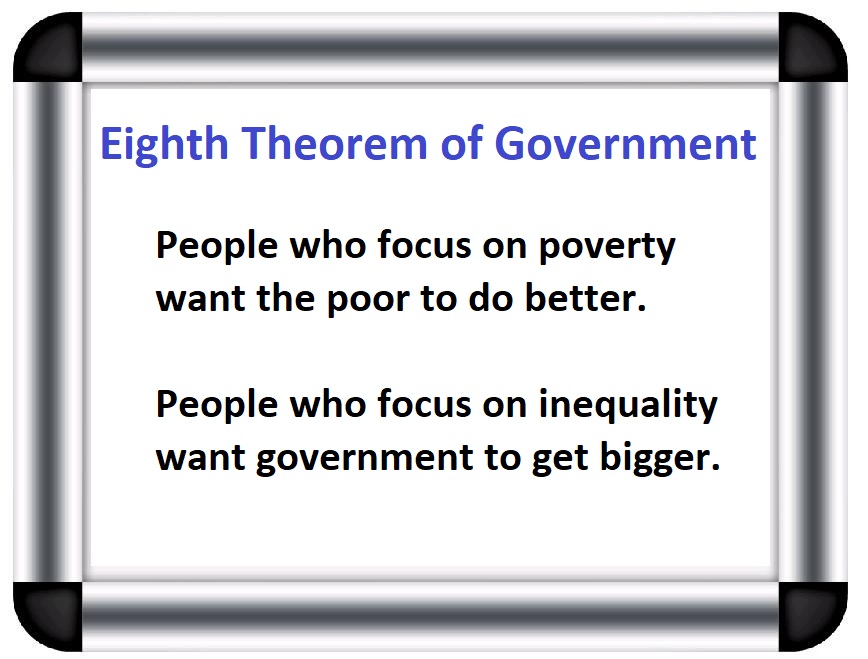 I also think that our friends on the left who fixate on inequality are mostly motivated by an ideological desire for bigger government (or an ideological desire to hurt the rich).
Helping the less fortunate seems to be – at best – a secondary concern for them.
But let’s not worry about deciphering their real motives and instead look at why their approach is misguided.
Here’s a tweet from Gabriel Zucman, who (along with Thomas Piketty) is one of the most widely cited crusaders for class-warfare policy.
He is upset that the richest people in the world earn a lot more than the poorest people, and he obviously wants people to view these numbers as scandalous…
View original post 181 more words
Joe Jackson – Is She Really Going Out With Him? (Live, The Regal Theatre, Hitchin, 1983)
28 Jan 2022 Leave a comment
in Music
Inflation, monetary policy and all that
28 Jan 2022 Leave a comment

The CPI for the December quarter was finally released yesterday – even later in the month than that other CPI laggard the ABS. The picture wasn’t pretty, even if at this point not particularly surprising. My focus is on the sectoral factor model measure of core inflation – long the Reserve Bank’s favourite – and if, as my resident economics student says “but Dad, no one else seem to mention it”, well too bad. Of the range of indicators on offer it is the most useful if one is thinking about monetary policy, past and present.
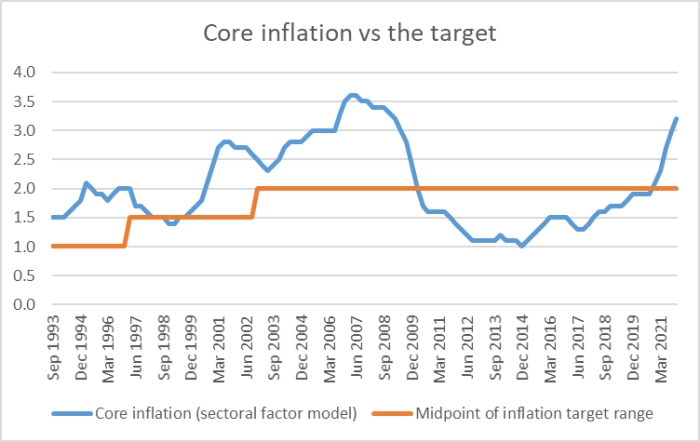
Factor models like this provide imprecise reads (subject to revision) for the most recent periods – that’s what you’d expect, especially when things are moving a lot, as the model is looking to identify something like the underlying trend. The most recent observations were revised up yesterday, and the estimate for core inflation for…
View original post 2,252 more words
Road to net zero will cost trillions a year, report says
28 Jan 2022 Leave a comment


This BBC report trots out the usual evidence-free assertions about the supposed human causes of recent warming. But ignoring the role of natural variation and spending fortunes on the basis of poorly performing climate models looks little better than casino gambling. For waverers the threat of extreme weather is pulled out of the hat.
– – –
Trillions of dollars need to be spent every year for almost three decades to hit net zero targets, according to consultancy McKinsey. — BBC News reporting.
On top of current spending, the equivalent of half of all corporate profits will have to be invested to tackle global warming, it says.
McKinsey highlights that gaining acceptance will be tough, especially from those paying energy bills.
But the alternative is more extreme weather, experts have warned.
View original post 166 more words
January 27, 1343: Pope Clement VI issues the Papal Bull Unigenitus Dei filius
28 Jan 2022 Leave a comment

Pope Clement VI (1291 – December 6, 1352), born Pierre Roger, was head of the Catholic Church from 7 May 1342 to his death in 1352. He was the fourth Avignon pope. Clement reigned during the first visitation of the Black Death (1348–1350), during which he granted remission of sins to all who died of the plague.
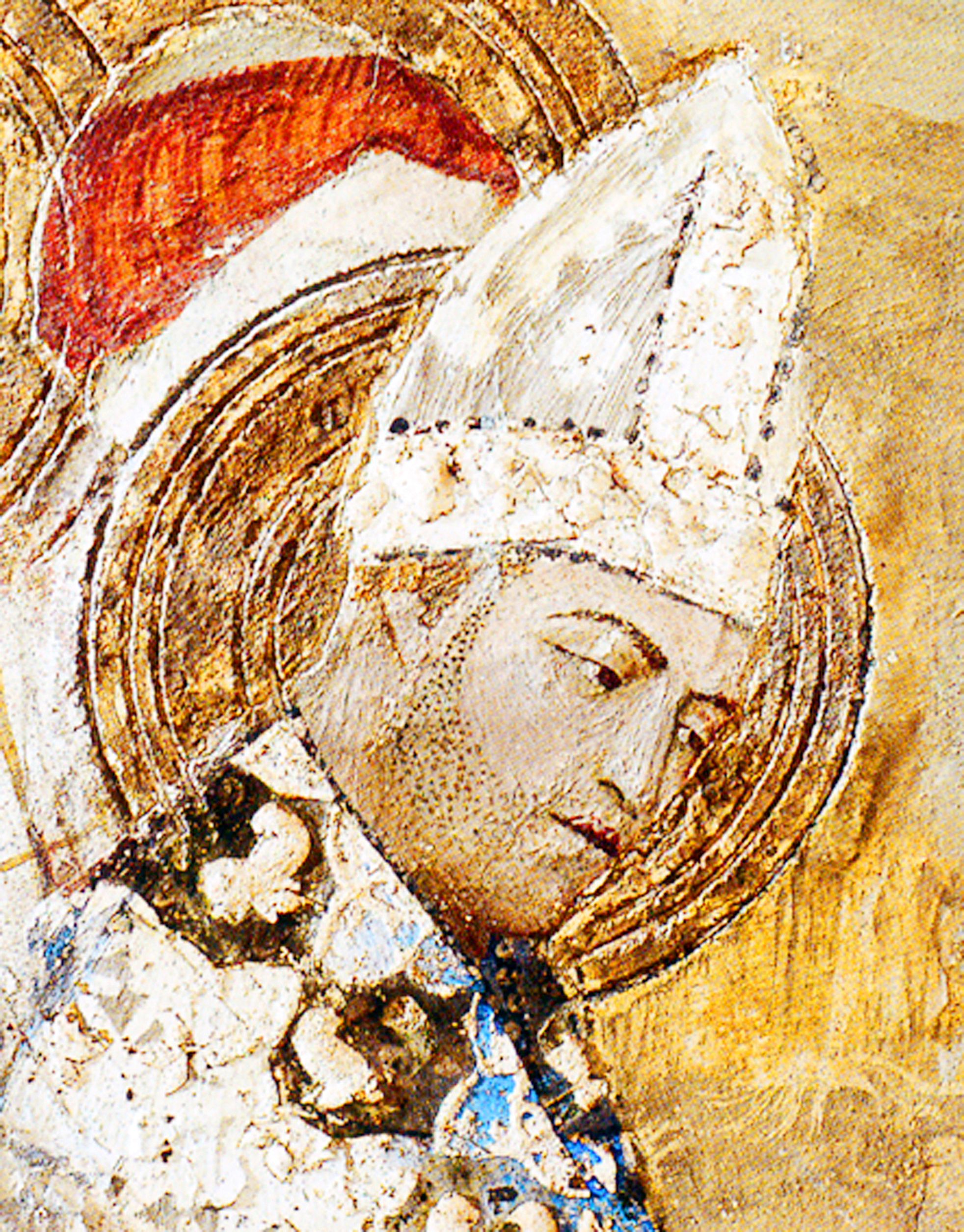 Pope Clement VI
Roger steadfastly resisted temporal encroachments on the Church’s ecclesiastical jurisdiction and, as Clement VI, entrenched French dominance of the Church and opened its coffers to enhance the regal splendour of the Papacy. He recruited composers and music theorists for his court, including figures associated with the then-innovative Ars Nova style of France and the Low Countries.
Like his immediate predecessors, Clement VI was devoted to France, and he demonstrated his French sympathies by refusing a solemn invitation to return to Rome from the city’s people, as well as from the…
View original post 470 more words


Recent Comments