IMF Bailouts and Moral Hazard
25 Jan 2022 Leave a comment

One of the (many) unfortunate tendencies of politicians is that they focus on the short run (i.e., their upcoming reelection battles).
Why is this unfortunate? Because there are some policy changes that may be costly in the short run, but they are nonetheless very worthwhile because they generate big long-run benefits.
- Shifting to a system of personal retirement accounts means trillions of dollars of near-term “transition costs” in order to protect current retirees and older workers, but reform will solve the program’s long-term $40 trillion-plus unfunded liability.
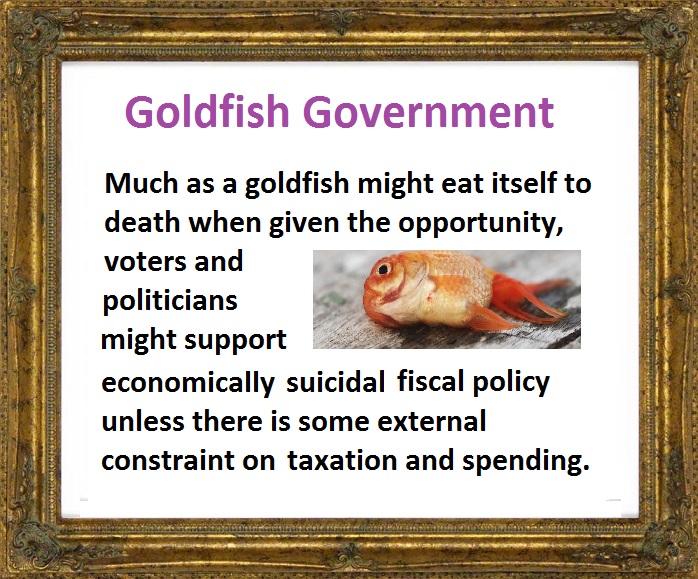
- Messy fights over the debt limit create (almost certainly exaggerated) concerns about potential default, but that potential cost would be trivial compared to the long-run benefits of figuring out how to limit the growing burden of federal spending.
- When bad monetary policy causes a financial bubble or housing bubble, shifting to good monetary policy presumably will…
View original post 637 more words

Carthage Must Be Destroyed by Richard Miles (2010)
24 Jan 2022 Leave a comment

According to legend Carthage was founded in 814 BC. Its history came to an end in 146 BC, the year in which Rome defeated and utterly destroyed it. Richard Miles is a young historian whose book, Carthage Must Be Destroyed, sets out to record everything we know about Carthage, from the legends of its founding, through its umpteen wars, up to the final catastrophe.
Carthage Must Be Destroyed is long, 373 pages of text, 77 pages of notes, 34 page bibliography and a 66-page index = 521 pages.
It is not a social or political history. There is hardly anything about Carthage’s form of government, a reasonable amount about its economy (trade and some agriculture), a surprising amount about the evolving design and metallurgy of its coinage (in the absence of other evidence, coins are a good indicator of cultural changes and economic success), and quite a lot about…
View original post 6,225 more words
Human History is Simple – Jordan B Peterson
24 Jan 2022 Leave a comment
in economic history Tags: capitalism and freedom, The Great Enrichment
Energy High Treason: The ‘Environmental’ Groups Sabotaging Reliable & Affordable Power Supplies
24 Jan 2022 Leave a comment


Outfits like the Sierra Club ought to be charged with High Treason, for trying to destroy reliable and affordable power supplies – supplies critical to peace, prosperity and the survival of Western civilisation.
As to defence, in a high-tech world of internet surveillance, satellite reconnaissance and remotely controlled drones, try protecting the Realm without electricity available around-the-clock.
Over the last 20 years, so-called ‘green’ groups have given up on saving the environment and have directed their hate towards reliable and affordable power.
Openly committed to the destruction of power sources generated with fossil fuel and fervently dedicated to resisting the CO2 emissions-free nuclear power that ought to placate their doom and gloom forecasts about the climate, it’s as if these characters are intent on destroying their own societies, from within.
With the hapless Joe Biden in the White House, and Bernie Sanders and his Squad intent on directing energy policy…
View original post 866 more words
Guest Post: Was Henry IV A Usurper? By Michele Morrical
24 Jan 2022 Leave a comment

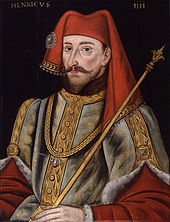 Some medieval English kings have unfairly gotten a bad rap. Others are deservedly vilified (Richard III, I’m talking to you).
Our modern-day perception of English kings is largely constructed from only a few sources. Of course, we have the writings of Shakespeare which were generally based on the real events of English monarchs but had lots of extra drama added in to spice things up. We also have the writings of chroniclers who actually lived in the middle ages, but they aren’t always reliable. Just imagine if you were hired by Henry VIII to write the history of his reign. You would definitely write it in a way that reflected very well on the king. And we have modern-day historians who try to bring the past to life with new interpretations of English monarchs and their new explanations of their controversial actions.
One of the English kings who has received very…
View original post 2,375 more words


Recent Comments